

2020 · Kartenspiel
The LOOP
Die Spieler werden zu Zeitagenten, die zusammenarbeiten, um einen verrückten Wissenschaftler daran zu hindern, die Zeitlinie auseinanderzureißen. Das Spiel erstreckt sich über sieben Zeitalter der Raumzeit, während die Spieler Missionen erfüllen, Klone zerstören und zeitrissige Wirbel mithilfe von Artefaktkarten, Energietokens und Charakterfähigkeiten versiegeln. Eine besondere LOOP-Mechanik erlaubt es den Spielern, Aktionen zu verketten und Combo-Effekte auszulösen, während eine zufällige Feindbewegung und eine 3D-Maschine, die Würfel fallen lässt, unvorhersehbare Bedrohungen erzeugen, die Koordination und taktische Planung erfordern. Mehrere Modi verändern die Stärke der Gegner, die Aktionsbeschränkungen und die Eskalationsphasen, wodurch unterschiedliche Ziele und Niederlagebedingungen entstehen, die an Wirbel, gescheiterte Missionen oder abgelaufene Zeit gebunden sind.
- Spieler
- 1–4 am besten mit 2
- Spielzeit
- 60 Min.
- Alter
- 12+
- Komplexität
- 2,8 / 5
Über das Spiel
- Autoren
- Illustration
- Publisher



Erweiterungen
In Ludoya ansehen

Fotos von Ludoya-Tischen
Alle Fotos in Ludoya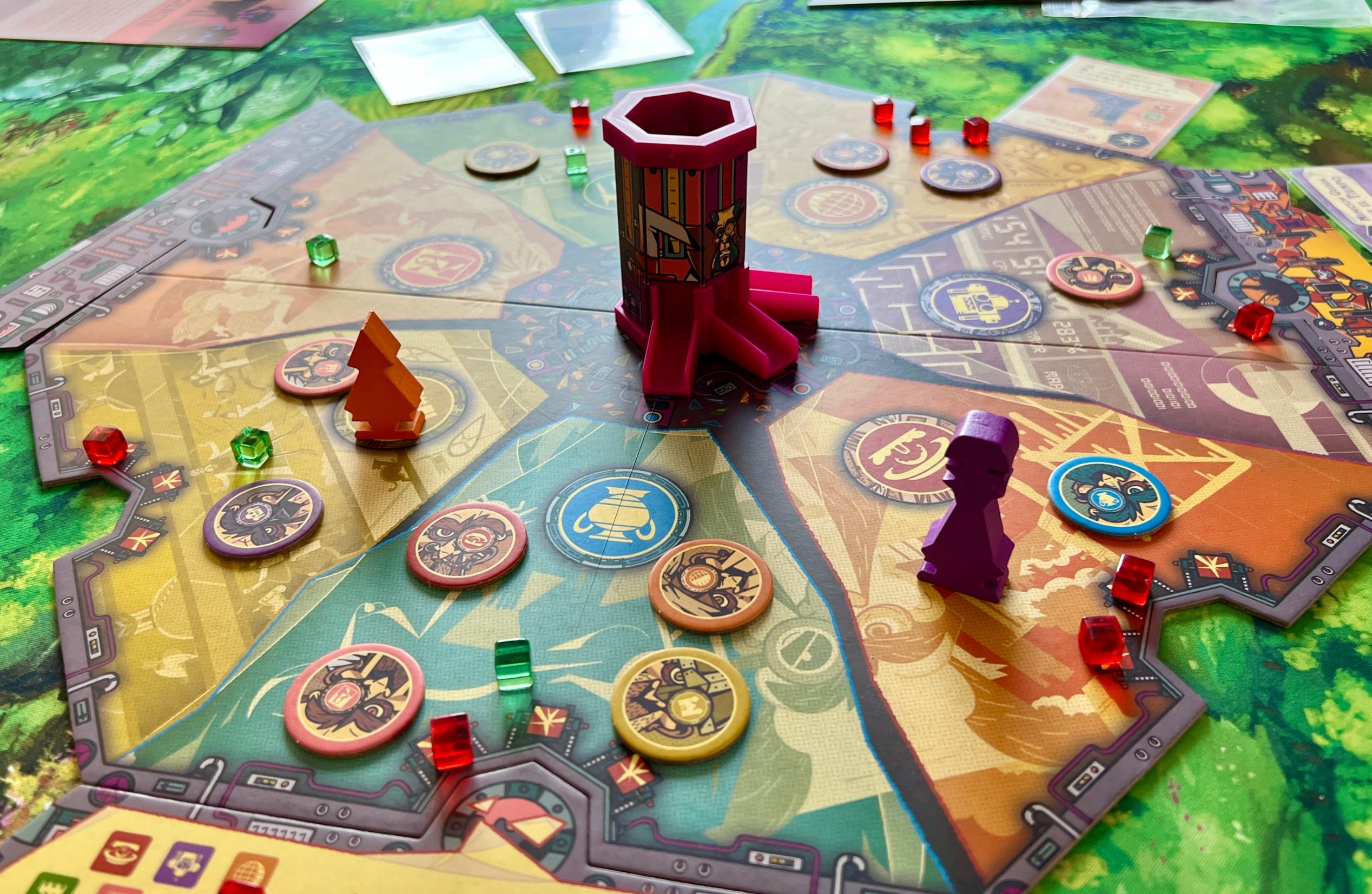
Wo kaufen
Shop-Preise und gebrauchte Exemplare, täglich geprüft.
An Ludoyas Tischen
Alle Statistiken in Ludoya- 430
- Erfasste Partien
- 297
- Spieler
- 1h 12m
- Durchschnittliche Partie
- 126
- In Sammlungen
- 36
- Auf Wunschlisten
7,9/10
aus 44 Ludoya-Rezensionen
Jan Solo8,5 Impro-Reseña⇒

Regelfragen
Aus der Spielanleitung beantwortet von Ludoyas Regelassistenten.
How does LOOP cost work — can I LOOP multiple times in one turn and how much Energy does each cost?
You can perform multiple LOOPs in one turn but each costs 1 more Energy than the previous (1 for the first, 2 for the second, 3 for the third, etc.); each LOOP spends 1 Energy from your Era and readies all cards in your hand that share one chosen Elementary Dimension (you may never choose the Black Hole Dimension). (p.7)
When I remove Rifts with a card, where do those cubes go — can they still cause a Vortex?
Any Rift you remove is returned straight to the pool (not placed on an Era), so that particular Rift can never cause a Vortex; generally removed Rifts go back to the pool. (p.11)
If a card from the Huge Deck is made available on an Era that immediately becomes a Vortex, does the card still resolve or is it destroyed instantly?
If a card is made available on an Era that becomes a Vortex, the card’s effects fully resolve first and it is then destroyed by the Vortex. (p.12, p.6)
Can I archive a Sabotage tile as soon as it has the required damage even if I'm not on that Era?
No — you may only archive a Sabotage tile during your Archive phase and only if you are on that tile’s Era; archiving also triggers the Attendance Bonus. (p.9, p.10)
Does destroying a Duplicate on Dr Foo’s Era immediately count toward Sabotage mission damage?
Yes — destroying a Duplicate on the Era where Dr Foo is located counts toward the corresponding Sabotage mission and lets you place the appropriate damage cube(s). (example and explanation: p.8; missions summary: p.10)
What happens if my Draw pile is empty when I need to draw a card?
For your Agent deck, shuffle your Discard pile to form a new Draw pile and then finish resolving the draw; for the Huge Deck, if it is ever empty you reshuffle the Destroyed Cards pile to form a new Huge Deck. (p.5, p.11)
Ähnliche Spiele
 The Stygian Society2020
 Aeon's End: Outcasts2020
 Aeon's End: Ein neues Zeitalter2024
 Unstoppable2025
 Astro Knights: Eternity2024
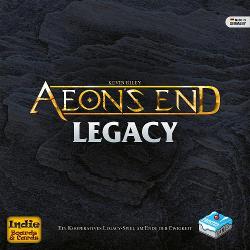 Aeon's End: Legacy2023
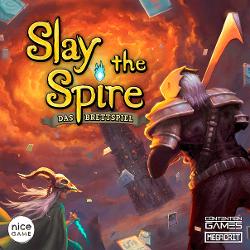 Slay the Spire: Das Brettspiel2024
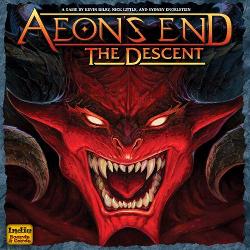 Aeon's End: The Descent2024
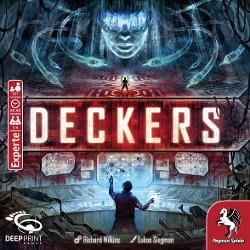 Deckers2025
 Helden müssen draussen bleiben!2024
 Invincible: The Card Game2025
 Dead Reckoning2022






Kostenlos, im Web, für Android und iOS
Spiel The LOOP mit Ludoya
- Hab es in deiner SammlungVerwalte dein Exemplar und seine Erweiterungen, leih es Freunden oder setz es auf deine Wunschliste und erfahre, wenn der Preis fällt.Zur Sammlung hinzufügen
- Erfasse jede PartiePunkte, Sieger, Timer und Fotos, dann deine Statistiken: Siegquote, liebste Spielerzahl, beste Punktzahl.Partie erfassen
- Regelfragen klärenFrag alles zu den Regeln und erhalte eine Antwort aus der Spielanleitung, mit der Seite zum Nachprüfen.Den Regelassistenten fragen
- Finde Leute, mit denen du es spielstClubs, Spieleabende und Veranstaltungen in deiner Nähe, bei denen dieses Spiel auf den Tisch kommt.Veranstaltungen ansehen
Spieldaten (Spieler, Spielzeit, Alter, Mitwirkende) von BoardGameGeek.