

2018 · Rompecabezas
Azul: Vitrales de Sintra
Los jugadores ensamblan vitrales eligiendo paneles de vidrio translúcido y colocándolos en una ventana de doble cara. En cada ronda, los jugadores toman conjuntos de paneles de colores de exhibiciones comunes, gestionan el exceso que puede causar penalizaciones y organizan las piezas para completar patrones en su tablero personal. La puntuación se obtiene durante y después de las rondas por paneles completados, patrones específicos y conjuntos de colores, con una mecánica adicional de Bono de Color en cada ronda que recompensa ciertas colecciones de colores. El juego usa una torre para los paneles descartados y se juega durante seis rondas; gana el jugador con la puntuación más alta.
- Jugadores
- 2–4 mejor con 3
- Duración
- 30–45 min
- Edad
- 8+
- Complejidad
- 2 / 5
Sobre el juego
- Diseño
- Arte
- Publisher



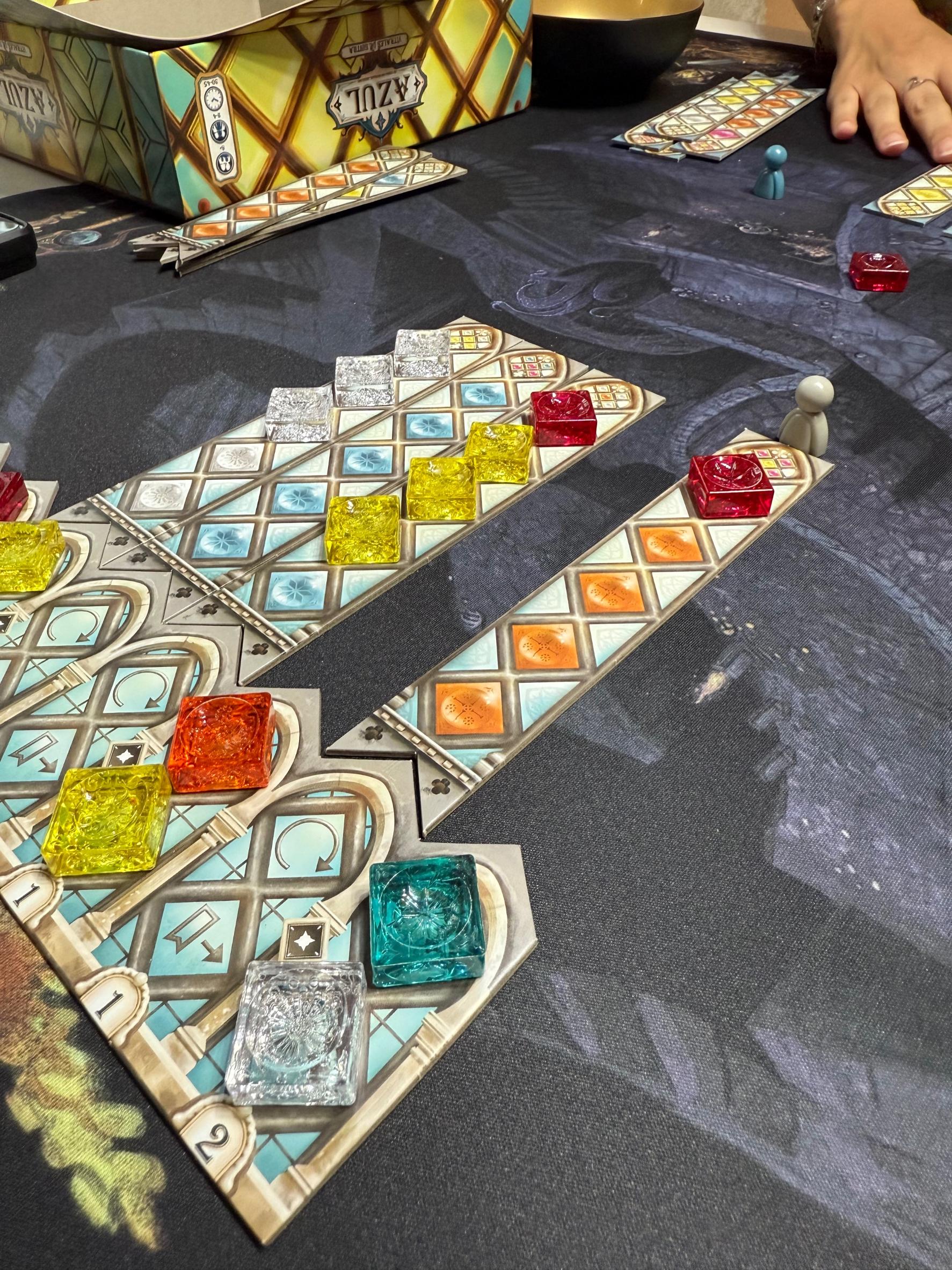
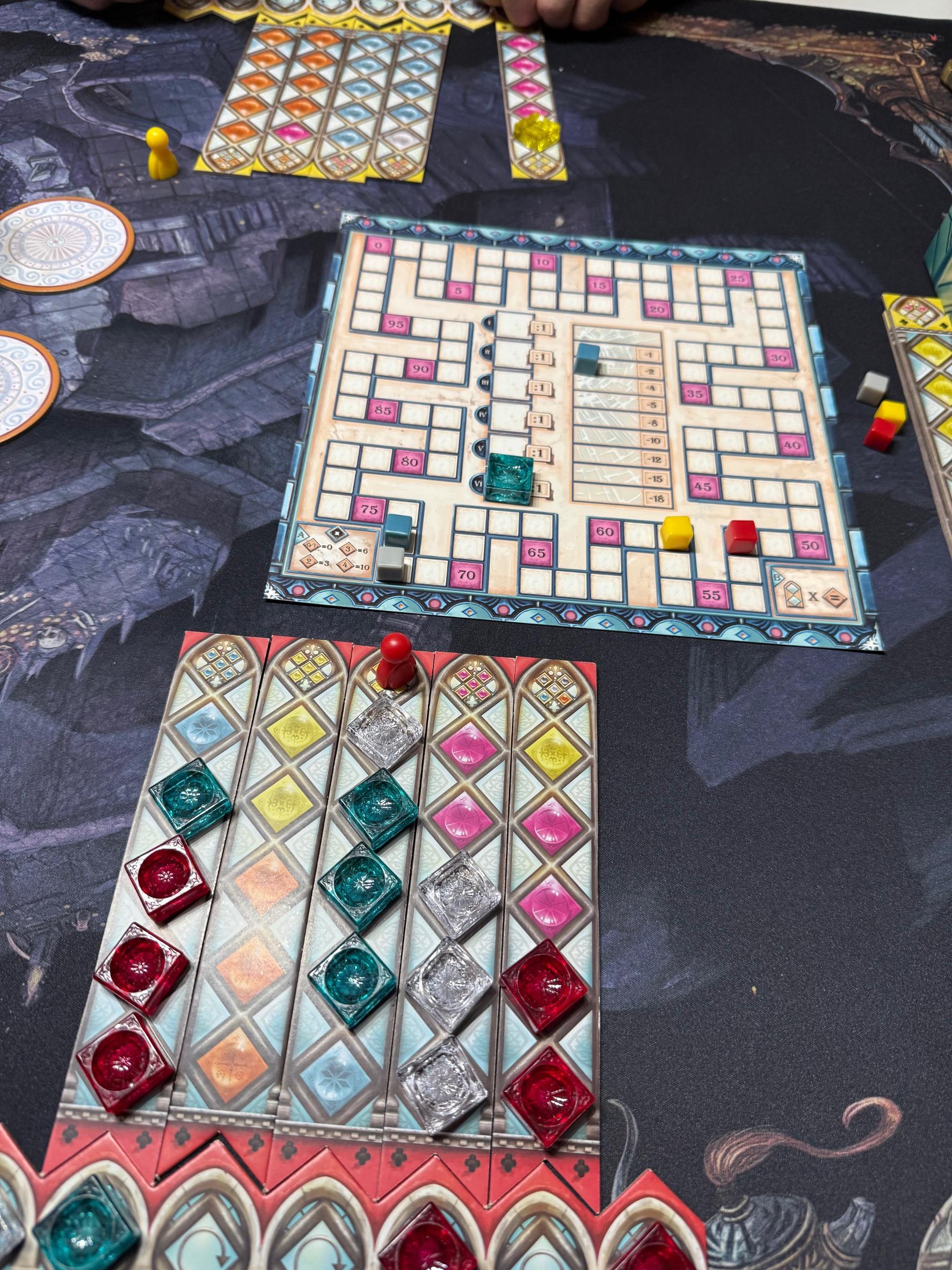
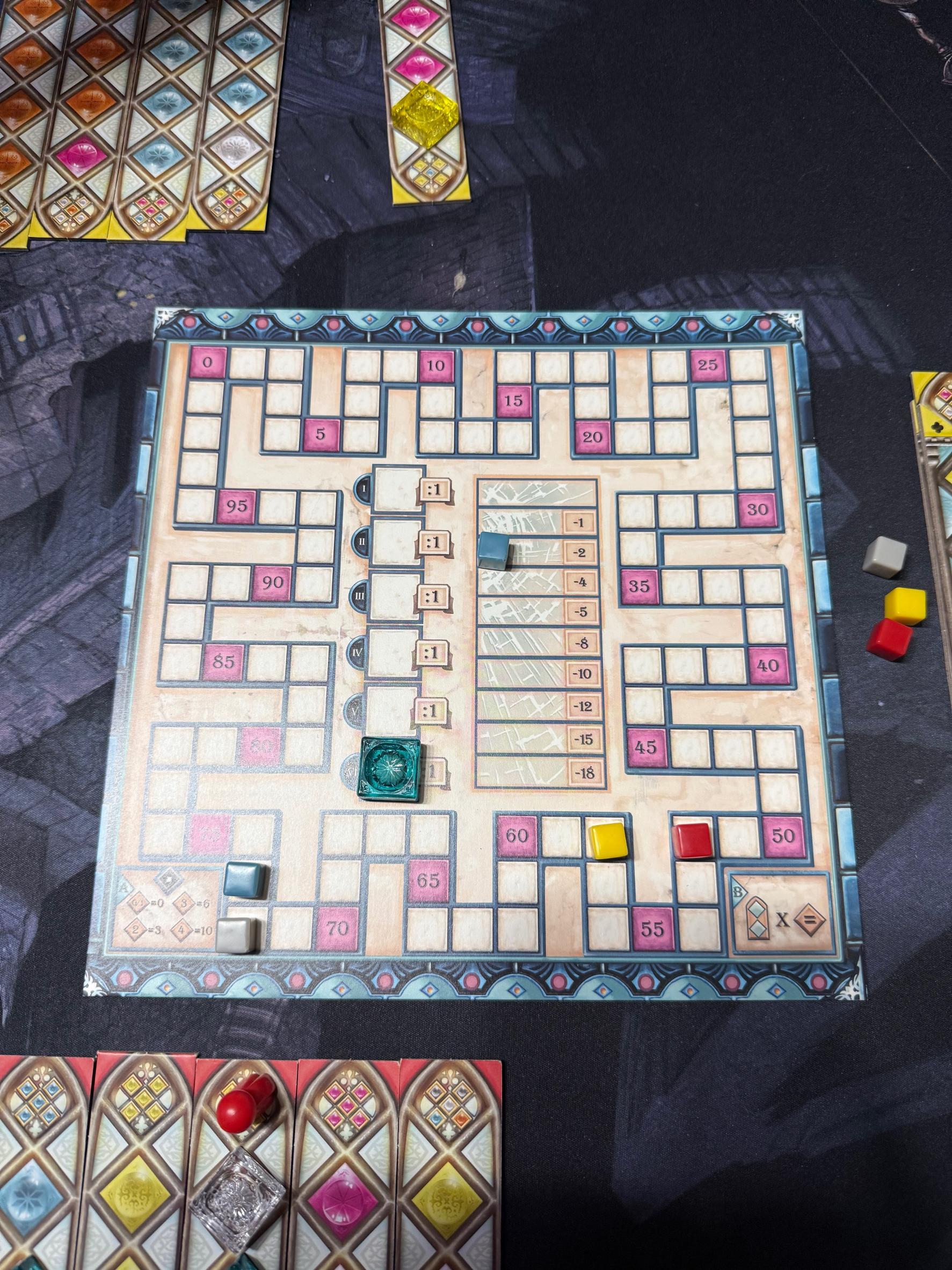
Fotos de mesas de Ludoya
Todas las fotos en Ludoya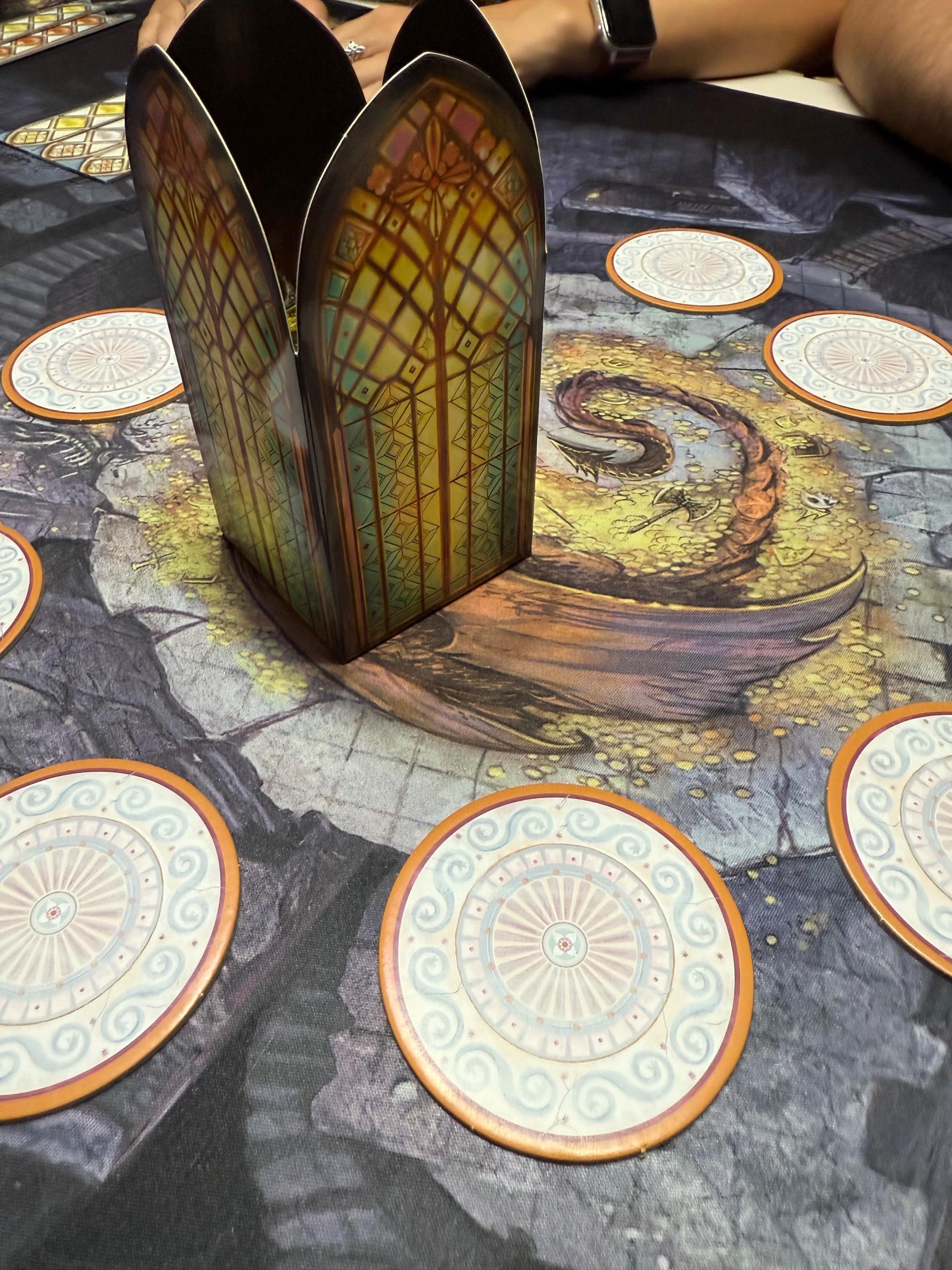
Dónde comprarlo
Precios de tiendas y copias de segunda mano, revisados cada día.
- La GameriaSin stock 35.95 €
- Mono de JuegosSin stock 37.95 €
- Juegos de la Mesa RedondaSin stock 38.21 €
- MathomEn stock 39.59 €
- Dungeon MarvelsPreventa 39.95 €
- Va de jocsSin stock 39.95 €
- Goblin Trader BarcelonaSin stock 40.5 €
- Magia de TintaSin stock 41.95 €
En las mesas de Ludoya
Todas las estadísticas en Ludoya- 511
- Partidas registradas
- 428
- Jugadores
- 37m 23s
- Partida media
- 155
- En colecciones
- 14
- En listas de deseos
6,9/10
de 64 reseñas en Ludoya
Evan5,9 This game uses the basic tile selection mechanism from Azul 1, and applies it to a new puzzle. The player boards get randomized at the start of the game, so each player is going for different colors at different points. You no longer have a prep area, rather your tiles are placed directly into columns. When a column is full, it scores for itself, and for each column completed to it's right. Then you mark the completion, flush the tiles out of it and flip it over so it's available for a second completion but this time with different colors. You also have a meeple who starts on the left, and clicks to the right above whichever column you place your tiles into, who prevents you from placing tiles to the left of his current position. A new option during your turn is essentially passing to reset him to the left most position. It's so hard to judge this game on it's own merits for me at this point. I know I should allow this game to be it's own beautiful creature, but to me Azul 1 is such a perfectly designed game. To meddle with it to the extent here feels uncomfortable. My brain is telling me, this is just Azul, with much harder to track information. With the new players boards it's harder to see who needs what when. There's a mechanism where starting round 2, one color of tile is more valuable to complete which alters the math. Players can pass, which changes the flow of knowing who will get stuck with the giant pool of solid color nonsense. It's like Azul but more chaos. I do think that this impression might just be the natural result of meeting a brand new, unfamiliar game, yet because it's called Azul, and uses the same tile selection as Azul, I feel like I should intuitively know and understand it like Azul, a game I've played a lot of. The puzzle here is compelling once you can see and understand it. Predicting the flow of the game should come with more time and plays. I do think this isn't as elegant as Azul 1. I don't see this unseating Azul 1 in my heart. :star: Art, Iconography and components functional :star: Clever or interesting mechanisms :star: Reasonably low downtime between turns with mildly AP players :star: Multiple plays stay interesting :star: Low or mitigatable luck elements :star::star::nostar::nostar::nostar: Raw enjoyment
- Base [ 02 ] -

Dudas de reglas
Respondidas a partir del reglamento por el asistente de reglas de Ludoya.
Can I place pieces on strips to the left of my glazier?
No — you may only place the pieces on the strip beneath your glazier or any strip to his right; never on strips to his left (page 3).
What happens to extra pieces I pick that don't fit on the chosen strip?
Any excess pieces that don't fit are considered broken: move your marker down one space on the broken glass track per broken piece and drop those pieces into the glass tower; if you have no matching space at all all picked pieces are broken, but if you have at least one reachable matching space you must place there even if others will break (page 3).
If I take pieces from the center, do I get the starting player tile and a penalty?
Yes — the first player each round to take pieces from the center also takes the starting player tile and their marker on the broken glass track is moved one space down (page 2).
When I complete a pattern strip, what exactly happens with placement and scoring?
When a strip is completed you first score color bonus points equal to how many pieces on the strip match the top piece of the round indicator, then remove all five pieces, keep one to place into the palace window (drop the other four into the glass tower), flip or remove the strip as instructed, and immediately score that window plus any windows to its right that contain pieces (pages 3–4).
Can I choose to just move my glazier instead of taking pieces, and are there restrictions?
Yes — instead of picking pieces you may move your glazier back to your leftmost pattern strip, but you cannot move him above an empty slot and if he is already above your leftmost strip you cannot take this action (page 4).
How do the final bonuses for Palace Side A and Side B work?
Side A: for each ornament you score 10/6/3/0 points if all 4/3/2/≤1 surrounding frames hold pane pieces; Side B: count your completed windows and choose a color, then gain (completed windows × number of panes of that color on your palace); ties are broken by who lost fewer points on the broken glass track (page 5).

















Gratis, en web, Android e iOS
Juega a Azul: Vitrales de Sintra con Ludoya
- Tenlo en tu colecciónControla tu copia y sus expansiones, préstala a tus amigos o ponla en tu lista de deseos y te avisamos cuando baje de precio.Añadirlo a tu colección
- Registra cada partidaPuntuaciones, ganadores, temporizadores y fotos, y luego tus estadísticas: porcentaje de victorias, número de jugadores favorito, mejor puntuación.Registrar una partida
- Resuelve dudas de reglasPregunta lo que quieras sobre las reglas y obtén una respuesta sacada del reglamento, con la página donde comprobarla.Preguntar al asistente de reglas
- Encuentra gente con quien jugarloClubes, noches de juegos y eventos cerca de ti que sacan este juego a la mesa.Ver eventos
Datos del juego (jugadores, duración, edad, créditos) de BoardGameGeek.