
2017 · Juego de cartas
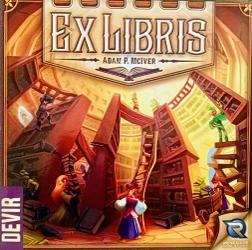
Ex Libris
Construye una colección privada de tomos raros en un bullicioso pueblo de gnomos y compite para impresionar al inspector del alcalde. Los jugadores envían asistentes para conseguir libros de apariciones limitadas, y luego los colocan en estanterías para cumplir los criterios de puntuación: orden alfabético, estabilidad de la estantería, variedad y restricciones de libros prohibidos. La elección de acciones y el timing son importantes, ya que los recursos aparecen y los rivales corren por los mismos objetos, y los poderes especiales según la ubicación cambian a medida que avanza la partida. La planificación, la colocación de losetas y la gestión de recursos determinan quién organiza mejor su biblioteca al final de la semana.
- Jugadores
- 1–4 mejor con 3
- Duración
- 45 min
- Edad
- 10+
- Complejidad
- 2,5 / 5






Dónde comprarlo
Precios de tiendas y copias de segunda mano, revisados cada día.
En las mesas de Ludoya
Todas las estadísticas en Ludoya- 157
- Partidas registradas
- 213
- Jugadores
- 1h 9m
- Partida media
- 62
- En colecciones
- 16
- En listas de deseos
- 1
- En preventa
8,4/10
de 37 reseñas en Ludoya
Fernando6,0 1 partida. Se trata de ir colocando libros en tu librería respetando el orden alfabético, como en las bibliotecas. Para ello, por orden de turno, se elige una de las varias acciones disponibles y que van cambiando cada ronda. Al principio, cuando te lo explican, parece infumable, de tantas opciones que hay; aunque luego, durante la partida, empiezas con solo 4 acciones disponibles y se van ampliando poco a poco. Así que, en realidad, no es tan complicado. No está mal.
Alshter7,5 Me encanta el puzzle de montar tu librería y el arte, pero la caja es enorme y muchas localizaciones las veo inutiles o redundantes
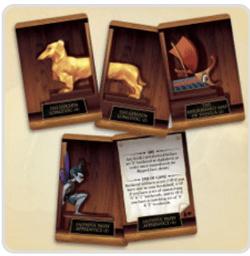
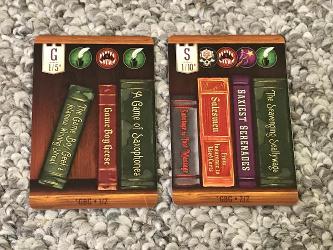
Evan10,0 In this game, you are placing your three workers on action spots with the goal of drawing and placing cards into your tableau, so that the cards wind up in letter order with same letter ties broken by printed number order. Your goal is to have an even amount of symbols in your tableau because you score for whichever symbol you wind up with the least of. One symbol is also a secret bonus point category for each player and one is assigned as a publicly known negative point category. Each player gets a different special power. Many seem interesting, others seem underpowered, in particular any ability that doesn't come with inherent card draw as part of it's effect. Effects that draw you more than a single card without needing some card expenditure are rare if they even exist at all, so if your hand gets depleted and you don't have a player power that nets free cards, it seems like you are playing from a major disadvantage. Certain action spot effects also cause opponents to lose cards from their hands, which barely bothers the card-rich powered players, but seemed to cripple other players. The worker placement action spots are randomly drawn from a deck of tiles each round, which makes meaningful planning between rounds nearly irrelevant. Some of the action spots also heavily benefit from being early in turn order. For example, in our game a player who gets a free card draw when someone places next to him took the first spot in an action tile which gives cards to each player who places into the hall each time any player uses the tile. Component wise, each action tile comes with a block of nearly illegible text which describes the action on the tile. This adds a lot of time to the game checking and rechecking what the action spots do. The book cards are laid out so it's reasonably easy to see what symbols people have. However, in addition to the colors each book also has letters and numbers that describe the position it needs to be in relationship to the other cards in the tableau for it to qualify for scoring. The letters are somewhat visible. The numbers are impossible to see from across the table. Overall, this is a mediocre set collection game with lots of extra randomness thrown in, poor components and uncomfortably balanced player powers. I hope to not play this again. :nostar: Art, Iconography and components functional :nostar: Clever or interesting mechanisms :nostar: Reasonably low downtime between turns with mildly AP players :star: Multiple plays stay interesting :nostar: Low or mitigatable luck elements :nostar::nostar::nostar::nostar::nostar: Raw enjoyment

Juegos similares








Gratis, en web, Android e iOS
Juega a Ex Libris con Ludoya
- Tenlo en tu colecciónControla tu copia y sus expansiones, préstala a tus amigos o ponla en tu lista de deseos y te avisamos cuando baje de precio.Añadirlo a tu colección
- Registra cada partidaPuntuaciones, ganadores, temporizadores y fotos, y luego tus estadísticas: porcentaje de victorias, número de jugadores favorito, mejor puntuación.Registrar una partida
- Puntúa sin papelUsa las hojas de puntuación y ayudas de juego de la comunidad, y deja que Ludoya sume los puntos.Buscar hojas de puntuación
- Encuentra gente con quien jugarloClubes, noches de juegos y eventos cerca de ti que sacan este juego a la mesa.Ver eventos
Datos del juego (jugadores, duración, edad, créditos) de BoardGameGeek.