
2024 · Económico
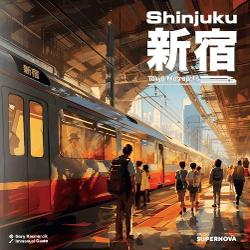
Shinjuku
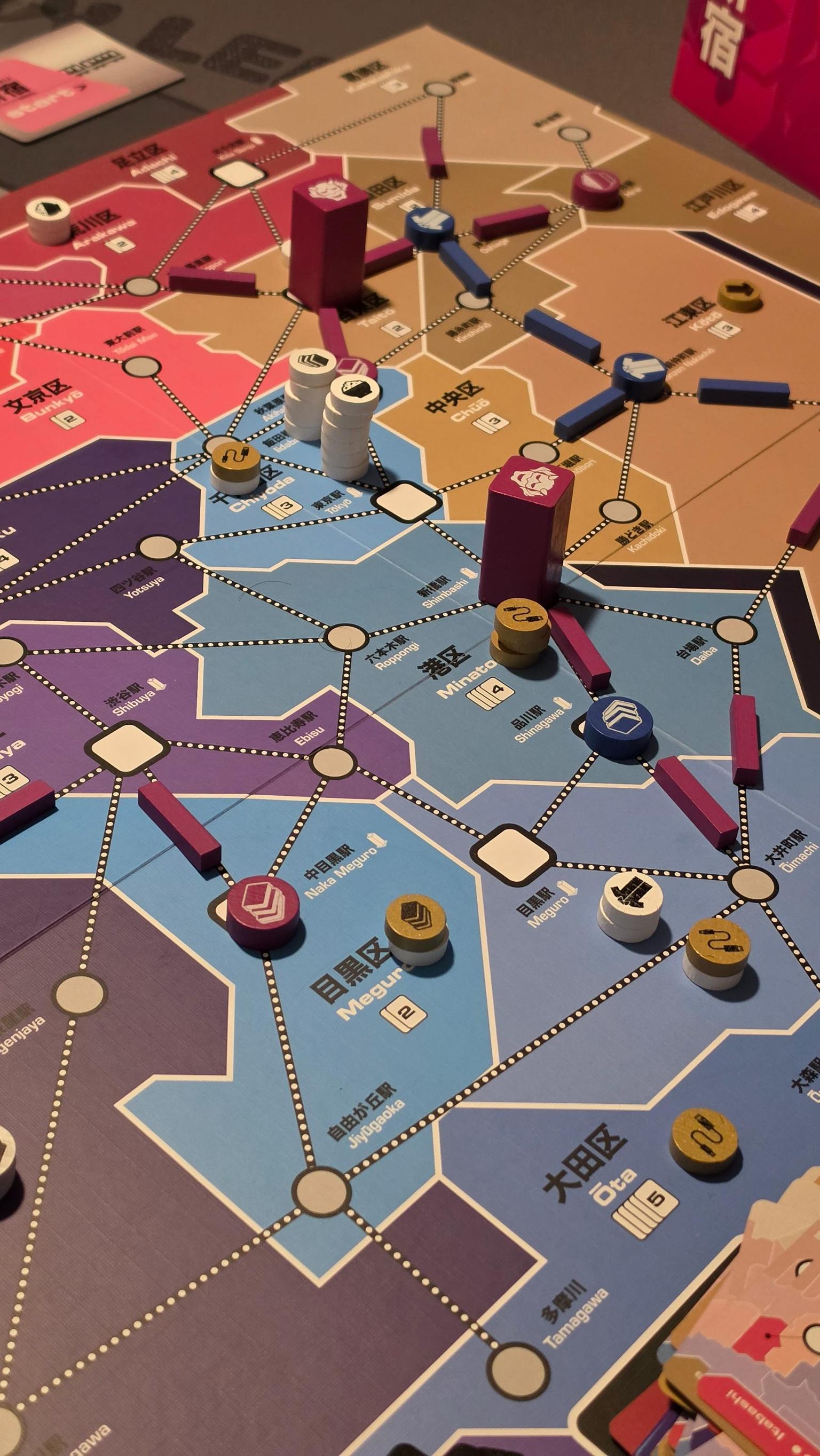
Players develop a retail-and-rail network across Tokyo, building stores and laying rail lines to connect them while competing to satisfy arriving customers. Each turn a new set of customers appears demanding one of four goods; players then take two different actions such as building a store, expanding rail, upgrading to a department store, drawing income cards, or moving customers along the rails to stores. Actions that place or upgrade locations require playing a matching location card from hand; cards matching existing store locations act as wilds. The game ends after the final customer round, and scoring awards points for collected customer sets.
- Jugadores
- 2–4 mejor con 4
- Duración
- 60 min
- Edad
- 10+
- Complejidad
- 2,5 / 5
Sobre el juego
- Diseño
- Editoriales



Fotos de mesas de Ludoya
Todas las fotos en Ludoya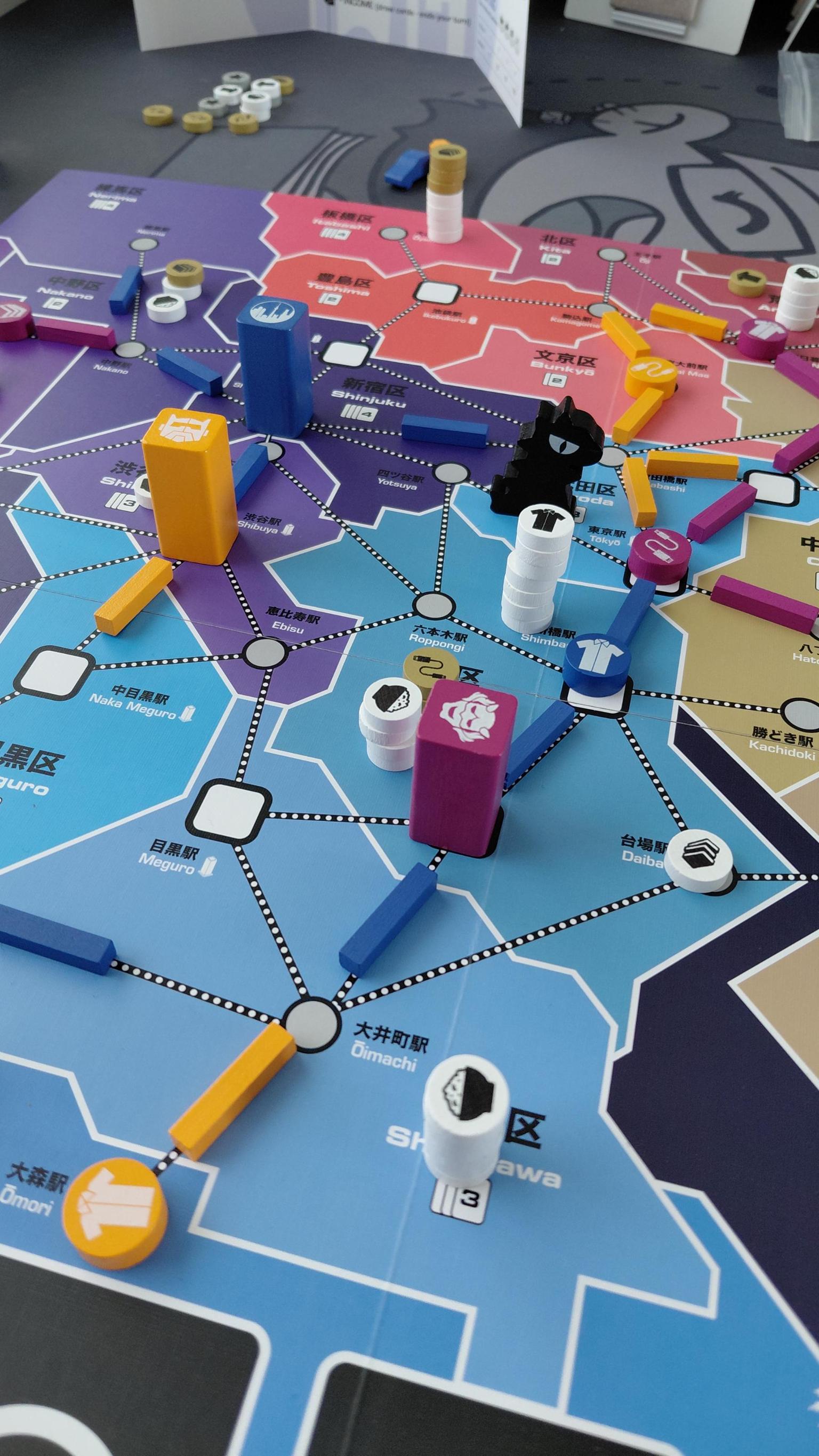
Dónde comprarlo
Precios de tiendas y copias de segunda mano, revisados cada día.
En las mesas de Ludoya
Todas las estadísticas en Ludoya- 13
- Partidas registradas
- 27
- Jugadores
- 1h 39m
- Partida media
- 7
- En colecciones
- 2
- En listas de deseos
6,0/10
de 6 reseñas en Ludoya
Xavi Torras6,0 Es simple y sencillo. No hay dependencia del idioma, ya que está en inglés o italiano. El juego original es en japonés (otra versión más antigua). Hay un factor de azar elevado, aunque se puede reducir incorporando las dos variantes que vienen de serie, lo que hace que el juego sea un poco más disparatado, pero a la vez también más sencillo y con un poco más de estrategia detrás. A grandes rasgos, es una especie de Ticket to Ride en el que tienes que ir expandiéndote por el tablero lo más rápido posible. Este representa la ciudad de Tokio y sus estaciones de metro. Tendrás que construir tiendas o incluso centros comerciales con el objetivo de atraer clientes a tus establecimientos a través de la red de vías de metro que iréis construyendo entre todos los participantes. El objetivo es conseguir más puntos mediante una colección de conjuntos (set collection), que completarás gracias a los diferentes clientes que hayan entrado en tus tiendas. Es un juego que escala bien tanto a 2 como a 4 participantes. Para mí, el número ideal de participantes es 3. A las personas más experimentadas probablemente se les quedará un poco corto, mientras que a las que se inician les puede parecer un poco complicado, hasta el punto de hacerles explotar el cerebro. En conclusión, es un juego correcto y funciona bien, pero no tiene una gran profundidad. Tiene un cierto componente estratégico, pero también un factor de suerte bastante elevado. Mi recomendación es que, si eres una persona experimentada y con mucho recorrido en los juegos de mesa, este se te quedará corto. Es el típico juego que puedes disfrutar como padre o madre junto con tus hijos o hijas: tú te lo pasas bien y ellos también
andycted6,0 After playing at 4p, our head hurt from parsing nightmare due to cards randomness, the stacking of 4-5 dynamics interacting with each other on the board and in perpetual change and finally the heavy player interaction and balancing. No thanks. Too much stuff and obstacles and randomness tossed over a relatively good and semi-original concept. Which is actually good for today's standards Way better with 3 players, but still has too much fiddliness and effort for the little satisfaction it gives and this is due to randomness and parsing hell. For example: I never got a Shinjuku card last game and I got tons of light blue cards. Nobody else built there and not many customers came in in that area. Could I prevent it ? No. Could I play it differently ? Of course, if I saw the future. You really need to fit where the other players go, and leader bashing can be extreme. But you're so limited by cards that you can't do any of these most of the time. Here is a rundown of your strategic choices. Leaving aside the store upgrade mechanic, which is nice but plays like a secondary attached mechanic, the core decisions will be split in two: A: build rails -1 : where there's already infrastructure -2 : where you expect infrastructures to be built And B: build shops -1: where there's already infrastructure -2 : where you expect infrastructures to be built In both cases, n.1 can suffer from players moving to build in other places/players choosing other routes And n.2 in just people not building there Then there's the very heavy randomness of cards impacting your and the table play, that will dictate where to play and what to move, hence ruin any 1 or 2 Then there's the complete randomness of where people will spawn, which can further hurt and invalidate the A and B choices made above. Finally, were it not enough, there's the semi blind choice of what kind of shop to open, given the total randomness of which token will end where on the map. Add to this that players can basically cut you off, move all customers away from you, and decide each turn who to give points to, and you understand why trying to play this game strategically can induce hopeless and probably useless AP. You are better off playing so rapidly that the game ends in half an hour and you enjoy the map growth and emerging story Just like Rise & Fall, an inelegant optimisation euro which looks elegant at first sight because of rules simplicity, however the stacking of many interacting, but jarring, mechanics make it for an overwrought game. And just like R&F the game lets you perceive there's a great mechanic, idea and game somewhere, waiting to come out, but it's buried deep down






Gratis, en web, Android e iOS
Juega a Shinjuku con Ludoya
- Tenlo en tu colecciónControla tu copia y sus expansiones, préstala a tus amigos o ponla en tu lista de deseos y te avisamos cuando baje de precio.Añadirlo a tu colección
- Registra cada partidaPuntuaciones, ganadores, temporizadores y fotos, y luego tus estadísticas: porcentaje de victorias, número de jugadores favorito, mejor puntuación.Registrar una partida
- Puntúa sin papelUsa las hojas de puntuación y ayudas de juego de la comunidad, y deja que Ludoya sume los puntos.Buscar hojas de puntuación
- Encuentra gente con quien jugarloClubes, noches de juegos y eventos cerca de ti que sacan este juego a la mesa.Ver eventos
Datos del juego (jugadores, duración, edad, créditos) de BoardGameGeek.