
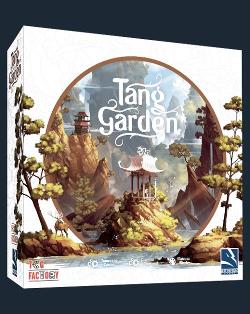
2019 · Ambiental
Tang Garden
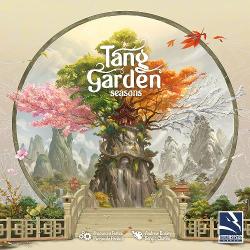
Diseña y construye un jardín chino clásico durante la dinastía Tang colocando losetas de paisaje, situando decoraciones y montando panoramas verticales que amplían la vista. Los jugadores alternan entre dos acciones: colocar losetas para equilibrar los elementos naturales y desbloquear miniaturas de personajes, o robar y colocar cartas de decoración para completar colecciones y ganar prestigio. Los personajes se orientan hacia los fondos que prefieren para puntuar con los panoramas, que se colocan de forma perpendicular al tablero y crean vistas continuas para los visitantes. Los puntos se obtienen por los elementos naturales equilibrados, las decoraciones colocadas y cómo los visitantes aprecian los panoramas completados; gana quien tenga más prestigio.
- Jugadores
- 1–4 mejor con 3
- Duración
- 40–60 min
- Edad
- 14+
- Complejidad
- 2,6 / 5
Sobre el juego
- Arte
- Publisher




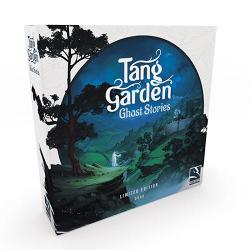
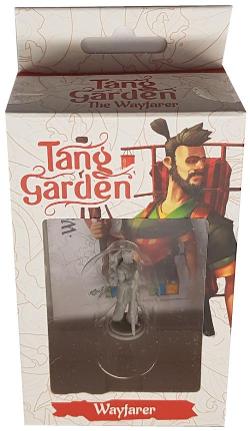
Expansiones
Verlas en Ludoya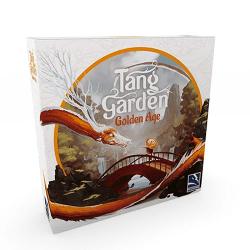

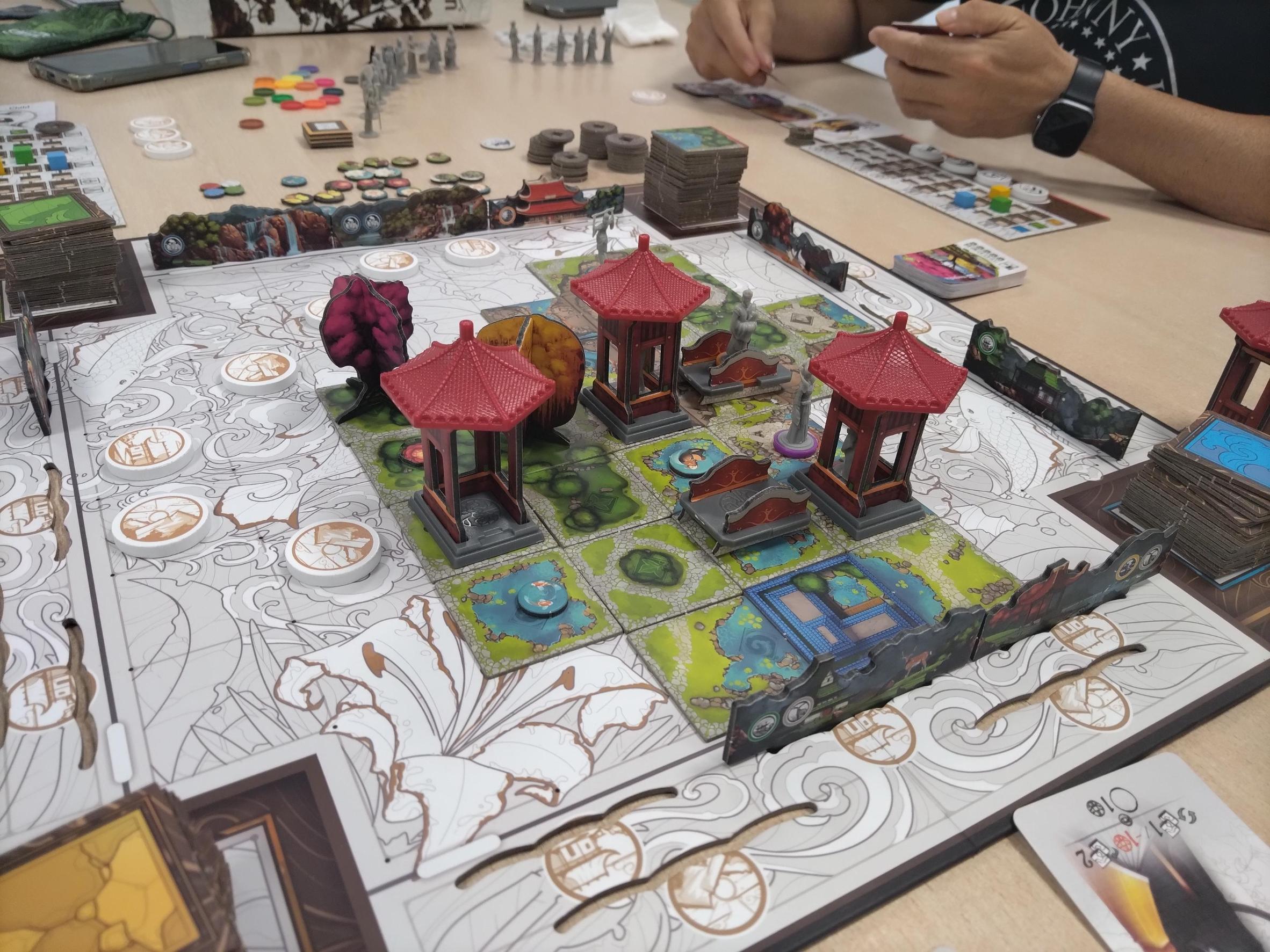
Fotos de mesas de Ludoya
Todas las fotos en Ludoya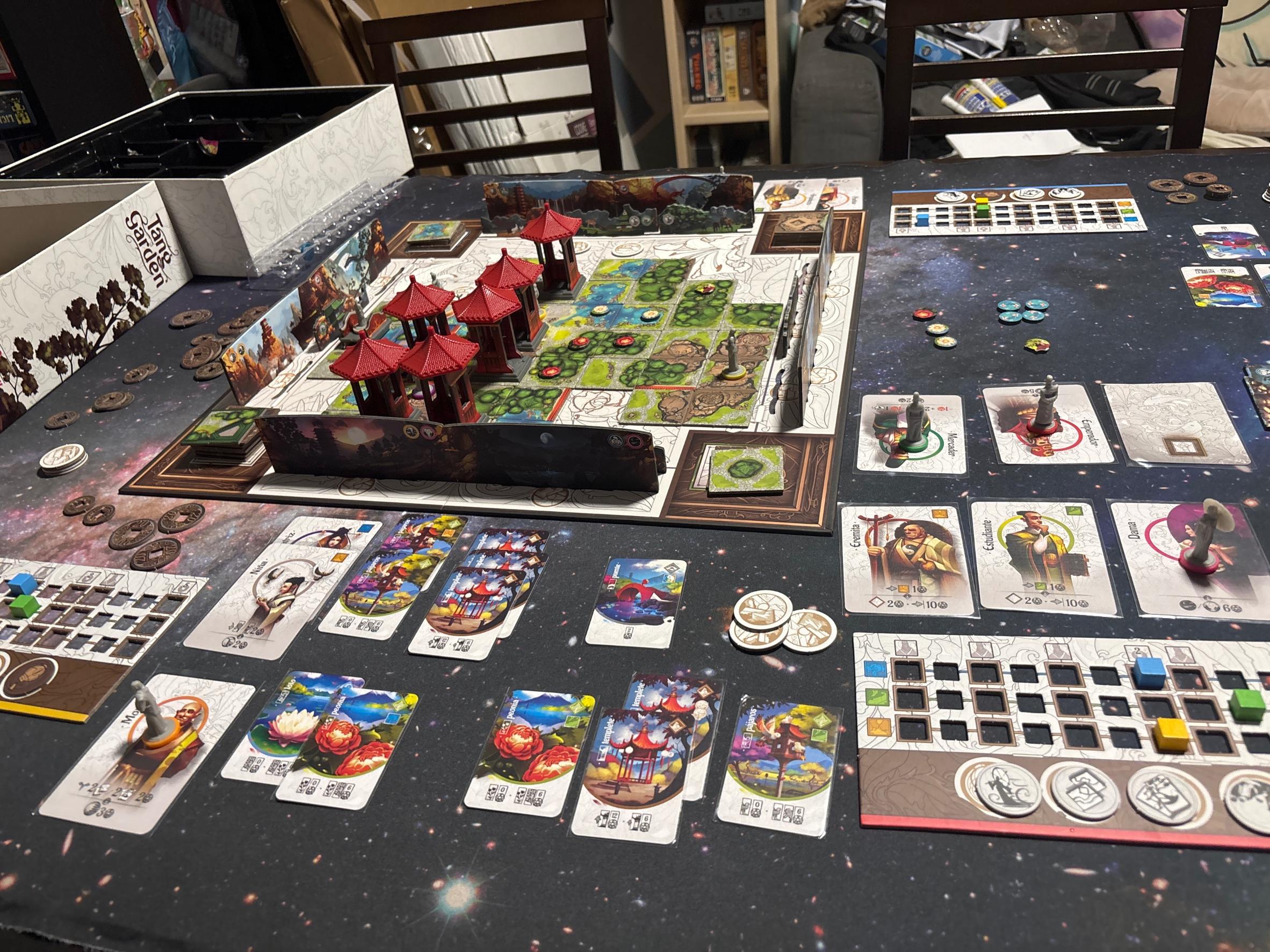
Dónde comprarlo
Precios de tiendas y copias de segunda mano, revisados cada día.
En las mesas de Ludoya
Todas las estadísticas en Ludoya- 109
- Partidas registradas
- 146
- Jugadores
- 1h 20m
- Partida media
- 47
- En colecciones
- 12
- En listas de deseos
4,6/10
de 21 reseñas en Ludoya
Evan1,6 On your turn you can either select a tile from one of the four piles, place it in the central grid respecting the picture on the tiles Carcassonne style, then get track bumps and money depending on what features you added to or completed, or you draw 2+ decoration cards depending on how many of the tile draw piles are face down, keeping one. Each player starts with an asymmetric ability card that can grant points when one of your actions meets their matching conditions. Once all three of your tracks reach a certain threshold, you can take a new character from the display, and then place the matching meeple of one of your two characters in a space on the board. They'll then score points for you at the end of the game depending on how much the board has been built out to their printed preferences. The game is actually quite simple, and has many elements I enjoy very much. The tile laying process is great, and I like slowly building my own personal scoring criteria. The components are quite beautiful, although the minis are a little small and lacking in good detail. The rulebook gets in the way of understanding the process of play. The game really needs player aids. The iconography is incredibly poor. The game is littered with tiny similar icons that make no sense, and there's no reason for it. The tiles themselves can also be very unclear as to what they extend. This could have been a great game if they had worked more on usability issues. The process of play is also a little muddy, as you spend the first half of the game putting features in places, hoping you eventually get to place the character meeple who likes those things in a useful place, but you don't really have a sense if you are setting things up for yourself or for an opponent. ☆ Art, Iconography and components functional ★ Clever or interesting mechanisms ☆ Reasonably low downtime between turns with mildly AP players ☆ Multiple plays stay interesting ☆ Low or mitigatable luck elements ★★☆☆☆ Raw enjoyment
N4
A nice tile laying game with amazing aesthetics. PROS - It is light and perfect for casual gamers while maintaining a layer of strategy. - The flow between taking tiles and cards feels right and creates an interesting gameplay. - It is stunning. Amazingly beautiful. The panorama landscapes are a great concept and work wonderfully. CONS - It is not innovative in any way: you have seen this all before, but probably not this beautiful. - The expansions cannot be stored in the main game box if keeping its insert (which is pretty good).


















Gratis, en web, Android e iOS
Juega a Tang Garden con Ludoya
- Tenlo en tu colecciónControla tu copia y sus expansiones, préstala a tus amigos o ponla en tu lista de deseos y te avisamos cuando baje de precio.Añadirlo a tu colección
- Registra cada partidaPuntuaciones, ganadores, temporizadores y fotos, y luego tus estadísticas: porcentaje de victorias, número de jugadores favorito, mejor puntuación.Registrar una partida
- Puntúa sin papelUsa las hojas de puntuación y ayudas de juego de la comunidad, y deja que Ludoya sume los puntos.Buscar hojas de puntuación
- Encuentra gente con quien jugarloClubes, noches de juegos y eventos cerca de ti que sacan este juego a la mesa.Ver eventos
Datos del juego (jugadores, duración, edad, créditos) de BoardGameGeek.