
2019 · Rompicapo
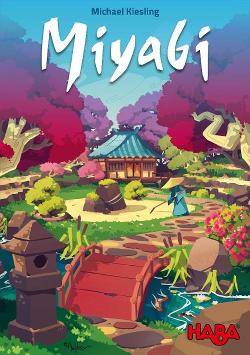
Miyabi
I giocatori progettano un raffinato giardino giapponese posizionando tessere su un tabellone multilivello condiviso per disporre pietre, cespugli, alberi, laghetti e pagode. A ogni turno, i giocatori scelgono e posizionano elementi del giardino rispettando le regole di posizionamento e ottengono punti raccogliendo il maggior numero possibile di elementi di ciascun tipo paesaggistico sui vari livelli. Il posizionamento strategico delle tessere, la pianificazione dei turni successivi e la capacità di adattarsi alle mosse degli avversari determinano il punteggio. Il gioco base include diversi scenari e cinque espansioni opzionali che aggiungono varietà e nuove sfide.
- Giocatori
- 2–4 ideale in 2
- Tempo di gioco
- 45 min
- Età
- 8+
- Complessità
- 2 / 5
Il gioco
- Autori
- Illustrazioni
- Publisher



Foto dai tavoli di Ludoya
Tutte le foto in Ludoya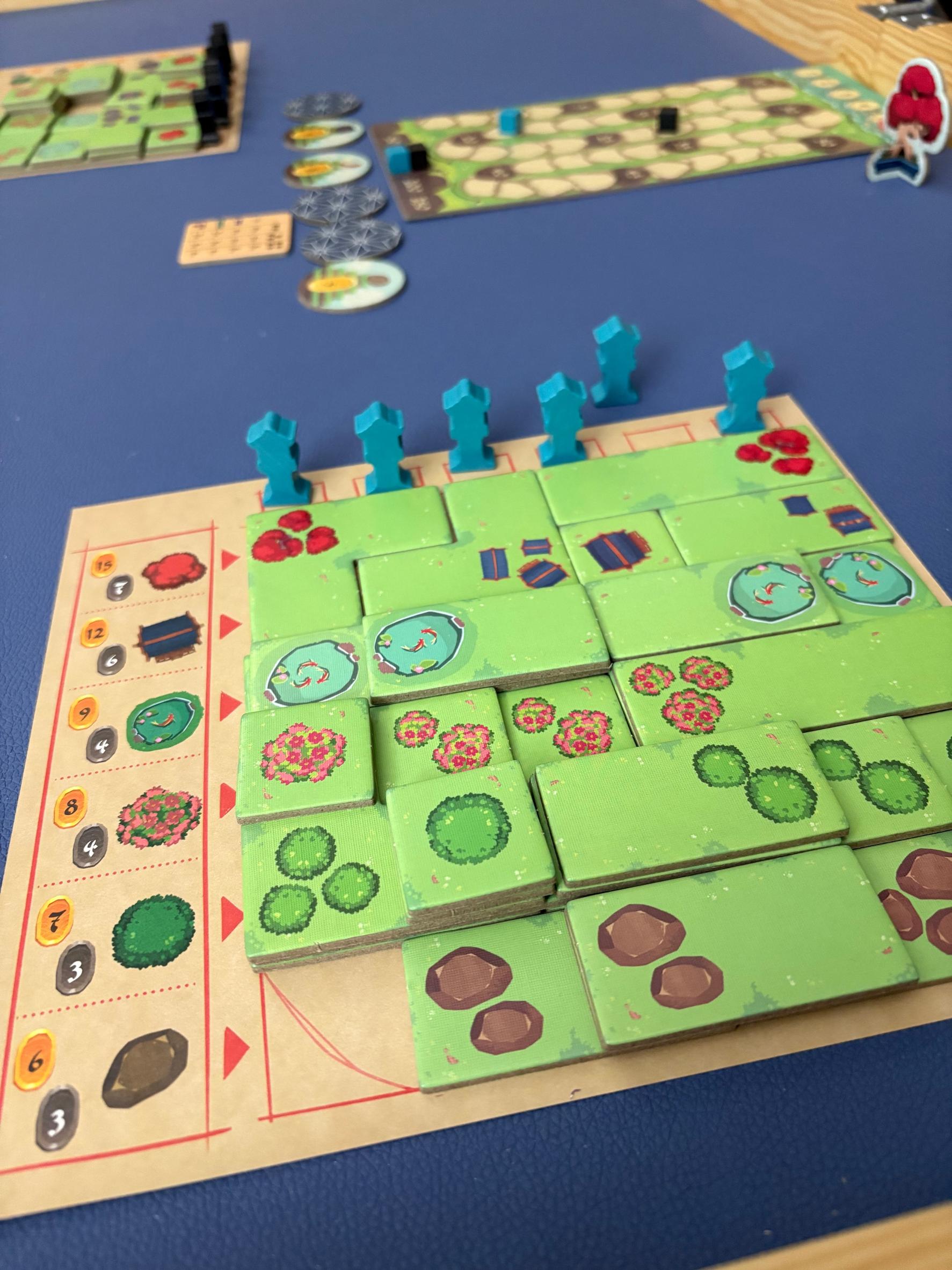
Dove comprarlo
Prezzi dei negozi e copie usate, controllati ogni giorno.
Sui tavoli di Ludoya
Tutte le statistiche in Ludoya- 319
- Partite registrate
- 261
- Giocatori
- 37m 30s
- Partita media
- 83
- Nelle ludoteche
- 12
- Nelle liste dei desideri
- 1
- Preordinato
7,1/10
da 40 recensioni Ludoya
Evan5,9 At the start of each round you lay out a fixed number of tiles of each size, then players take turns taking a tile and placing it on their mat. Each tile has a square containing a scoring feature and once the tile is placed, you put a market at the top of the column the scoring feature was laid into, preventing you from adding another scoring feature to the same column in the same round. Tiles can be laid on top of each other so long as it rests flatly. You then score points according to the size of the tile times the height of the tile. Things get tense as you build up your board and slowly become damned by your own choices. Then there are bonus points for the first player to get each of the features to five height, and additional points for whichever player has the most features across each of the different rows. Then game then adds additional optional mechanisms that provide even more scoring opportunities and features, which elevate decisions in the game even more. This is a very satisfying abstract tile laying game. It starts off slow, then ramps up quickly. I only wish there were an easier way of tracking who had how many features in each row for majorities purposes. Perhaps adding some dice to track it would help, although this too would be a little fiddily since you often cover features with your tile placements. It would also be better if the game had a little more flexibility. Getting things 5 high seems like more of a momentous achievement of focus rather than an exciting race to the top. :star: Art, Iconography and components functional :star: Clever or interesting mechanisms :star: Reasonably low downtime between turns with mildly AP players :nostar: Multiple plays stay interesting :star: Low or mitigatable luck elements :star::star::star::nostar::nostar: Raw enjoyment
- Base -














Gratis, sul web, Android e iOS
Gioca a Miyabi con Ludoya
- Tienilo nella tua ludotecaTieni traccia della tua copia e delle sue espansioni, prestala agli amici o mettila nella lista dei desideri e ricevi un avviso quando il prezzo scende.Aggiungilo alla tua ludoteca
- Registra ogni partitaPunteggi, vincitori, timer e foto, poi le tue statistiche: percentuale di vittorie, numero di giocatori preferito, miglior punteggio.Registra una partita
- Segna i punti senza cartaUsa i fogli punteggio e gli assistenti di gioco della community e lascia che Ludoya sommi i punti.Trova fogli punteggio
- Trova persone con cui giocarloClub, serate di gioco ed eventi vicino a te che portano questo gioco in tavola.Vedi gli eventi
Dati del gioco (giocatori, durata, età, crediti) da BoardGameGeek.