
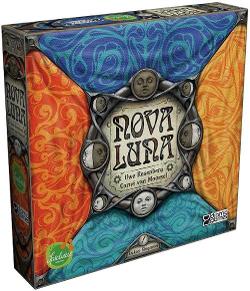
2019 · Rompicapo
Nova Luna
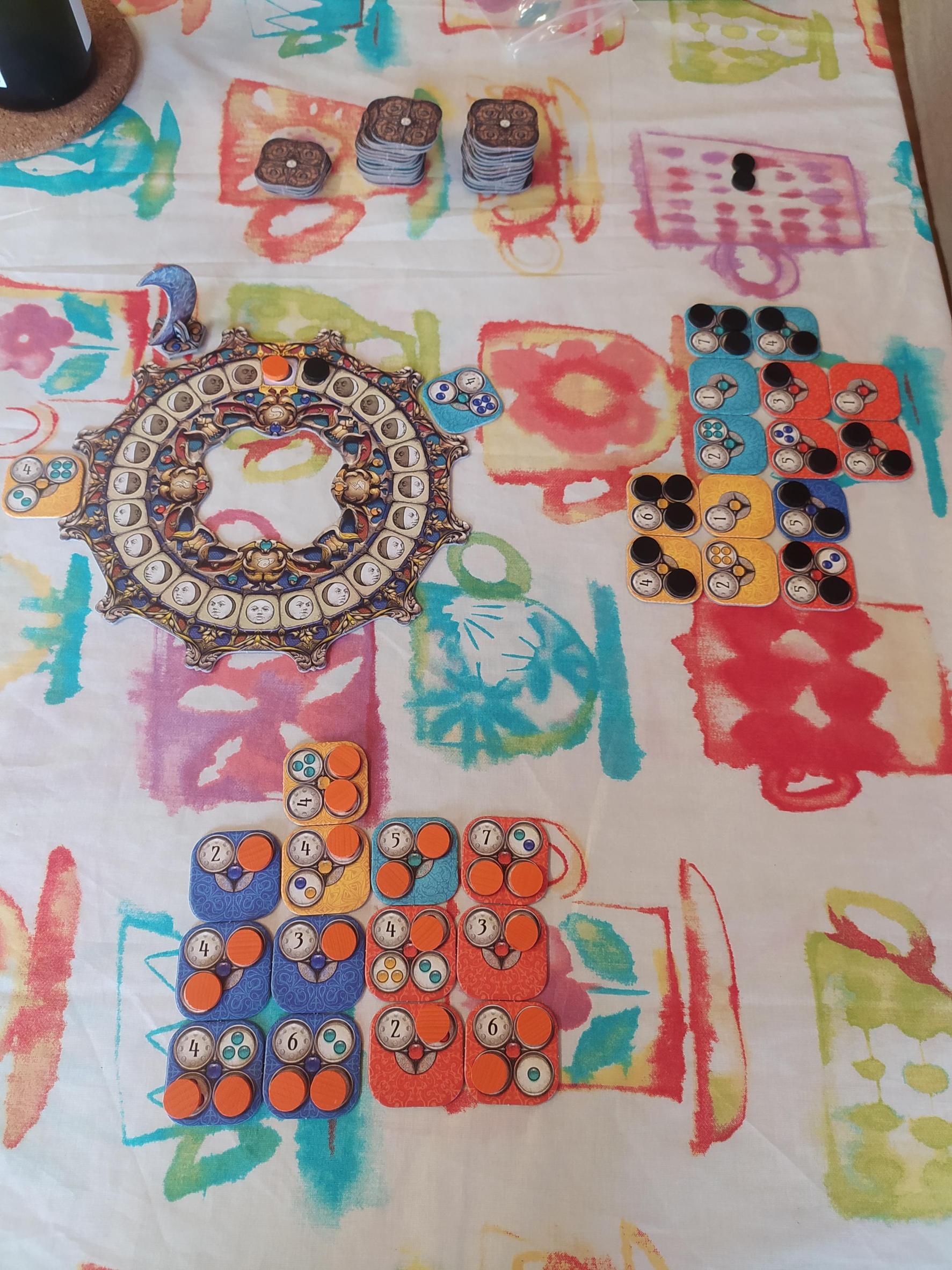
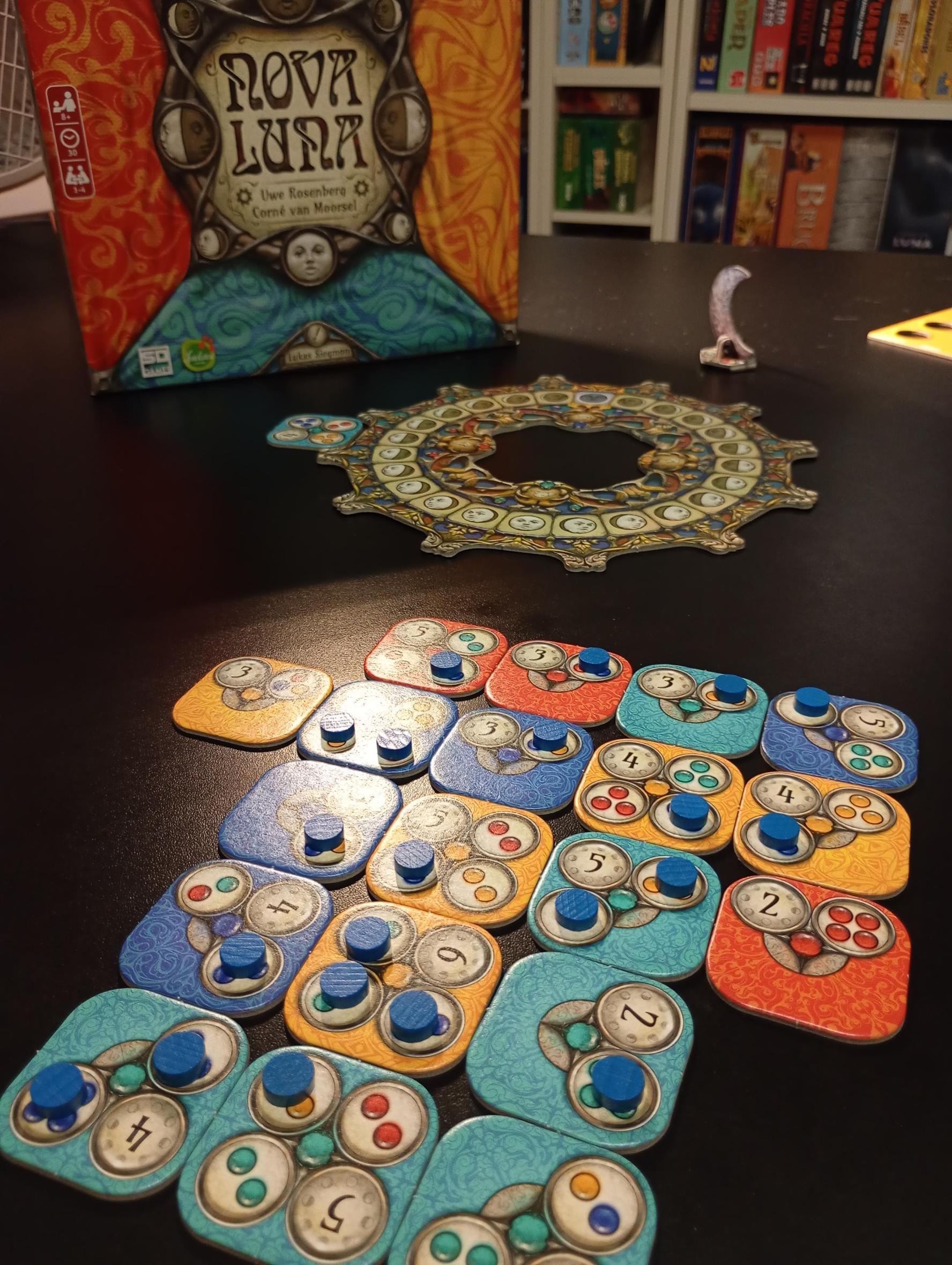
I giocatori scelgono tessere da una ruota comune e le aggiungono al proprio tableau personale, creando compiti e schemi di adiacenza colorati per soddisfare i requisiti. Ogni tessera introduce uno o più compiti; completare un compito richiede di circondarlo con tessere di colori specifici e permette al giocatore di piazzare un segnalino su quel compito. I giocatori devono pianificare in anticipo, perché ogni tessera piazzata crea nuovi compiti e nuove opportunità. I turni ruotano attorno alla scelta di una tessera dalla ruota, alla sua collocazione e alla risoluzione di eventuali compiti completati. La partita termina quando un giocatore ha piazzato tutti i propri segnalini.
- Giocatori
- 1–4 ideale in 2
- Tempo di gioco
- 30–60 min
- Età
- 8+
- Complessità
- 1,9 / 5
Il gioco
- Illustrazioni
- Publisher



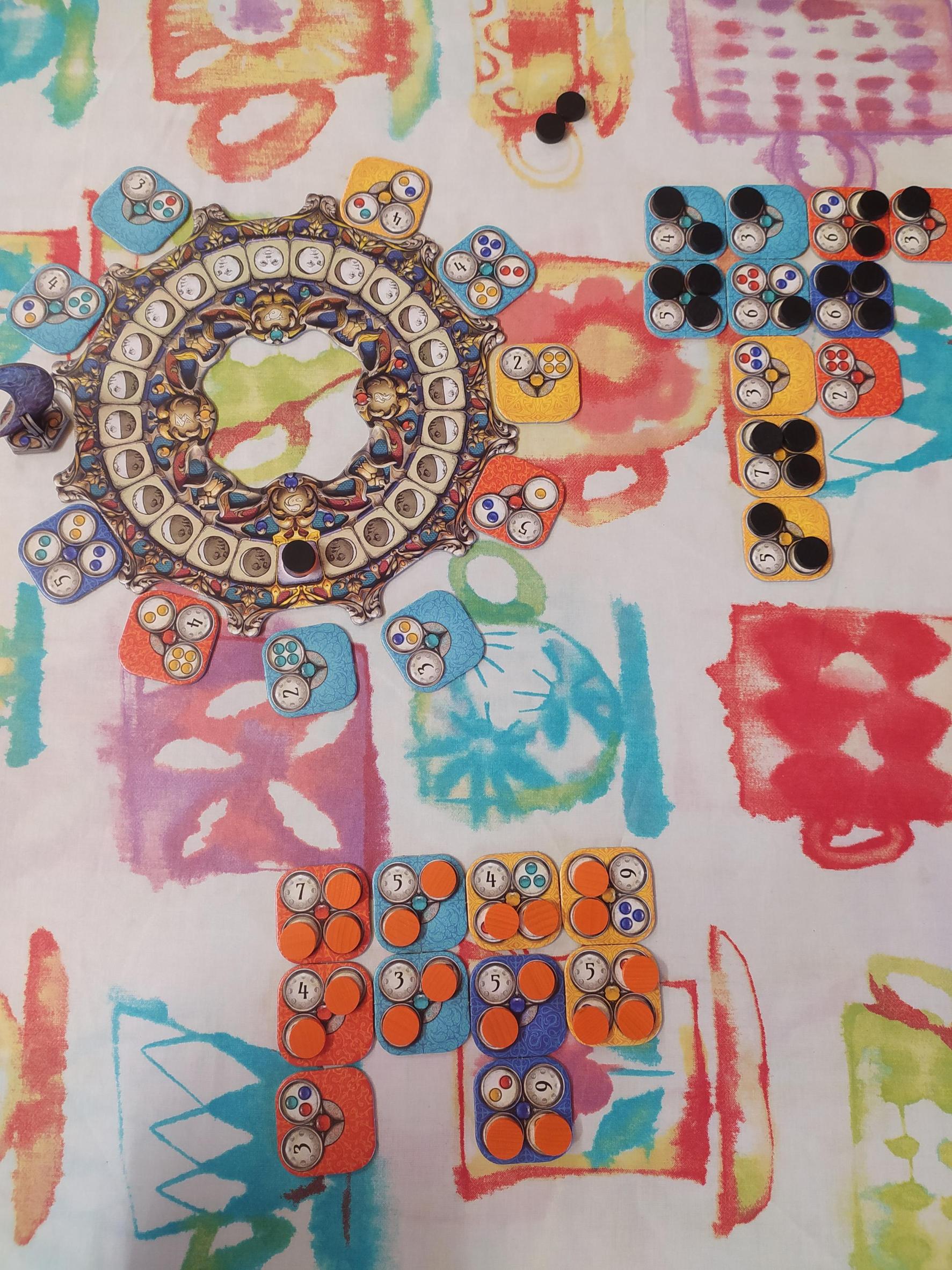
Foto dai tavoli di Ludoya
Tutte le foto in Ludoya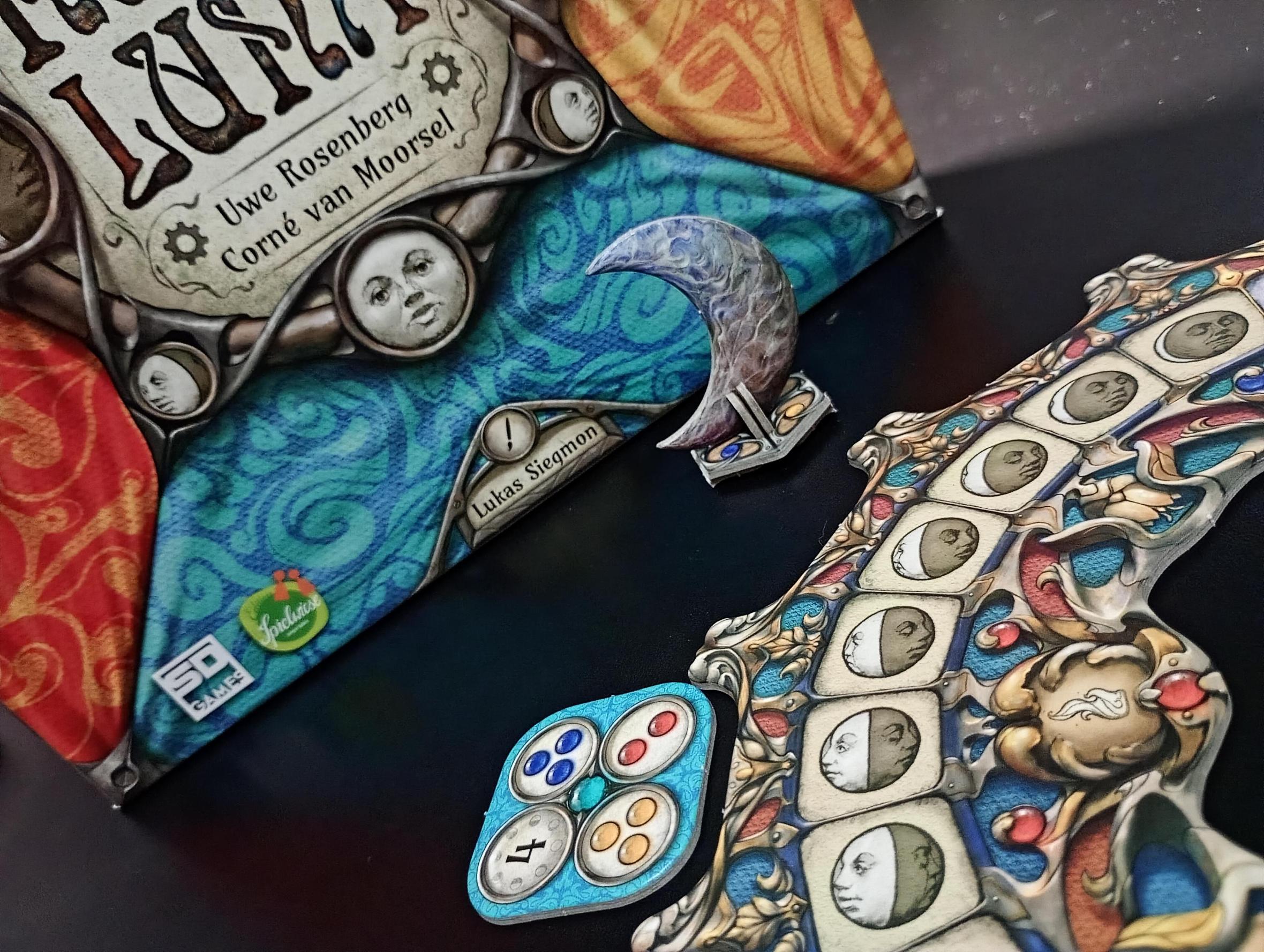
Dove comprarlo
Prezzi dei negozi e copie usate, controllati ogni giorno.
Sui tavoli di Ludoya
Tutte le statistiche in Ludoya- 1417
- Partite registrate
- 743
- Giocatori
- 26m 40s
- Partita media
- 185
- Nelle ludoteche
- 25
- Nelle liste dei desideri
- 2
- Preordinato
6,9/10
da 80 recensioni Ludoya
Juego del cansino Uwe con aires de Patchwork donde deberemos colocar fichitas según vayamos cumpliendo objetivos de losetas.
Daniel6,5 Ludoteca Mama
Evan5,9 Players move their pawns around the time wheel a number of steps equal to the number on the tile they take from the three tiles in front of the moving tile selection marker, then they add the tile to their play area, just like in the game patchwork. Each tile has a color, and a number of circles on it, each with some number of smaller colored orbs. When a tile in your area is surrounded by tiles of the colors printed in the orbs of one of your circles, you cover it with a disc. The goal of the game is to be the first player to run out of discs. The puzzle element gets interesting as tiles of the same color can chain by 1 space, so if I have a tile that needs three blues next to it, I can put blue1 adjacent to it, then blue 2 above blue1, and blue 3 below blue1 and then I've met the goal on the tile. Since every tile has it's own requirements, your goal is to orchestrate things where you can complete multiple circles with the fewest moves. The game works better the fewer players you have, as the more planning you can do. The puzzle is thinky and satisfying, but I do have some concerns as to the game's staying power. I also wish the game came with some neutral circle markers you could use to cover circles that you are no longer able to complete, just to reduce the visual load. Of course this would be easy to find custom bits for. :star: Art, Iconography and components functional :star: Clever or interesting mechanisms :nostar: Reasonably low downtime between turns with mildly AP players :nostar: Multiple plays stay interesting :star: Low or mitigatable luck elements :star::star::star::star::nostar: Raw enjoyment


Domande sulle regole
Risposte tratte dal regolamento dall'assistente per le regole di Ludoya.
Can I take any tile from the Moon Wheel or only those on the selection track?
You take tiles from the selection track; after you take a tile you refill the selection track from the Moon Wheel and then resolve the rest of your action (including advancing the moon marker). (p3)
When I take a tile, how far do I move my moon marker?
After taking a tile you advance the moon track by the tile’s printed time cost (the number shown on the tile). (p2, p3)
Do corner tasks count tiles diagonally or only orthogonally?
Corner tasks count only orthogonally adjacent tiles; groups of the same color that are orthogonally connected are counted as groups for task fulfillment. (p4)
Does the tile I just placed count toward fulfilling its own corner tasks?
No — the tile you place does not count as part of the surrounding color groups for its own corner tasks (see the examples illustrating origin-color exclusion). (p4, p5)
How is the solo game different — what changes should I watch out for?
Solo play uses a two‑phase sequence with token stacks, special selection‑track rules, and adjusted scoring/penalties specific to solo mode; follow the solo setup and procedures listed for single‑player games. (p6)





Gratis, sul web, Android e iOS
Gioca a Nova Luna con Ludoya
- Tienilo nella tua ludotecaTieni traccia della tua copia e delle sue espansioni, prestala agli amici o mettila nella lista dei desideri e ricevi un avviso quando il prezzo scende.Aggiungilo alla tua ludoteca
- Registra ogni partitaPunteggi, vincitori, timer e foto, poi le tue statistiche: percentuale di vittorie, numero di giocatori preferito, miglior punteggio.Registra una partita
- Risolvi i dubbi sulle regoleChiedi qualsiasi cosa sulle regole e ottieni una risposta dal regolamento, con la pagina per verificarla.Chiedi all'assistente per le regole
- Trova persone con cui giocarloClub, serate di gioco ed eventi vicino a te che portano questo gioco in tavola.Vedi gli eventi
Dati del gioco (giocatori, durata, età, crediti) da BoardGameGeek.