
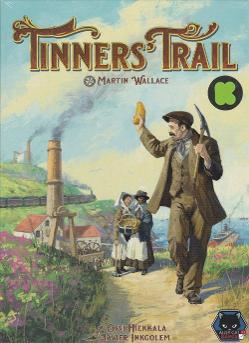
2021 · Economico
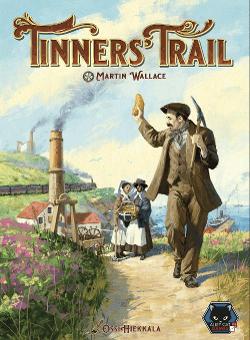
Tinners' Trail: Expanded Edition
I giocatori gestiscono compagnie minerarie nella Cornovaglia del XIX secolo, acquistando terreni nelle aste, esplorando i lotti alla ricerca di stagno e rame e amministrando punti lavoro e denaro per sviluppare ed estrarre il minerale. Le miniere diventano più profonde e costose da gestire, quindi i giocatori costruiscono miglioramenti—porti, stazioni ferroviarie e gallerie di drenaggio—per ridurre i costi di estrazione e scelgono il momento giusto per vendere, sfruttando le fluttuazioni dei prezzi di mercato. I contenuti aggiuntivi introducono l’arsenico e un modulo sull’emigrazione che manda i minatori all’estero; questa edizione porta il numero di giocatori da 1 a 5, sostituisce la preparazione con i dadi con il piazzamento di tessere per ridurre la casualità e usa carte a doppio scopo per influenzare le aste e gli effetti successivi all’asta. I punti vittoria si ottengono investendo i profitti in industrie al di fuori della Cornovaglia e grazie all’efficienza nelle attività minerarie e nello sviluppo.
- Giocatori
- 1–5 ideale in 3
- Tempo di gioco
- 60–90 min
- Età
- 14+
- Complessità
- 3 / 5
Il gioco
- Autori
- Illustrazioni



Sui tavoli di Ludoya
Tutte le statistiche in Ludoya- 3
- Partite registrate
- 5
- Giocatori
- 7
- Nelle ludoteche
3,5/10
da 1 recensione Ludoya
Evan3,5 First edition of the game was a bit too random for my taste. The value of each type of cube is randomized at the beginning of the round through a die roll. Then, the way to get the cubes is through bidding on regions with facedown tiles that populate the space when won, not knowing quite what you are bidding for in most cases. This can turn things a bit wonky when the game rewards more for converting resources to money to points earlier in the game than it does in the late game. The best part of the game is the action system where you spend a variable amount of time points to take different actions, then the player who spent the least time goes next. This can lead to some very interesting timing considerations. Particularly as with an action you can start a bid for a region someone else wants and let them buy it after bidding it up, costing them more than they'd like to, at which point they are the ones who have to spend their time points and you get to start another action in a less contested position. I was hoping the changes for the second edition would solve the luck issues and polish the game up with some replayability. Unfortunately, while there's an improvement, it still leaves a lot to be desired. The map is too small for the number of cubes that need to fit into each area. The game adds cards that the player who starts an auction for a region can pay to play in addition to the cost of winning a bid to peek at the tile before placing their bid. Then, if they don't win the auction they get half the money of the winning bid. This helps, but it can be a little disappointing as the cards are locked to being used in specific regions, which means you'll only realistically be able to use half your cards as the other elements of the game reward bunching up your controlled spaces. Otherwise the luck of the game is largely unchanged. The mini expansions that come with the kickstarter unbalance the game completely. One allows you to send a meeple to a separate board for a huge payout of points, or an extra building, or money income. It's wildly powerful, but everything is first come first serve, and players are in a turn order competition for a very limited supply of the meeples. The other expansion adds a new type of cube that can be gobbled by the starting player and sent to another separate board for a massive money payout in exchange for not being able to use as many action points for the rest of the game. Given that money lets you win all the map spaces plus having money early still rewards substantially more early game than late game on the victory points conversion chart, this can create a runaway leader round 1.








Gratis, sul web, Android e iOS
Gioca a Tinners' Trail: Expanded Edition con Ludoya
- Tienilo nella tua ludotecaTieni traccia della tua copia e delle sue espansioni, prestala agli amici o mettila nella lista dei desideri e ricevi un avviso quando il prezzo scende.Aggiungilo alla tua ludoteca
- Registra ogni partitaPunteggi, vincitori, timer e foto, poi le tue statistiche: percentuale di vittorie, numero di giocatori preferito, miglior punteggio.Registra una partita
- Segna i punti senza cartaUsa i fogli punteggio e gli assistenti di gioco della community e lascia che Ludoya sommi i punti.Trova fogli punteggio
- Trova persone con cui giocarloClub, serate di gioco ed eventi vicino a te che portano questo gioco in tavola.Vedi gli eventi
Dati del gioco (giocatori, durata, età, crediti) da BoardGameGeek.