
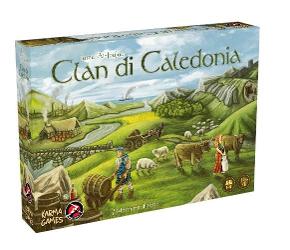
2017 · Industria / Fabbricazione
Clan di Caledonia
I giocatori guidano clan scozzesi storici distinti durante la transizione dall’agricoltura all’industria nel XIX secolo, producendo e trasformando beni come cereali, lino, cotone, prodotti ovini e whisky. In ognuno dei cinque round, i giocatori scelgono a turno una delle otto azioni — costruire edifici produttivi o commerciali, potenziare le strutture, commerciare beni o esportare — per sviluppare la propria economia e ampliare l’accesso ai mercati. Dopo i turni dei giocatori, una fase di produzione genera risorse di base, beni trasformati e introiti dalle unità produttive costruite; i round terminano con un punteggio determinato da una tessera a rotazione. Il gioco utilizza poteri asimmetrici dei clan, una mappa modulare, bonus portuali e obiettivi variabili per guidare la pianificazione economica e l’interazione.
- Giocatori
- 1–4 ideale in 4
- Tempo di gioco
- 30–120 min
- Età
- 12+
- Complessità
- 3,5 / 5
Il gioco
- Autori
- Illustrazioni
- Editore



Espansioni
Vedile in Ludoya
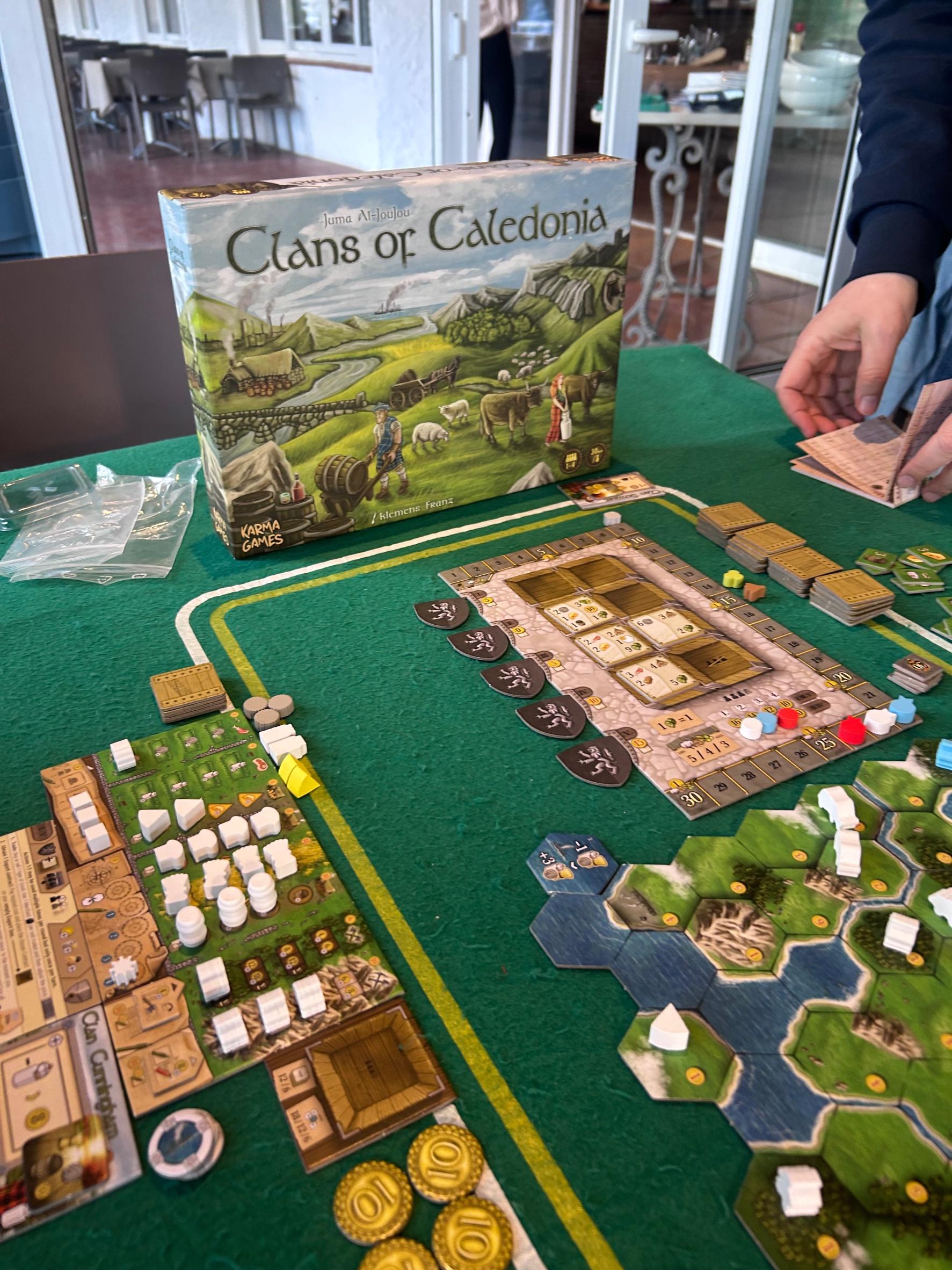
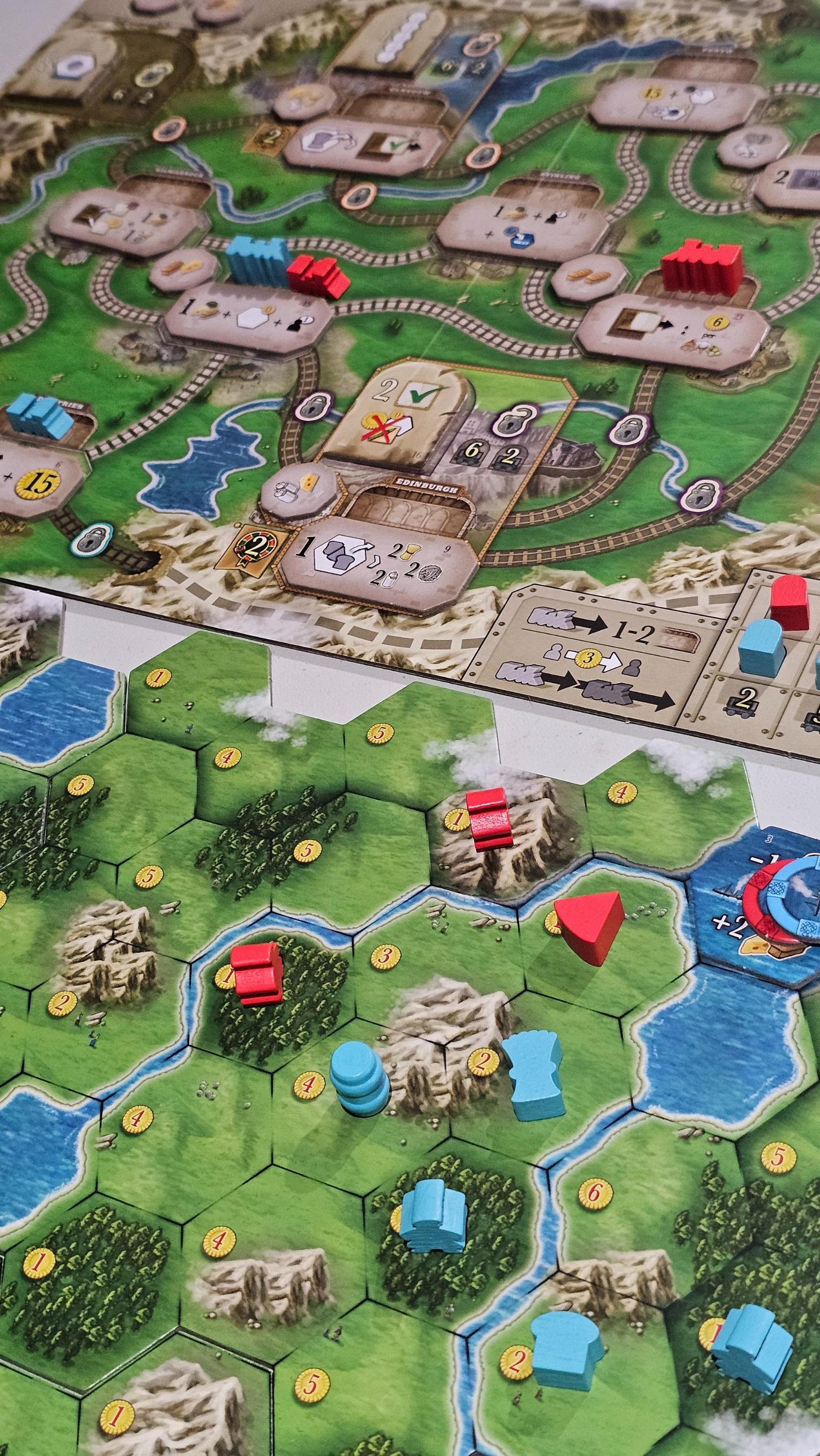
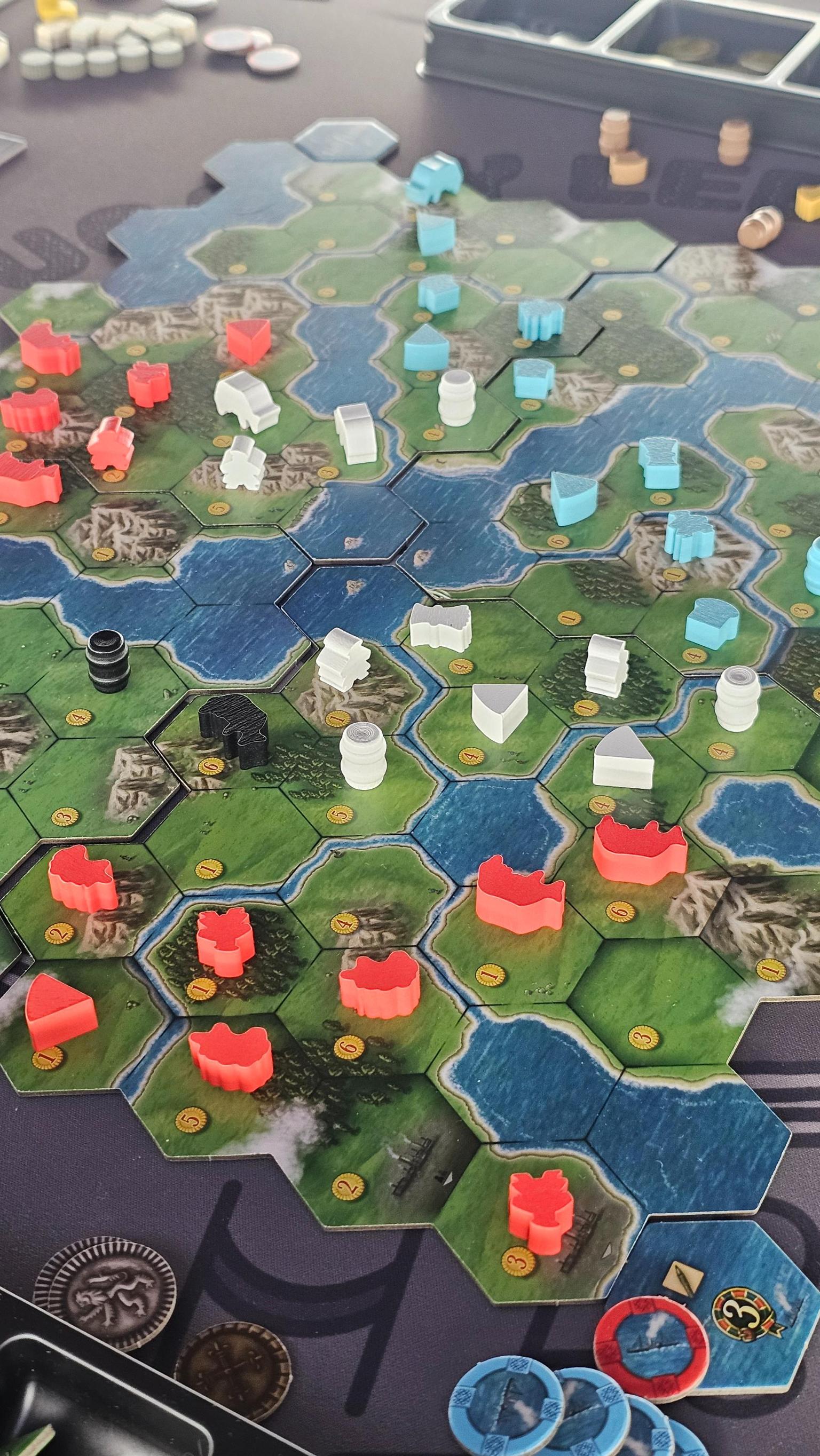
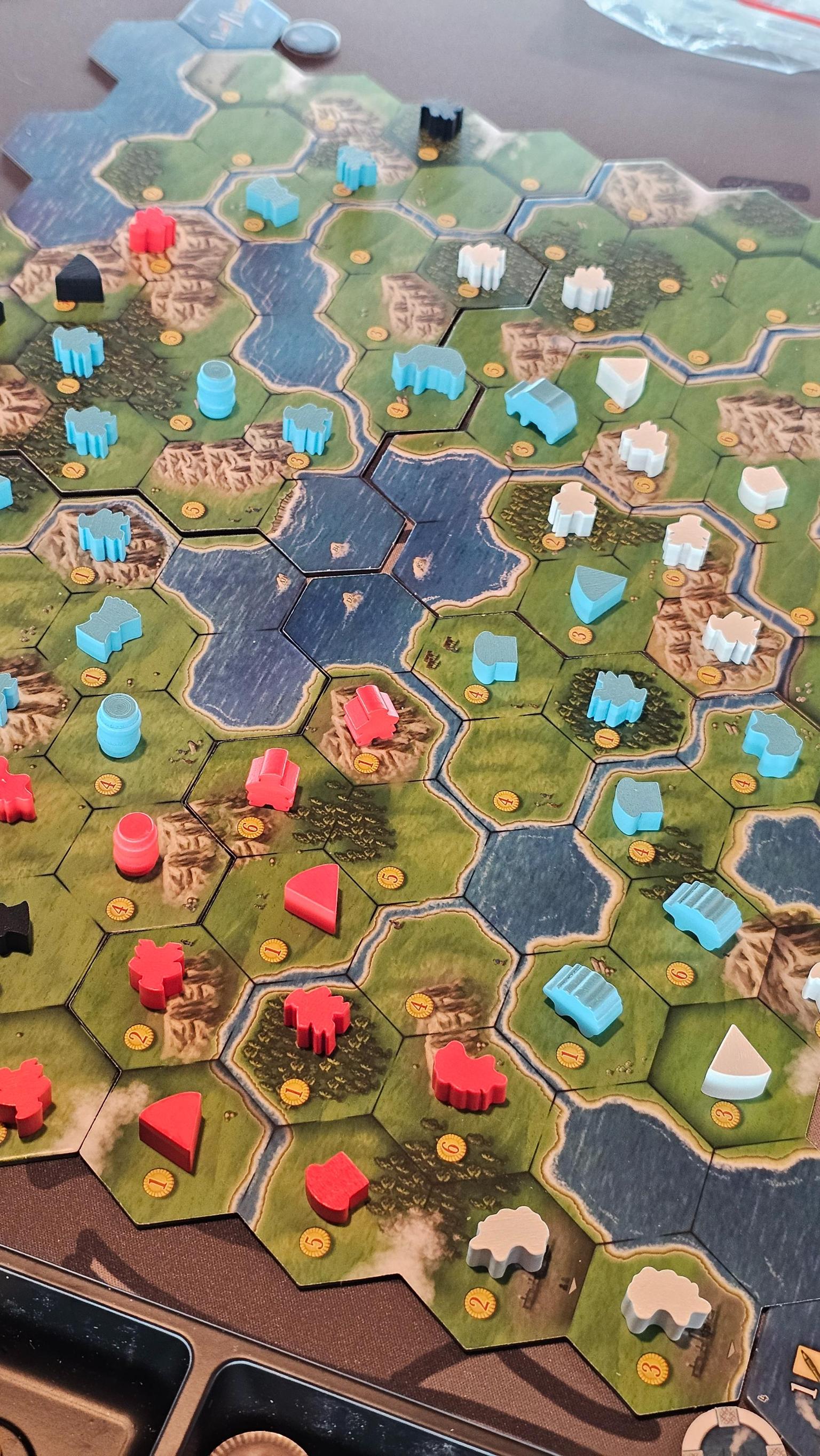
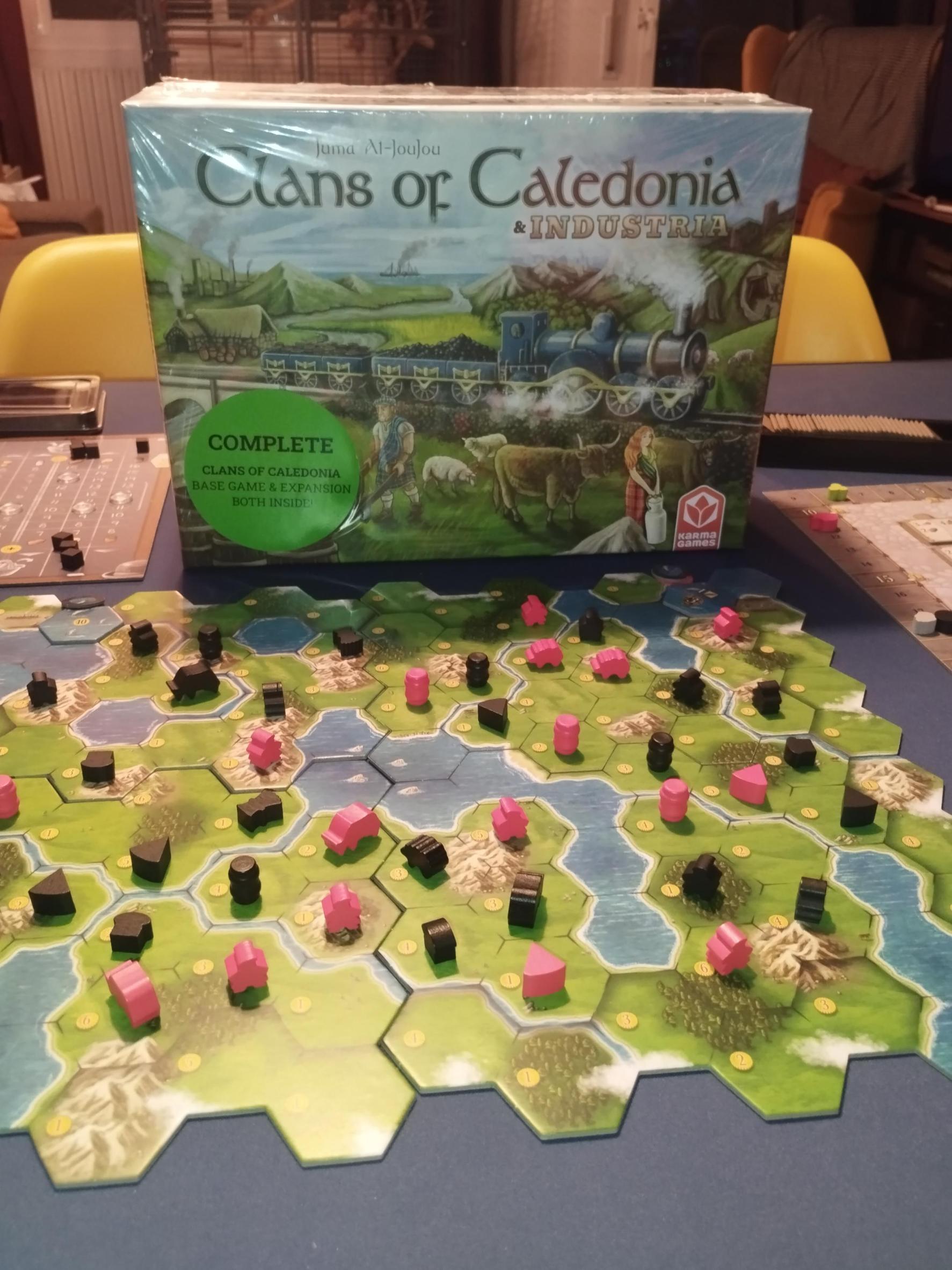
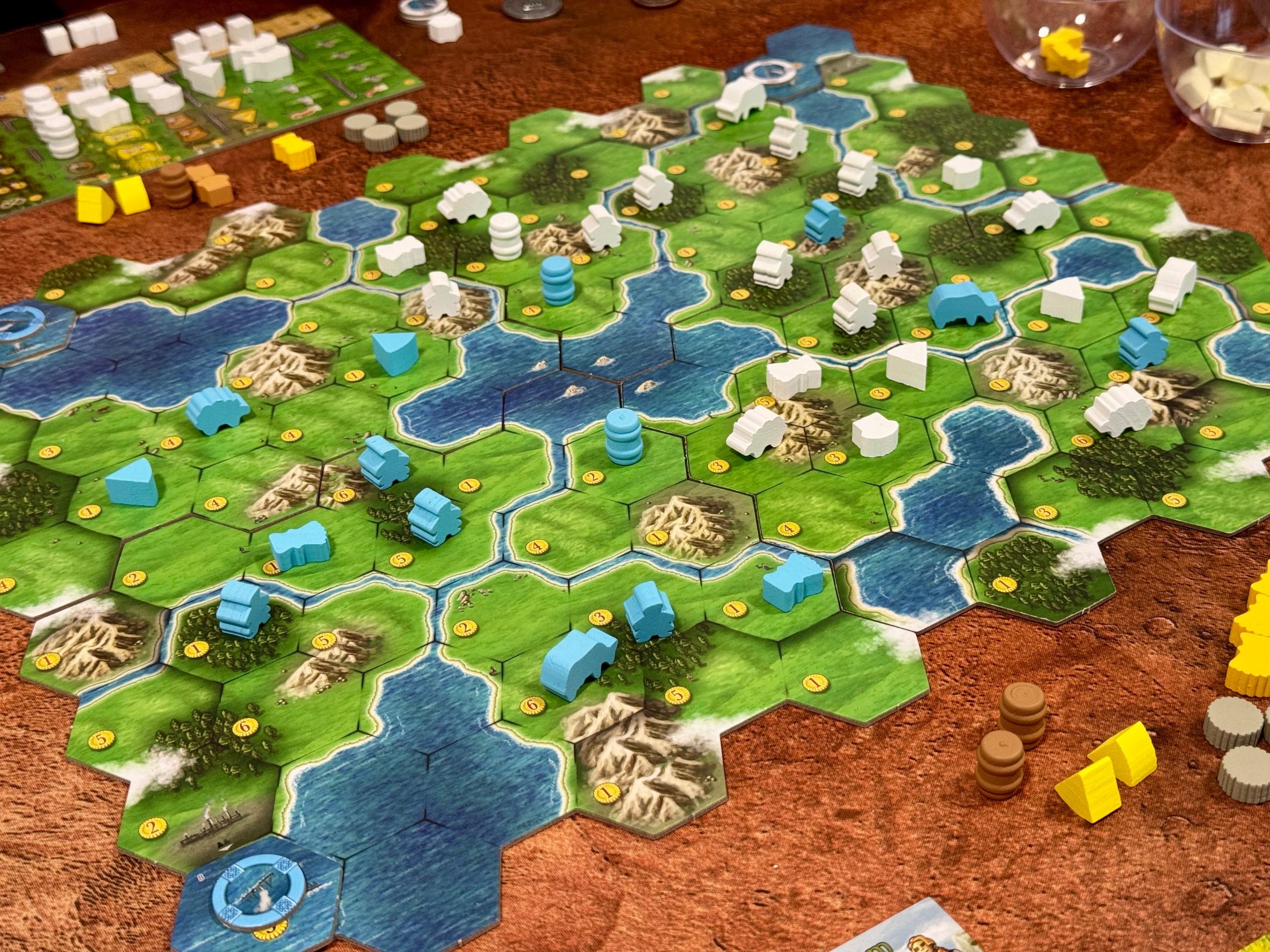
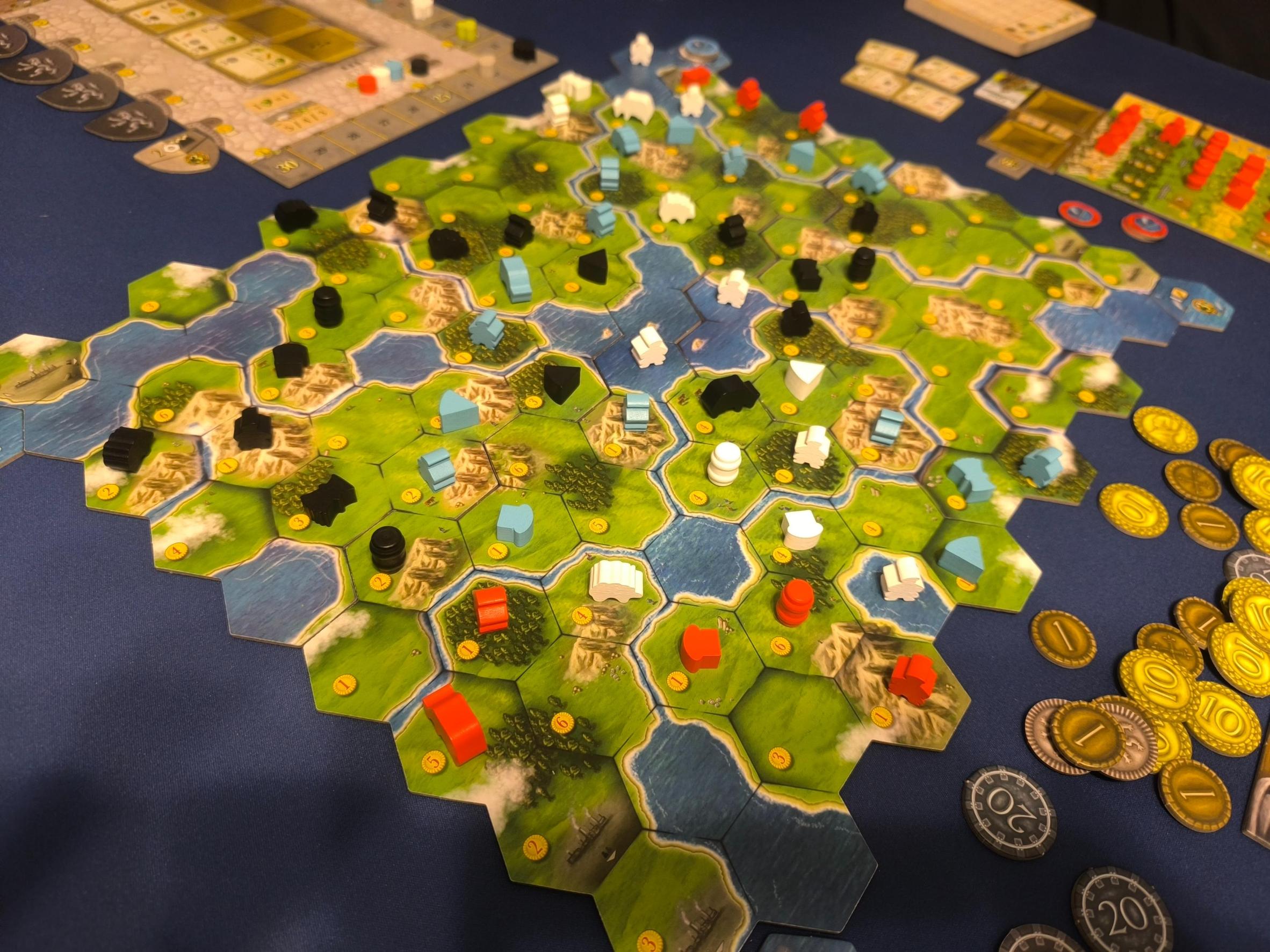
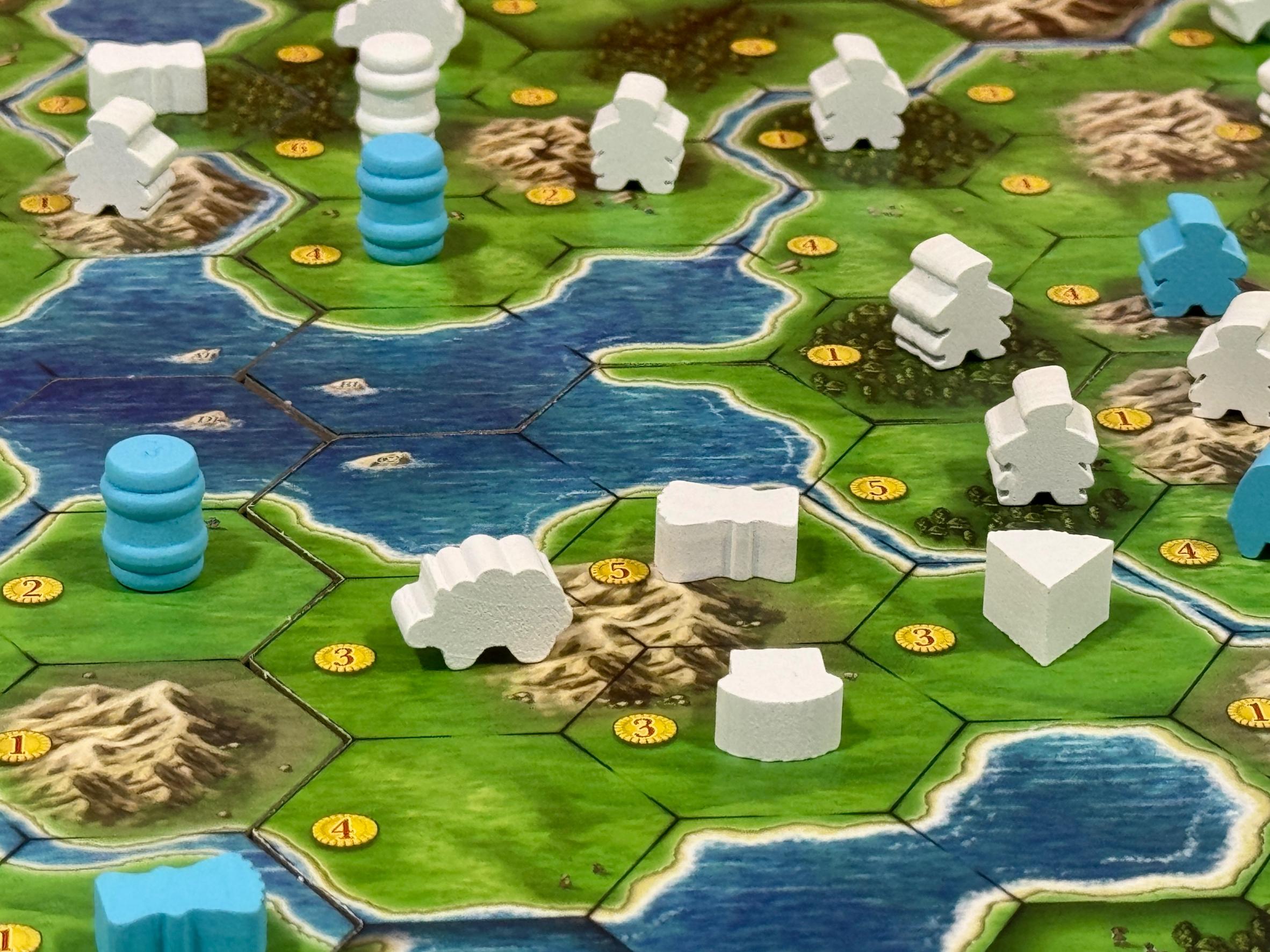
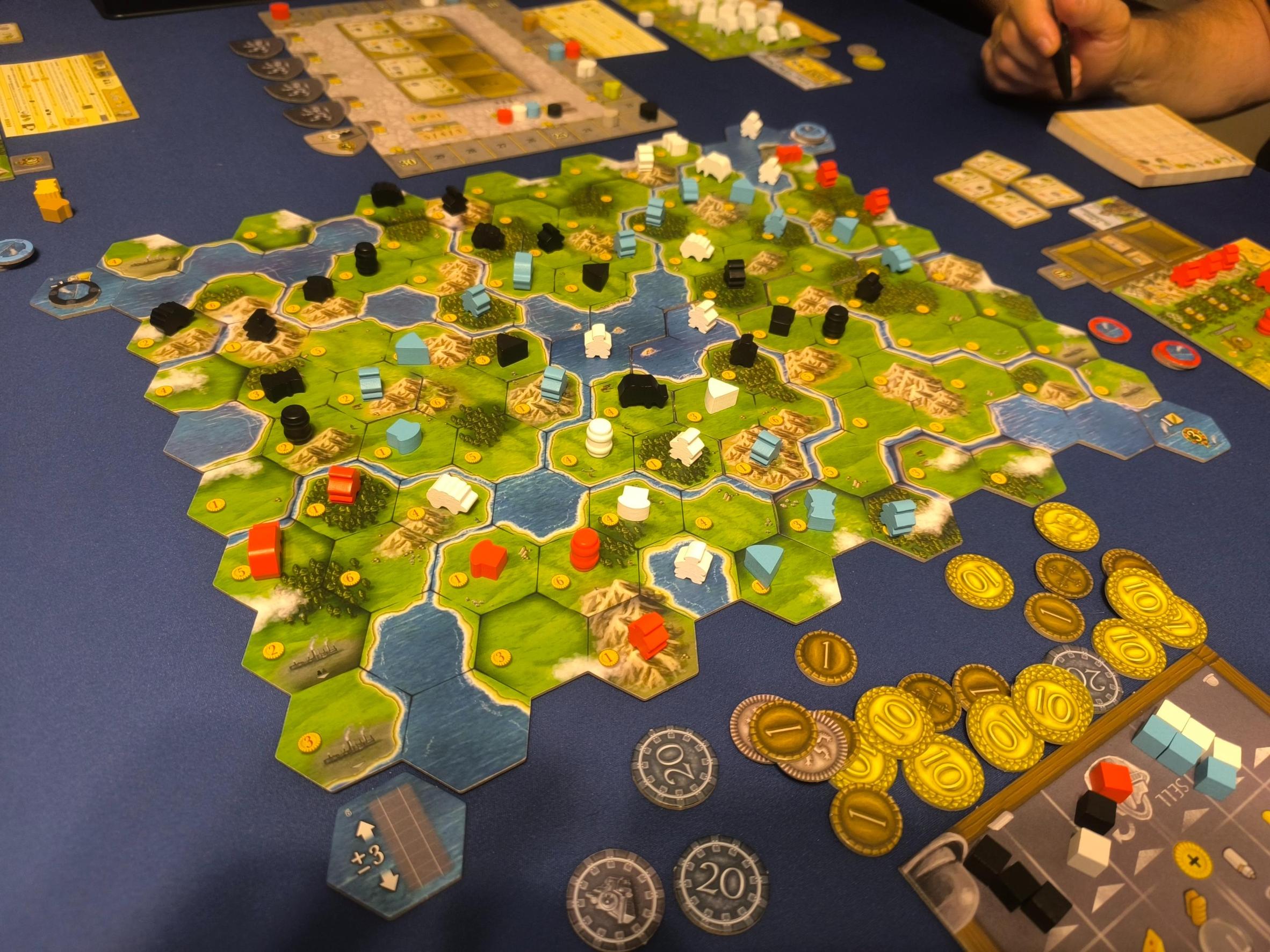
Foto dai tavoli di Ludoya
Tutte le foto in Ludoya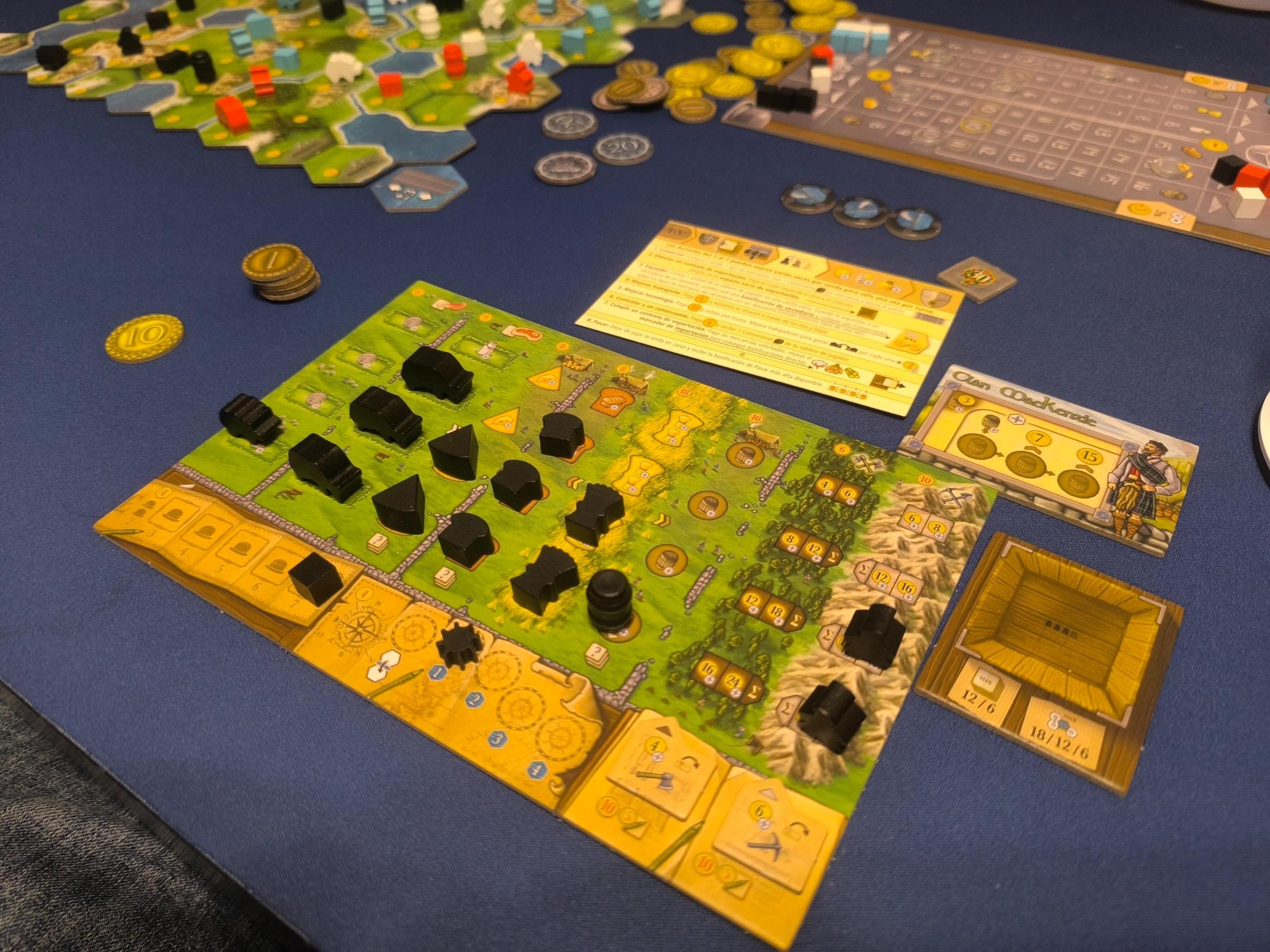
Dove comprarlo
Prezzi dei negozi e copie usate, controllati ogni giorno.
Sui tavoli di Ludoya
Tutte le statistiche in Ludoya- 885
- Partite registrate
- 731
- Giocatori
- 1h 42m
- Partita media
- 156
- Nelle ludoteche
- 49
- Nelle liste dei desideri
- 4
- Preordinato
7,9/10
da 104 recensioni Ludoya
Jan Solo8,7 Eurogame al estilo Terra Mystica con gestión de recursos/pedidos, mercado, etc. Ambientado en escocia y sus diferentes clanes. Es un juego que deja muy buenas sensaciones, con múltiples posibilidades estratégicas. Impro-Reseña⇒ https://youtu.be/ZPyj1jZESJQ
Garfield6,0 Hmm, beautiful looking game, but nothing new here? [c] Theme: ★★☆☆☆ <!-- size 7]Not very strong --> Gameplay: ★★★☆☆ <!-- size 7]Good --> Interaction: ★☆☆☆☆ <!-- size 7]Almost no interaction --> Artwork: ★★★☆☆ <!-- size 7]Nice design --> Luck: ★☆☆☆☆ <!-- size 7]Export objectives revealment, trading --> Strategy: ★★★★☆ <!-- size 7]Yep --> Components: ★★★★★ <!-- size 7]Great! Especially the goods --> Play duration: ★★★★☆ <!-- size 7]It's over quite fast --> Easy to teach: ★★★☆☆ <!-- size 7]Takes its time... --> Setup time: ★★☆☆☆ <!-- size 7]Fiddly --> No downtime: ★★★☆☆ <!-- size 7]Still ok --> [/c]
Evan8,5 In this game, players have to tightly budget their money to construct buildings from their player boards to the central board. Each building either produces a basic resource, or transforms a basic resource into an advanced resource. The resources are then used to either fulfill contract tiles, or can be sold on the marketplace, which shifts the values of the goods each time they are bought or sold. All of this is pretty typical euro faire, but the game shines in a number of exciting ways. The first amazing thing is that there are three types of resources printed on the contract tiles which have no physical representation. Rather, when you complete those contracts the corresponding type bumps up on the points track. At the end of the game, each resource scores for the player owning it, and the value of the scoring depends on the resource's relationship with the other 2 on the scoring track. Whichever is furthest along scores the least, and whatever players collectively have the least of scores the most. This is a fascinating dance. Another really fantastic thing is that at the end of the game the player with the highest number of unconnected settlements will score the most points. When you build, you have to either build adjacent to your stuff, which only serves to expand your settlement, rather than make a new one, unless you bump your 'shipping track' which allows you to build across rivers or along however many water spaces. This encourages players to build in a sort of a checkerboard fashion, which also encourages opponents to get up in your face. There's even a bonus you get for building next to an opponent which allows you to buy a good from the marketplace at a discount. Add to this a special scoring criteria at the end of each round, and fairly well balanced variable player powers, cute components, clear and consistent iconography, and a few other nice gameplay features that add to replayability even more, and you've got a really incredible game.

Domande sulle regole
Risposte tratte dal regolamento dall'assistente per le regole di Ludoya.
Quando posizioniamo i due Lavoratori iniziali durante la preparazione, dobbiamo pagare per il terreno e per il Lavoratore?
Sì — ogni volta che viene piazzato un Lavoratore (anche durante la configurazione iniziale) si paga sia il costo del terreno sia il costo del Lavoratore (costi dei Lavoratori: Boscaiolo £6, Minatore £10). (pagina 3)
Posso comprare e vendere merci diverse in una sola azione di Commercio (per esempio comprare Whisky e vendere Formaggio)?
No — un’azione di Commercio può comprare o vendere solo un tipo di Merce; per commerciare Merci diverse devi eseguire l’azione di Commercio più volte. (pagina 4)
Se espando accanto a un avversario, quanti beni posso comprare con il bonus Vicinato e ci sono sconti sul prezzo?
Puoi eseguire immediatamente un’azione di Scambio extra per comprare il Bene prodotto da ogni unità avversaria adiacente, ma non puoi comprare più di tre copie dello stesso Bene per turno (quattro in una partita a 2 giocatori); le merci Base hanno uno sconto di £2 e le merci Lavorate uno sconto di £3, e devi avere Mercanti disponibili da piazzare. (pagina 5)
I contratti di esportazione possono mai richiedere Grano o Latte?
No — i contratti di esportazione non richiedono mai Grano o Latte, anche se possono richiedere altri beni o Carne (Manzo/Agnello). (pagina 6)
Quando un contratto di esportazione richiede Carne, devo macellare i miei animali e questo influisce sulla produzione?
Sì — soddisfare un Meat Export richiede di macellare le Mucche o le Pecore indicate come parte dell’azione Fulfil, riportandole sulla tua plancia Giocatore; questo ridurrà la tua produzione di Latte o Lana e libererà lo spazio sulla mappa. (pagina 6)
Se piazzo i Mercanti sul Mercato durante un Commercio, quando li riottengo?
I mercanti piazzati sul Mercato rimangono lì fino a quando non vengono recuperati nella successiva fase di Preparazione; durante la Preparazione i giocatori recuperano i loro Mercanti dal Mercato. (pagina 4)
Fogli punteggio e assistenti di gioco
- Fulla de Puntuació
- Game Kit
- Puntuación + Industria






Gratis, sul web, Android e iOS
Gioca a Clan di Caledonia con Ludoya
- Tienilo nella tua ludotecaTieni traccia della tua copia e delle sue espansioni, prestala agli amici o mettila nella lista dei desideri e ricevi un avviso quando il prezzo scende.Aggiungilo alla tua ludoteca
- Registra ogni partitaPunteggi, vincitori, timer e foto, poi le tue statistiche: percentuale di vittorie, numero di giocatori preferito, miglior punteggio.Registra una partita
- Risolvi i dubbi sulle regoleChiedi qualsiasi cosa sulle regole e ottieni una risposta dal regolamento, con la pagina per verificarla.Chiedi all'assistente per le regole
- Trova persone con cui giocarloClub, serate di gioco ed eventi vicino a te che portano questo gioco in tavola.Vedi gli eventi
Dati del gioco (giocatori, durata, età, crediti) da BoardGameGeek.