
2011 · 中世
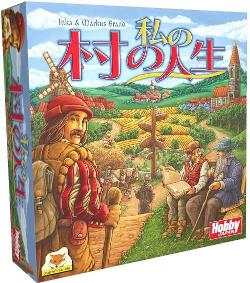
村の人生
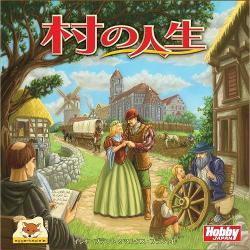
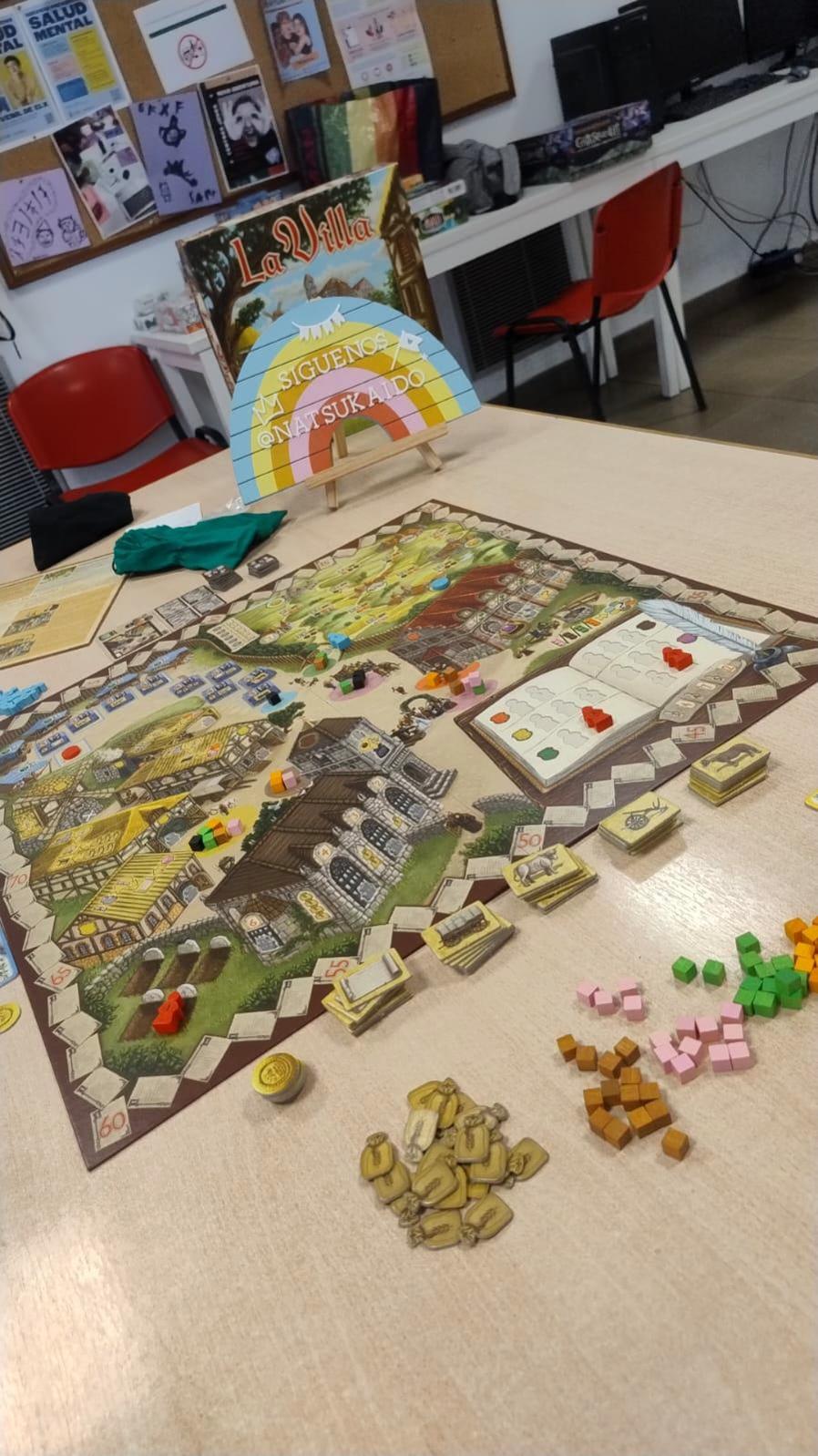
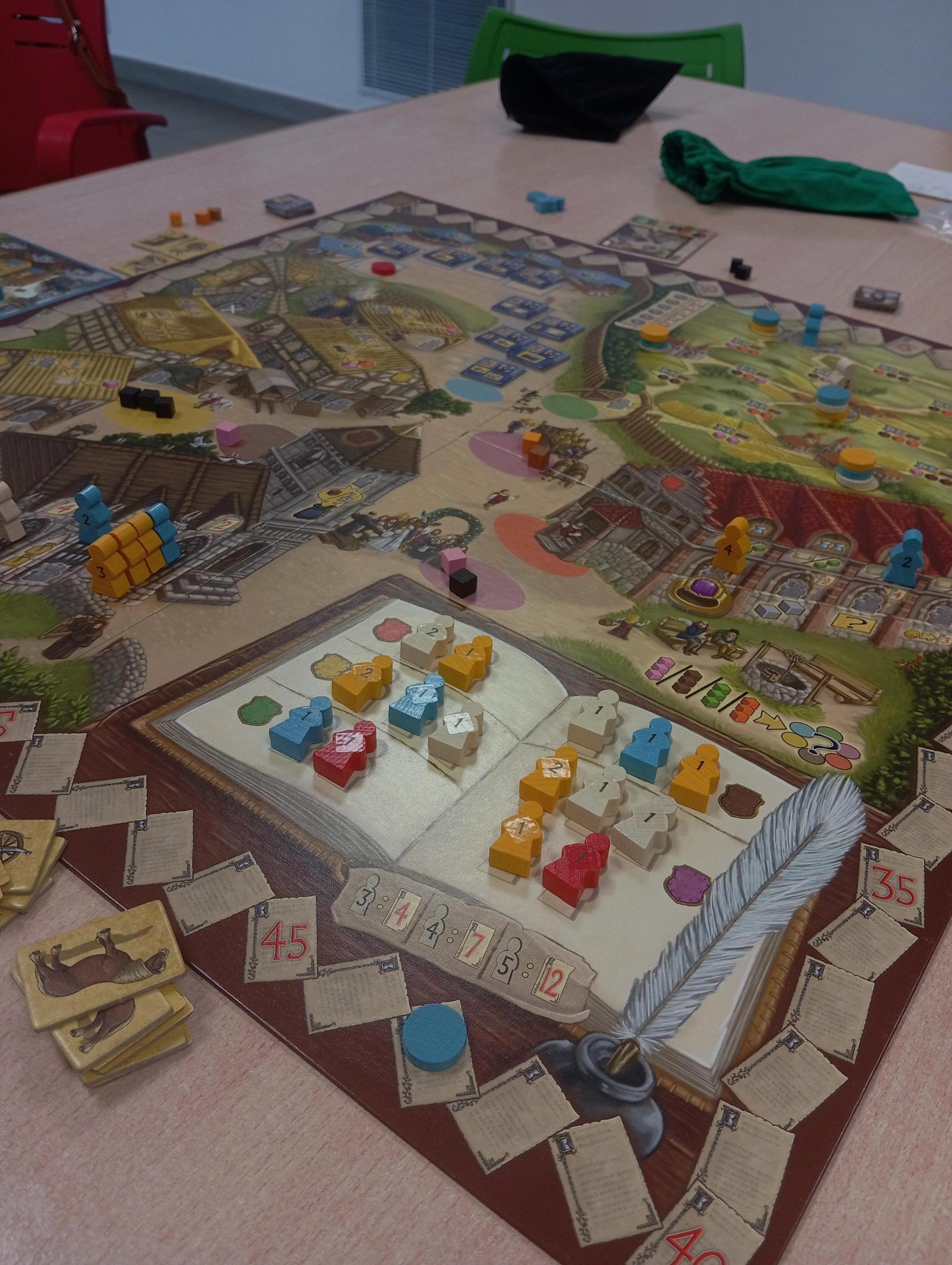
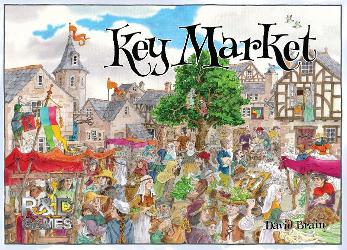
Players control families in a rural community, sending villagers to work, travel, join the church, hold office, craft goods, or otherwise pursue careers and status. On a turn a player takes a cube from one of several board zones and performs that zone’s action; locations include market, travel, crafting, church, and council, each offering multiple specific options and rewards. Cubes of different colors drive available actions while black cubes act as curses. Time advances and villagers die, with some becoming recorded in the village chronicle for long-term glory and others consigned to the graveyard. Rounds end when all cubes are gone; the game ends when the chronicle or graveyard fills, and scoring mixes short- and long-term objectives.
- プレイ人数
- 2–4 ベスト4人
- プレイ時間
- 60–90分
- 対象年齢
- 12+
- 複雑さ
- 3.1 / 5




購入先
ショップ価格と中古品を毎日チェックしています。
Ludoyaのテーブルでは
Ludoyaで詳しい統計を見る- 347
- 記録されたプレイ
- 389
- プレイヤー
- 1h 43m
- 平均プレイ時間
- 132
- コレクション登録
- 16
- ウィッシュリスト登録
7.3/10
Ludoyaのレビュー90件より
Sergio Fdez.8.1 De este juego solo puedo hablar bien. Es junto con el Agrícola uno de los juegos con los que me inicié en este mundo y rápidamente me sedujo. Es un juego muy versátil, consigue atrapar tanto a jugones como a noveles. En fin, un juego que entra en seguida por el ojo. En el apartado de las críticas, decir que quizá le falta un quinto jugador, y algunas cartas que le dieran un poco más de factor sorpresa. Decir esto es ventajista ya que cuando escribo esta reseña, sé que hay un extensión que soluciona estas dos cuestiones, y como en breve será aquí reseñada, esperamos pues. Juego para tener siempre en la ludoteca esperando a esos amigos que vienen a cenar a tu casa, y que seguramente se presten a echar una partidaca. http://mesasdejuegos.blogspot.com.es/2013/06/la-villa-real-como-la-vida-misma.html
Evan4.6 Actions are taken by removing a resource cube from an action area, adding it to your supply, then sometimes sending a worker to stand on the board, and sometimes requiring you to move your "time" marker around the track on your personal board. When the time counter makes a full rotation, the worker with the lowest number stickered on him dies. Having a worker die while manning certain action areas results in your getting victory points at the end of the game. Each action area has a limited number of grave spaces associated with it, so once they are full, additional dead workers only serve to accelerate the endgame timer. Every area of the board is it's own little mechanism for points, with those mechanisms being only loosely tied to each other. There's a decent tension early in the game you want to get the most out of your pawns, but you also need to kill them fast enough to ensure they score. As the game goes on and spaces fill up, the core game tension lessens and you just focus on finishing our your plans to the best of your ability. It's an interesting game idea, with some very unique elements that could have really been something special if it the different areas of the board could have been tied to each other a little more, or if the tension of play had been a little more consistent across sessions. :star: Art, Iconography and components functional :star: Clever or interesting mechanisms :star: Reasonably low downtime between turns with mildly AP players :star: Multiple plays stay interesting :star: Low or mitigatable luck elements :star::star::nostar::nostar::nostar: Raw enjoyment
Carlos7.2 Little bit unbalanced actions. Travelling doesn't seem to be great.


ルールに関する質問
Ludoyaのルールアシスタントがルールブックに基づいて回答しています。
Can I take a cube from an action space and just keep the cube without doing the action?
Yes — you may take a cube and choose not to perform that space's action, except that a market day must be held when the market action is taken (you may still opt to only take the cube). (page 5)
What exactly happens when I take a plague (black) cube?
Return the plague cube immediately to the supply and lose 2 time (move your life-time track marker forward 2 spaces); you may then perform the action of that space if you wish. (pages 4–5)
When my time marker passes the bridge, which family member dies and when do I decide?
When your marker passes the bridge one of your oldest family members (the lowest number) dies at the end of your turn (you pick which among the tied lowest numbers); exception: if you pass the bridge during a market day you must choose immediately. Family members still in the black bag cannot die. (pages 5, 10–11)
Do I have to place a family member on a craft building to get its good, or can I pay instead?
You have two options: train/place a family member (paying the training and production time) to produce the good, or acquire the good instantly by returning the specified influence cubes (or grain for the stables) to the supply without placing a worker; the mill is handled differently (coins for grain/time). (page 6)
Is a market day optional, and what do I pay to serve customers if I wasn’t the one who triggered it?
A market day is mandatory when triggered; the triggering player may serve one available customer without the extra cost, but other players (and any subsequent sales by any player) must also pay 1 green influence cube and 1 time for each sale they make during that market day. (page 7)



ゲーム情報(人数、プレイ時間、対象年齢、クレジット)の出典:BoardGameGeek。