
2024 · Renaissance
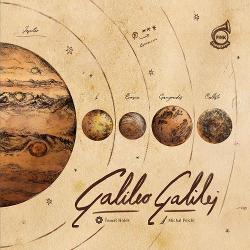
Galileo Galilei
Spelers kruipen in de huid van astronomen uit de vroegmoderne tijd die de hemel verkennen, telescopen ontwikkelen en wetenschappelijke doorbraken proberen te bereiken in een tijdperk waarin religieus toezicht alomtegenwoordig is. Tijdens elke beurt gebruikt een speler een telescoop om een van de vijf acties te kiezen, die spelers na verloop van tijd kunnen verbeteren. Spelers verzamelen kaarten van planeten en sterrenstelsels en vergaren drie gekleurde lenzen om ontdekkingen te doen. Inquisiteurs kunnen opduiken en de reputatie van een speler bedreigen. Onderzoek en verbeteringen afwegen tegen af en toe een compromis sluiten om voordeel te halen uit hun bezoeken, vormt dus een belangrijk onderdeel van de strategie.
- Spelers
- 1–4 best met 2
- Speeltijd
- 50–100 min
- Leeftijd
- 12+
- Complexiteit
- 3 / 5
Over het spel
- Ontwerp
- Illustraties
- Uitgever



Uitbreidingen
Bekijk ze in Ludoya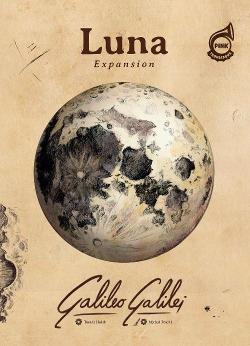
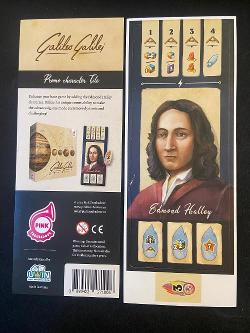
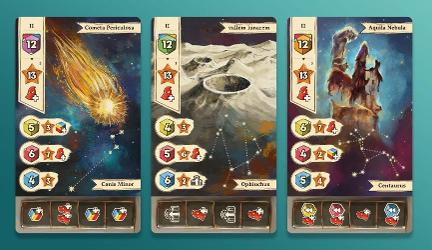
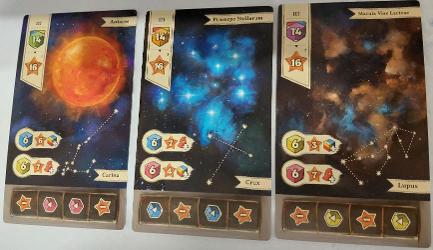
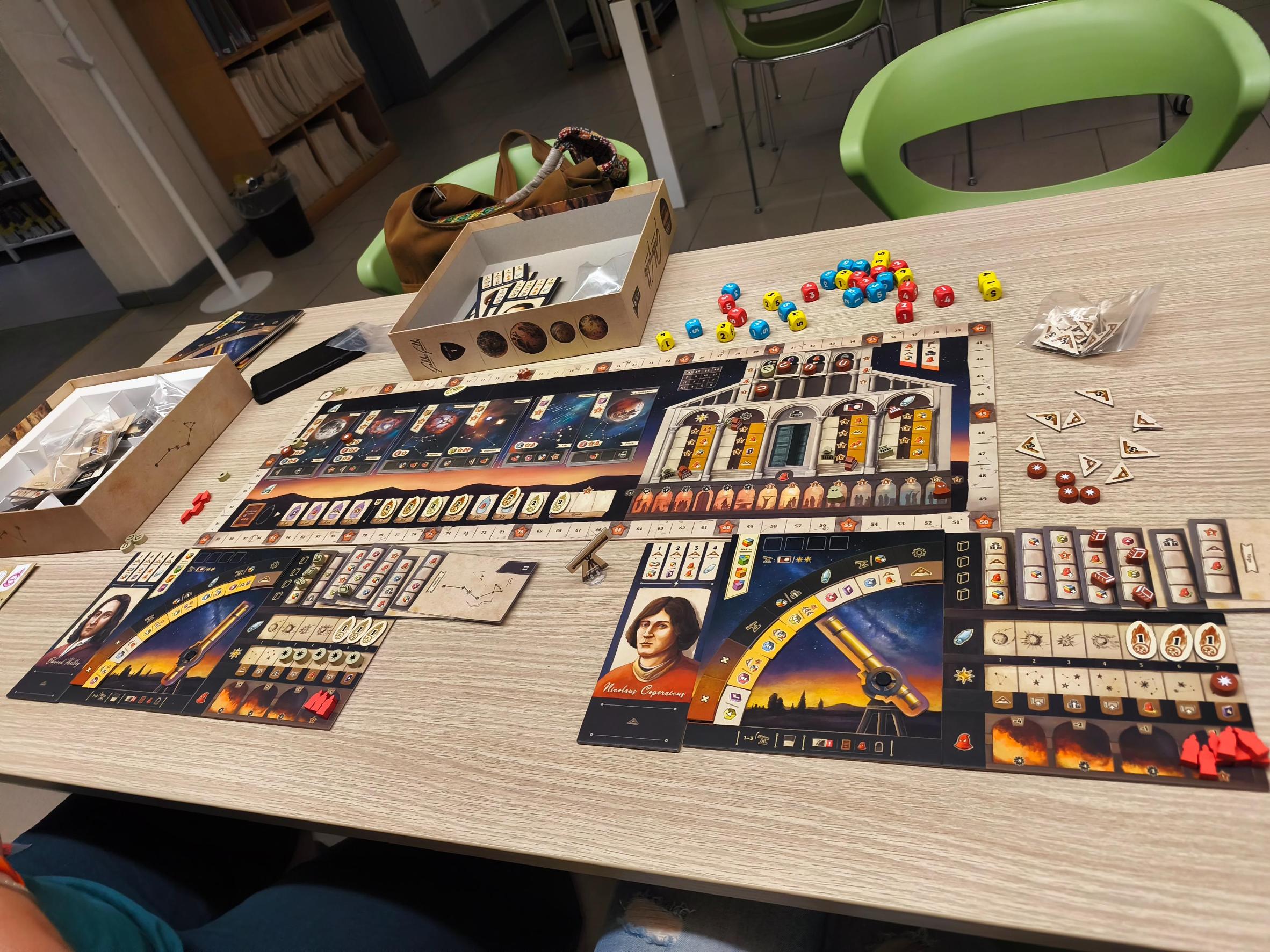
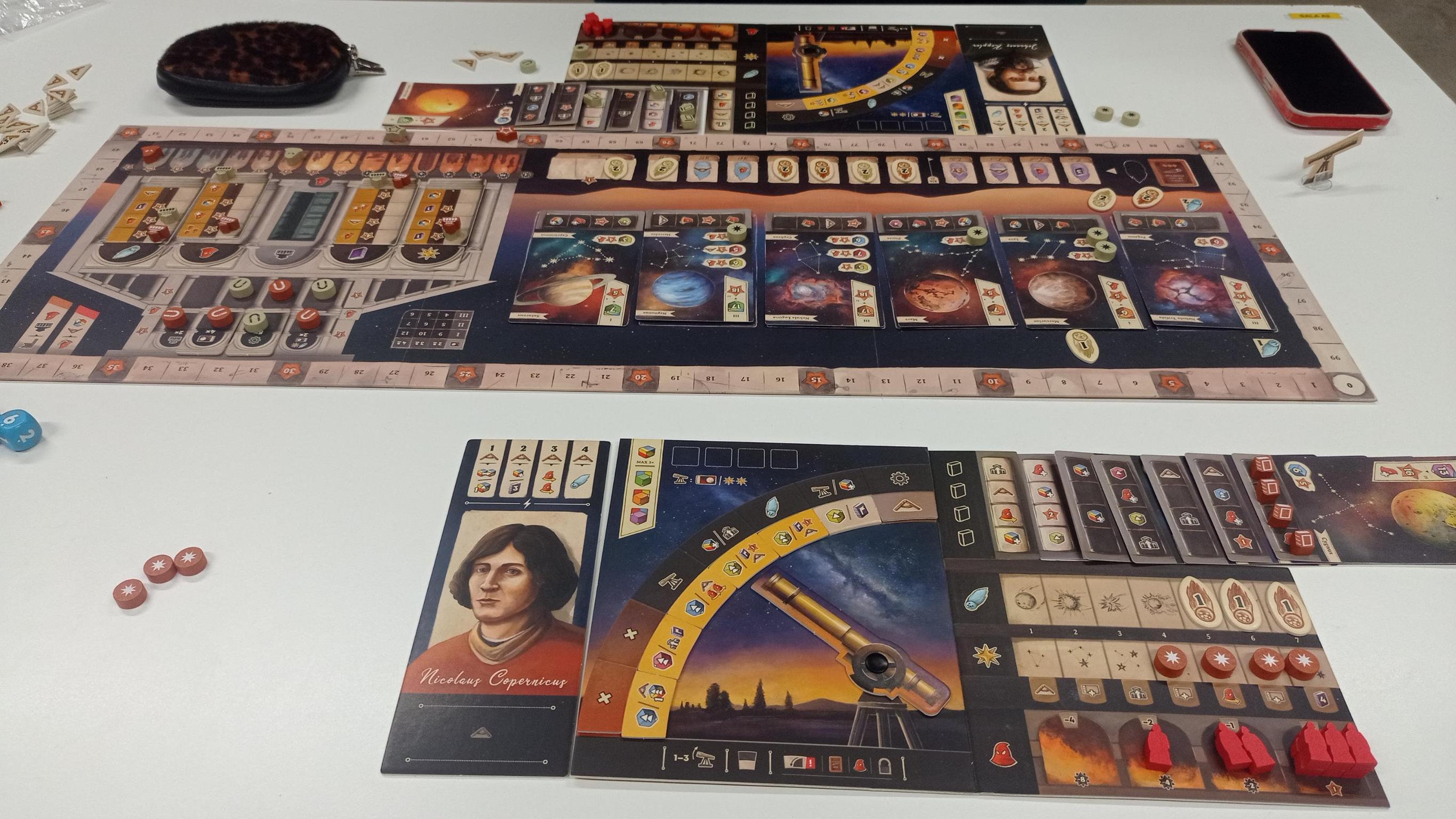
Foto's van Ludoya-tafels
Alle foto's in Ludoya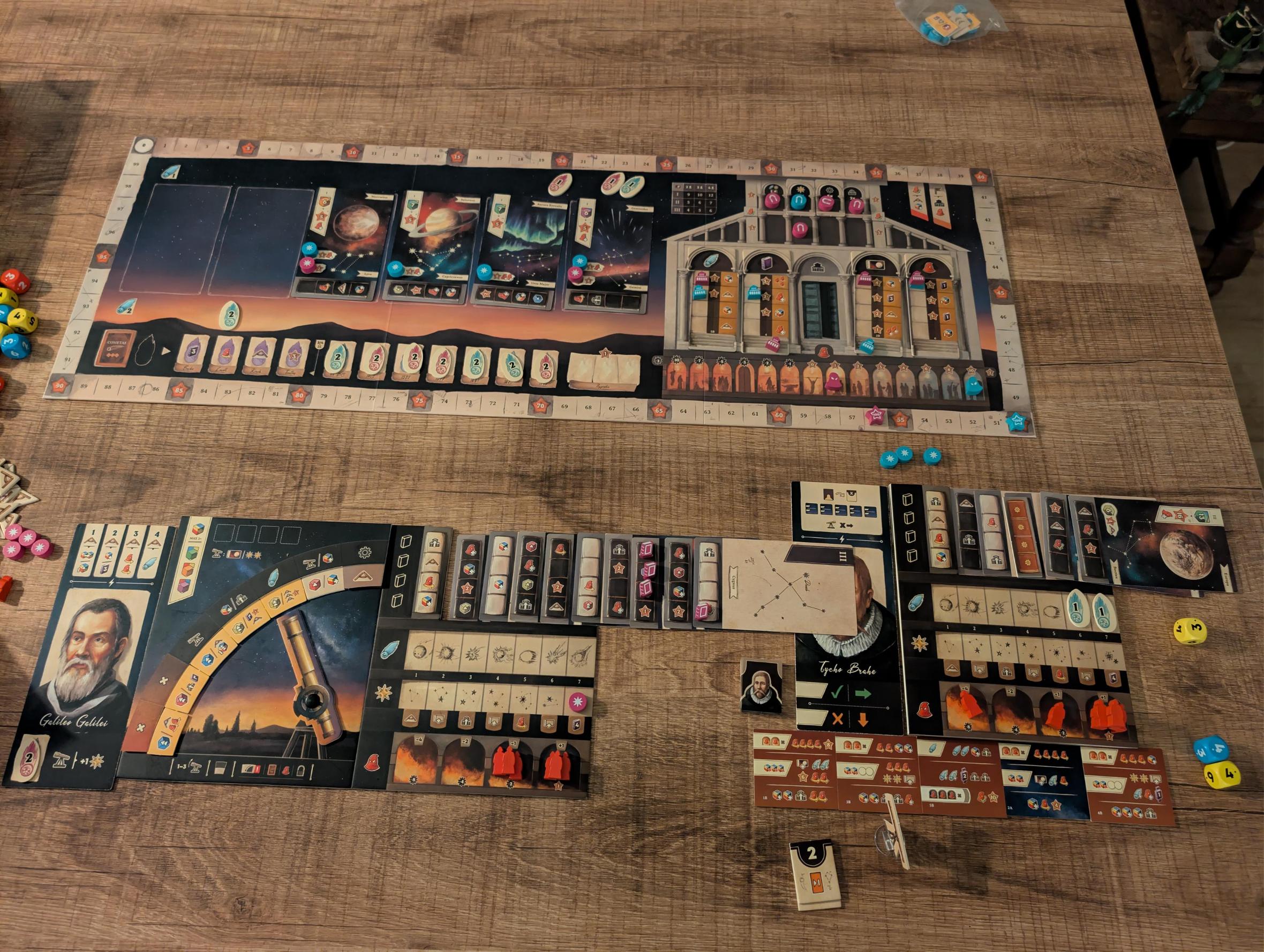
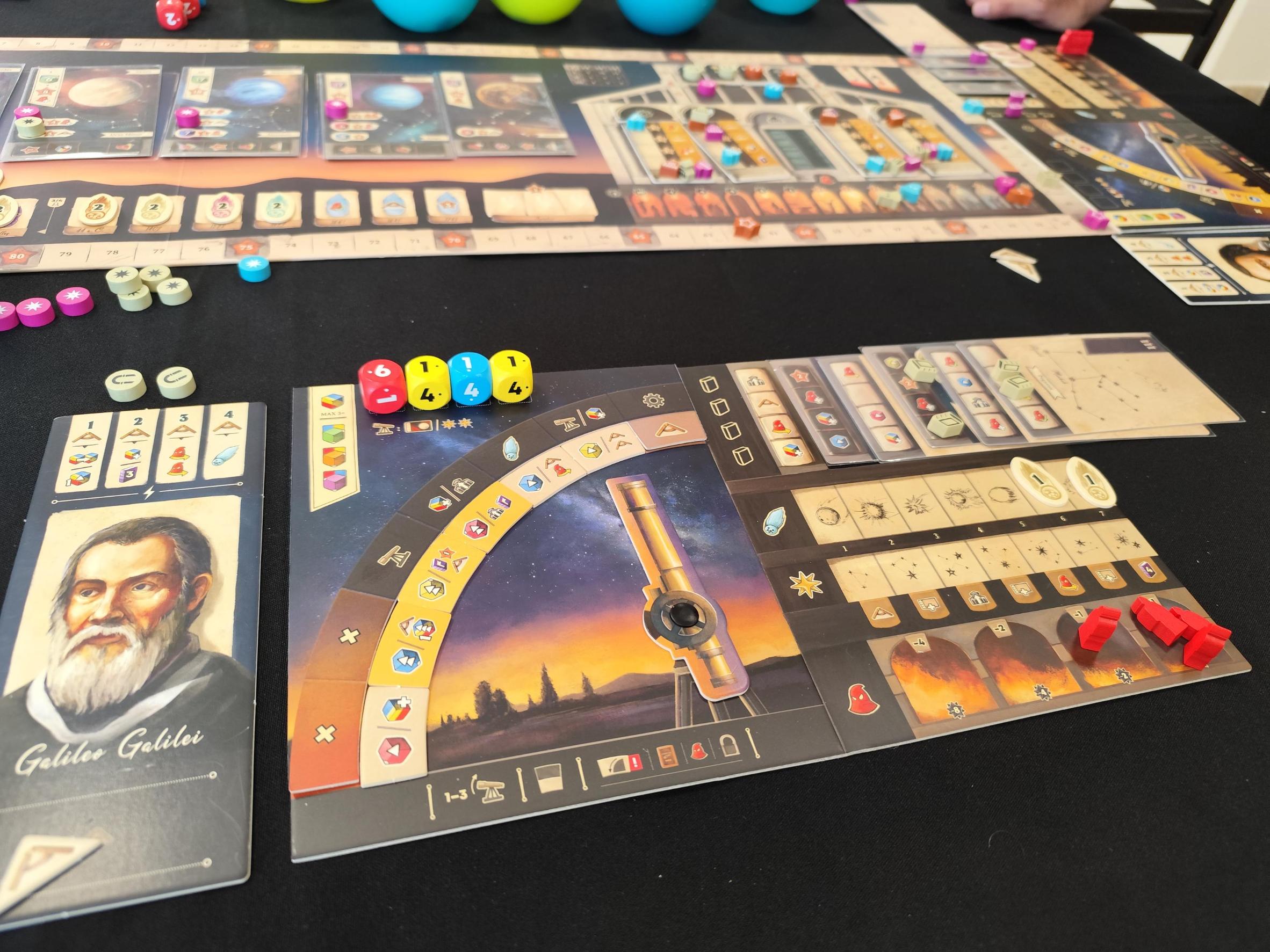
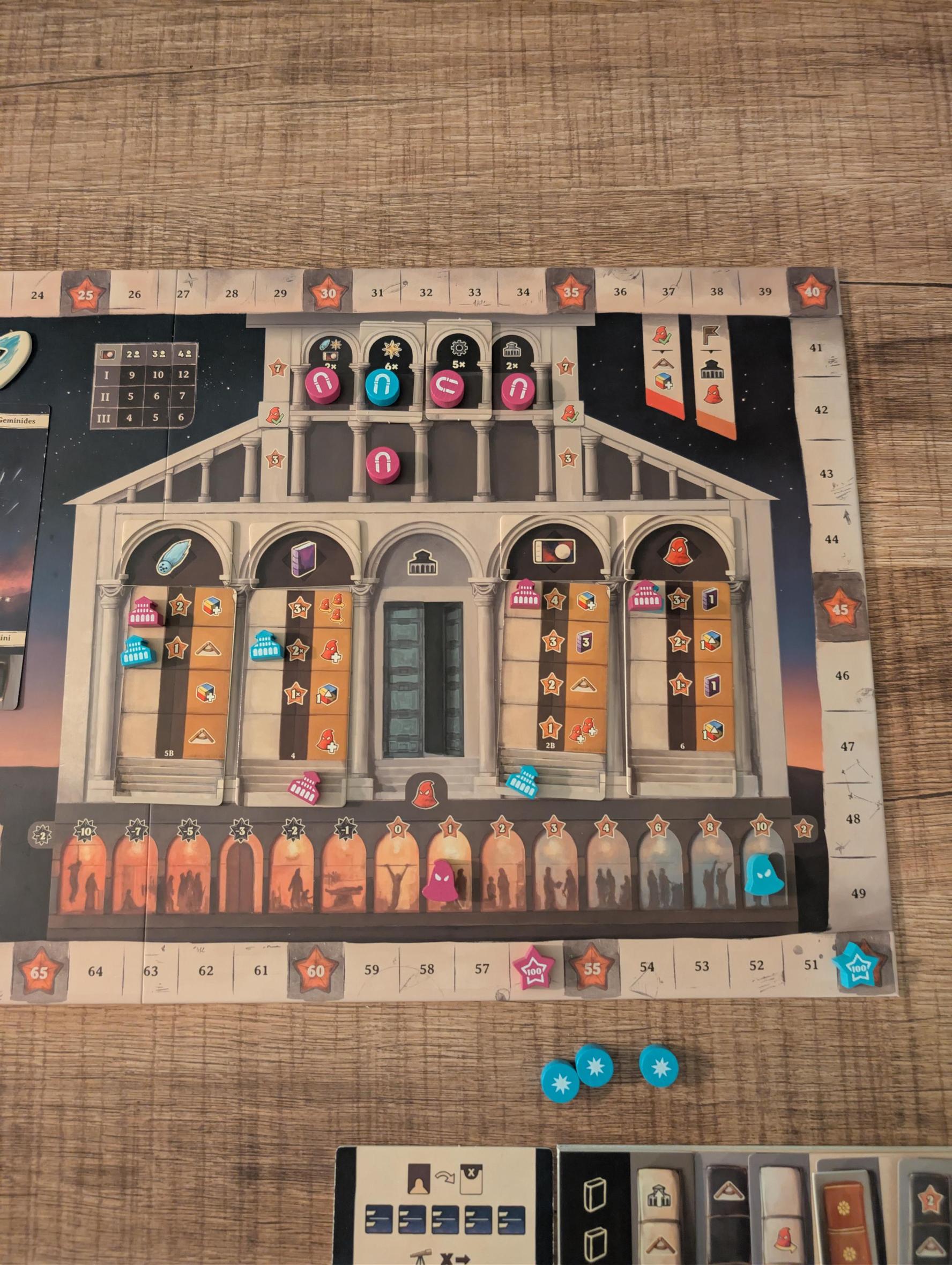
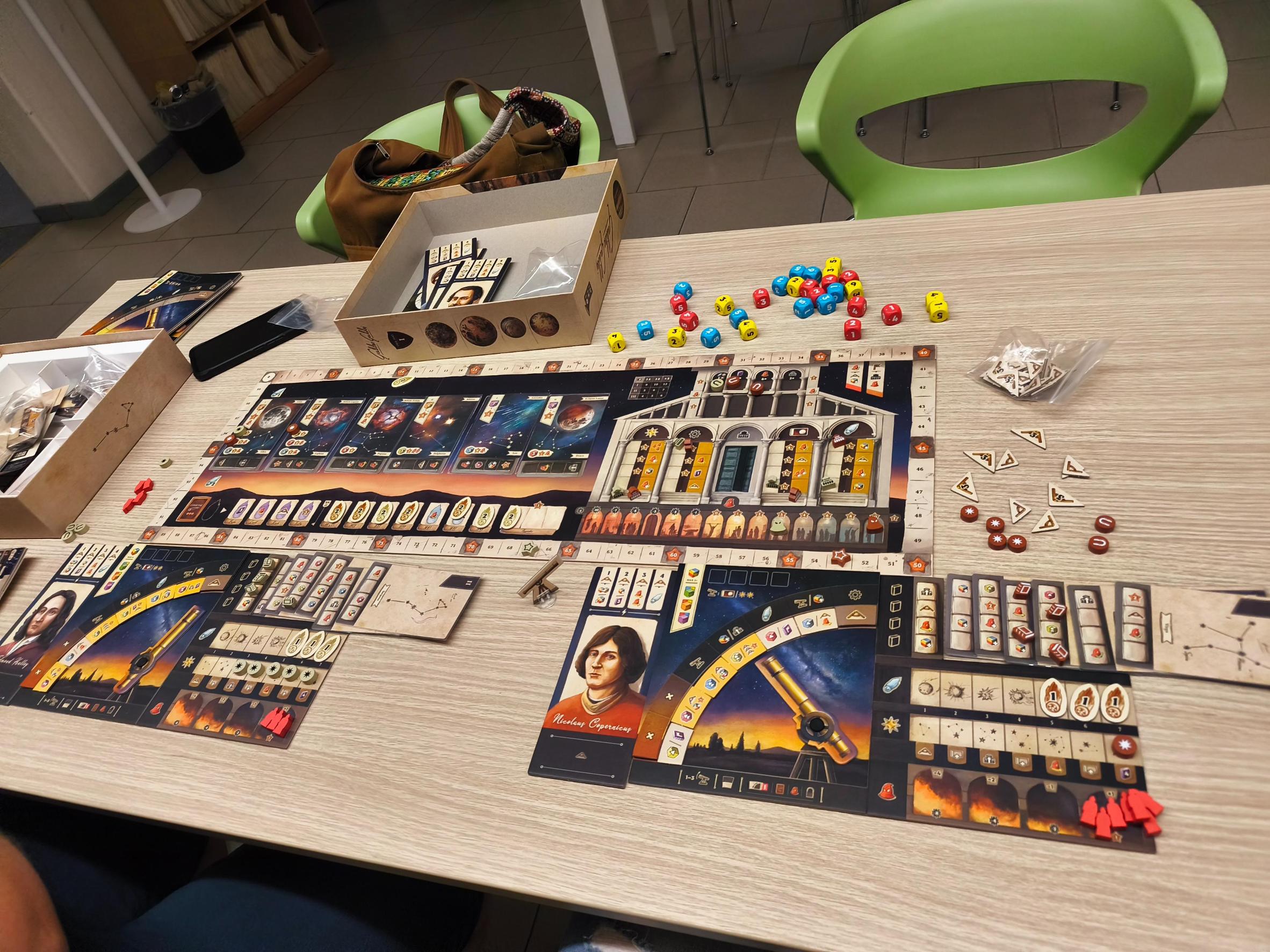
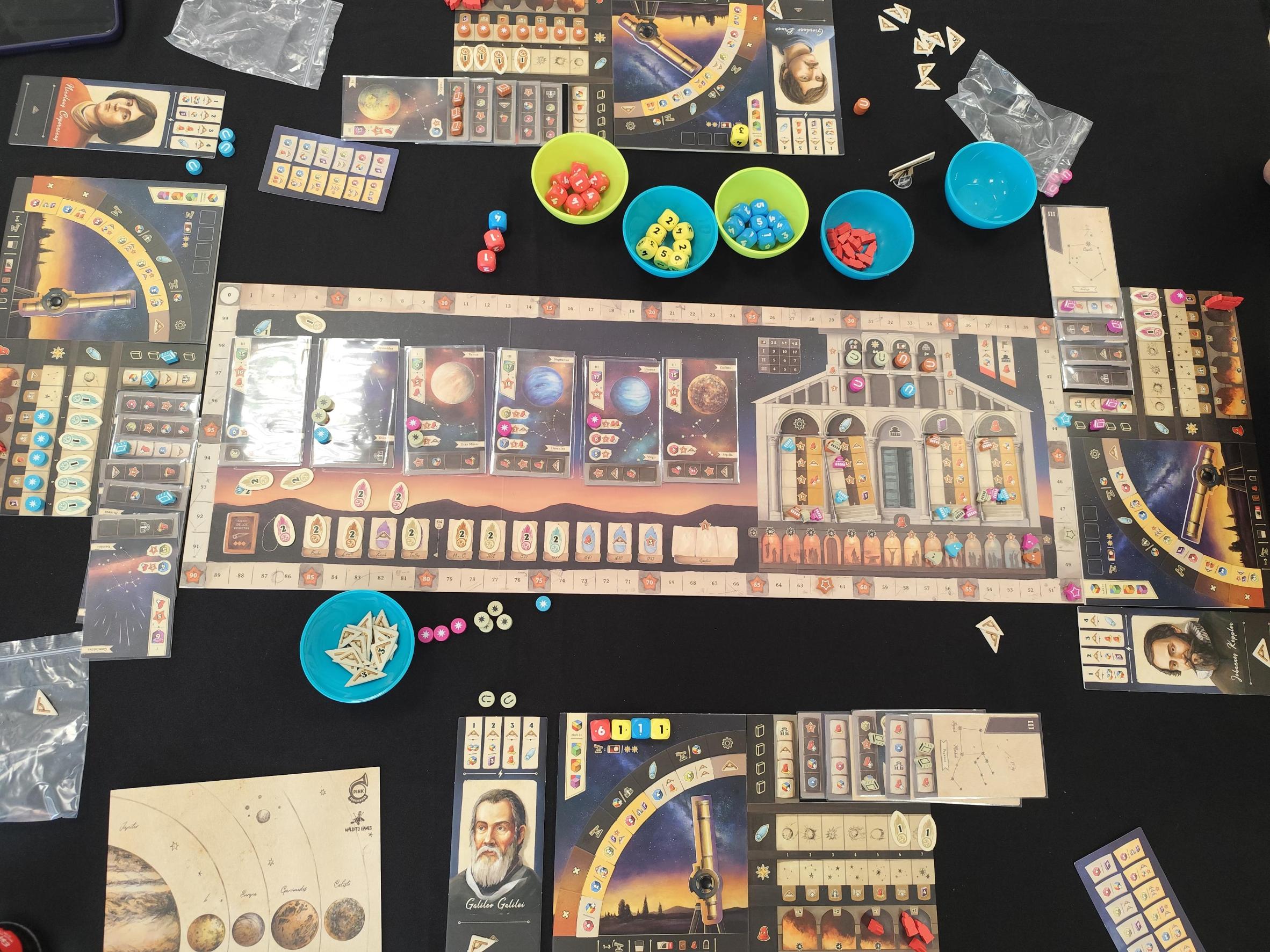
Waar te koop
Winkelprijzen en tweedehands exemplaren, elke dag gecontroleerd.
Aan de tafels van Ludoya
Alle statistieken in Ludoya- 223
- Vastgelegde speelsessies
- 267
- Spelers
- 1h 36m
- Gemiddeld potje
- 76
- In collecties
- 29
- Op verlanglijsten
- 2
- Voorbesteld
7,4/10
uit 31 Ludoya-recensies
Javo7,0 Juego de temática astronómica y que mezcla mecánicas de varios juegos. Lo mejor: - Diseño muy bonito. - Puzle interesante en cuanto a gestión de los inquisidores. - La rejugablidad está bien. Lo peor: - No inventa nada. Modo solitario: Funciona muy bien, compites contra un automa aunque deja poco movimiento al desarrollo ya que avanza muy rápido y puedes quedarte atrás muy fácilmente. Rejugabilidad: Personajes asimétricos con poderes diferentes. Cada partida cambian los tracks de puntuación de objetivos así como los objetivos. Cartas no hay muchas y aunque en cada partida varien, se repetiran. No obstante, las cartas no ofrecen nada especial más q puntos y beneficios, por lo que tampoco afecta. Para quien lo recomiendo? Para jugadores que busquen un euro que junte varias mecánicas interesantes y tenga una ludoteca discreta.
Geen speelsessies geregistreerd
- Base -
Eerste indrukken · 2 speelsessies


Regelvragen
Beantwoord vanuit het spelregelboek door de regelassistent van Ludoya.
When I Observe a Major Object do I have to spend dice of both colors, and can I overpay?
You must spend at least one observation die of each color the Major Object requires, but you may spend any number of dice to meet the cost and any excess value is forfeited; return spent dice to the supply after use (page 6).
Can I Observe two constellations in one Observe action and how do Constellation tokens work?
Yes — you may Observe up to two constellations in one action but resolve them one at a time; place your leftmost Constellation token on the chosen constellation, gain its listed rewards and then the reward from the space you removed the token from, and after you’ve used your seventh Constellation token you can no longer Observe constellations (page 7).
How do Comet tokens reduce observation costs and can they replace required dice colors?
Comet tokens reduce an object's observation cost by their value and each can be used once per turn, moving/flipping as you use them, but they do not substitute for required colors — you still must spend at least one die of each required color (page 8).
When can I take free actions and what do Quadrant tokens let me do?
You may spend Quadrant tokens to take free actions during your turn (not while resolving another action); costs are 1–4 Quadrant tokens and include options like changing a die color or +1 to a die (1), gaining a die or Write 3 (2), Persuade twice (3), or Spot a Comet (4) (page 9).
When does an interrogation happen and how does it change my Reputation/score?
If you Persuaded any inquisitor (i.e., successfully moved a cellar inquisitor) during your turn, an interrogation happens in the Cleanup Phase: add the values of all inquisitors in your cellar and move your Tribunal token that many spaces (negative moves left); if you’re already at the track end you instead immediately lose or gain 2 victory points (page 12; cleanup reference page 10).
What triggers the end of the game and how are ties broken?
The game ends when the last Discovery card is placed on the Game Board; finish the round and give each player one final turn, then score University bonuses followed by Inquisition results (page 13), and ties are broken by highest sum of remaining observation dice, then most Quadrant tokens, otherwise the tied players share victory (page 13).
Scoreformulieren en speelhelpers
- Hoja de Puntuación
- ES ✶ Galileo Galilei
















Gratis, op het web, Android en iOS
Speel Galileo Galilei met Ludoya
- Houd het bij in je collectieHoud je exemplaar en de uitbreidingen bij, leen het uit aan vrienden of zet het op je verlanglijst en krijg bericht als de prijs daalt.Voeg het toe aan je collectie
- Leg elke speelsessie vastScores, winnaars, timers en foto's, en dan je statistieken: winpercentage, favoriete spelersaantal, beste score.Speelsessie vastleggen
- Regelvragen beslechtenVraag alles over de regels en krijg een antwoord uit het spelregelboek, met de pagina om het na te lezen.Vraag de regelassistent
- Vind mensen om het mee te spelenClubs, spelavonden en evenementen bij jou in de buurt waar dit spel op tafel komt.Bekijk evenementen
Speldata (spelers, speeltijd, leeftijd, makers) van BoardGameGeek.