

2007 · Edukacyjny
Brass: Lancashire
Players act as competing industrialists in Lancashire during the Industrial Revolution, developing industries, building canals and rails, and creating a network to serve demand for coal, iron and cotton. Play proceeds in two distinct phases — canal then rail — with players taking two actions per turn from options such as building industry tiles, constructing links, developing industry, selling cotton or taking loans. Cards constrain where actions can occur and drive timing decisions, while shared resources (coal and iron) are drawn from the nearest sources, including opponents’ locations. Scoring happens at the end of each phase for networks and flipped industry tiles; the highest total victory points wins.
- Gracze
- 2–4 najlepiej w 4
- Czas gry
- 60–120 min
- Wiek
- 14+
- Złożoność
- 3,8 / 5
O grze
- Projekt
- Wydawcy







Dodatki
Zobacz je w Ludoya
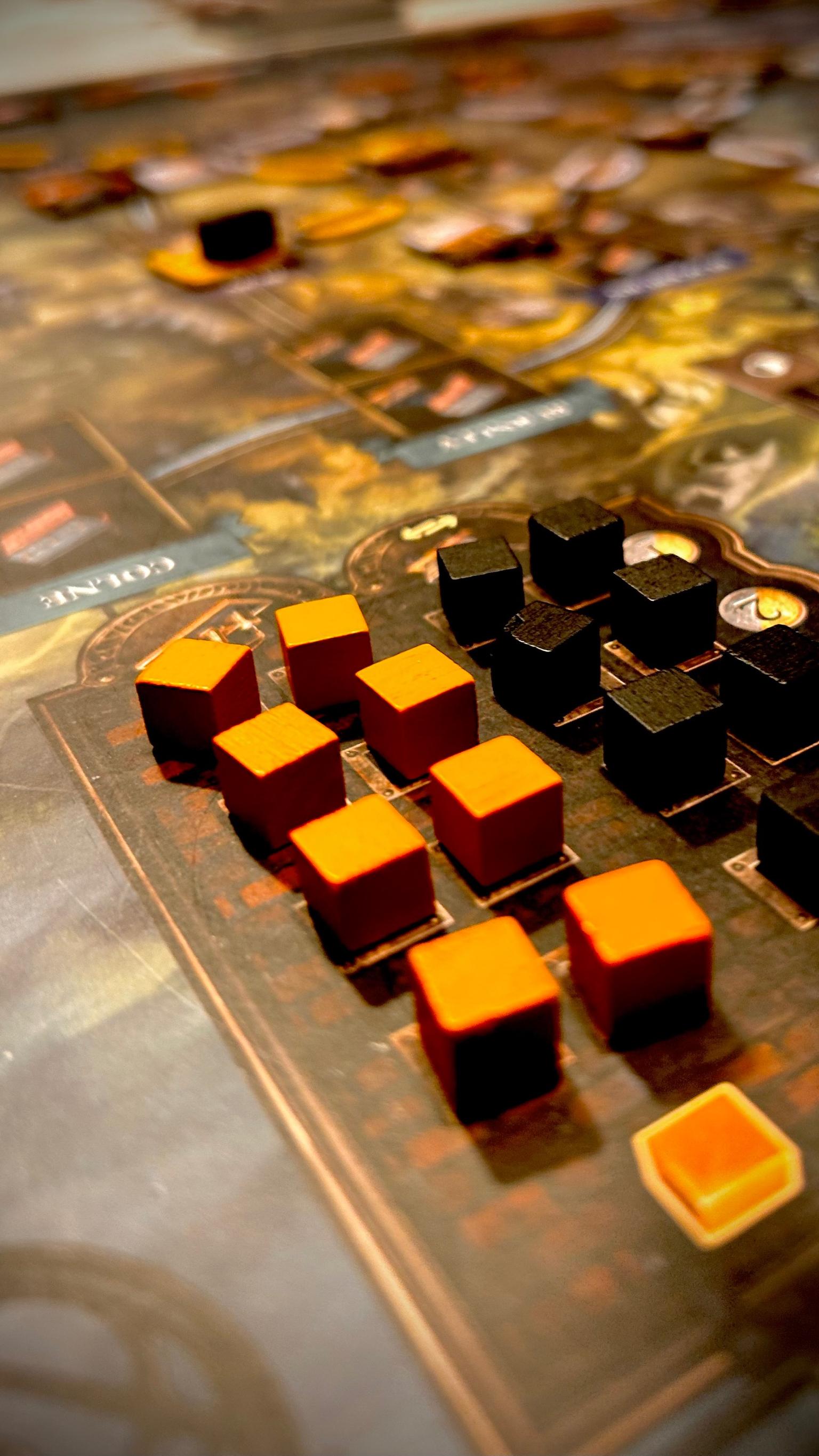
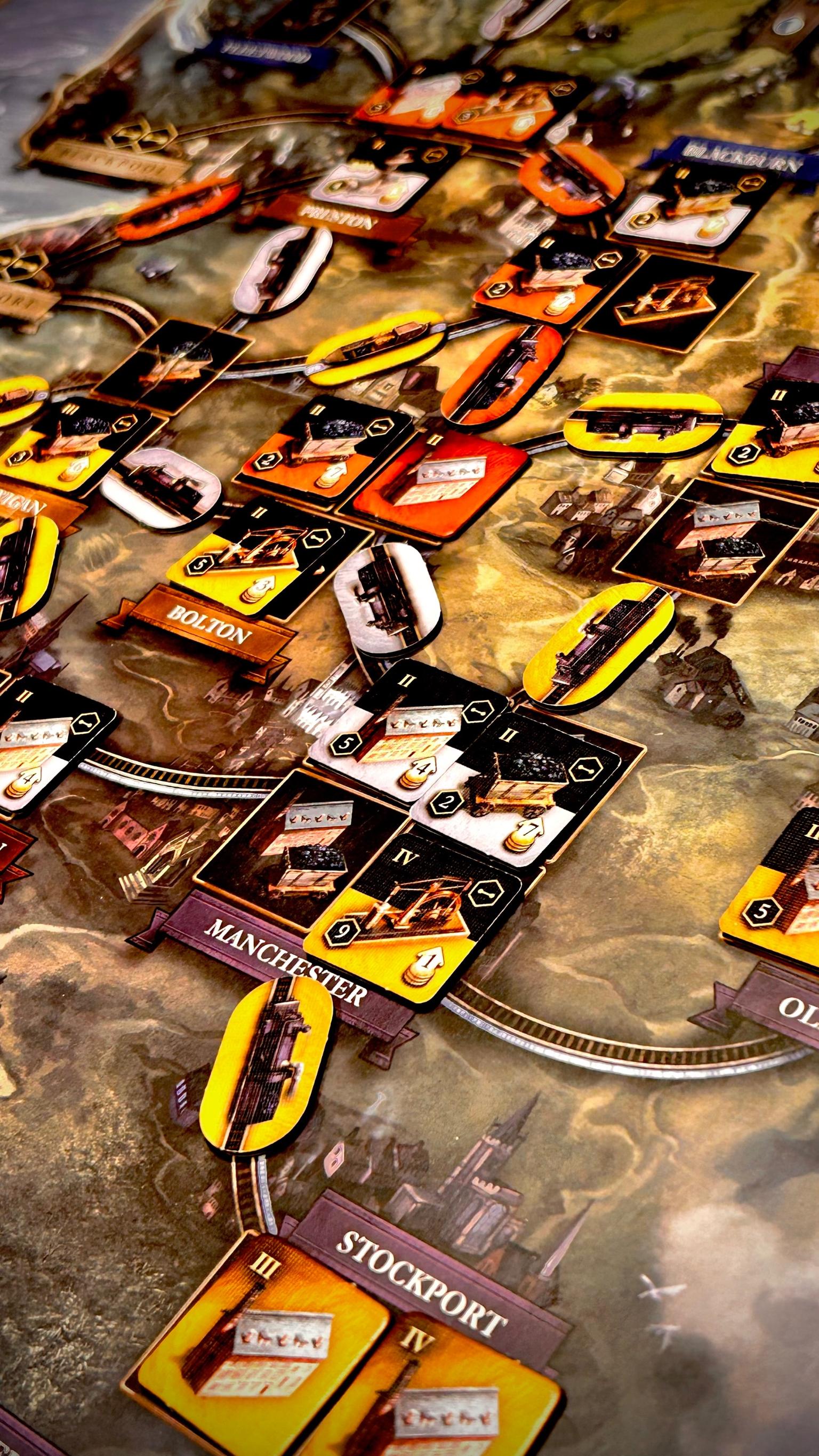
Zdjęcia ze stołów Ludoya
Wszystkie zdjęcia w Ludoya
Gdzie kupić
Ceny w sklepach i egzemplarze z drugiej ręki, sprawdzane codziennie.
Przy stołach Ludoya
Pełne statystyki w Ludoya- 649
- Zapisane rozgrywki
- 777
- Gracze
- 2h 12m
- Średnia rozgrywka
- 195
- W kolekcjach
- 22
- Na listach życzeń
- 6
- Zamówione w przedsprzedaży
8,3/10
z 121 recenzji w Ludoya
Obra maestra con tablero muy Dark
Balleflass9,0 Sleeve kings 63.5x88mm.
BarbutIndepe3,7 El Brass BO ES EL BIRMINGHAM

Pytania o zasady
Odpowiedzi z instrukcji od asystenta zasad Ludoya.
Do I have to be connected to a location to build there?
If you discard a Location card you may build that industry at the named location even if it is not part of your network; if you discard an Industry card you may only build that industry in a location that is part of your network (page 5).
Do I need a coal connection to consume coal when building rail links or some industries?
Yes — a Rail Link or Industry tile that requires coal must be connected to a source of coal after it is placed; you consume from the closest connected unflipped Coal Mine (or buy from the Coal Market if not connected) (page 5).
Do I need to be connected to an Iron Works to consume iron?
No — consuming iron does not require a network connection: you may take iron from any unflipped Iron Works (owned by any player) for free, or buy from the Iron Market if none are available (page 5).
When do tiles flip and when do I get income or VPs from them?
Shipyards flip when built; Cotton Mills and Ports flip when you perform a Sell action; Coal Mines and Iron Works flip when their last resource cube is removed — flipped tiles immediately advance your Income Marker by the amount shown on the tile, and flipped Industry tiles score VPs at end-of-era scoring (pages 5 and 4).
Can I overbuild an opponent's tile, and what are the limits?
You may overbuild your own tiles freely, but you may only overbuild an opponent's Coal Mine or Iron Works and only if there are no resource cubes of that type anywhere on the board (including its Market); overbuilt tiles are removed from the game and do not score (page 6).





Za darmo, w przeglądarce, na Androidzie i iOS
Graj w Brass: Lancashire z Ludoya
- Miej ją w swojej kolekcjiŚledź swój egzemplarz i jego dodatki, pożyczaj go znajomym albo dodaj go do listy życzeń i dostań powiadomienie, gdy cena spadnie.Dodaj do swojej kolekcji
- Zapisuj każdą rozgrywkęPunkty, zwycięzcy, minutniki i zdjęcia, a potem twoje statystyki: procent zwycięstw, ulubiona liczba graczy, najlepszy wynik.Zapisz rozgrywkę
- Rozstrzygaj spory o zasadyZapytaj o dowolną zasadę i dostań odpowiedź z instrukcji, ze stroną do sprawdzenia.Zapytaj asystenta zasad
- Znajdź ludzi do wspólnej gryKluby, wieczory gier i wydarzenia w pobliżu, na których ta gra trafia na stół.Zobacz wydarzenia
Dane gry (gracze, czas gry, wiek, twórcy) z BoardGameGeek.