
2018 · Civilização
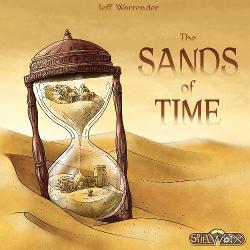
The Sands of Time
Registre a história de uma civilização antes que ela seja soterrada pelas areias do tempo. Em um cenário de Antiguidade clássica, os jogadores guiam impérios antigos escolhendo ações para construir estruturas, desenvolver avanços, migrar populações, travar guerras, expandir territórios, administrar revoltas, estabelecer rotas comerciais, exigir tributos e registrar seus reinados. Os jogadores gastam colheitas e ouro para realizar ações, equilibrando o tamanho do império e o descontentamento. As cartas de Crônica representam feitos notáveis e exigem um patrimônio cultural, civil ou político suficiente para serem reconhecidas e pontuadas. A competição, a diplomacia, a expansão e uma gestão cuidadosa moldam o legado de cada civilização.
- Jogadores
- 2–5 melhor com 4
- Tempo de jogo
- 120–180 min
- Idade
- 12+
- Complexidade
- 4,2 / 5
Sobre o jogo
- Design
- Arte
- Editora


Nas mesas da Ludoya
Todas as estatísticas na Ludoya- 4
- Partidas registradas
- 7
- Jogadores
- 3h 10m
- Partida média
- 3
- Em ludotecas
3,6/10
de 2 avaliações na Ludoya
Evan3,5 In this game players build out their civilizations with the goal of hyper specializing enough to get the benefit of the high level score cards in one of three categories. This gets tricky as every aspect of this game is tight and there is a lot of negative player interaction that can hamper your efforts. Each player has a large deck of symmetrical action cards. In a round players simultaneously pick two cards, then preform the cards back to back in turn order. At the start of the game this generates a lot of downtime between turns as players get used to their huge pile of options, but things accelerate as people get used to their cards to the point where you can essentially have your next three turns mapped out. The two things disrupting your plans are your opponents who can play cards that steal your resources, or conquer your spaces thereby taking your buildings and the dice driven end of round timer. The end of round resets your cards, which might upset your plans as some cards give you benefits only after they've combed with three other card effects with matching icons. The scoring mechanism is really interesting. One of your action cards allows you to play a scoring card to the goals board. If by the end of an era you've met the requirements of the scoring card you played, it generates points for you, and this is the primary scoring mechanism of the game. Timing things against the semi-random end of round card reset so you get the advances you need to meet the card's requirements, and getting the scoring card played enough times to be able to score multiple categories gives a fantastic sense of tension. The game suffers from familiar civilization game downsides. Combat between players winds up very costly for everyone involved. One tech track focuses on getting more techs which makes it difficult to justify not pushing into it over the others. There are icons you can gain from tech tracks which amount to as much as you can gain from the central board if not more, but tracks benefits can't be punched away like board presence can, so it's a more reliable point generation method. Stealing each other's resources either creates a back and forth waste of time or you lose the one resource you needed for your whole multi-turn plan. There is also a bit of a game design hole where if another player conquers your capital you are forced to move it, yet the buildings in it's space remain. One of the scoring criteria is for buildings in your capital specifically so this can cost you an entire strategy if it happens. Why this scoring can't be 'pick a region you control and score for the buildings there' I don't know. I like how players set their own victory conditions, and I like the action selection process. I'm not happy with the graphic design, and the board state gets extremely hard to read with the sheer number of pieces cluttering up each space. Overall too punchy for my taste, but I would play a game that shared a lot of this game's DNA. ☆ Art, Iconography and components functional ★ Clever or interesting mechanisms ☆ Reasonably low downtime between turns with mildly AP players ★ Multiple plays stay interesting ★ Low or mitigatable luck elements ★★☆☆☆ Raw enjoyment
Jogos semelhantes
 Era da Inovação2025
 Civolution2024
 Terra Mystica2016
 Terra Mystica: Big Box2025
 Projeto Gaia2017
 SETI: Busca por Inteligência Extraterrestre2025
 Indonesia2005
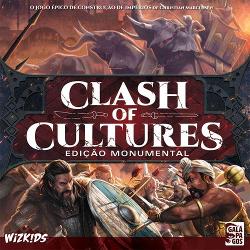 Clash of Cultures: Edição Monumental2021
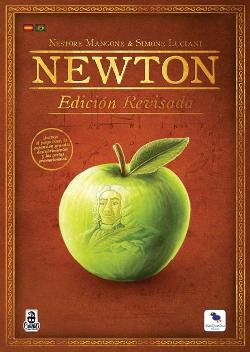 Newton Edición Revisada2022
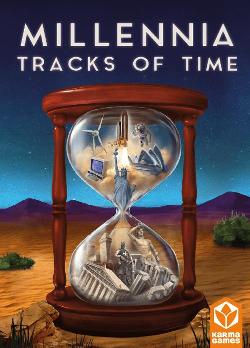 Millennia: Tracks of Time2025
 Orléans: Big Box2024
 Dark Ages: Holy Roman Empire2021
Grátis, na web, Android e iOS
Jogue The Sands of Time com a Ludoya
- Tenha na sua ludotecaAcompanhe sua cópia e suas expansões, empreste para os amigos ou coloque na lista de desejos e seja avisado quando o preço cair.Adicionar à sua ludoteca
- Registre cada partidaPontuações, vencedores, cronômetros e fotos, e depois suas estatísticas: taxa de vitórias, número de jogadores favorito, melhor pontuação.Registrar uma partida
- Marque os pontos sem papelUse as folhas de pontuação e os ajudantes de jogo da comunidade e deixe a Ludoya somar os pontos.Encontrar folhas de pontuação
- Encontre gente para jogarClubes, noites de jogos e eventos perto de você que levam este jogo para a mesa.Ver eventos
Dados do jogo (jogadores, tempo de jogo, idade, créditos) do BoardGameGeek.