
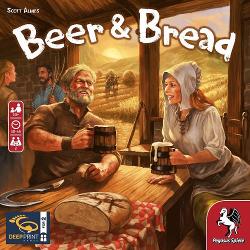
2022 · Kortspil
Beer & Bread
Two villages continue a centuries-old rivalry built on brewing beer and baking bread. Players each manage a village over six alternating “years,” harvesting and storing shared-field resources, producing beer and bread, selling goods for coins and upgrading buildings. Play uses a multi-use card system with alternating rounds that drive drafting, resource management, and interaction as players allocate actions and develop production chains. Final scoring uses only the coins from the good type (beer or bread) for which a player earned less, so players must balance output and sales rather than maximize a single product.
- Spillere
- 2
- Spilletid
- 30–45 min
- Alder
- 10+
- Kompleksitet
- 2,4 / 5
Om spillet
- Design
- Illustration
- Publisher


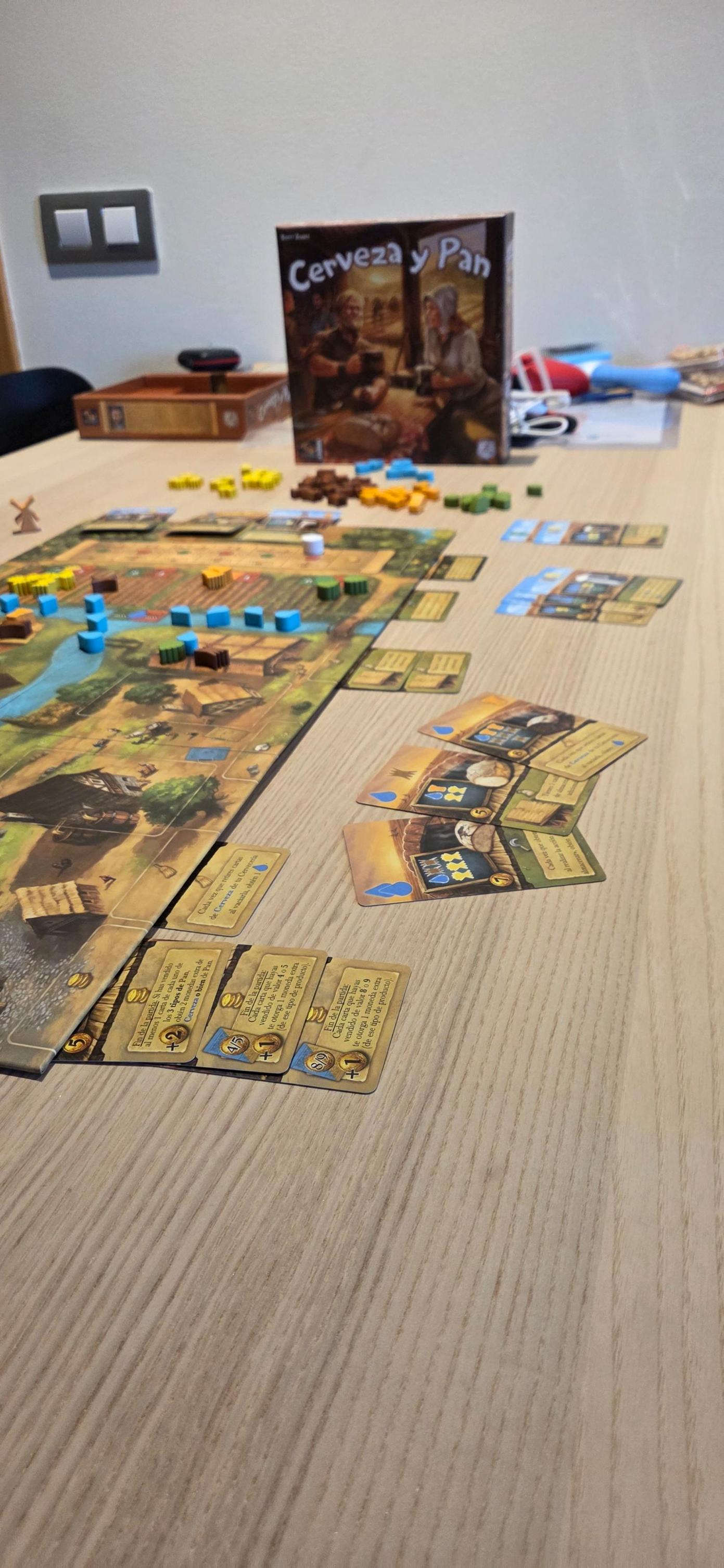
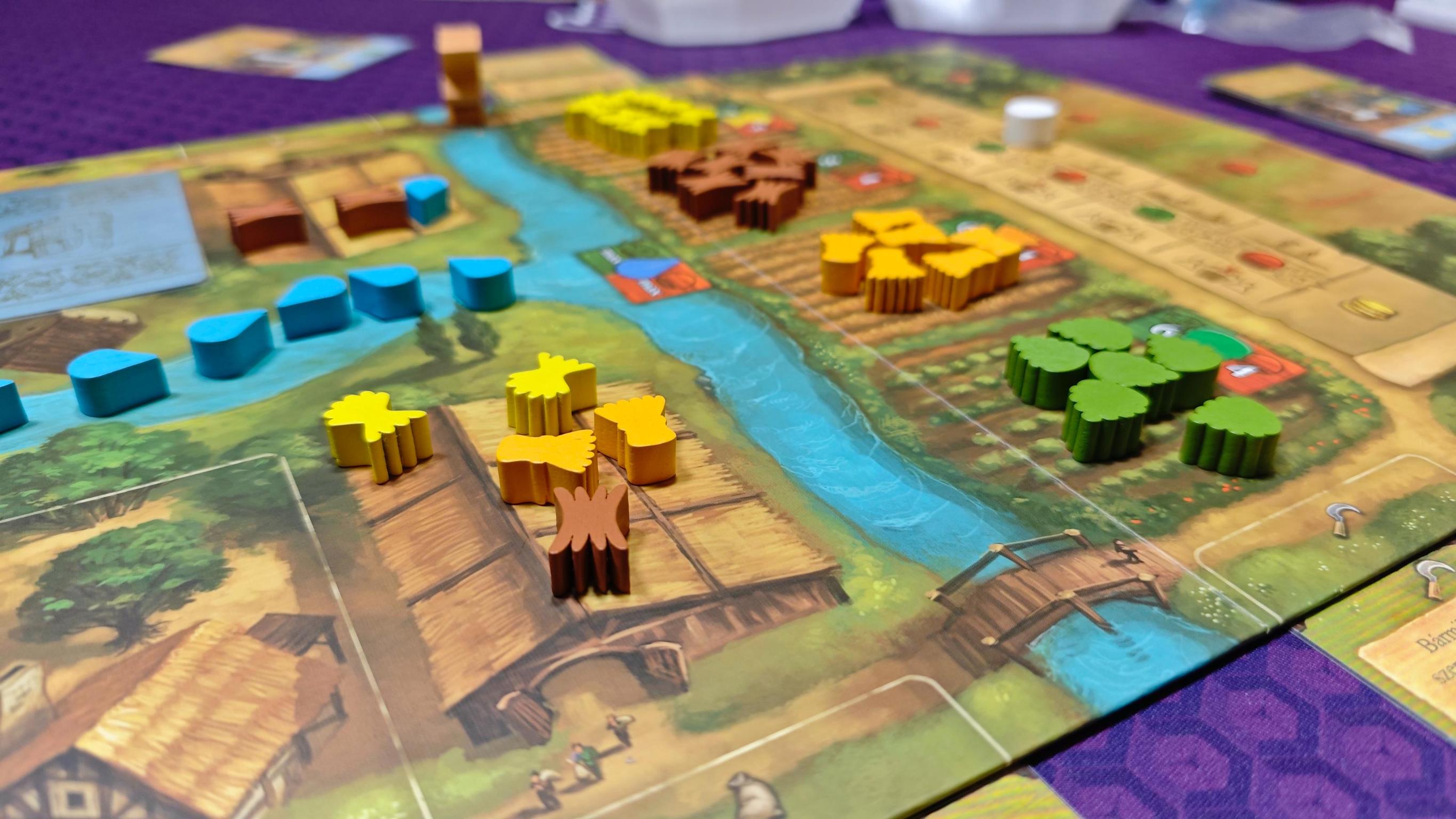
Fotos fra Ludoyas borde
Alle fotos i Ludoya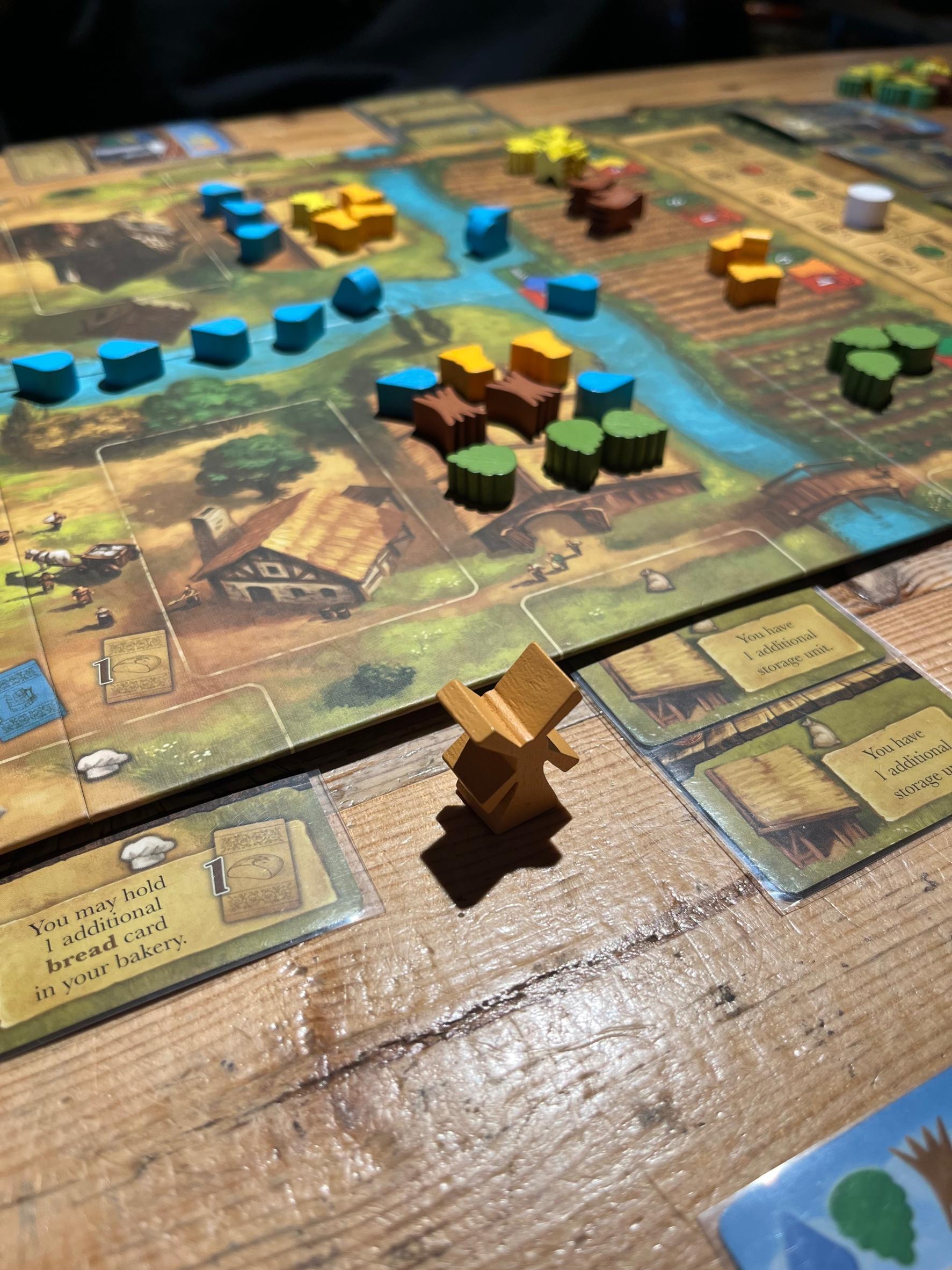
Hvor du kan købe det
Butikspriser og brugte eksemplarer, tjekket hver dag.
På Ludoyas borde
Al statistik i Ludoya- 410
- Registrerede partier
- 316
- Spillere
- 46m 35s
- Gennemsnitligt parti
- 156
- I samlinger
- 19
- På ønskelister
7,6/10
fra 57 anmeldelser på Ludoya
Hobbang10,0 It is such a comprehensive game. It's like a mini mash up of Rosenberg games but straightforward enough to introduce resource management to board gamers.
Elfrikijugon8,5 Edición en castellano de Maldito Game

Regelspørgsmål
Besvaret ud fra regelbogen af Ludoyas regelassistent.
What happens if I harvest more resources than I have storage for?
Choose which tokens to keep from among all your tokens (stored ones and the newly collected); offer the rest to the other player, who may take any they have free storage for, and return any leftovers to the common supply (page 6).
When do we swap hands — do we swap every round?
In fruitful years you swap hands after each pair of turns (after both players take a turn), repeating until hands are empty; in dry years you do not swap hands during the Action phase (pages 5 and 8).
How do the exchange cards work — when can I take one and what happens to my card?
In the Card phase of dry years three exchange cards are placed face up; on your turn you may place any hand card face up onto an exchange space (making it the new exchange card) and immediately take and play the exchange card you removed (you may not add it to your hand) (page 8).
What's the difference in seeding between fruitful and dry years?
Fruitful years seed fields to higher targets (wheat 7, barley 8, rye 6, hops 6) and add all water to the river, while dry years seed to lower targets (wheat 5, barley 4, rye 4, hops 4) and also add all water; if the supply lacks tokens, add as many as available (pages 4 and 7).
Who gets the windmill and what if we tie?
Give the windmill to the player with fewer resource tokens in their storage units; in case of a tie, the windmill goes to the player who did not have it that round (page 7).
How do we score at the end — do we add beer and bread together?
Count sold beer and bread separately (including any upgrade bonuses), then your final score is the lower of the two totals; the higher final score wins, with ties broken by the higher other total and then by the player who does not have the windmill (page 9).

Gratis, på web, Android og iOS
Spil Beer & Bread med Ludoya
- Hav det i din samlingHold styr på dit eksemplar og dets udvidelser, lån det ud til venner, eller sæt det på din ønskeliste, og få besked, når prisen falder.Føj det til din samling
- Registrér hvert partiPoint, vindere, timere og fotos, og så din statistik: vinderprocent, foretrukket spillerantal, bedste score.Registrér et parti
- Afgør regelspørgsmålSpørg om hvad som helst i reglerne, og få et svar fra regelbogen med siden, hvor du kan tjekke det.Spørg regelassistenten
- Find nogen at spille det medKlubber, spilaftener og arrangementer nær dig, hvor dette spil kommer på bordet.Se arrangementer
Spilfakta (spillere, spilletid, alder, medvirkende) fra BoardGameGeek.