

2020 · Kartenspiel
Café
Die Spieler leiten Kaffeefirmen im Portugal des frühen 20. Jahrhunderts und bauen eine Lieferkette von der Plantage über Trocknung und Röstung bis hin zum Vertrieb auf. Karten und arbeiterplatzierungsähnliche Aktionen werden genutzt, um die Produktion aufzubauen und zu verbessern, Kaffeebohnen zu verarbeiten und Aufträge an prestigeträchtige Cafés zu erfüllen. Die Spieler verwalten Ressourcen, optimieren das Ausspielen von Karten, um Fähigkeiten zu verketten, und konkurrieren über mehrere Runden um Marktkontrolle und Ansehen.
- Spieler
- 1–4 am besten mit 2
- Spielzeit
- 20–45 Min.
- Alter
- 8+
- Komplexität
- 2,1 / 5
Über das Spiel
- Illustration
- Publisher



Erweiterungen
In Ludoya ansehen
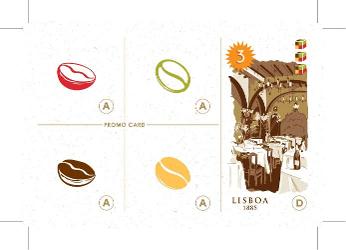
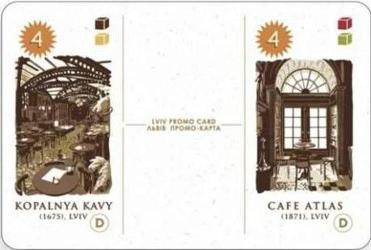
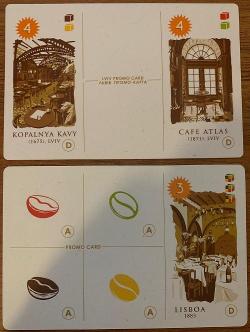
Fotos von Ludoya-Tischen
Alle Fotos in Ludoya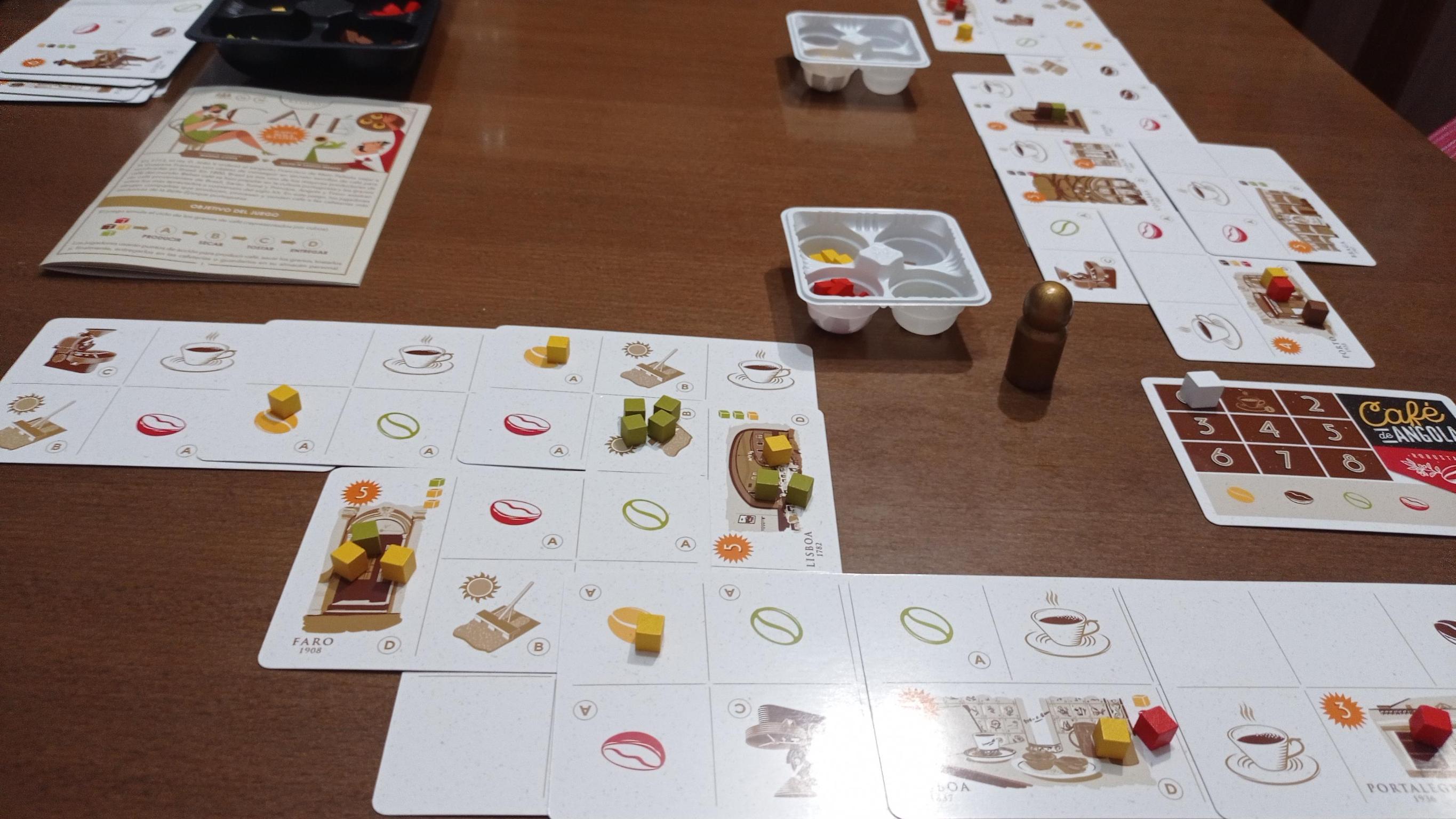
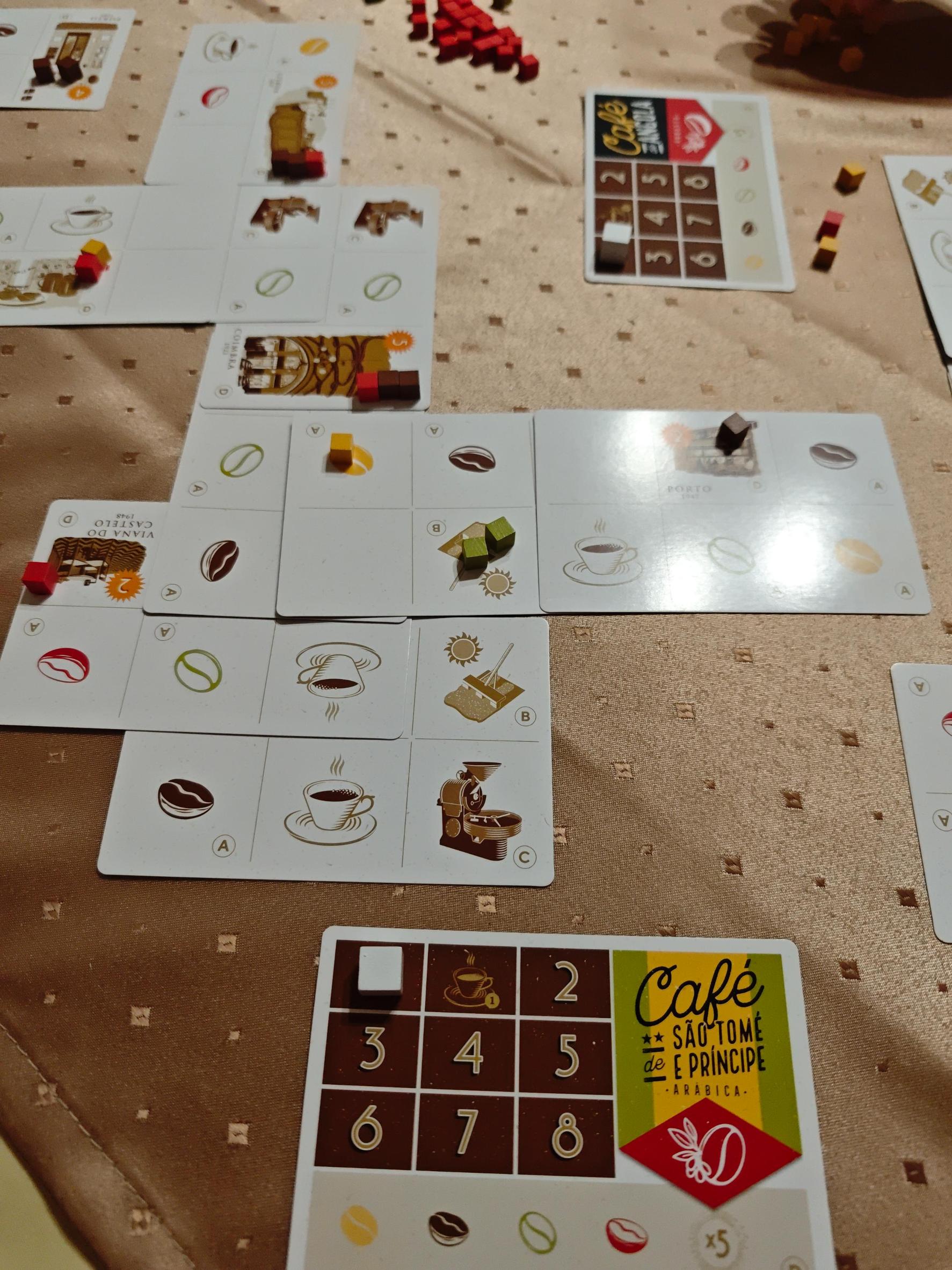
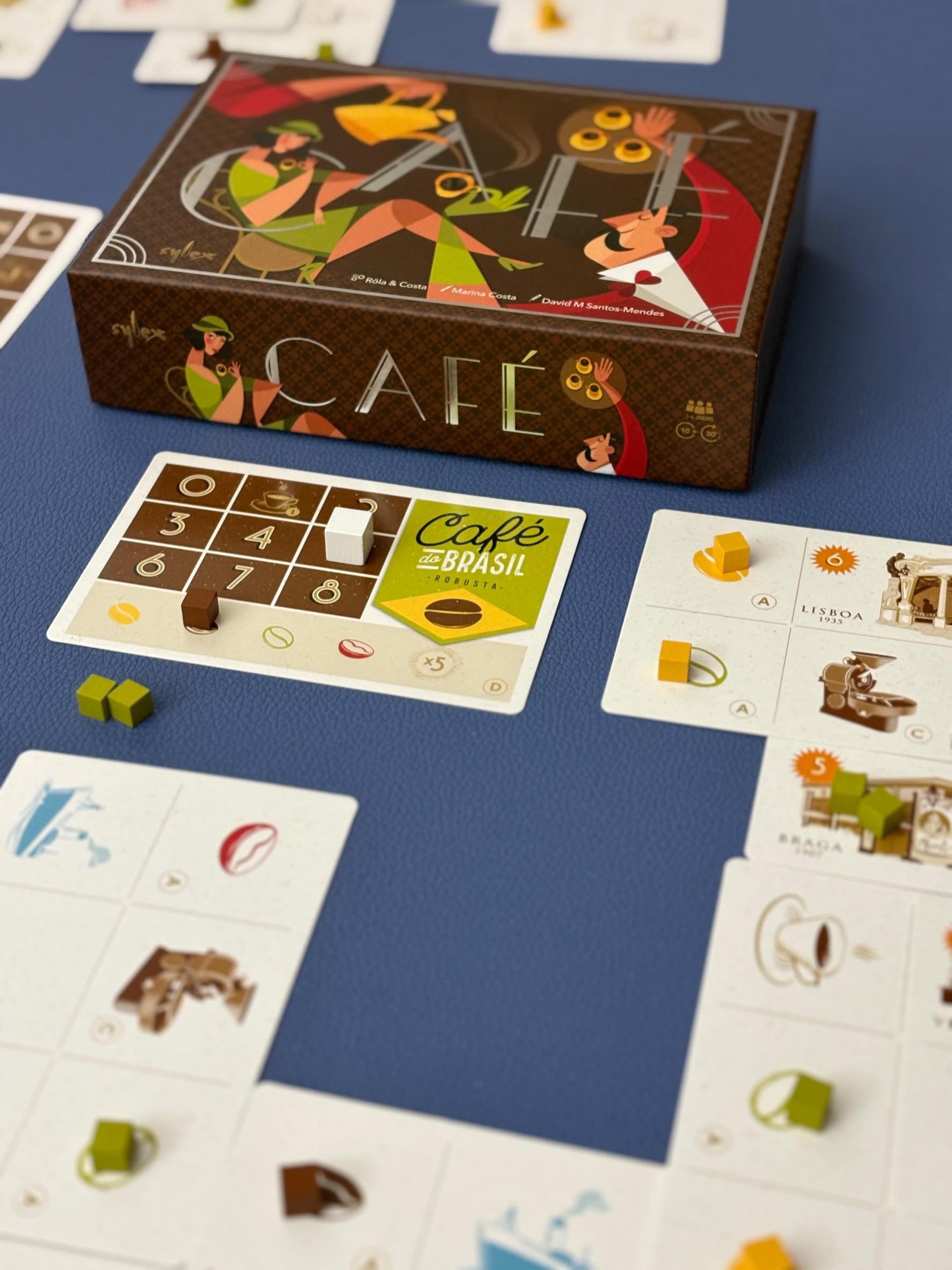
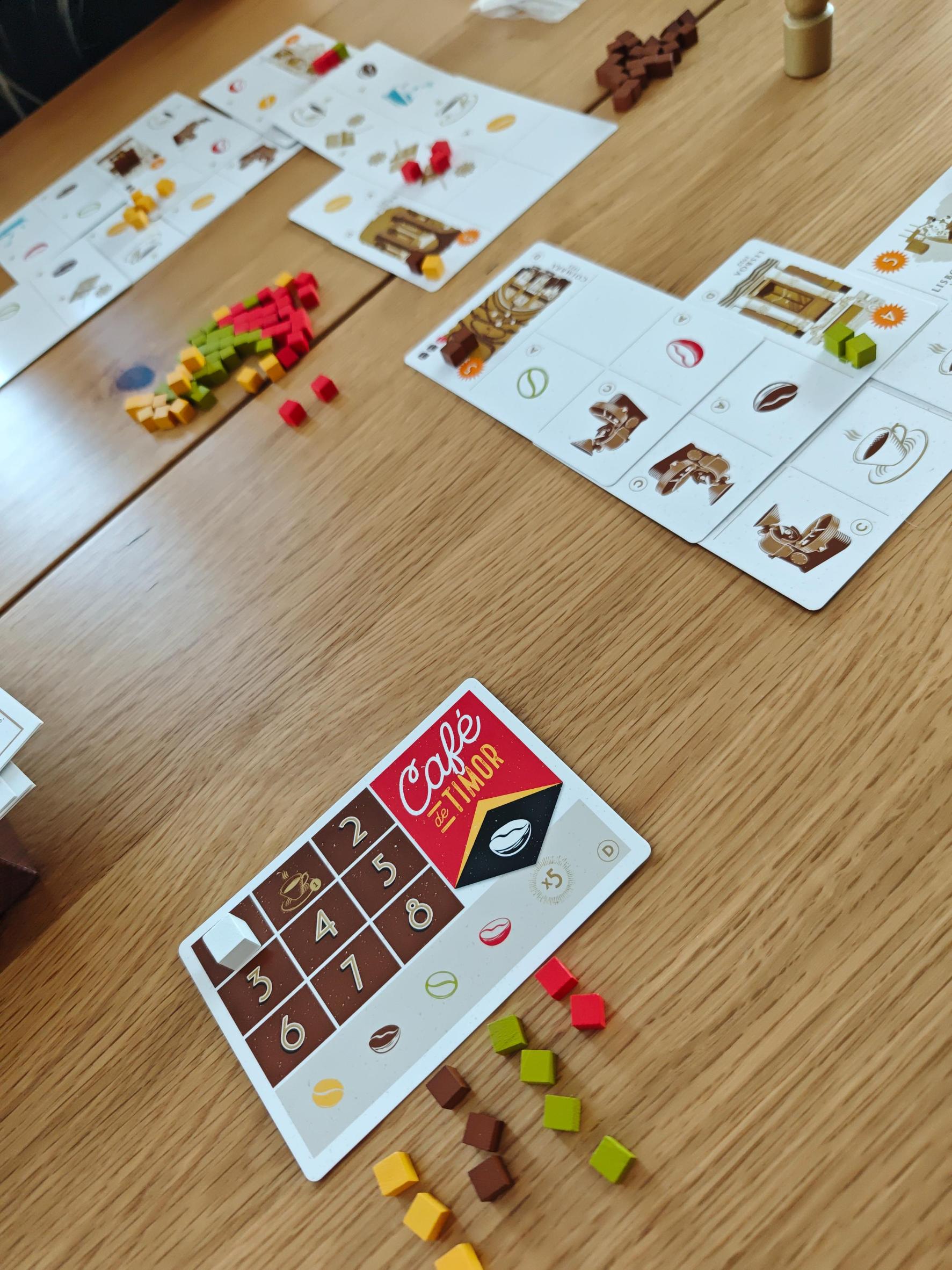
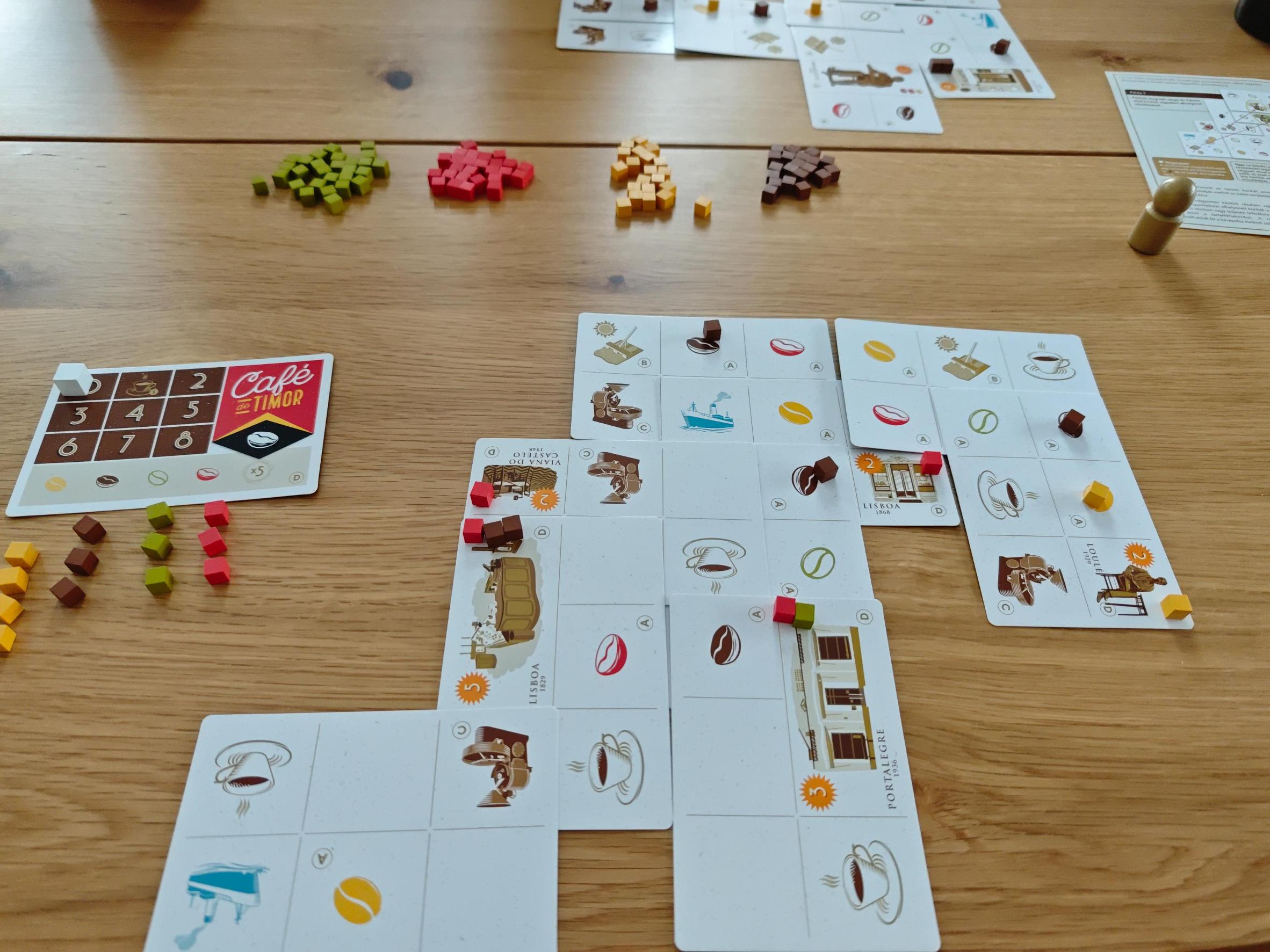
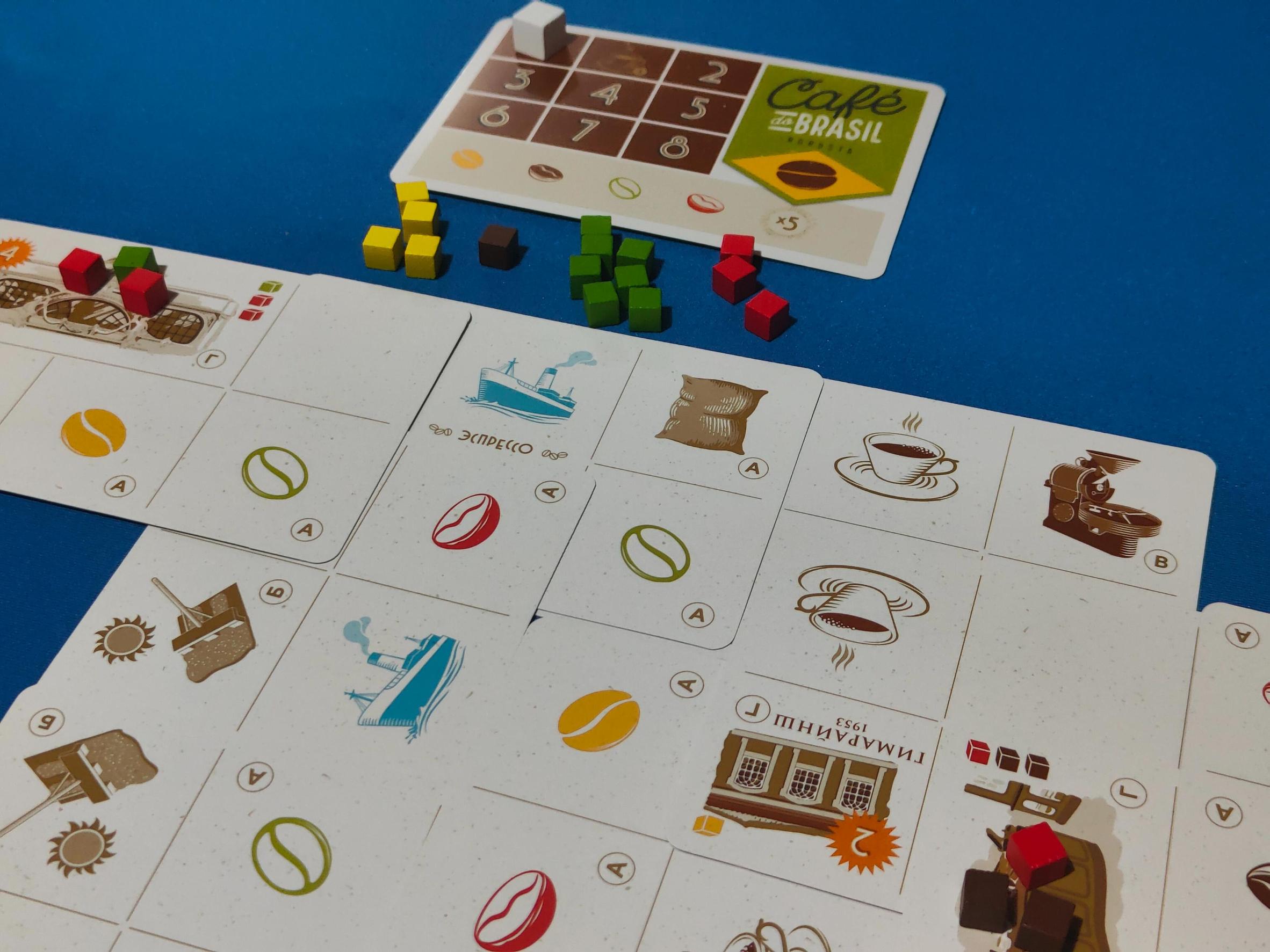
Wo kaufen
Shop-Preise und gebrauchte Exemplare, täglich geprüft.
An Ludoyas Tischen
Alle Statistiken in Ludoya- 553
- Erfasste Partien
- 372
- Spieler
- 28m 52s
- Durchschnittliche Partie
- 123
- In Sammlungen
- 15
- Auf Wunschlisten
7,0/10
aus 51 Ludoya-Rezensionen
[FR] Review avec proposition de modification légère de règles pour moins de hasard : https://www.adayagame.fr/jeux-familiaux/373-test-du-jeu-cafe
- Base [ 01 ] -
Viciados7,0 Great looking, nice little game for couples too. Haven't played with more people. The theme doesn't really matter in the game, it's the only thing I didn't like.



Regelfragen
Aus der Spielanleitung beantwortet von Ludoyas Regelassistenten.
Do Plan cards have to be placed on consecutive spaces, and can they overlap other cards?
Plan cards are placed sequentially covering 2–4 squares in your tableau and must follow the placement rules shown in the examples; you do not overlap existing cards when placing them (see p.5).
Can I buy a Plan card I can’t currently afford or ‘bank’ discounts for a later purchase?
You may only buy Plan cards if you can pay their cost after applying any discounts; you cannot reserve or buy cards you cannot afford (see p.4).
When I take a Produce action, do I also produce cubes on adjacent/connected spaces (the cluster)?
Producing places cubes on the chosen production space and also affects connected production spaces as a cluster—cluster production rules and examples explain how multiple cubes are produced together (see p.6).
If I dry or roast one cube, does that affect nearby cubes in the cluster too?
Drying and roasting can apply to clusters: the rules and examples show how drying/roasting actions convert cubes in connected clusters according to the cluster rules (see p.7–p.8).
What’s the difference between delivering roasted cubes to a coffee shop versus to the warehouse?
Delivering to a coffee shop places roasted cubes for immediate scoring on that shop’s scale, while sending cubes to the warehouse stores them for end‑game scoring under different warehouse scoring rules (see p.8–p.11).
When does the game end and how is final scoring, especially for the warehouse, calculated?
The game ends after the final round, then you perform final scoring: score coffee shops immediately and then score the warehouse using the warehouse score scales and examples provided (see p.10–p.11).

















Kostenlos, im Web, für Android und iOS
Spiel Café mit Ludoya
- Hab es in deiner SammlungVerwalte dein Exemplar und seine Erweiterungen, leih es Freunden oder setz es auf deine Wunschliste und erfahre, wenn der Preis fällt.Zur Sammlung hinzufügen
- Erfasse jede PartiePunkte, Sieger, Timer und Fotos, dann deine Statistiken: Siegquote, liebste Spielerzahl, beste Punktzahl.Partie erfassen
- Regelfragen klärenFrag alles zu den Regeln und erhalte eine Antwort aus der Spielanleitung, mit der Seite zum Nachprüfen.Den Regelassistenten fragen
- Finde Leute, mit denen du es spielstClubs, Spieleabende und Veranstaltungen in deiner Nähe, bei denen dieses Spiel auf den Tisch kommt.Veranstaltungen ansehen
Spieldaten (Spieler, Spielzeit, Alter, Mitwirkende) von BoardGameGeek.