
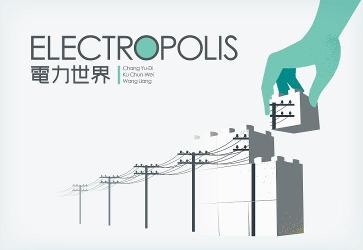
2019 · Städtebau
Electropolis
Die Spieler schlüpfen in die Rolle konkurrierender Bürgermeister, die die Energieinfrastruktur für eine wachsende Stadt planen. In jeder Runde wählen sie Aktionen in einem dynamischen Zugreihenfolge-System, um Baugenehmigungen zu erhalten, Felder zu beanspruchen und Gebäude in verschiedenen Zonengebieten zu platzieren. Dabei gilt es, zwischen Kohlekraftwerken, erneuerbaren Energien und Atomoptionen abzuwägen – jede mit eigenen Kosten, Leistungen und langfristigen Auswirkungen. Timing und Interaktion sind wichtig: Wer früh dran ist, kann sich starke Felder sichern, oder man wartet etwas, um Ressourcen zu sammeln und die Bauoptionen zu erweitern. Die Wertung basiert auf Stromproduktion, Stadtentwicklung und cleverer Platzierung. Das Spiel setzt auf Planung, Ressourcenmanagement und taktische Interaktion zwischen den Spielern.
- Spieler
- 2–4 am besten mit 3
- Spielzeit
- 50–70 Min.
- Alter
- 12+
- Komplexität
- 2,4 / 5
Über das Spiel
- Illustration
- Publisher




Wo kaufen
Shop-Preise und gebrauchte Exemplare, täglich geprüft.
An Ludoyas Tischen
Alle Statistiken in Ludoya- 42
- Erfasste Partien
- 58
- Spieler
- 1h 12m
- Durchschnittliche Partie
- 11
- In Sammlungen
- 6
- Auf Wunschlisten
3,5/10
aus 7 Ludoya-Rezensionen
Evan2,5 This is a little city grid building game with a few mean twists. Each round in player order, players pick a tile selection space. The later you go in turn order, the more tiles you pick up from the ring. Tiles come in three varieties. Power plants, buildings that give you popularity, and energy resources that you need to activate the power plants. In addition to picking the tiles up, you also draft a placement card. The placement card determines where in your grid you are allowed to place tiles. Early in the game, the cards come with endgame scoring bonus criteria, later in the game they come with some small immediate bonus. When you take tiles, you must take a grouping of all adjacent tiles. This means going later in turn order might mean you miss out on the key tiles you needed, and also have to take a mess of tiles you can't place, which get discarded for a VP penalty. Additionally, when you score your board at the end of the game, you lose massive points if your popularity rating isn't greater than the pollution sum of your powered plants. Largely the popularity buildings give you a penalty if placed next to power plants, so this gets tough fast. Power plants also produce more VP when the same kind of plant is placed in an adjacent chain of tiles. Essentially the game sets you up for needing a lot of things to work out in your favor. You need the card you take to allow you to place where you need to place, you need the tiles you need to come up in the circle at the right time, you need other players not to snatch what you need from you, and you need the energy resources to make your work count for anything, while also keeping mental track of how much pollution you will have at the end of the game, since you don't track it as you go, and making sure to get the popularity buildings. I had hoped this would be a wild ride, but ultimately I found it very frustrating. :star: Art, Iconography and components functional :star: Clever or interesting mechanisms :star: Reasonably low downtime between turns with mildly AP players :nostar: Multiple plays stay interesting :nostar: Low or mitigatable luck elements :star::nostar::nostar::nostar::nostar: Raw enjoyment










Kostenlos, im Web, für Android und iOS
Spiel Electropolis mit Ludoya
- Hab es in deiner SammlungVerwalte dein Exemplar und seine Erweiterungen, leih es Freunden oder setz es auf deine Wunschliste und erfahre, wenn der Preis fällt.Zur Sammlung hinzufügen
- Erfasse jede PartiePunkte, Sieger, Timer und Fotos, dann deine Statistiken: Siegquote, liebste Spielerzahl, beste Punktzahl.Partie erfassen
- Werte ohne PapierNutze die Wertungsbögen und Spielhelfer der Community und lass Ludoya die Punkte zusammenzählen.Wertungsbögen finden
- Finde Leute, mit denen du es spielstClubs, Spieleabende und Veranstaltungen in deiner Nähe, bei denen dieses Spiel auf den Tisch kommt.Veranstaltungen ansehen
Spieldaten (Spieler, Spielzeit, Alter, Mitwirkende) von BoardGameGeek.