
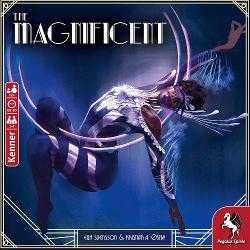
2019 · Würfel
The Magnificent
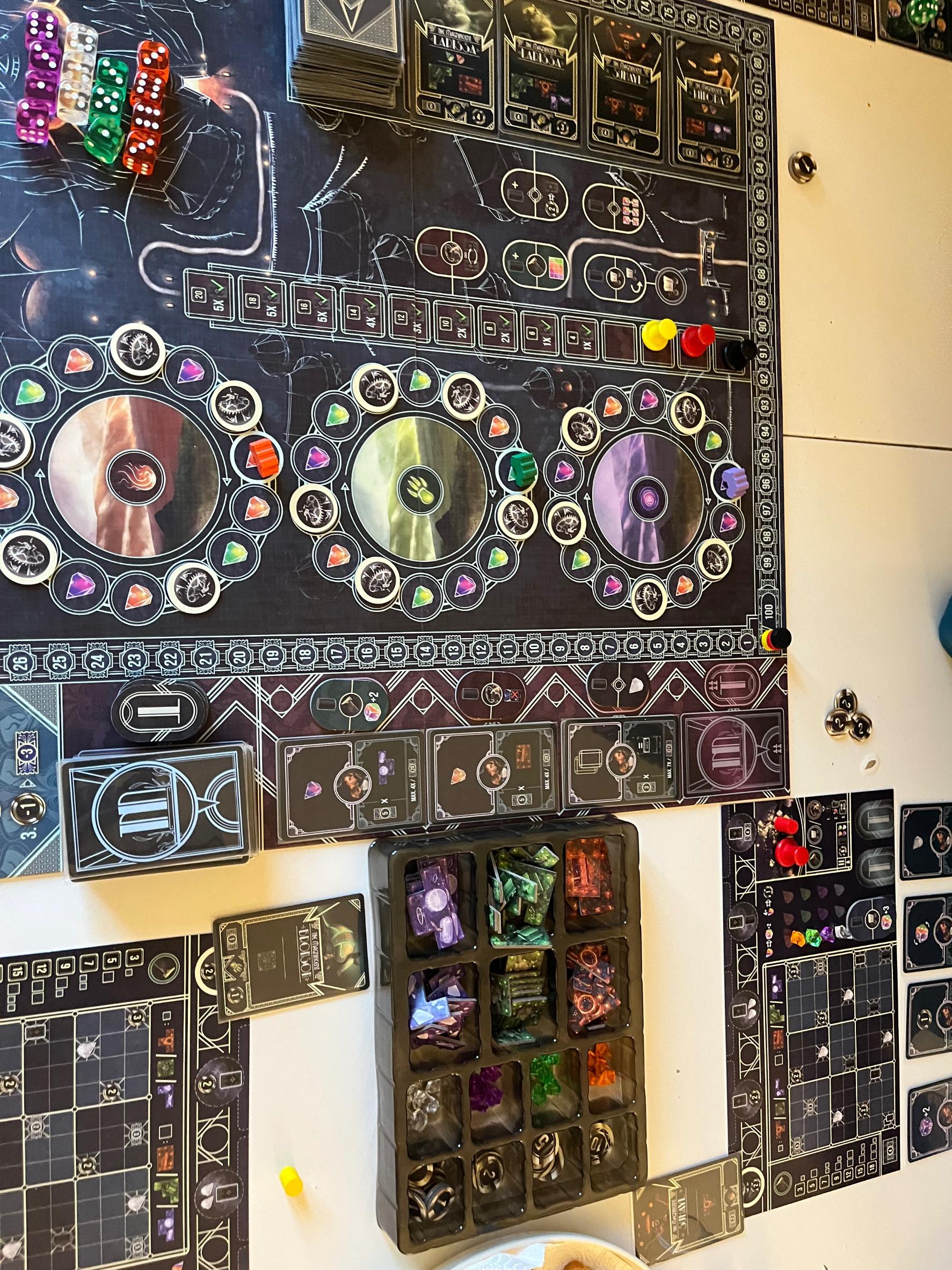
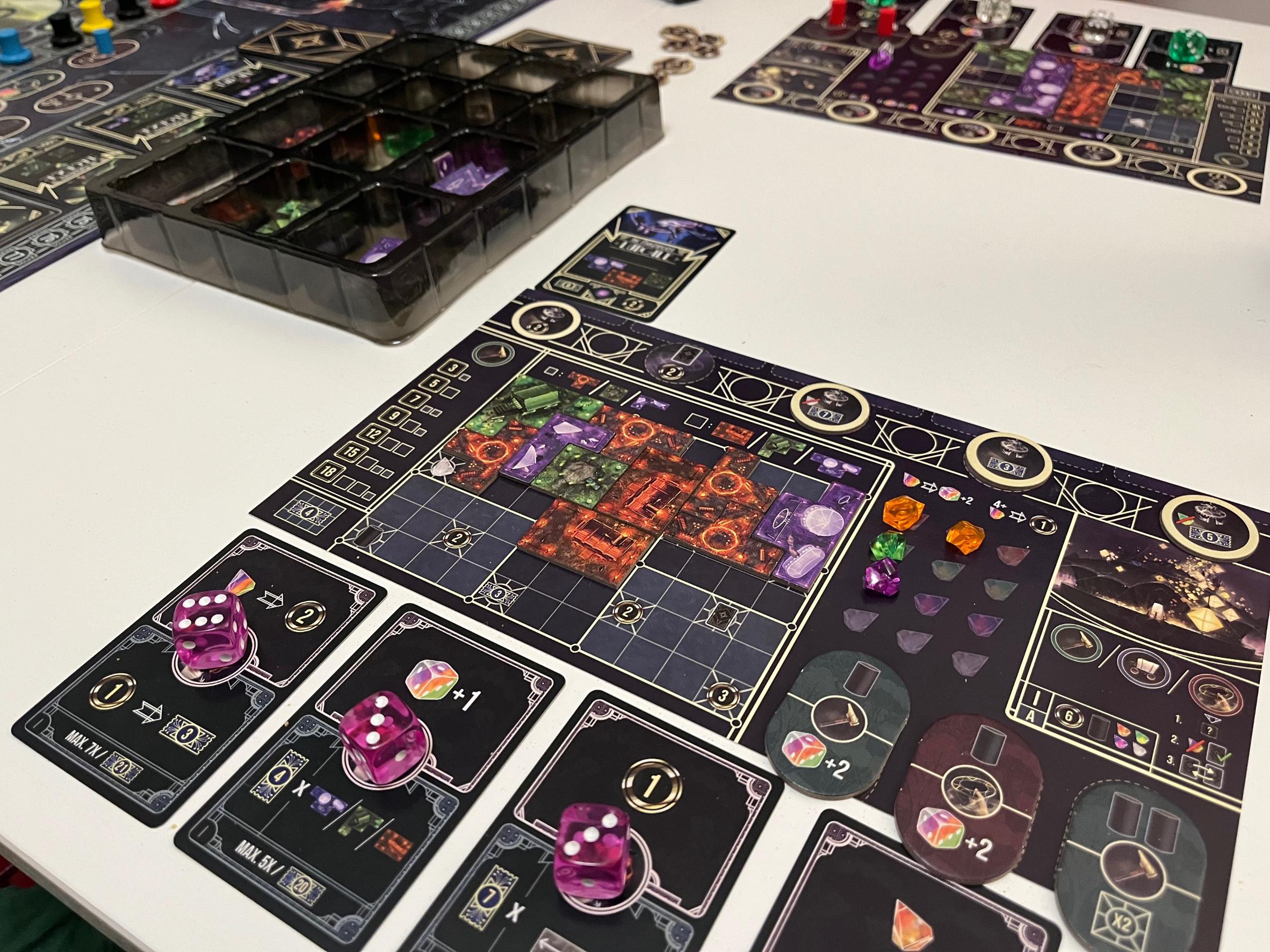
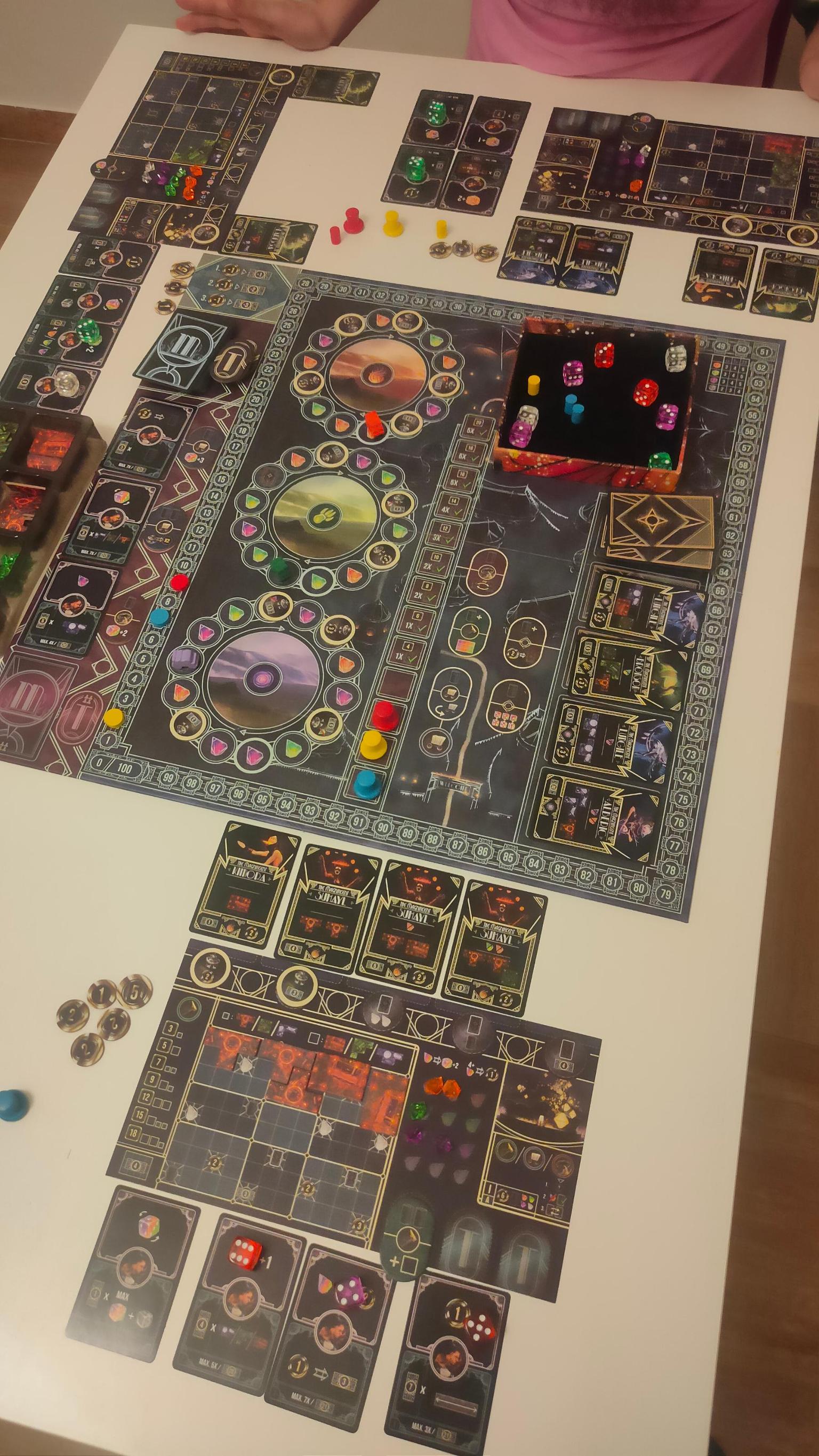
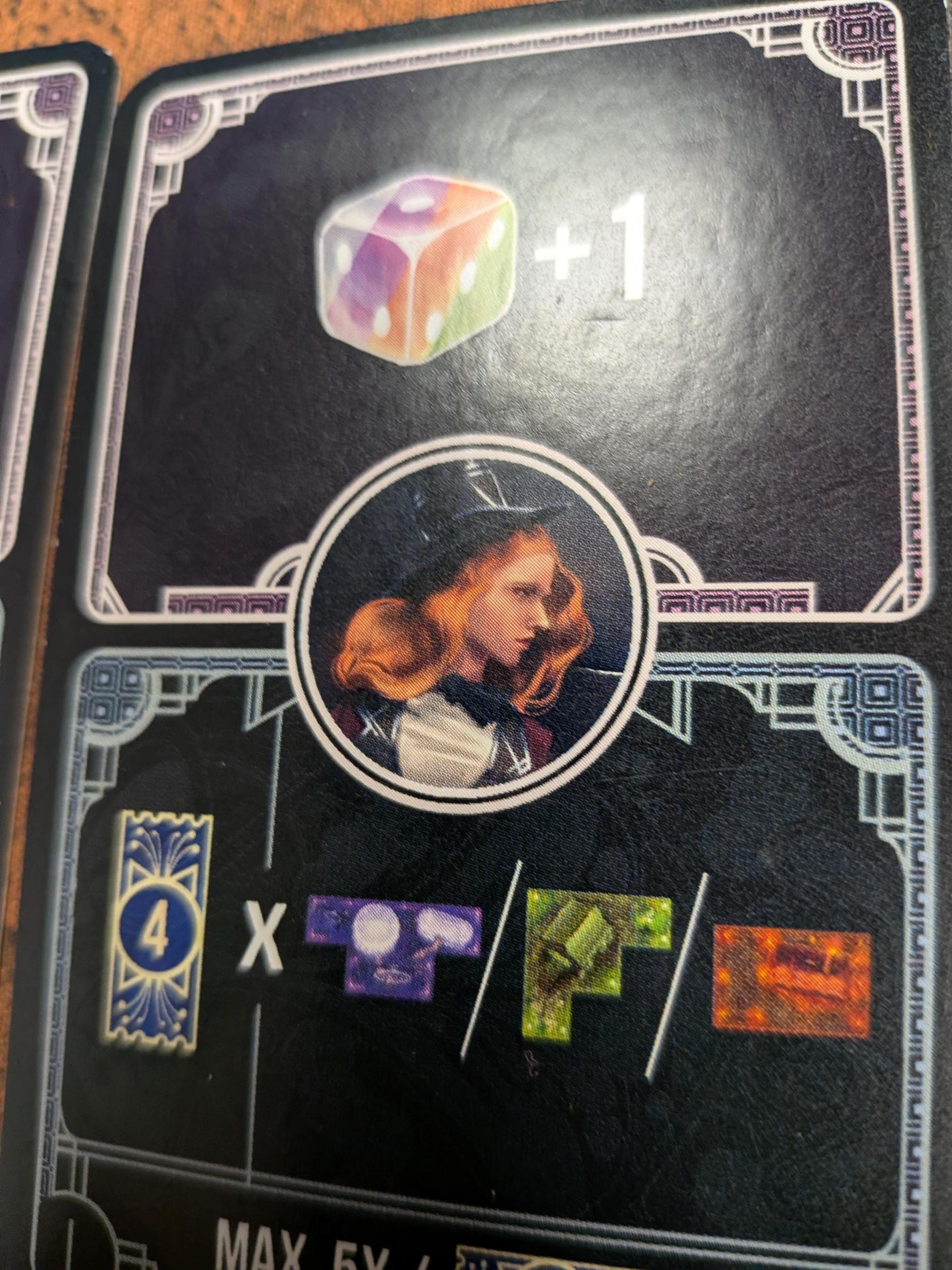
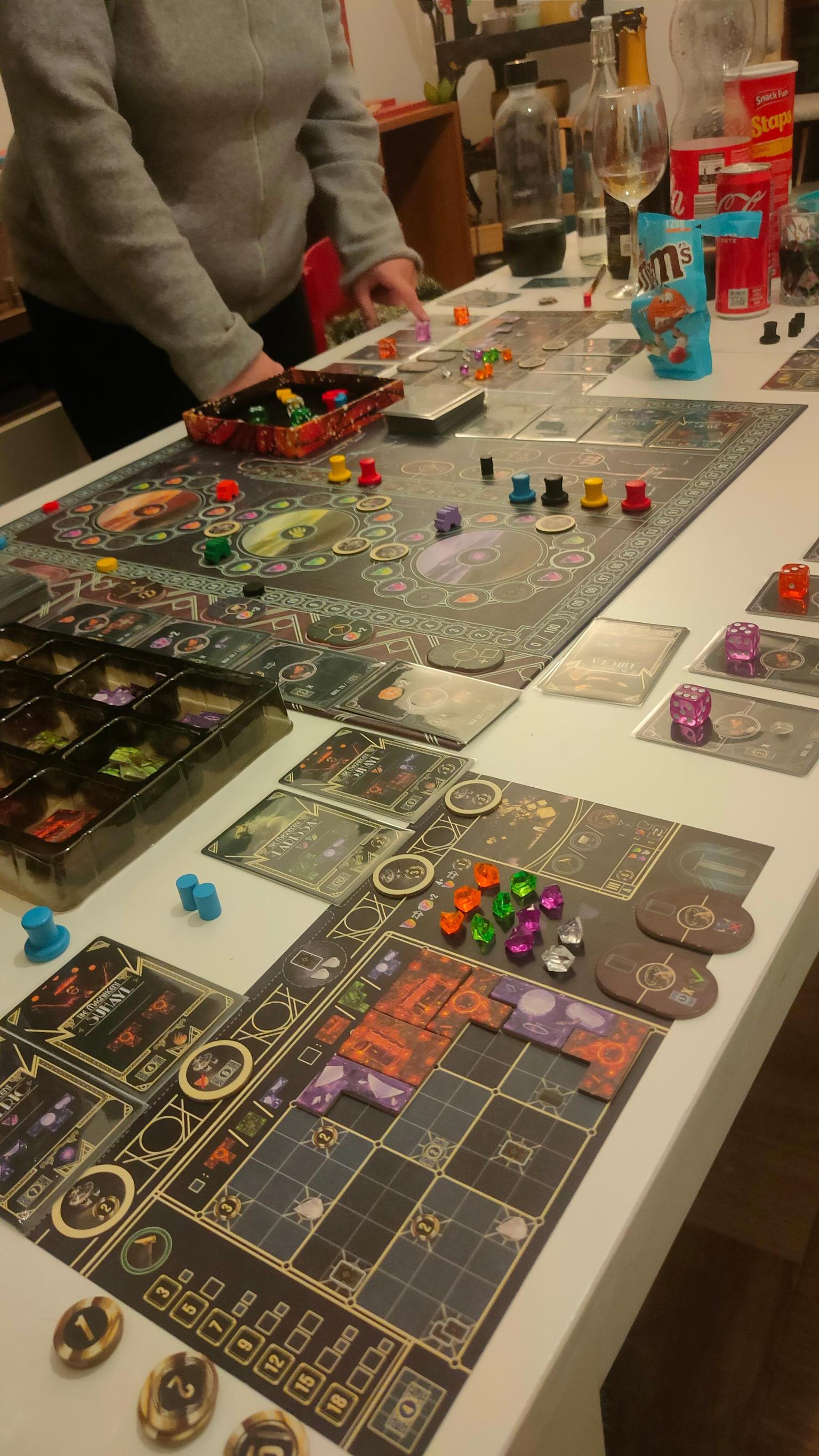
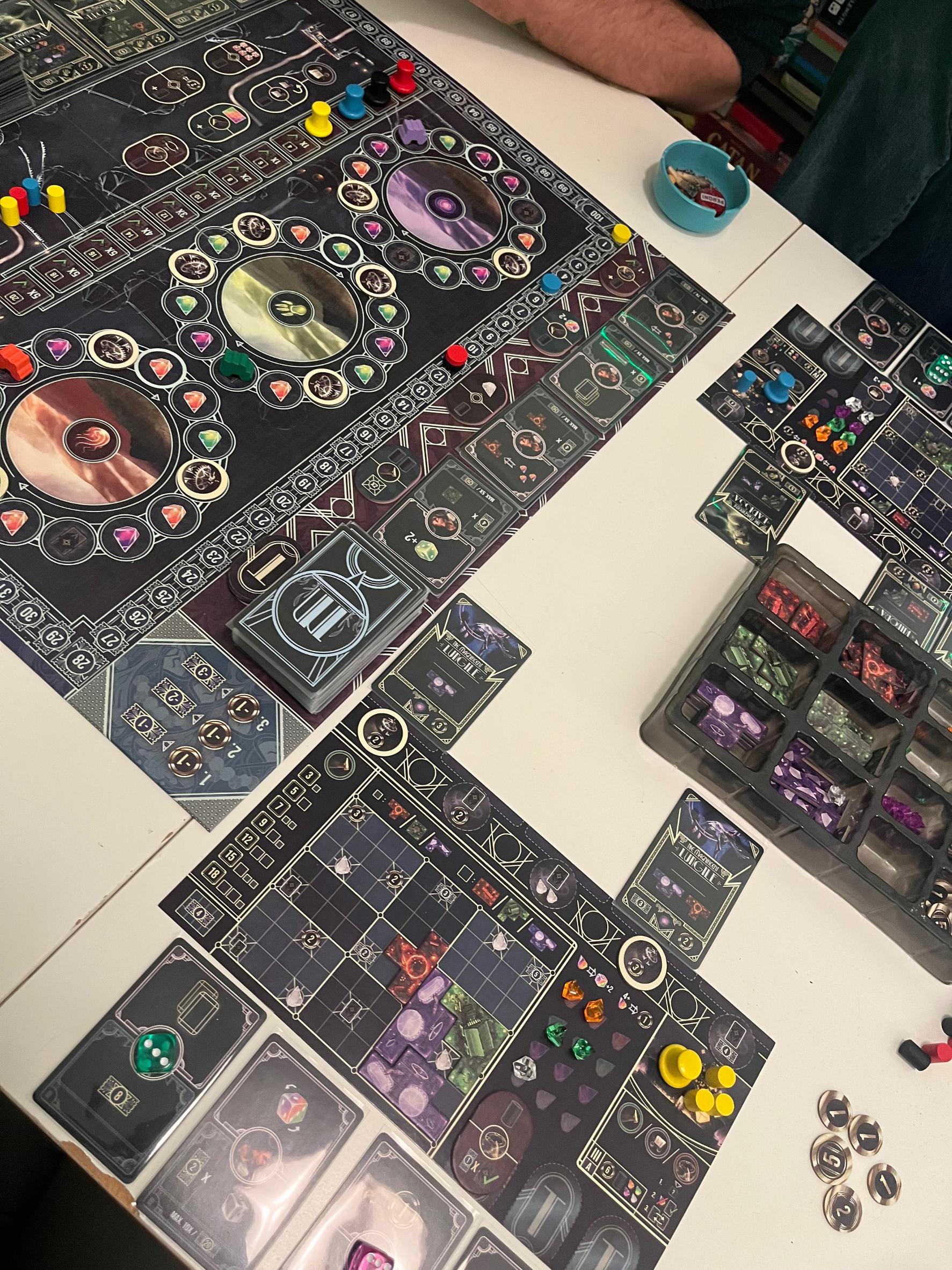
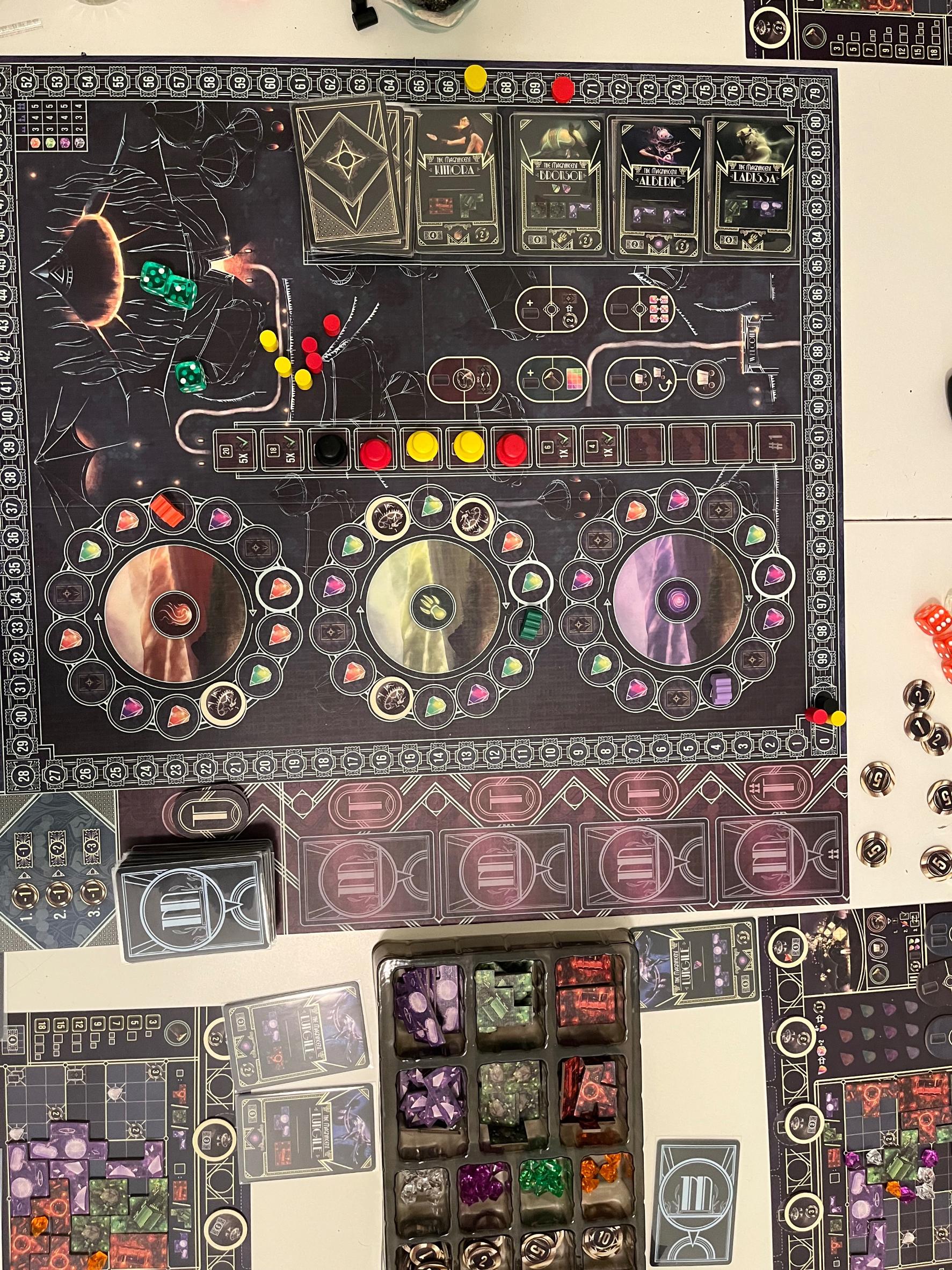
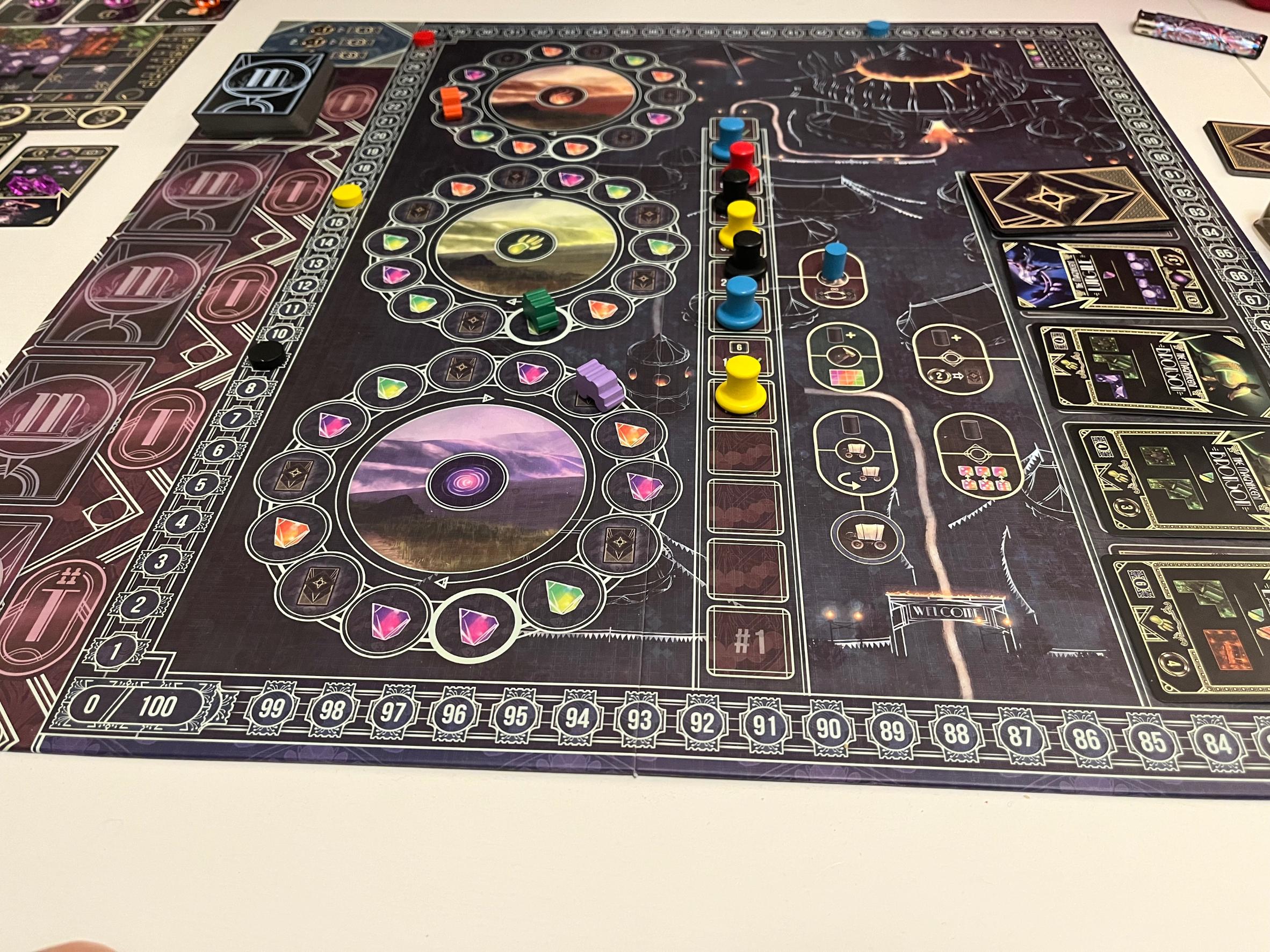
Die Spieler rekrutieren talentierte Artisten und erweitern ein umherziehendes Zirkuslager auf einem gemeinsamen Spielplan und ihren eigenen Spielertafeln. In ihrem Zug wählt ein Spieler einen Würfel aus dem Vorrat; die Augenzahl des Würfels plus alle eingesammelten Würfel derselben Farbe ergeben einen Stärke-Wert, der verwendet wird, um mit Tetris-artigen Plättchen zu bauen, zu reisen, um Elemente zu sammeln, oder Aufführungen in Zelten zu inszenieren. Die Würfelfarben bestimmen die Aktionen, verursachen aber auch am Ende jeder Runde Kosten in Münzen in Höhe des höchsten Farbwerts, sodass das Sammeln passender Würfel die Aktionen verbessert, aber die Ausgaben erhöht. Die Spieler verwalten außerdem Ansagerkarten, die ausgelöste Fähigkeiten gewähren und die Wertung am Rundenende festlegen, und nutzen Trainerplättchen für zusätzliche Vorteile. Das Spiel läuft über drei Runden aus Draften, Aktionen und Wertung; wer die meisten Punkte hat, gewinnt.
- Spieler
- 1–4 am besten mit 2
- Spielzeit
- 60–90 Min.
- Alter
- 14+
- Komplexität
- 3,1 / 5
Über das Spiel
- Illustration



Erweiterungen
In Ludoya ansehen
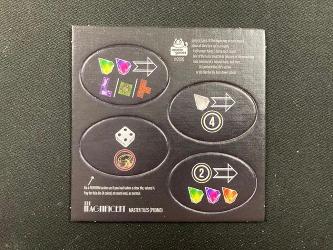
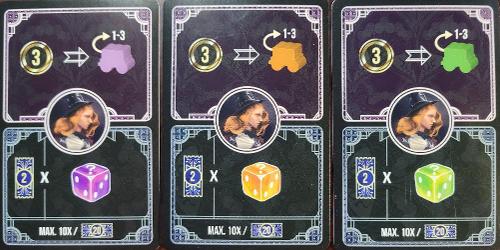
Fotos von Ludoya-Tischen
Alle Fotos in Ludoya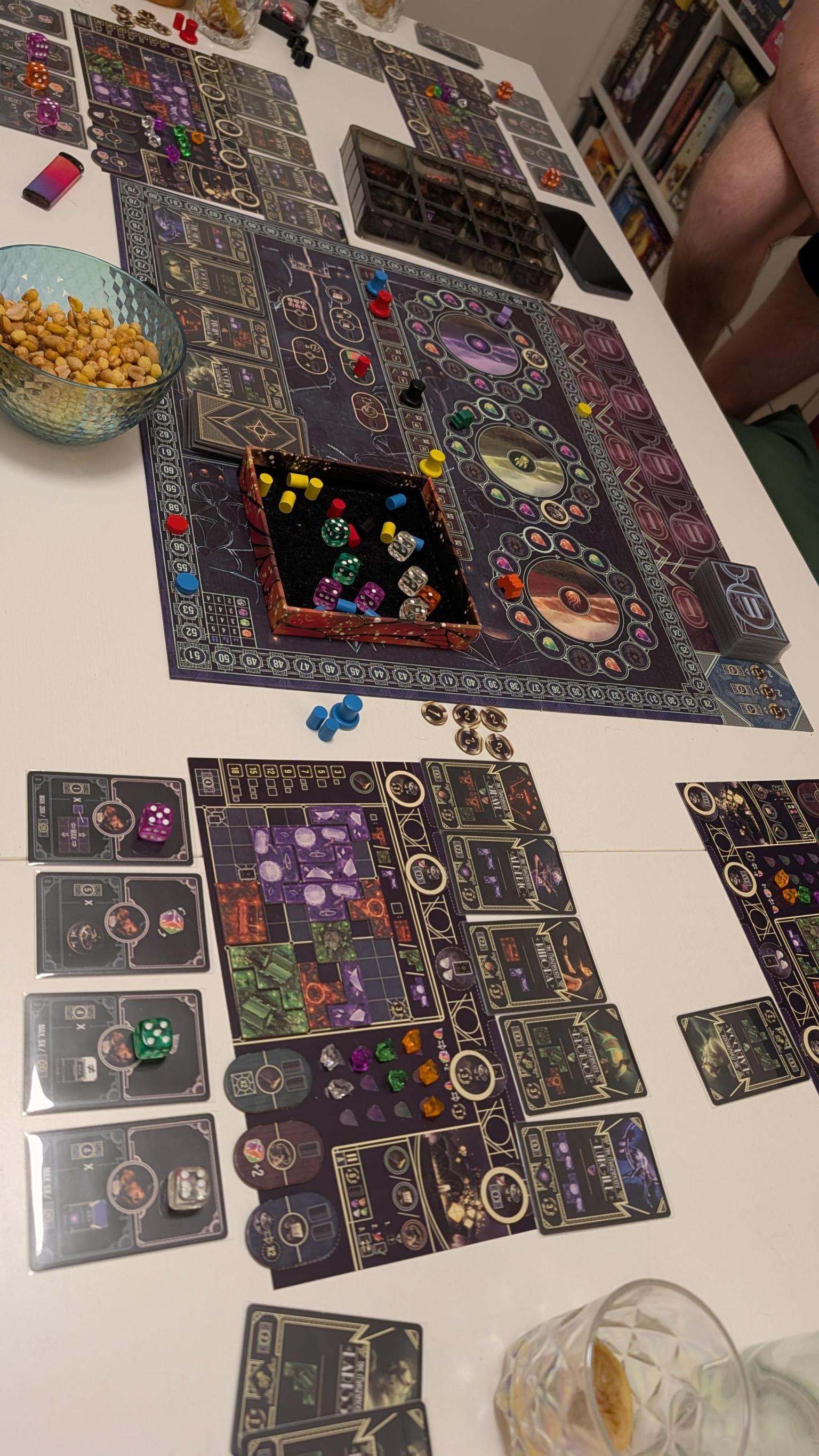
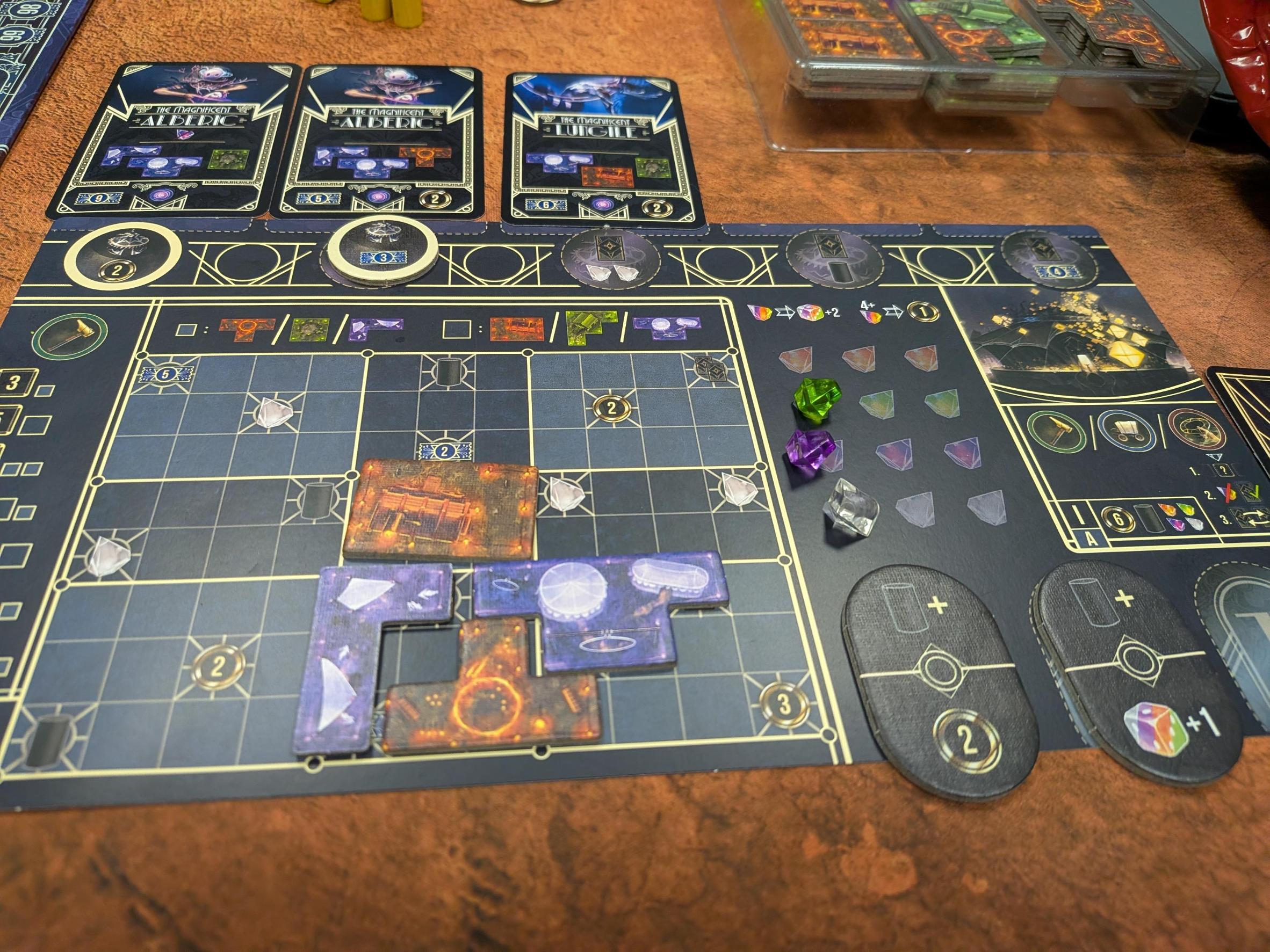
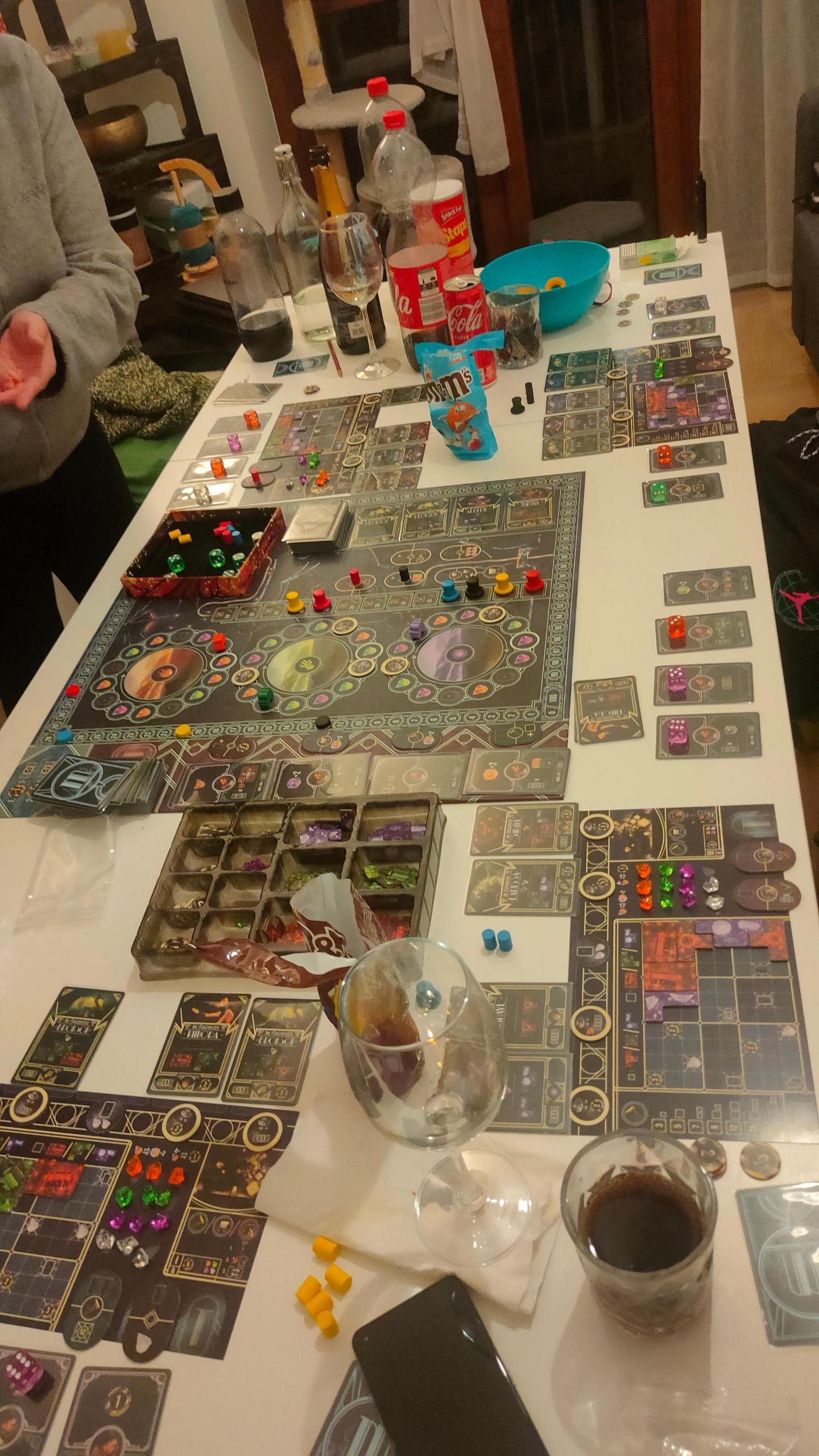
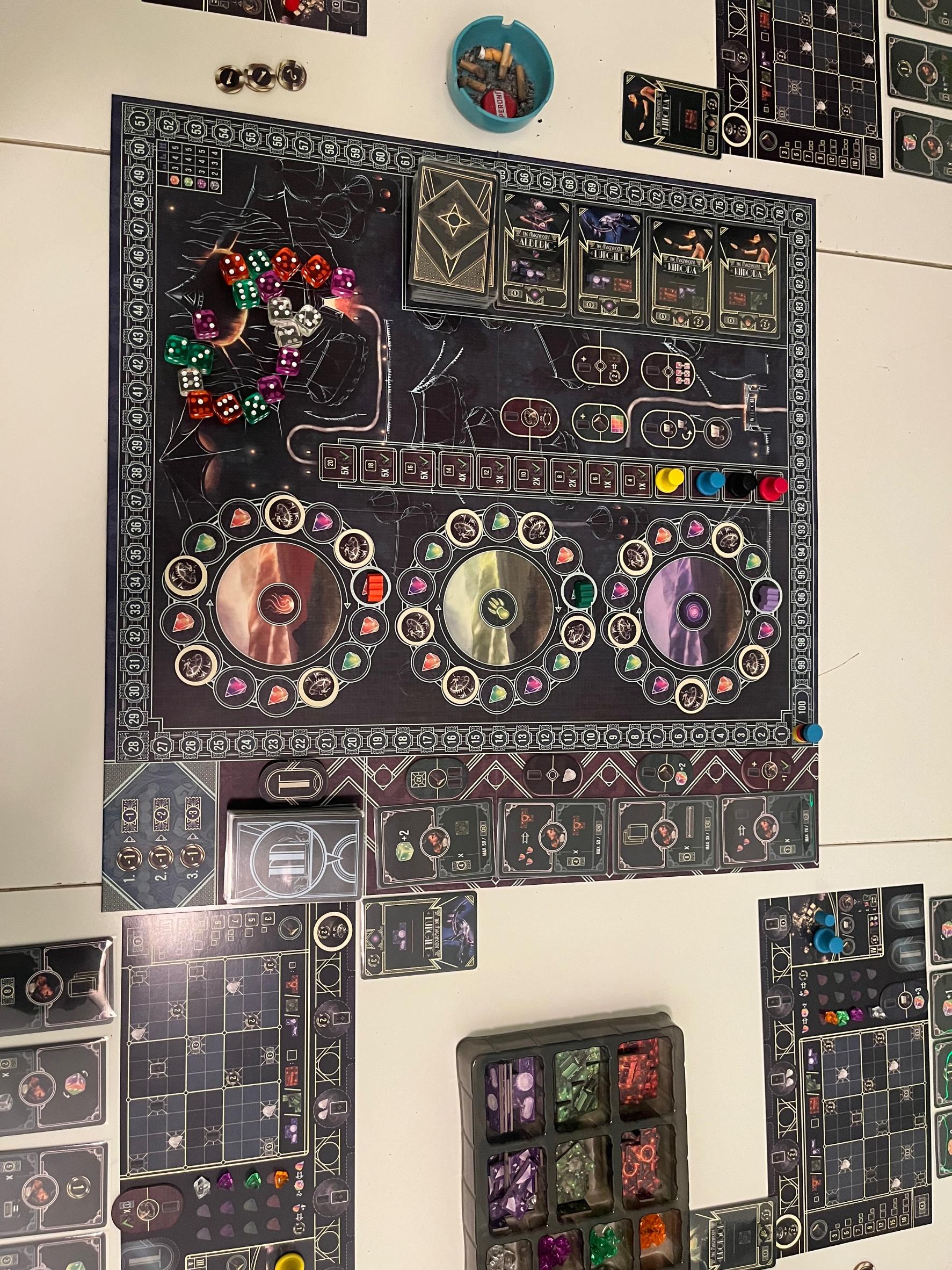
Wo kaufen
Shop-Preise und gebrauchte Exemplare, täglich geprüft.
- Cardhaus GamesAuf Lager 47.99 $
- Zatu GamesVorbestellung 40.89 £
- GameplayLagerstand prüfen 54.9 €
- Va de jocsAusverkauft 27.45 €
- Games EmpireAuf Lager 57.99 $
- 401 GamesAuf Lager 62.95 $
- Good GamesAuf Lager 64.32 $
- Juegos de la Mesa RedondaAusverkauft 46.71 €
An Ludoyas Tischen
Alle Statistiken in Ludoya- 266
- Erfasste Partien
- 233
- Spieler
- 1h 31m
- Durchschnittliche Partie
- 78
- In Sammlungen
- 9
- Auf Wunschlisten
5,7/10
aus 34 Ludoya-Rezensionen
Juego precioso en cuanto a mecánica y componentes, cosa que es de agradecer. Ideal para gente que se inicia a los euros o gente no muy jugona ya que no hay mucha interacción y cada uno va a su estrategia a seguir. Recomendado
Evan3,5 This is a short euro where you roll colored dice, then take turns drafting one die and taking one of three actions with a strength matching the pips of the dice you took plus all previous dice you took of the same color. At the end if the round you have to pay a coin per pip you have on the color of dice you took that had the greatest sum of pips. The actions are, place some tetris tiles into your personal grid, getting the benefits of things you cover, or moving a wagon on a clockwise track collecting gems used to amplify the effects of your dice, or scoring your recipe cards. The recipes require some set of building tiles, and sometimes ask you to discard gems of a specific color. The recipes then produce some number of points and or money. I had hoped the interesting elements of this game would come from some combination of dice drafting and tile placement, but neither of these puzzles is very tight. There is so much mitigation in the game that the real tension in the game comes from how few actions you have. Four actions each round, and three rounds. It's fine that you can more or less get done what you need to on your turn with that strong action limitation, it's just a little disappointing to have all these mechanisms that are normally tense and interesting where here they seem to be there just to check the box more than they add anything special to the experience of play. The one element that I found really cool was that with each of your four actions, you get a kicker effect from a one of your four master cards who the die gets assigned to for that round. At the end of the round, you get a fifth master card, then you remove one from your display and score the criteria at the bottom of the card. At the end of the game, the remaining cards are only scored at half value. It's a satisfying feeling to try and balance points vs ongoing function, but it's not really enough to carry the game overall, since so many of your other scoring opportunities are determined by the luck of the recipe card display requiring the buildings you have already built, and then additionally to have those cards contain substantial point gains as opposed to small point gains. :nostar: Art, Iconography and components functional :star: Clever or interesting mechanisms :star: Reasonably low downtime between turns with mildly AP players :nostar: Multiple plays stay interesting :star: Low or mitigatable luck elements :star::star::nostar::nostar::nostar: Raw enjoyment
Garfield2,0 After watching some reviews I have no desire to ever play it or even buy it. Multiplayer solitaire with no theme?

Regelfragen
Aus der Spielanleitung beantwortet von Ludoyas Regelassistenten.
When I take a clear die, does it count as any color for power, and do clear dice from previous turns add to my power?
A clear die can be treated as any color to determine your power on the turn you take it (you add values of all dice of one chosen color including that clear die), but clear dice already lying on your master cards from previous turns never add to your power. (page 4)
How do I calculate the coin payment at the end of a round?
For each color add the values of dice of that color on your master cards and pay coins equal to the highest of those three totals, plus pay the total value of all clear dice separately; if you can’t fully pay you pay what you have and take escalating point penalties. (page 7)
When I use Travel, how do I collect gems, posters and tents — are there limits?
Move the wagon up to your power and gain a gem or poster for every symbol you pass or land on; to pick up a tent you must end your movement on it (and stop), you can store at most 3 of each gem color (excess becomes 1 coin), and you cannot take more than 4 tents (you may still land on tents after that but not take them). (page 5)
When I Perform, does die color matter and how many posters can I complete?
Die color is irrelevant for Perform — only your power matters; the first time you Perform in a round place a hat on the PERFORMANCE TRACK and you may complete up to the number of posters shown on that space, but each completed poster must have a tent below it, you must have the required camp tiles, and you must discard any gems required by the poster or tent. (page 5)
How are master cards scored during the round and at game end (half value, caps)?
At the end of each round you choose one of your five master cards to score at its printed value, then discard it; at game end the four remaining master cards are scored at half value (rounded down), and any card maximums are also halved (rounded down). (pages 7, 8)
Ähnliche Spiele




Kostenlos, im Web, für Android und iOS
Spiel The Magnificent mit Ludoya
- Hab es in deiner SammlungVerwalte dein Exemplar und seine Erweiterungen, leih es Freunden oder setz es auf deine Wunschliste und erfahre, wenn der Preis fällt.Zur Sammlung hinzufügen
- Erfasse jede PartiePunkte, Sieger, Timer und Fotos, dann deine Statistiken: Siegquote, liebste Spielerzahl, beste Punktzahl.Partie erfassen
- Regelfragen klärenFrag alles zu den Regeln und erhalte eine Antwort aus der Spielanleitung, mit der Seite zum Nachprüfen.Den Regelassistenten fragen
- Finde Leute, mit denen du es spielstClubs, Spieleabende und Veranstaltungen in deiner Nähe, bei denen dieses Spiel auf den Tisch kommt.Veranstaltungen ansehen
Spieldaten (Spieler, Spielzeit, Alter, Mitwirkende) von BoardGameGeek.