2024 · Deduktion
Orapa
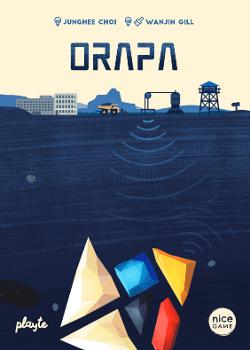
Ein Spieler übernimmt die Rolle des Direktors und platziert heimlich tangramförmige Mineralien auf einem 10×8-Raster, während die anderen Spieler als Entdecker versuchen, diese Platzierungen zu ermitteln. In jedem Zug wählt ein Entdecker eine Kantenkoordinate aus, um eine elastische Welle abzufeuern, die gerade über das Raster läuft und an den Mineralien entweder im rechten Winkel abgelenkt wird oder auf gerader Bahn weiterläuft, bis sie das Feld wieder verlässt. Der Direktor nennt die Austrittsposition und die Farbe der austretenden Welle; die Entdecker notieren diese Ergebnisse und ziehen daraus logische Schlüsse, um die Positionen und Farben der Formen zu bestimmen. Gespielt wird im Uhrzeigersinn, aber jeder Spieler darf jederzeit eine vollständige Lösung nennen; der erste Spieler, der alle Mineralpositionen und Farben korrekt identifiziert, gewinnt.
- Spieler
- 2–5 am besten mit 2
- Spielzeit
- 20–30 Min.
- Alter
- 8+
- Komplexität
- 1,9 / 5
Über das Spiel
- Autoren
- Illustration
- Publisher
Erweiterungen
In Ludoya ansehen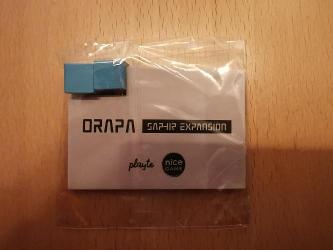
Fotos von Ludoya-Tischen
Alle Fotos in LudoyaWo kaufen
Shop-Preise und gebrauchte Exemplare, täglich geprüft.
An Ludoyas Tischen
Alle Statistiken in Ludoya- 159
- Erfasste Partien
- 82
- Spieler
- 20m 24s
- Durchschnittliche Partie
- 33
- In Sammlungen
- 11
- Auf Wunschlisten
- 1
- Vorbestellt
7,2/10
aus 11 Ludoya-Rezensionen
Regelfragen
Aus der Spielanleitung beantwortet von Ludoyas Regelassistenten.
Can gemstone pieces touch each other or be placed at an angle?
Pieces must align with the board’s grid and cannot be placed at an angle. Their edges may not directly touch; only corners and internal lines may meet, and no piece may extend outside the grid (Rulebook, p. 1).
What exactly do I say when I fire an ultrasonic wave?
Choose one numbered or lettered position along the edge and ask about sending a wave from there. The quiz master tells you both the wave’s exit point and its resulting color (Rulebook, p. 2).
Can I ask about a wave I already sent without using my turn?
Yes. You may ask for the result of a previously sent ultrasonic wave again, and doing so does not use your turn (Rulebook, p. 2).
What do the different beam colors mean?
The beam changes color according to the gemstone colors it encounters: red, blue, yellow, and white produce their matching colors; combinations produce pink, lemon, sky blue, or gray. If it encounters the same color more than once, that color is counted only the first time (Rulebook, p. 2).
Can I guess the whole mine whenever I want, and what happens if I’m wrong?
You may submit your solution sheet using your turn. A correct solution wins, but an incorrect one causes you to lose immediately in the two-player game (Rulebook, p. 3).
What happens if the wave hits the black gemstone in the Blackbody expansion?
The black gemstone absorbs the ultrasonic wave instead of reflecting it, so the quiz master answers, “The signal was absorbed,” without giving an exit point or color. The same response applies when using coordinate questions (Rulebook, p. 4).


Kostenlos, im Web, für Android und iOS
Spiel Orapa mit Ludoya
- Hab es in deiner SammlungVerwalte dein Exemplar und seine Erweiterungen, leih es Freunden oder setz es auf deine Wunschliste und erfahre, wenn der Preis fällt.Zur Sammlung hinzufügen
- Erfasse jede PartiePunkte, Sieger, Timer und Fotos, dann deine Statistiken: Siegquote, liebste Spielerzahl, beste Punktzahl.Partie erfassen
- Regelfragen klärenFrag alles zu den Regeln und erhalte eine Antwort aus der Spielanleitung, mit der Seite zum Nachprüfen.Den Regelassistenten fragen
- Finde Leute, mit denen du es spielstClubs, Spieleabende und Veranstaltungen in deiner Nähe, bei denen dieses Spiel auf den Tisch kommt.Veranstaltungen ansehen
Spieldaten (Spieler, Spielzeit, Alter, Mitwirkende) von BoardGameGeek.