
2017 · Deduktion
TAGIRON
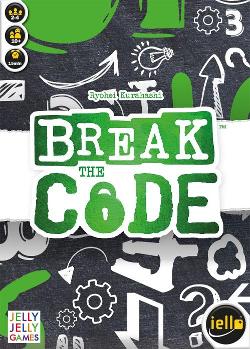
Die Spieler verwenden Zahlplättchen und Fragekarten, um die verdeckten Plättchen der Mitspieler oder die verdeckt in der Mitte liegenden Plättchen zu entschlüsseln. Jeder Spieler ordnet seine gezogenen Plättchen hinter einem Sichtschirm in aufsteigender Reihenfolge an und stellt dann Fragen aus einem gemeinsamen Kartenstapel oder beantwortet solche Fragen, um Informationen zu sammeln. Das Ziel ist, die Farben und Zahlen der Zielplättchen in der Reihenfolge von links nach rechts korrekt zu bestimmen. Im Spiel geht es vor allem um logisches Schlussfolgern, Zahlenverständnis und das Deuten der Antworten der Gegner, um Möglichkeiten auszuschließen und einen geordneten Tipp abzugeben.
- Spieler
- 2–4 am besten mit 2
- Spielzeit
- 15 Min.
- Alter
- 10+
- Komplexität
- 1,7 / 5
Über das Spiel
- Autoren
- Illustration
- Verlage


Erweiterungen
In Ludoya ansehen
Fotos von Ludoya-Tischen
Alle Fotos in Ludoya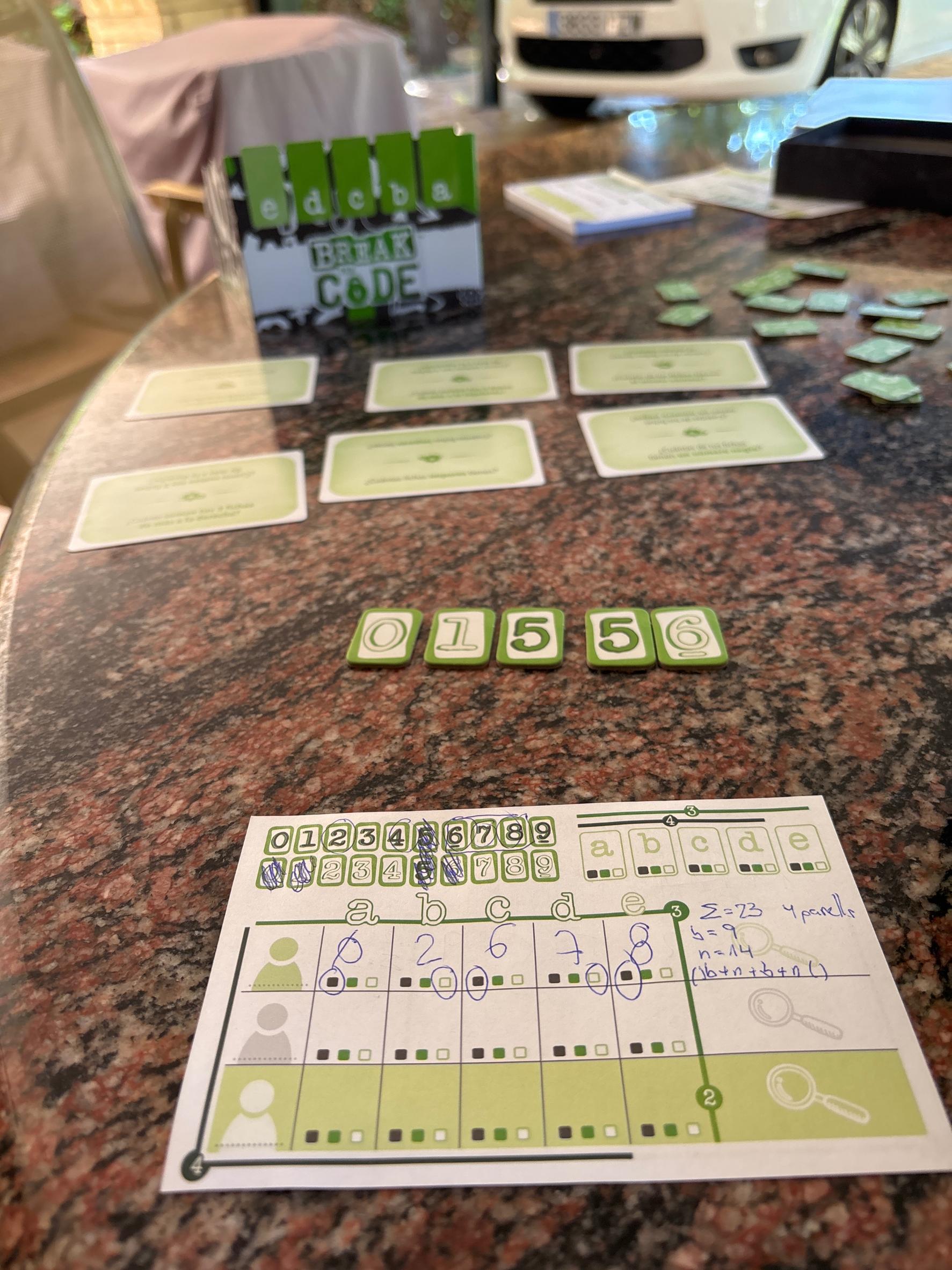
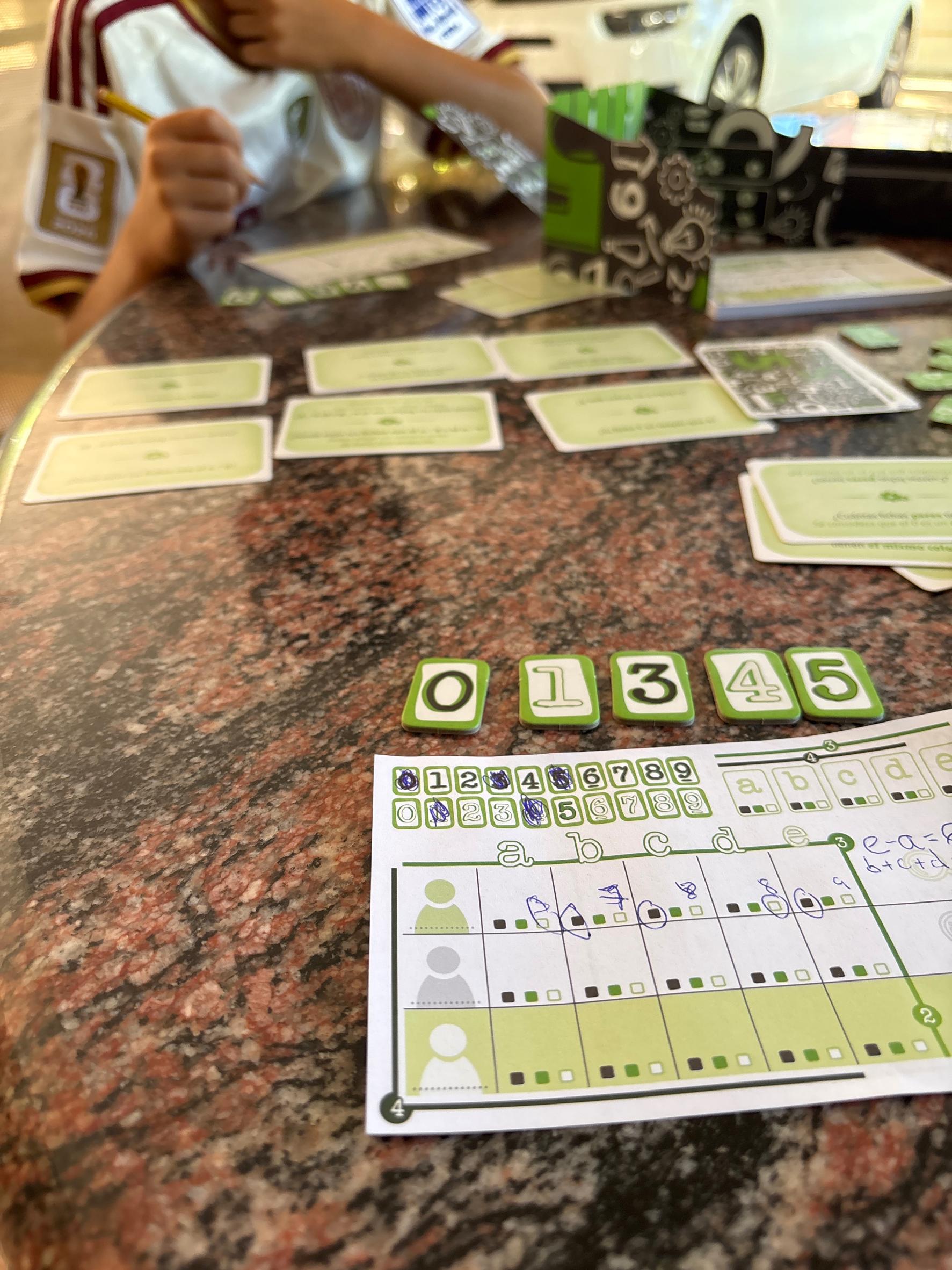
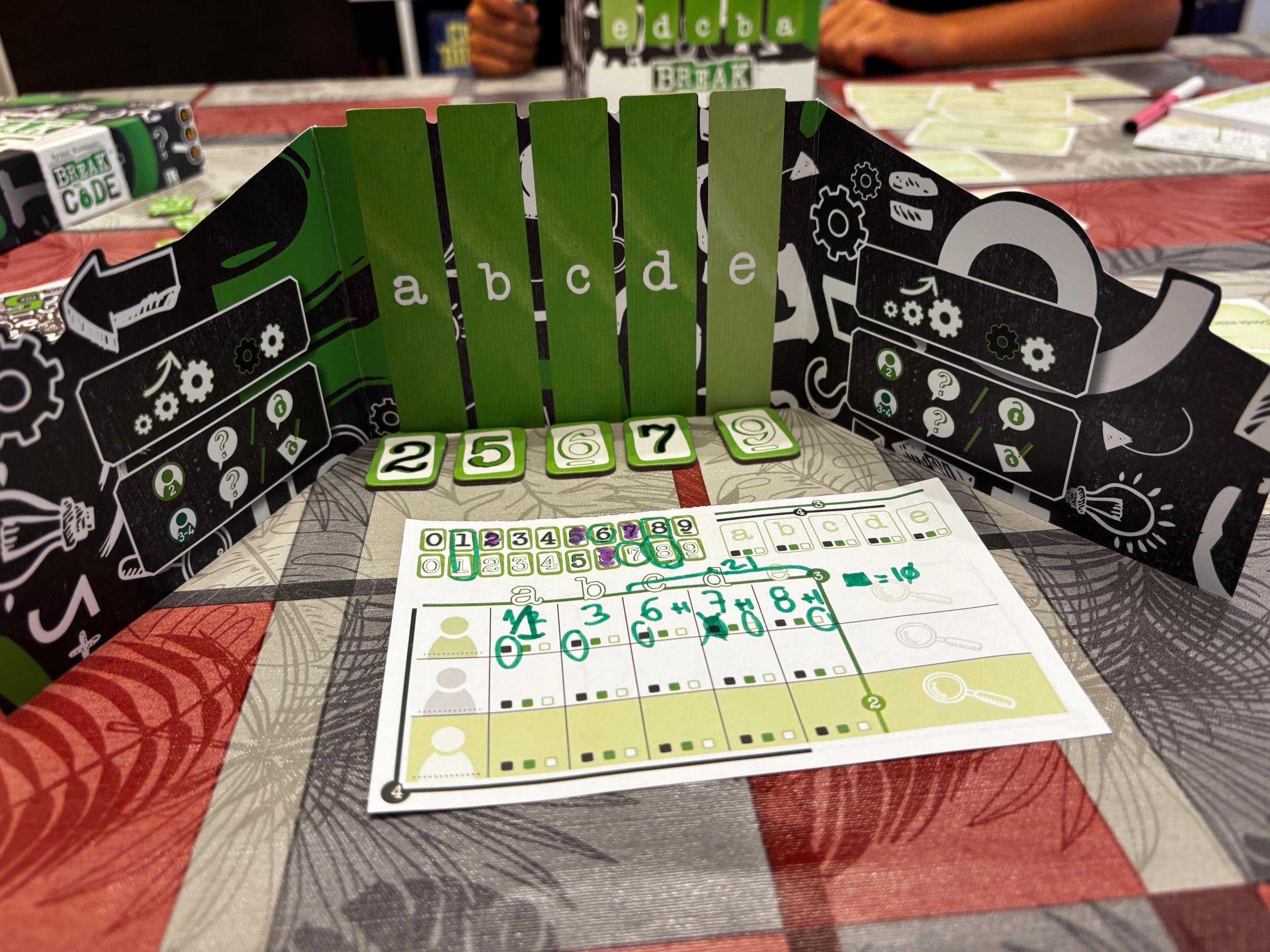
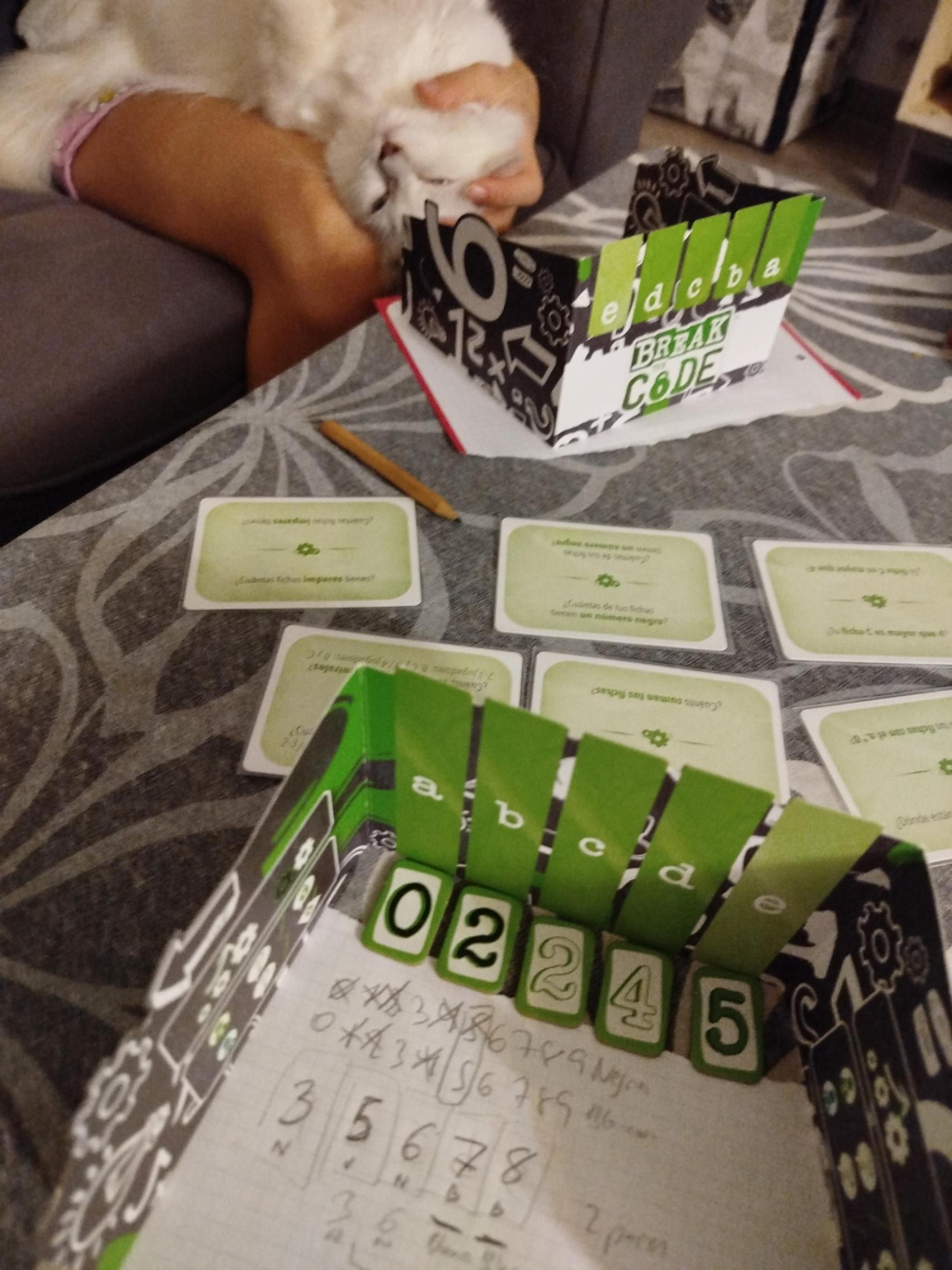
Wo kaufen
Shop-Preise und gebrauchte Exemplare, täglich geprüft.
An Ludoyas Tischen
Alle Statistiken in Ludoya- 500
- Erfasste Partien
- 302
- Spieler
- 16m 54s
- Durchschnittliche Partie
- 97
- In Sammlungen
- 5
- Auf Wunschlisten
6,9/10
aus 40 Ludoya-Rezensionen
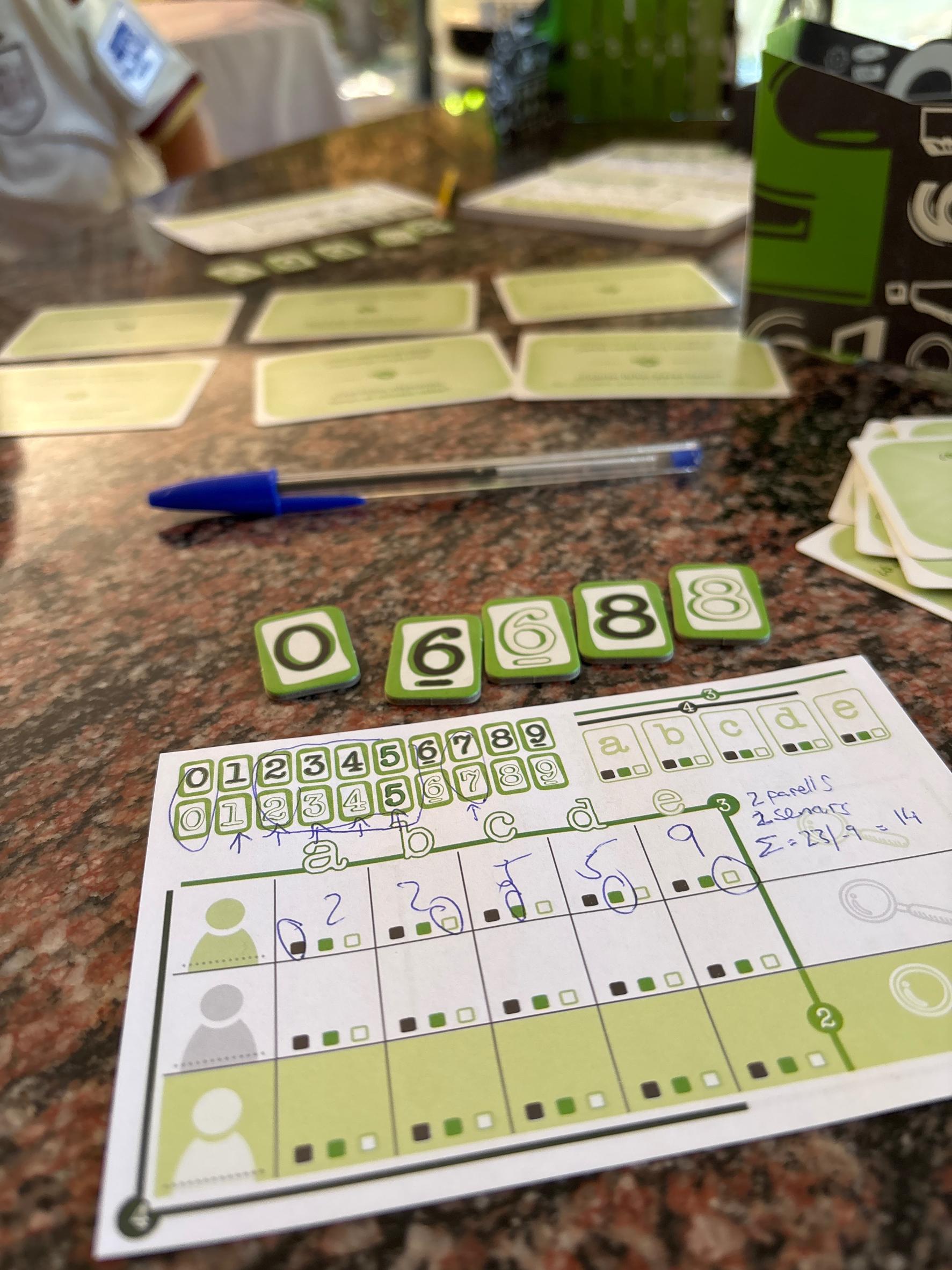
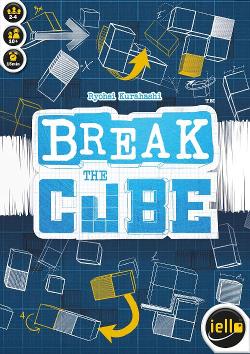
FR- BREAK THE CODE – Découvert récemment à 4 joueurs, ce jeu est une sorte de SUDOKU à la sauce CODENAMES/DECRYPTO avec un petit zest de MASTERMIND. Mine de rien cela fait … cogiter ! C’est pourtant tout simple : 20 plaquettes comportent des chiffres de 0 à 9, en 2 couleurs. Noir ou blanc. Bon, ils ont mis les deux plaquettes « 5 » en vert au passage. Chacun récupère 4 plaquettes et les cache derrière son paravent. Si vous êtes bien réveillé, il restera 4 plaques cachées au centre de la table. Le but est d’être le premier à identifier quelles nombres et en quelle couleur ! Pour cela, on choisit une question parmi les 6-8 cartes disponibles : quelle est la somme de tes chiffres noirs ? Et on la pose aux autres…sans y répondre soi-même. On complète les questions disponibles, on choisit avec soin la nôtre…du genre « où sont vos 6 ». On note peu à peu les indices (comme on le peut sur la minuscule fiche disponible ! Mine de rien en quelques tours on coche les nombres restant en circulation, le premier qui peut annoncer le bon code (en vérifiant vite fait avant) l’emporte. Un jeu pour faire des maths niveau collège. Moins tout public qu’un Codenames ou qu’un Decrypto, perso j’ai plutôt bien aimé, reste à voir sur le long terme passé le côté découverte, comparativement aux deux jeux cités plus haut qui sortent régulièrement chez nous depuis leur achat.
Un juego rápido, sencillo de explicar y muy entretenido. Escala perfectamente según número de jugadores. Sale poco a mesa, pero creo que está bien así, ya que se puede tornar repetitivo. Un gran juego de 2 a 4.
- Base -



Regelfragen
Aus der Spielanleitung beantwortet von Ludoyas Regelassistenten.
If I get two tiles with the same number, which one do I place first (left or right)?
Place tiles in ascending order left-to-right; when two tiles have the same number, place the tile with the black number first (on the left of the white one). (page 2)
If I ask “Where are your 1 or 2 tiles?” can I ask for both numbers at once or do I have to pick one?
You must decide which number you're asking about — you ask either for #1 or for #2, not both at once. (page 3)
When I announce a full guess in a 2-player game, does my opponent tell me how many or which tiles I got right?
No — the opponent only says whether your entire announced guess is correct or incorrect; they do not tell how many or which tiles were right. (page 3)
In a 4-player game, do I have to answer the question I just read aloud?
Yes — in a 4-player game all players, including the asker, must answer the Question card. (page 4)
In a 3- or 4-player game, how many times can I try to guess the central tiles?
You may only guess once in a 3- or 4-player game, so write your answer carefully before checking. (page 4)
If I start the 2-player game and correctly guess my opponent’s tiles, can they still guess and force a tie?
Yes — if you were the starting player and guess correctly, your opponent may immediately try to guess your tiles; if they also guess correctly the game ends in a tie. (page 3)














Kostenlos, im Web, für Android und iOS
Spiel TAGIRON mit Ludoya
- Hab es in deiner SammlungVerwalte dein Exemplar und seine Erweiterungen, leih es Freunden oder setz es auf deine Wunschliste und erfahre, wenn der Preis fällt.Zur Sammlung hinzufügen
- Erfasse jede PartiePunkte, Sieger, Timer und Fotos, dann deine Statistiken: Siegquote, liebste Spielerzahl, beste Punktzahl.Partie erfassen
- Regelfragen klärenFrag alles zu den Regeln und erhalte eine Antwort aus der Spielanleitung, mit der Seite zum Nachprüfen.Den Regelassistenten fragen
- Finde Leute, mit denen du es spielstClubs, Spieleabende und Veranstaltungen in deiner Nähe, bei denen dieses Spiel auf den Tisch kommt.Veranstaltungen ansehen
Spieldaten (Spieler, Spielzeit, Alter, Mitwirkende) von BoardGameGeek.