
2018 · Rätsel
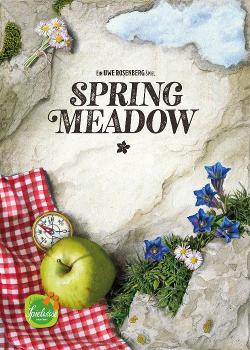
Spring Meadow
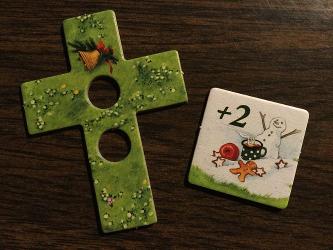
Der Frühling hält Einzug in den Bergen, und die Spieler bauen eine blühende Wiese, indem sie unregelmäßige Plättchen mit 0–2 Löchern auf ihre persönlichen Bergtafeln legen. Die Plättchen werden von einem zentralen Tableau ausgewählt; wer Plättchen so platziert, dass Gruppen von Löchern entstehen oder vergrößert werden, erhält zusätzliche Plättchen, während Murmeltierbauten auf den Plättchen einschränken, wo Teile gelegt werden dürfen. Die Spieler müssen mit begrenzten Snacks (Reihenfolge und Plättchenauswahl) sowie räumlichen Einschränkungen umgehen, um ihre Wiese wachsen zu lassen. Die Wertung findet in bestimmten Abständen statt und richtet sich nach den Wiesenplättchen, die aus der Mitte gewählt werden; die größte Wiese erhält dabei einen Wanderpin. Der erste Spieler, der bei der Wertung zwei Wanderpins sammelt, gewinnt.
- Spieler
- 1–4 am besten mit 2
- Spielzeit
- 15–60 Min.
- Alter
- 10+
- Komplexität
- 1,8 / 5
Über das Spiel
- Autoren
- Illustration
- Publisher

Erweiterungen
In Ludoya ansehen
Fotos von Ludoya-Tischen
Alle Fotos in Ludoya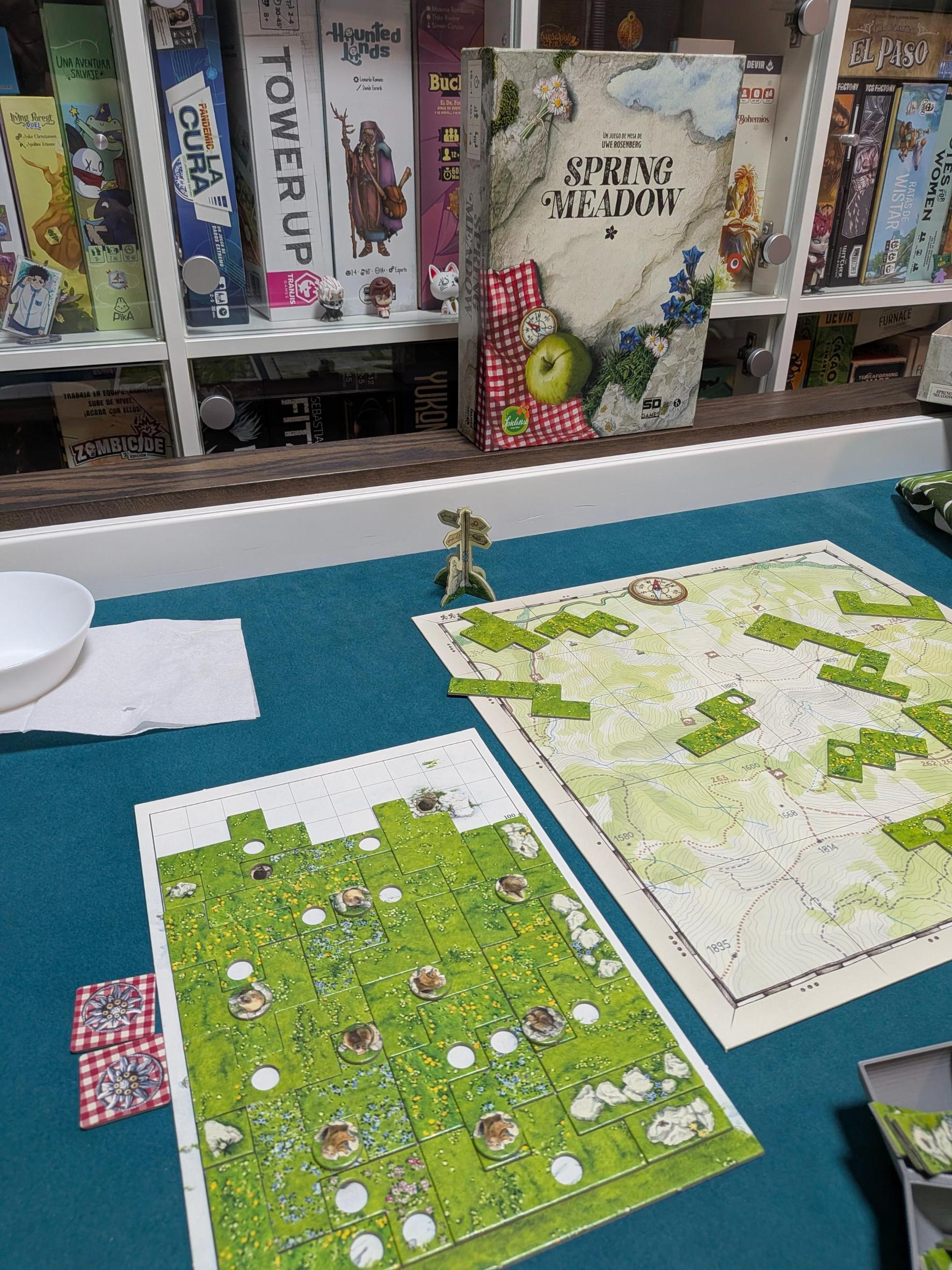
Wo kaufen
Shop-Preise und gebrauchte Exemplare, täglich geprüft.
- MathomAuf Lager 12 €
- Miniature MarketAusverkauft 43.99 $
- Cardhaus GamesAuf Lager 44.95 $
- Juegos de la Mesa RedondaAuf Lager 21.97 €
- BoardGames.BGAusverkauft 23 €
- Gamers Guild AZAuf Lager 40.96 $
- ZacatrusAusverkauft 35.95 €
- Dungeon MarvelsVorbestellung 35.96 €
An Ludoyas Tischen
Alle Statistiken in Ludoya- 236
- Erfasste Partien
- 147
- Spieler
- 31m 28s
- Durchschnittliche Partie
- 37
- In Sammlungen
- 4
- Auf Wunschlisten
6,6/10
aus 14 Ludoya-Rezensionen
Evan5,9 In this game, players are drafting tiles from a grid as in Cottage Garden. This is a wonderful tile selection method as you can clearly see what tiles are coming up and you can plan your future moves reducing downtime substantially. You lay your tiles as evenly as possible into your player board aiming to complete rows. When a selection row on the grid would be selected from yet is mostly depleted, the game pauses for a scoring. Players get 10 vp for each completed row plus 1 vp for each completed square in their lowest incomplete row, and a few mini points for various features. Winner gets a VP chip, and then you refill the grid, and play continues until someone manages to get 2 chips. The interesting part of the game is that the tetris tiles have holes in them like in Indian Summer, and if you line up the holes with the printed spaces on your map, you get bonus points in the next scoring, and if you line the holes up with each other, you get to lay down bonus tiles to cover new areas. There's a nice tension between wanting to get the tile that perfectly fits your situation, vs wanting to extend your chain of contiguous holes. Of the three games in the series, I think Indian Summer is still my favorite, because this game is very low on player interaction, and the art on the tiles is by far the blandest of the three. That being said I'm looking forward for more of this game, and I hope it grows on me over time. :star: Art, Iconography and components functional :star: Clever or interesting mechanisms :star: Reasonably low downtime between turns with mildly AP players :star: Multiple plays stay interesting :star: Low or mitigatable luck elements :star::star::star::nostar::nostar: Raw enjoyment
Won in Rifa. Sold in LaBSK.



















Kostenlos, im Web, für Android und iOS
Spiel Spring Meadow mit Ludoya
- Hab es in deiner SammlungVerwalte dein Exemplar und seine Erweiterungen, leih es Freunden oder setz es auf deine Wunschliste und erfahre, wenn der Preis fällt.Zur Sammlung hinzufügen
- Erfasse jede PartiePunkte, Sieger, Timer und Fotos, dann deine Statistiken: Siegquote, liebste Spielerzahl, beste Punktzahl.Partie erfassen
- Werte ohne PapierNutze die Wertungsbögen und Spielhelfer der Community und lass Ludoya die Punkte zusammenzählen.Wertungsbögen finden
- Finde Leute, mit denen du es spielstClubs, Spieleabende und Veranstaltungen in deiner Nähe, bei denen dieses Spiel auf den Tisch kommt.Veranstaltungen ansehen
Spieldaten (Spieler, Spielzeit, Alter, Mitwirkende) von BoardGameGeek.