
2012 · Combat
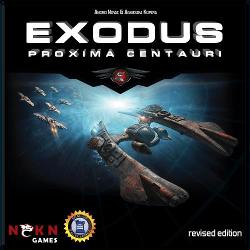
Exodus: Proxima Centauri
Six factions humaines se reconstruisent après un effondrement, s’installent sur des planètes laissées par une civilisation extraterrestre et se disputent le contrôle tandis que leurs protecteurs repartent. Les joueurs construisent des flottes spatiales personnalisables, explorent et conquièrent des systèmes, gèrent les ressources et la logistique, et étudient un arbre technologique extraterrestre pour étendre leurs empires. Les déplacements secrets et les combats contre la résistance contrôlée par l’IA comme contre les autres joueurs façonnent les gains territoriaux, tandis que les armes, les améliorations de vaisseaux et la capture de planètes alimentent la construction de moteur. Un volet politique repose sur des enchères à l’aveugle et des votes pour faire adopter des lois et des résolutions qui affectent tous les joueurs. Le jeu récompense l’action militaire autant que le développement économique et technologique.
- Joueurs
- 2–6 idéal à 6
- Temps de jeu
- 180 min
- Âge
- 14+
- Complexité
- 3,6 / 5
À propos du jeu
- Auteurs
- Illustration
- Éditeur


Extensions
Les voir dans Ludoya Exodus: Edge of Extinction2015
 Exodus: Event Horizon2017
 Exodus: Edge of Extinction – Kickstarter Edition2015
 Exodus: Proxima Centauri – Ymnighet Mini-Expansion2017
 Exodus: Generals2012
 Exodus: Edge of Extinction – Kickstarter Limited Components2015
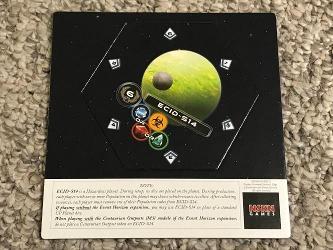 Exodus: Proxima Centauri – ECID-S14 Mini-Expansion2018
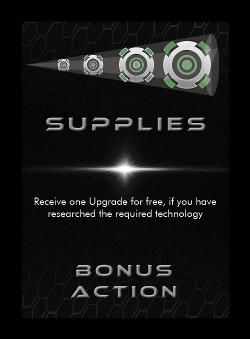 Exodus: Supplies bonus card2012
 Exodus: Edge of Extinction – Kickstarter Limited Action Cards2015Exodus: Edge of Extinction – Kickstarter Limited Political Cards2015Exodus: Edge of Extinction – Kickstarter Limited Combat Cards2015
Sur les tables de Ludoya
Toutes les statistiques dans Ludoya- 14
- Parties enregistrées
- 14
- Joueurs
- 6
- Dans des collections
- 7
- Dans des listes de souhaits
6,9/10
sur 4 avis Ludoya
Balleflass7,0 Has it all and wont overstay its welcome as long as you have a semi-aggressive group
Aucune partie enregistrée
Evan7,0 (Revised edition) The game is often described as a cross between Eclipse and Twi Imp. From Eclipse, it gets the upgradable space ships mechanic. From Twi Imp it gets a system of playing action cards where you use the primary, and then any player can pay cubes to use any of the secondaries available. The tech tree is imported in style from Clash of Cultures, although it again looks to Eclipse by making lower level technologies provide not a requirement but a discount for the higher level ones. The unique things about the game are that planets can be shared by multiple players, and endgame points for holding the planet go to most cubes on that planet, or shared in a tie. The movement rules are interesting, every hex has a number 1 to 6 on the edge. You take number tokens and log in the moves of each of your ships and simultaneously execute. I thought this was a really fun way to do movement, and bluff your opponents at the same time. I loved how your borders were somewhat fluid, and sometimes fleets would accidentally meet in space and have conflict. This mechanism was met with utter hate from my playgroup unfortunately, and was a major barrier to getting this game played. Unfortunately, the process of gathering and assigning the movement tokens is a bit complicated and fiddly. A better implementation of this system might have kept this game in my collection. I had heard this system got removed and replaced in one of the expansions, but by that point my group was categorically against trying this again. Combat is rolling dice, and if you get destroyed the ships are easily reconstructed, allowing for a decent comeback if you get blown to pieces. A flaw of the game might be that the game deeply rewards players for winning in combat. The most punchy player can become a runaway leader by virtue of lucky die rolls, or by picking on weaker fleets. All non-combat points are limited by what's printed on the board and remaining alien tokens. This is perhaps just the nature of the game. Cubes also have a strange component limitation. Players have a limited number of cubes despite that cubes are used for both charts and as people on planets. ★ Art, Iconography and components functional ★ Clever or interesting mechanisms ☆ Reasonably low downtime between turns with mildly AP players ★ Multiple plays stay interesting ☆ Low or mitigatable luck elements ★★★★☆ Raw enjoyment
Premières impressions · 2 parties
Jeux similaires
 Twilight Imperium: Third Edition2005
 Andromeda's Edge: Deluxe Edition2024
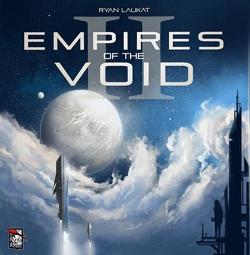 Empires of the Void II2018
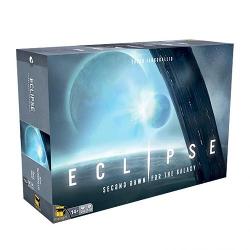 Eclipse: Second Dawn for the Galaxy2020
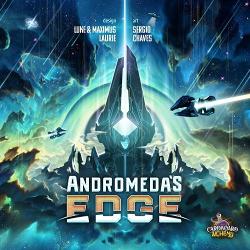 Andromeda's Edge2024
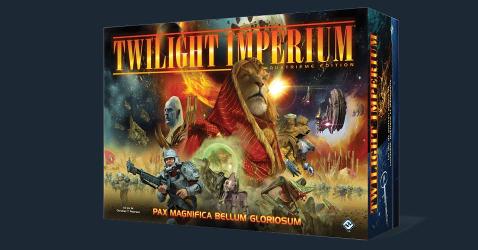 Twilight Imperium: Quatrième Édition2018
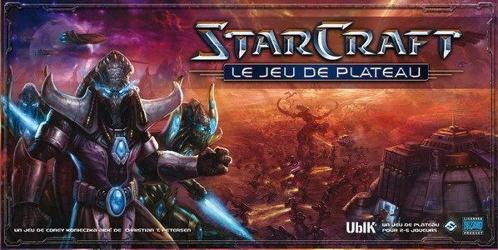 StarCraft: le jeu de plateau2008
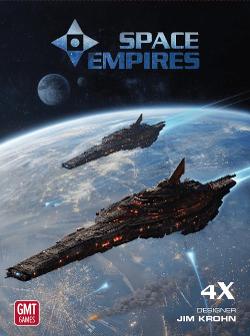 Space Empires 4X2011
 Innovation Ultimate2026
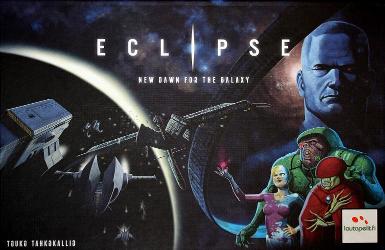 Eclipse: New Dawn for the Galaxy2011
 Star Trek: Ascendancy2016
 Stellar Horizons2020
Gratuit, sur le web, Android et iOS
Jouez à Exodus: Proxima Centauri avec Ludoya
- Gardez-le dans votre collectionSuivez votre exemplaire et ses extensions, prêtez-le à vos amis ou ajoutez-le à votre liste de souhaits et soyez prévenu quand le prix baisse.Ajouter à votre collection
- Enregistrez chaque partieScores, gagnants, minuteurs et photos, puis vos statistiques : taux de victoire, nombre de joueurs préféré, meilleur score.Enregistrer une partie
- Comptez les points sans papierUtilisez les feuilles de score et les aides de jeu de la communauté, et laissez Ludoya additionner les points.Trouver des feuilles de score
- Trouvez des gens avec qui y jouerClubs, soirées jeux et événements près de chez vous qui mettent ce jeu sur la table.Voir les événements
Données du jeu (joueurs, durée, âge, crédits) issues de BoardGameGeek.