
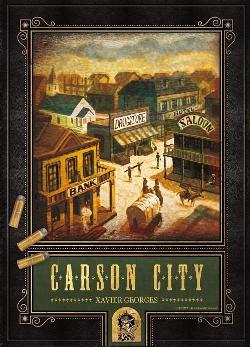
2009 · Costruzione di città
Carson City
I giocatori scelgono uno dei sette ruoli disponibili in ogni round e piazzano i cowboy negli spazi azione per costruire strutture, insediarsi nei terreni o migliorare le strade. Le azioni includono reclamare terreni, costruire edifici e case, ingaggiare pistoleri (aiutanti assoldati), raccogliere denaro e innescare duelli quando più cowboy occupano lo stesso luogo. La risoluzione dei conflitti utilizza i dadi per determinare gli esiti, mentre i giocatori ottengono punti per i terreni controllati, gli edifici, le montagne, gli aiutanti assoldati e il denaro accumulato. La partita si svolge in quattro round e combina piazzamento lavoratori, controllo dell’area e combattimento tattico per determinare il giocatore con il punteggio più alto.
- Giocatori
- 2–5 ideale in 4
- Tempo di gioco
- 90 min
- Età
- 12+
- Complessità
- 3,2 / 5
Il gioco
- Autori
- Illustrazioni
- Publisher



Espansioni
Vedile in Ludoya Carson City: Gold & Guns2012
 Carson City: A New Beginning2010
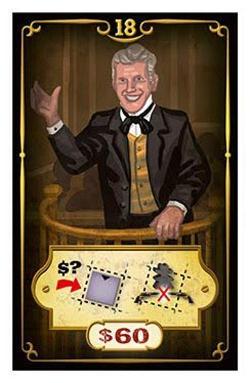 Carson City: The Lawyer / Editor2015
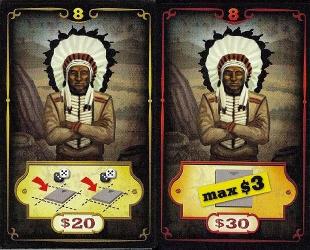 Carson City: The Indian2009
 Carson City: Horses & Heroes2015
 Carson City: Father Christmas Promo Card2018
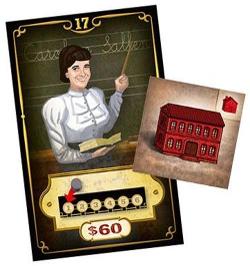 Carson City: The Teacher & Town Hall2015
 Brettspiel Adventskalender 20182018
 Carson City: Solo Pack2024
Foto dai tavoli di Ludoya
Tutte le foto in Ludoya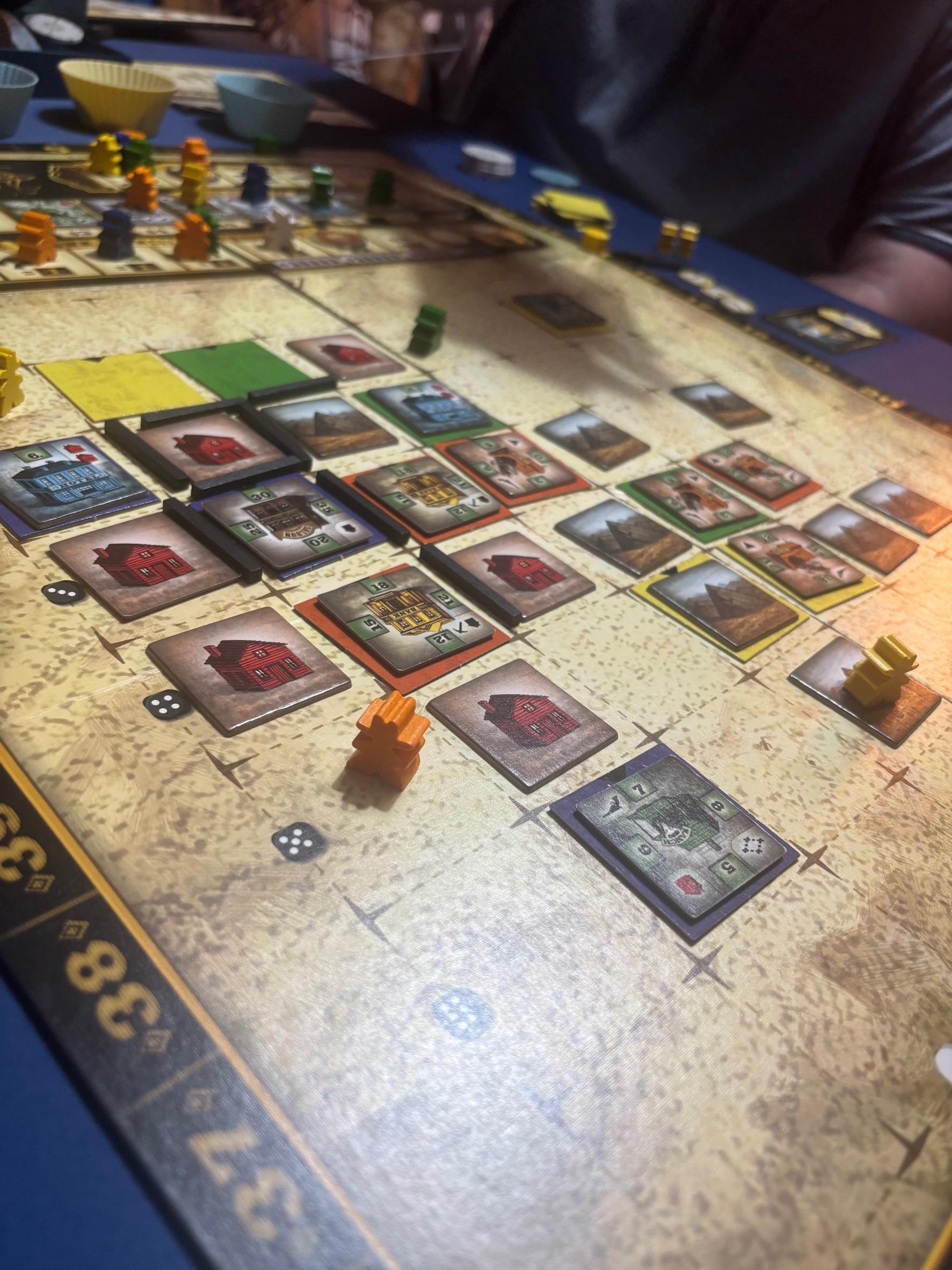
Dove comprarlo
Prezzi dei negozi e copie usate, controllati ogni giorno.
Sui tavoli di Ludoya
Tutte le statistiche in Ludoya- 202
- Partite registrate
- 254
- Giocatori
- 1h 55m
- Partita media
- 26
- Nelle ludoteche
- 18
- Nelle liste dei desideri
6,4/10
da 43 recensioni Ludoya
Evan4,6 This is a curious western themed worker placement game. The game features a method of action blocking where you can place your meeple in a spot someone else has claimed to have a duel with them right before resolution for the right to execute that spot. You can also place your meeples on other player's buildings to take half of that buildings production until they duel you off. The duel consists of adding up unspent guys plus gun tokens and then rolling a D6. This can feel a little random at times, but it's mitigatable randomness by focusing on getting more gun tokens. The loser of a duel gets the worker back to place again in the next round, whereas normally spent workers are lost. The worker being returned to the player, also means they get 1 extra firepower if they have another duel that round. I like a lot about this game. I love how the city expands. I like that when you build most buildings you need to place a red house token somewhere legal for it to be, which both serves to fill up the map awkwardly, but also gives players big scoring opportunities when they place buildings that want to be adjacent to houses. I like the mitigatable action blocking, although the D6 thing is a little troublesome. I also like how players can sort of hinder the leader by blocking their scoring action or by taking some of their money for themselves. Here are my problems with the game... With 3 players the game is too loose. The board grows too slowly and the action spaces feel empty. With 6 players the game is far far too tight, with few to no actions you can take other than start a duel if you aren't going very early in turn order. The Train station building from the expansion seems to be worth way too many points. I'm not sure why the job that gives you the unduelable worker goes first (or second if playing with the 0 guy) in turn order. This seems like a doubly strong ability, as you can't place the unduelable worker in a space to start a duel. The iconography on the building tiles is pretty poor. The buildings require you to read a passage in the rulebook every time a new type of one flips, and they can be hard to remember in the face of remembering all the other rules. In the second expansion they use one of the same icons from the base game to have a different meaning, which is really troublesome. The biggest problem with the game is the endgame scoring. Throughout the game there are action spots available that let you covert dollars into points at different ratios. In each of the 4 rounds, the next best conversion spot disappears. Based on the character ability tile you select, you have a different ability to hold money between rounds. Any money you can't hold and didn't spend gets turned into points at a 10:1 rate, as opposed to 2/3/4/5:1 rate. All of these conversion spots are duel-able, which means taking the spot doesn't mean that you'll necessarily get to resolve it. The only sure way to convert dollars to points is at the end of the game, you discard down to your dollars held limit at that 10:1 rate, and then you can convert the remaining money at 6:1, which isn't bad, but it is bad when you look at how different the money held skills are. Several guys in the base setup only can hold $20, whereas one can hold over $100. For me, this makes scoring a frustrating experience. :nostar: Art and components :star: Innovative mechanics :star: Handles 5 or more players :nostar: Good with different player counts :star: Low time between turns :star: Comfortable complexity :star: Re-playability :star::nostar::nostar: Enjoyment
Mestremuten7,0 Rating: 3/5 Production value: 4/4 Is the game in my collection/Love to have?: 0/1
Carlos8,0 Mucha interacción y tiempo de duración bien acotado.

Domande sulle regole
Risposte tratte dal regolamento dall'assistente per le regole di Ludoya.
Posso piazzare un cowboy su un’azione o un terreno già occupato? Cosa succede in quel caso?
Sì — puoi piazzare un cowboy su una casella o un lotto già occupato; questo fa scattare un duello in cui ogni giocatore coinvolto tira un dado e aggiunge la propria potenza di fuoco (cowboy + revolver nella riserva); il totale più alto vince il diritto di eseguire l’azione e i perdenti rimettono il proprio cowboy nella riserva personale (in caso di parità, vince chi ha il numero d’ordine di turno più basso). (p. 3)
Ci sono spazi azione in cui è possibile piazzare più cowboy senza dover affrontare un duello?
Sì — alcune caselle permettono esplicitamente la presenza di più cowboy senza duello: Salari dà 4 $ per ogni cowboy sulla casella, e una casella Strade dà una strada per ogni cowboy presente; le altre caselle azione seguono la sequenza e le regole dei duelli indicate sul tabellone. (pp. 3–4)
Ho bisogno di una strada per costruire su un appezzamento? Ci sono eccezioni o requisiti aggiuntivi?
In generale, per costruire un edificio è necessario che il terreno sia raggiunto da una strada (almeno una strada deve toccarne un angolo), e molti edifici richiedono anche di piazzare una casa su un terreno libero raggiunto da una strada; fanno eccezione i ranch e le miniere, che non necessitano di una strada. Puoi anche acquistare un edificio e tenerlo davanti a te per piazzarlo in seguito (vedi le regole sui tempi). (pp. 4, 6)
Cosa succede se termino il turno con più denaro del limite di denaro del mio personaggio?
Qualsiasi somma superiore al limite di denaro del tuo personaggio deve essere spesa; per ogni 10 $ che devi spendere ricevi 1 punto vittoria (puoi spendere volontariamente più denaro e ottenere comunque 1 PV ogni 10 $). Ogni carta personaggio indica il proprio limite di denaro. (pp. 3, 7)
Le case che appartengono ad altri giocatori (o le case senza proprietario) contano per i miei introiti dagli edifici?
Una casa senza proprietario aumenta il valore degli edifici adiacenti per tutti, mentre una casa costruita su un terreno appartenente a un giocatore beneficia solo gli edifici di quel giocatore (la stessa distinzione si applica alle montagne/miniere). (p. 5)
Posso attaccare una chiesa o una prigione, oppure attaccare edifici adiacenti alla chiesa di qualcun altro?
No: non puoi attaccare una chiesa o una prigione; inoltre, una chiesa impedisce gli attacchi a tutti gli edifici direttamente adiacenti del suo proprietario, e costruire una chiesa accanto a un edificio sotto attacco annulla quell’attacco. (pag. 6)










Gratis, sul web, Android e iOS
Gioca a Carson City con Ludoya
- Tienilo nella tua ludotecaTieni traccia della tua copia e delle sue espansioni, prestala agli amici o mettila nella lista dei desideri e ricevi un avviso quando il prezzo scende.Aggiungilo alla tua ludoteca
- Registra ogni partitaPunteggi, vincitori, timer e foto, poi le tue statistiche: percentuale di vittorie, numero di giocatori preferito, miglior punteggio.Registra una partita
- Risolvi i dubbi sulle regoleChiedi qualsiasi cosa sulle regole e ottieni una risposta dal regolamento, con la pagina per verificarla.Chiedi all'assistente per le regole
- Trova persone con cui giocarloClub, serate di gioco ed eventi vicino a te che portano questo gioco in tavola.Vedi gli eventi
Dati del gioco (giocatori, durata, età, crediti) da BoardGameGeek.