

2005 · Costruzione di città
Caylus
I giocatori vestono i panni di maestri costruttori in un villaggio medievale che si sviluppa attorno a un cantiere reale. A ogni turno, i giocatori pagano per piazzare lavoratori negli edifici del villaggio per raccogliere risorse o denaro, costruire o migliorare strutture e contribuire alla costruzione del castello per ottenere prestigio e favori reali. Gli edifici forniscono punti immediati e un reddito continuo quando vengono usati dagli altri, e le nuove strutture estendono una strada che si allontana dal castello e che può essere disponibile oppure no in ogni round. I giocatori influenzano il segnalino del Prevosto (pagando) per controllare quali edifici sono attivi e influenzare il movimento del Balivo, che a sua volta determina la fine della partita. Il piazzamento strategico e il tempismo modellano le azioni disponibili per tutti i giocatori.
- Giocatori
- 2–5 ideale in 3
- Tempo di gioco
- 60–150 min
- Età
- 12+
- Complessità
- 3,8 / 5
Il gioco
- Autori
- Illustrazioni
- Publisher




Espansioni
Vedile in Ludoya
Foto dai tavoli di Ludoya
Tutte le foto in Ludoya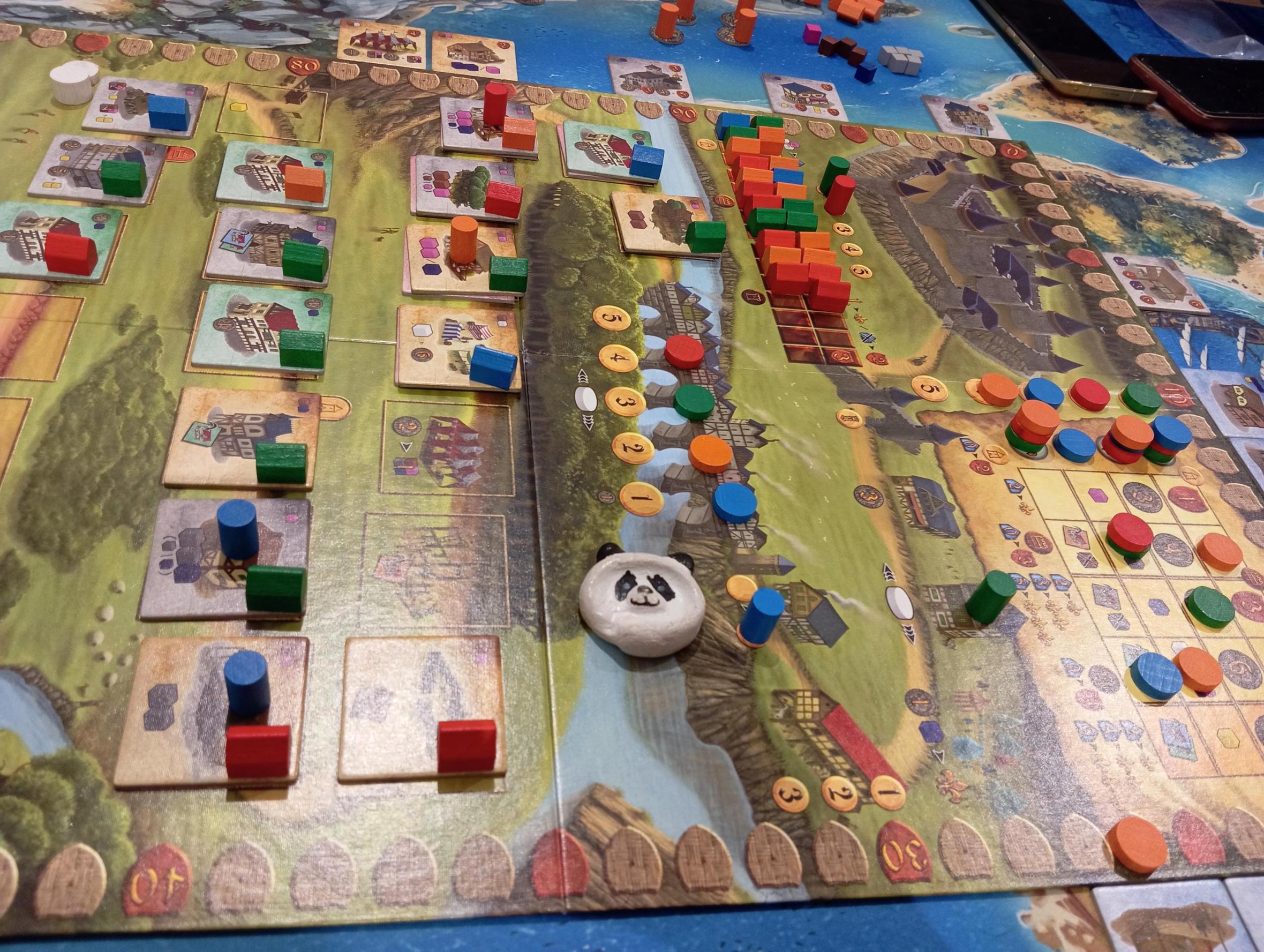
Dove comprarlo
Prezzi dei negozi e copie usate, controllati ogni giorno.
Sui tavoli di Ludoya
Tutte le statistiche in Ludoya- 617
- Partite registrate
- 478
- Giocatori
- 1h 36m
- Partita media
- 154
- Nelle ludoteche
- 25
- Nelle liste dei desideri
- 1
- Preordinato
7,8/10
da 122 recensioni Ludoya
Mestremuten10,0 Rating: 5/5 Production value: 4/4 Is the game in my collection/Love to have?: 1/1
Domande sulle regole
Risposte tratte dal regolamento dall'assistente per le regole di Ludoya.
If a production building is activated by another player, do I also get resources as the owner?
Yes — when a production (stone) building is activated by anyone but its owner, the owner takes one resource cube (chosen among those produced) from the stock; if the owner activates it themself they take only the normal income and no extra cube is taken (page 3).
How does the provost decide which buildings are activated — what if my workers are past the provost?
After players pay to move the provost (Phase 4), buildings are activated in order from the first space after the bridge up to the provost's current space; any workers on buildings beyond the provost are not activated and are returned to their owners without compensation (pages 3 and 5).
If I place a worker on someone else’s building do they get points? What about placing on my own building?
Yes — placing a worker on another player's building immediately gives the building's owner 1 prestige point; placing a worker on one of your own buildings costs 1 denier but does not give any prestige point to anyone (page 3).
I put a worker in the castle — what if I can't or won't supply a batch when it's my turn to build?
If you placed a worker in the castle but cannot or will not provide the required batch (three different cubes, one must be food), you lose 2 prestige points (but not below zero); this penalty does not apply if you can't give a batch because the Towers section has no room left (pages 4–5).
Can I use the 'exclusive use' favor effects even if the corresponding building isn't on the board, and when are higher favor columns available?
Yes — the exclusive-use favor line lets you use construction-building effects even if the building isn't on the board (page 6); columns 3 and 4 of the favor table become available after the Dungeon count, and column 5 becomes available after the Walls count (page 6).













Gratis, sul web, Android e iOS
Gioca a Caylus con Ludoya
- Tienilo nella tua ludotecaTieni traccia della tua copia e delle sue espansioni, prestala agli amici o mettila nella lista dei desideri e ricevi un avviso quando il prezzo scende.Aggiungilo alla tua ludoteca
- Registra ogni partitaPunteggi, vincitori, timer e foto, poi le tue statistiche: percentuale di vittorie, numero di giocatori preferito, miglior punteggio.Registra una partita
- Risolvi i dubbi sulle regoleChiedi qualsiasi cosa sulle regole e ottieni una risposta dal regolamento, con la pagina per verificarla.Chiedi all'assistente per le regole
- Trova persone con cui giocarloClub, serate di gioco ed eventi vicino a te che portano questo gioco in tavola.Vedi gli eventi
Dati del gioco (giocatori, durata, età, crediti) da BoardGameGeek.