

2024 · Rinascimento
Galileo Galilei
Players take the role of early modern astronomers who explore the heavens, develop telescopes and seek scientific breakthroughs during an age of religious scrutiny. Each turn, a player uses a telescope to choose one of five actions and may upgrade those actions over time. Players collect planet and star system cards and gather three colored lenses to make discoveries. Inquisitors can appear and threaten a player’s reputation, so balancing research, upgrades and occasional compromises to profit from their visits is part of the strategy.
- Giocatori
- 1–4 ideale in 3
- Tempo di gioco
- 50–100 min
- Età
- 12+
- Complessità
- 3 / 5
Il gioco
- Autori
- Illustrazioni
- Publisher



Espansioni
Vedile in Ludoya

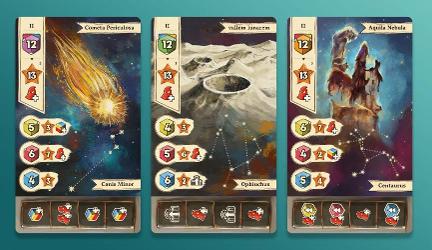
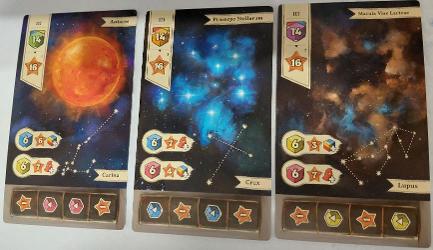
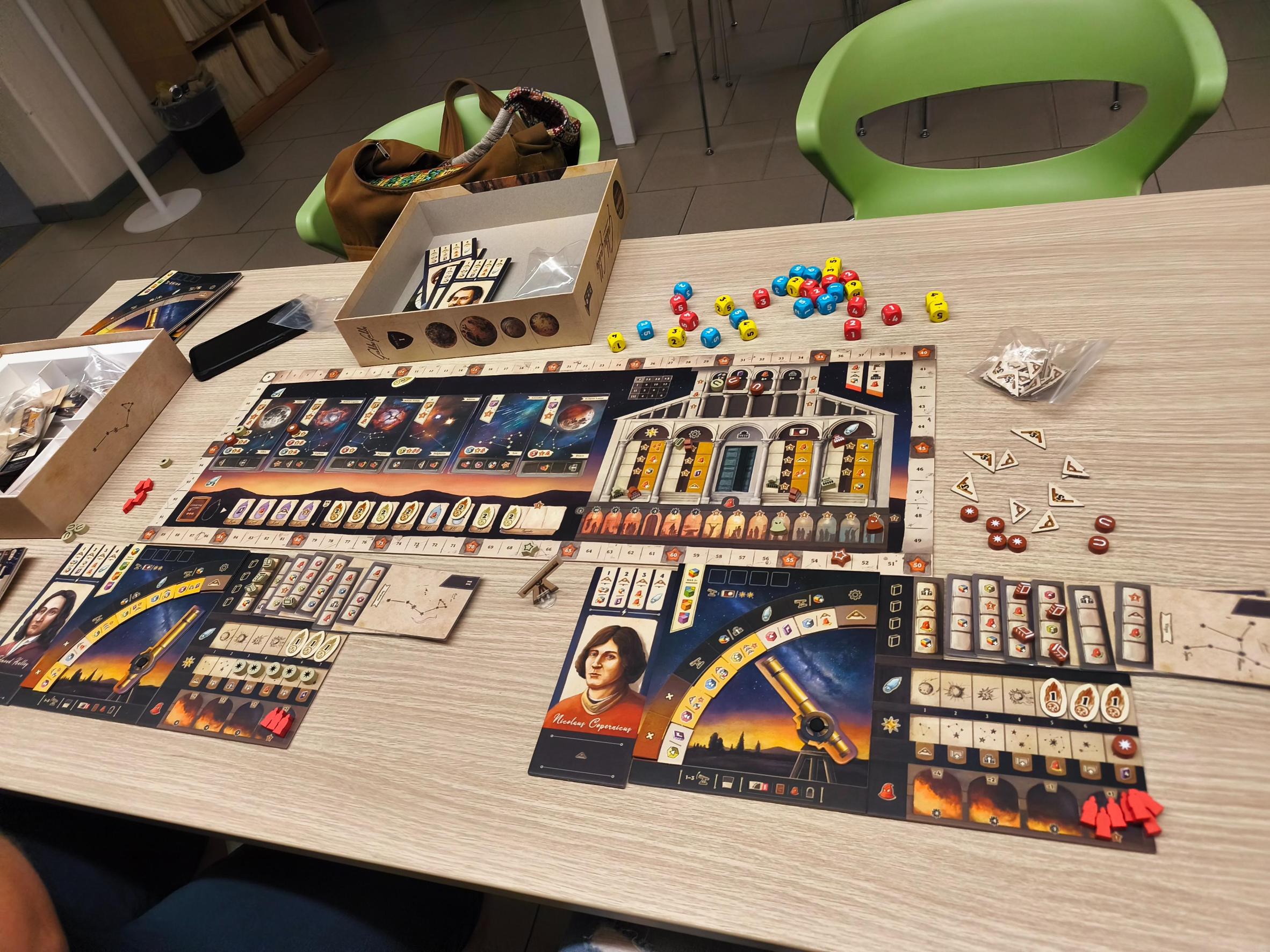
Foto dai tavoli di Ludoya
Tutte le foto in Ludoya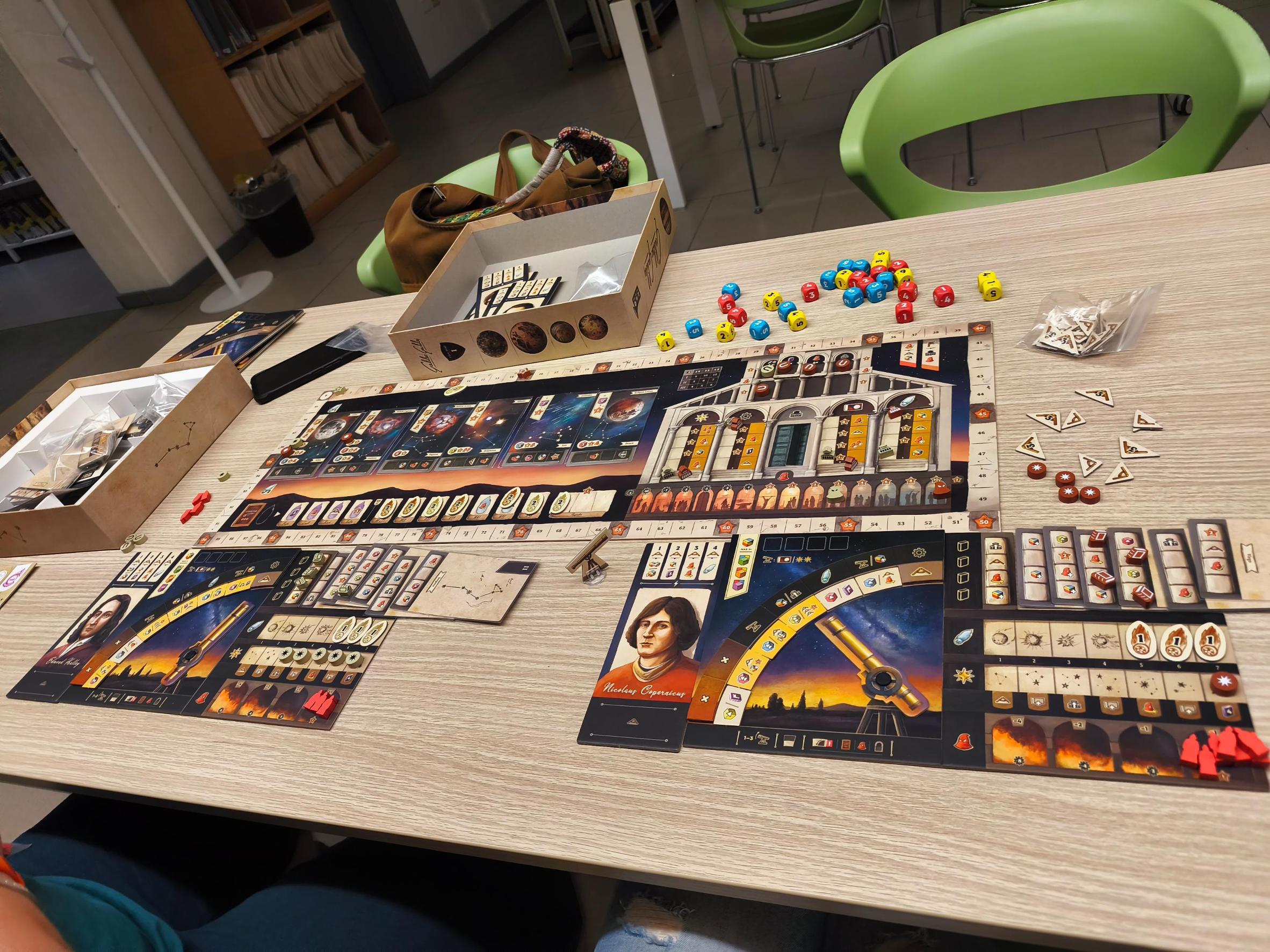
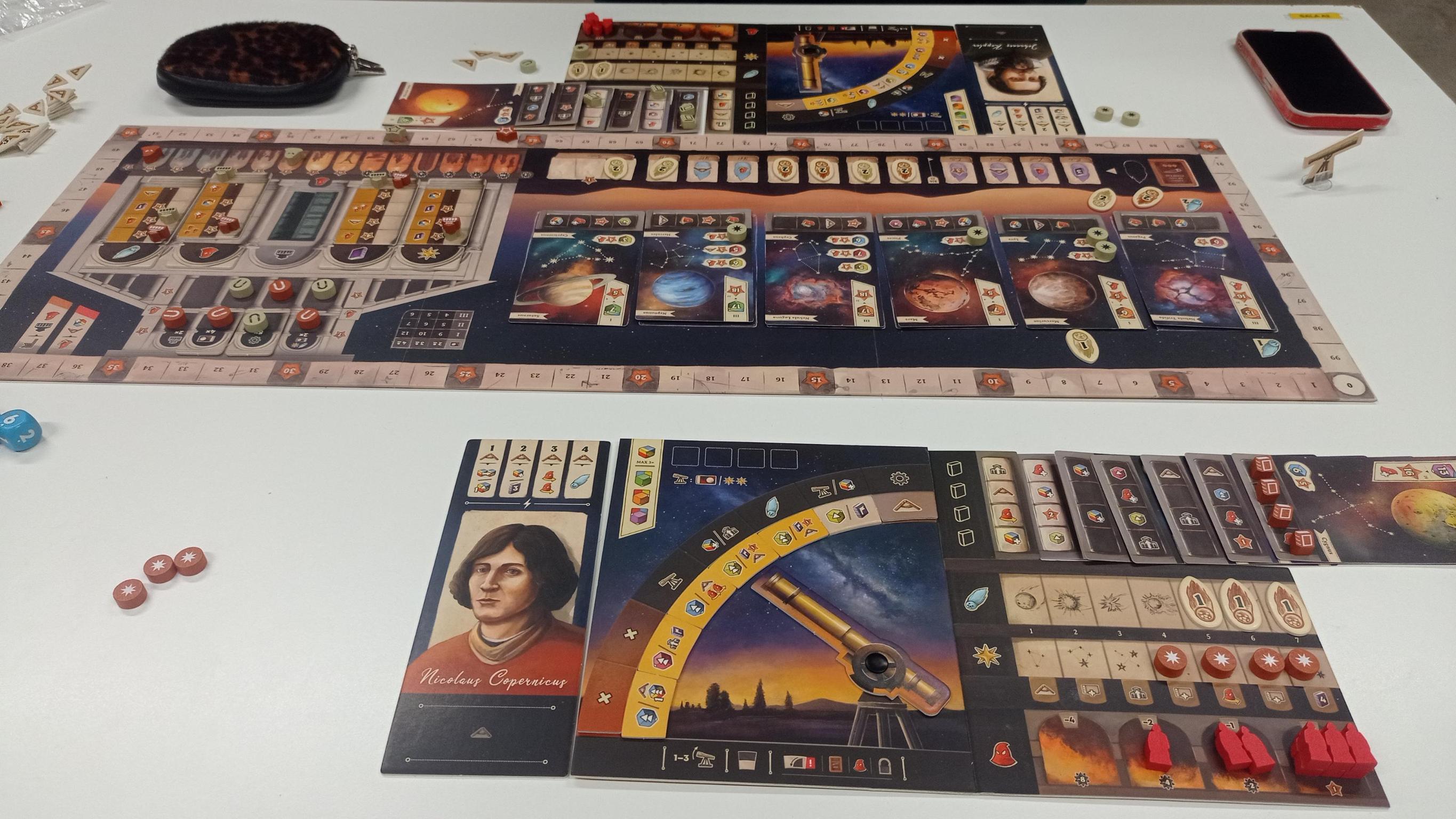
Dove comprarlo
Prezzi dei negozi e copie usate, controllati ogni giorno.
Sui tavoli di Ludoya
Tutte le statistiche in Ludoya- 202
- Partite registrate
- 251
- Giocatori
- 1h 37m
- Partita media
- 68
- Nelle ludoteche
- 26
- Nelle liste dei desideri
- 2
- Preordinato
7,4/10
da 29 recensioni Ludoya
Javo7,0 Juego de temática astronómica y que mezcla mecánicas de varios juegos. Lo mejor: - Diseño muy bonito. - Puzle interesante en cuanto a gestión de los inquisidores. - La rejugablidad está bien. Lo peor: - No inventa nada. Modo solitario: Funciona muy bien, compites contra un automa aunque deja poco movimiento al desarrollo ya que avanza muy rápido y puedes quedarte atrás muy fácilmente. Rejugabilidad: Personajes asimétricos con poderes diferentes. Cada partida cambian los tracks de puntuación de objetivos así como los objetivos. Cartas no hay muchas y aunque en cada partida varien, se repetiran. No obstante, las cartas no ofrecen nada especial más q puntos y beneficios, por lo que tampoco afecta. Para quien lo recomiendo? Para jugadores que busquen un euro que junte varias mecánicas interesantes y tenga una ludoteca discreta.
- Base -


Domande sulle regole
Risposte tratte dal regolamento dall'assistente per le regole di Ludoya.
When I Observe a Major Object do I have to spend dice of both colors, and can I overpay?
You must spend at least one observation die of each color the Major Object requires, but you may spend any number of dice to meet the cost and any excess value is forfeited; return spent dice to the supply after use (page 6).
Can I Observe two constellations in one Observe action and how do Constellation tokens work?
Yes — you may Observe up to two constellations in one action but resolve them one at a time; place your leftmost Constellation token on the chosen constellation, gain its listed rewards and then the reward from the space you removed the token from, and after you’ve used your seventh Constellation token you can no longer Observe constellations (page 7).
How do Comet tokens reduce observation costs and can they replace required dice colors?
Comet tokens reduce an object's observation cost by their value and each can be used once per turn, moving/flipping as you use them, but they do not substitute for required colors — you still must spend at least one die of each required color (page 8).
When can I take free actions and what do Quadrant tokens let me do?
You may spend Quadrant tokens to take free actions during your turn (not while resolving another action); costs are 1–4 Quadrant tokens and include options like changing a die color or +1 to a die (1), gaining a die or Write 3 (2), Persuade twice (3), or Spot a Comet (4) (page 9).
When does an interrogation happen and how does it change my Reputation/score?
If you Persuaded any inquisitor (i.e., successfully moved a cellar inquisitor) during your turn, an interrogation happens in the Cleanup Phase: add the values of all inquisitors in your cellar and move your Tribunal token that many spaces (negative moves left); if you’re already at the track end you instead immediately lose or gain 2 victory points (page 12; cleanup reference page 10).
What triggers the end of the game and how are ties broken?
The game ends when the last Discovery card is placed on the Game Board; finish the round and give each player one final turn, then score University bonuses followed by Inquisition results (page 13), and ties are broken by highest sum of remaining observation dice, then most Quadrant tokens, otherwise the tied players share victory (page 13).
Fogli punteggio e assistenti di gioco
- Hoja de Puntuación
- ES ✶ Galileo Galilei


















Gratis, sul web, Android e iOS
Gioca a Galileo Galilei con Ludoya
- Tienilo nella tua ludotecaTieni traccia della tua copia e delle sue espansioni, prestala agli amici o mettila nella lista dei desideri e ricevi un avviso quando il prezzo scende.Aggiungilo alla tua ludoteca
- Registra ogni partitaPunteggi, vincitori, timer e foto, poi le tue statistiche: percentuale di vittorie, numero di giocatori preferito, miglior punteggio.Registra una partita
- Risolvi i dubbi sulle regoleChiedi qualsiasi cosa sulle regole e ottieni una risposta dal regolamento, con la pagina per verificarla.Chiedi all'assistente per le regole
- Trova persone con cui giocarloClub, serate di gioco ed eventi vicino a te che portano questo gioco in tavola.Vedi gli eventi
Dati del gioco (giocatori, durata, età, crediti) da BoardGameGeek.