
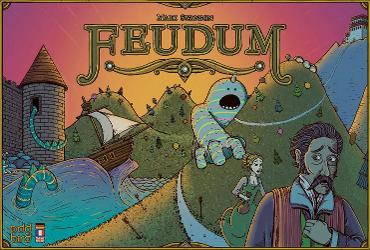
2018 · ファンタジー
Feudum
Players rebuild fortunes in a medieval economy, directing characters to farm, tax towns, occupy outposts and pursue military or civic roles. Turn structure centers on four actions per player and five epochs of play, with hand and resource management guiding long-term planning. Control of feudums grants membership in six guilds and unlocks economic synergies as goods flow from farmer to merchant to alchemist to knight, while owners must balance obligations to the crown. Victory depends on optimizing production chains, spreading influence across the map and adapting to events and rival players.
- プレイ人数
- 2–5 ベスト4人
- プレイ時間
- 80–180分
- 対象年齢
- 12+
- 複雑さ
- 4.6 / 5
ゲームについて
- デザイン
- Publisher



 Feudum: Squirrels & Conifers2018
 Feudum: Windmills & Catapults2018
 Feudum: The Queen's Army2018
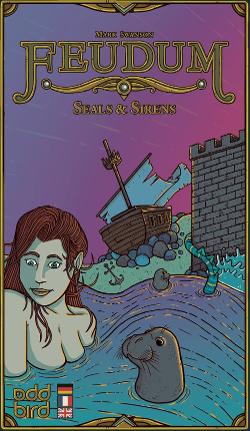 Feudum: Seals & Sirens2018
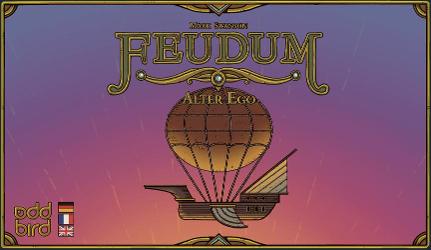 Feudum: Alter Ego2018
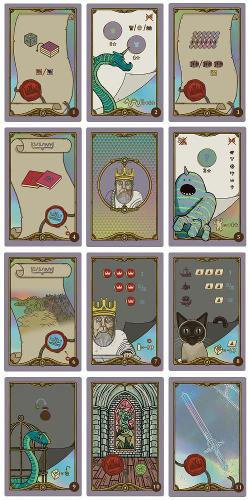 Feudum: Kickstarter Promotional Cards2018
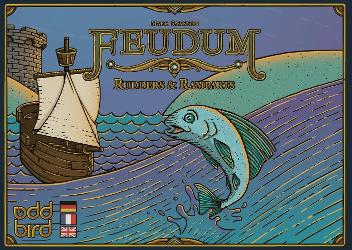 Feudum: Rudders & Ramparts2020
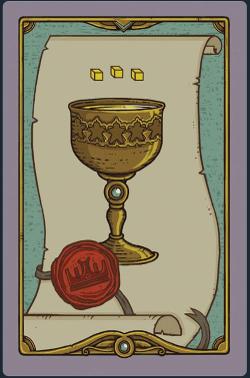 Feudum: Royal Chalice Promotional Card2017
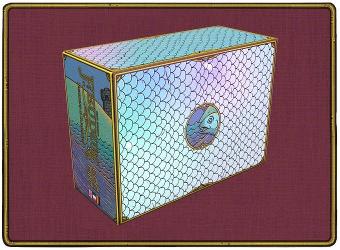 Feudum: Rudders & Ramparts – Kickstarter Edition2020
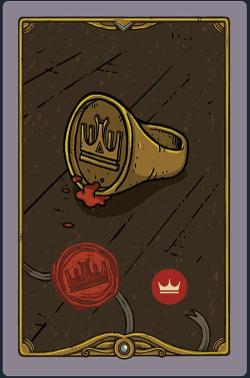 Feudum: Royal Signet Ring Promotional Card2017
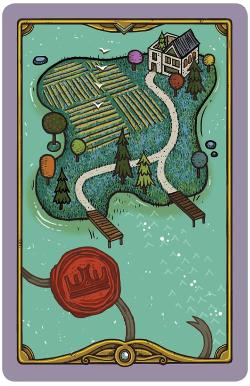 Feudum: Rudders & Ramparts – Lone Isle Promotional Card2019
 Feudum: The Queen's Army – Atticus Promotional Card2018
Ludoyaのテーブルからの写真
Ludoyaですべての写真を見る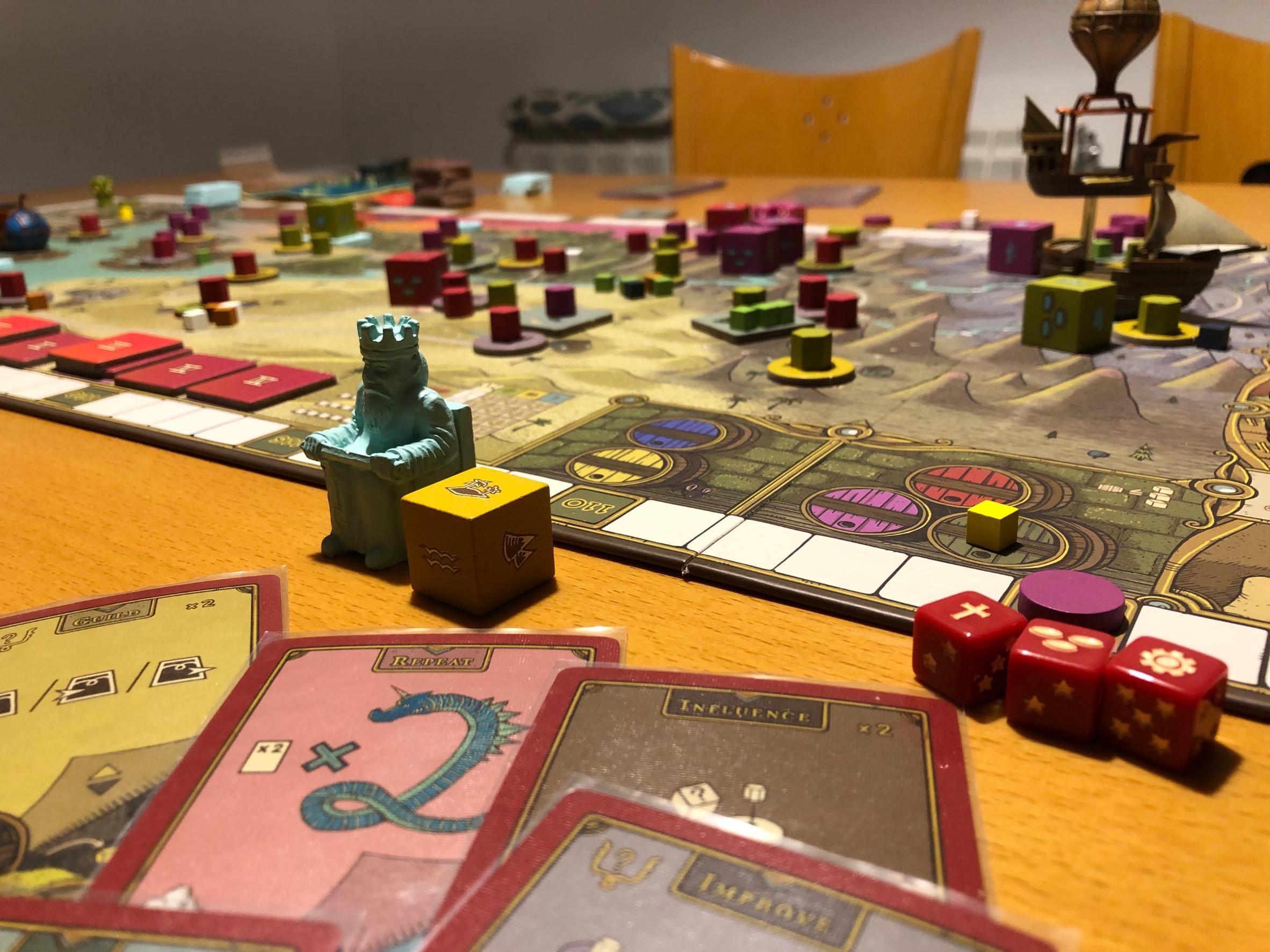
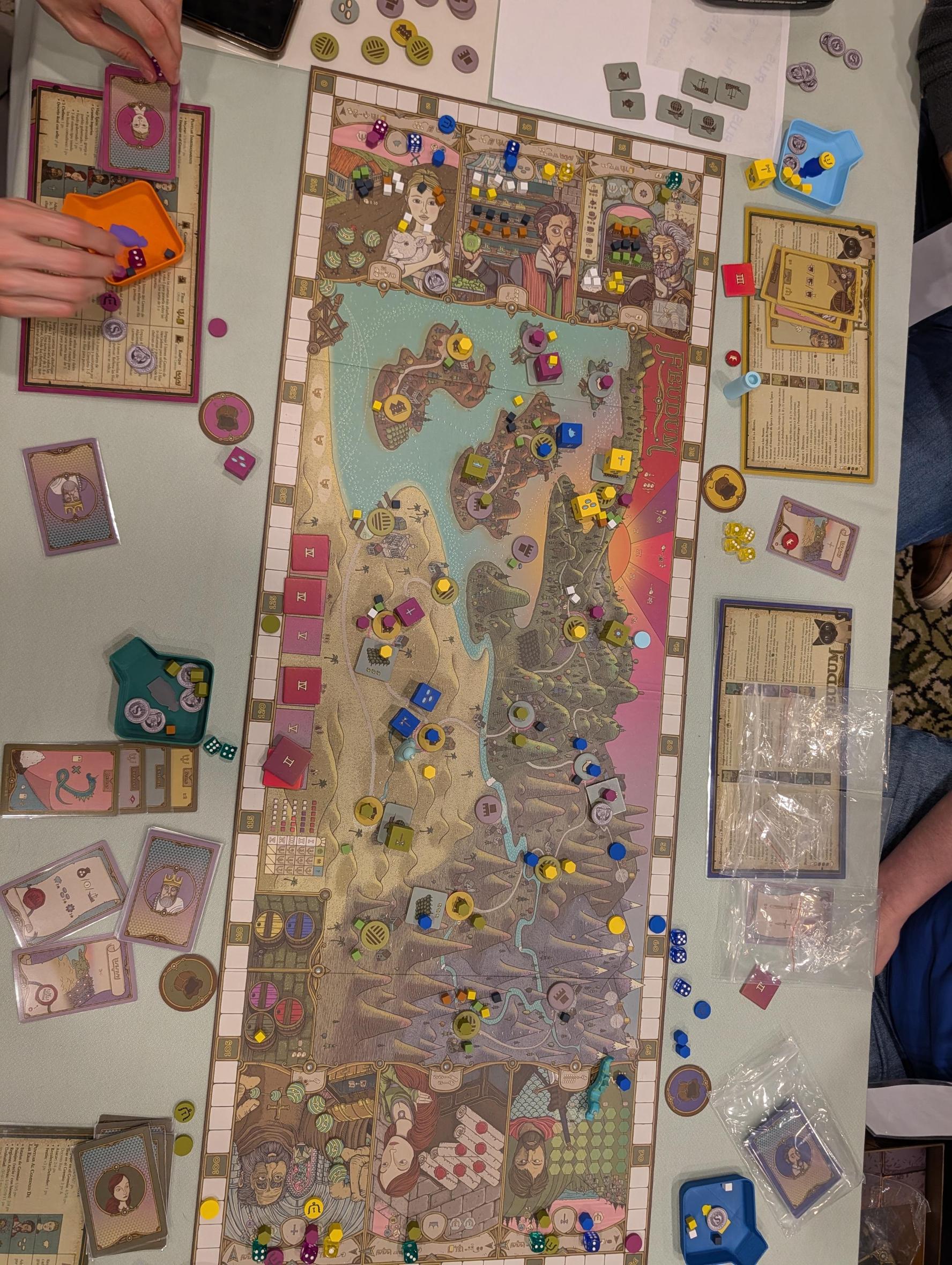
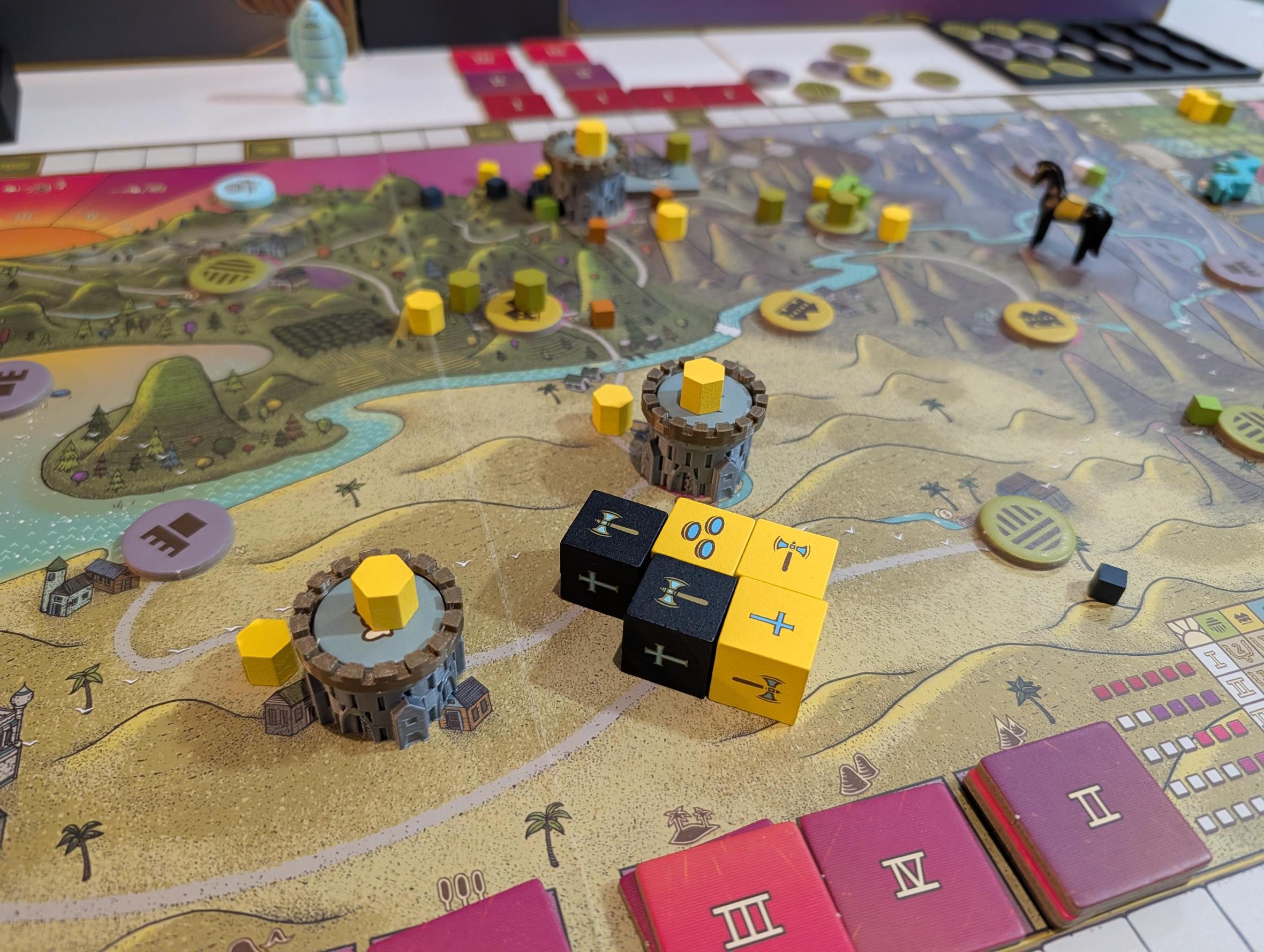
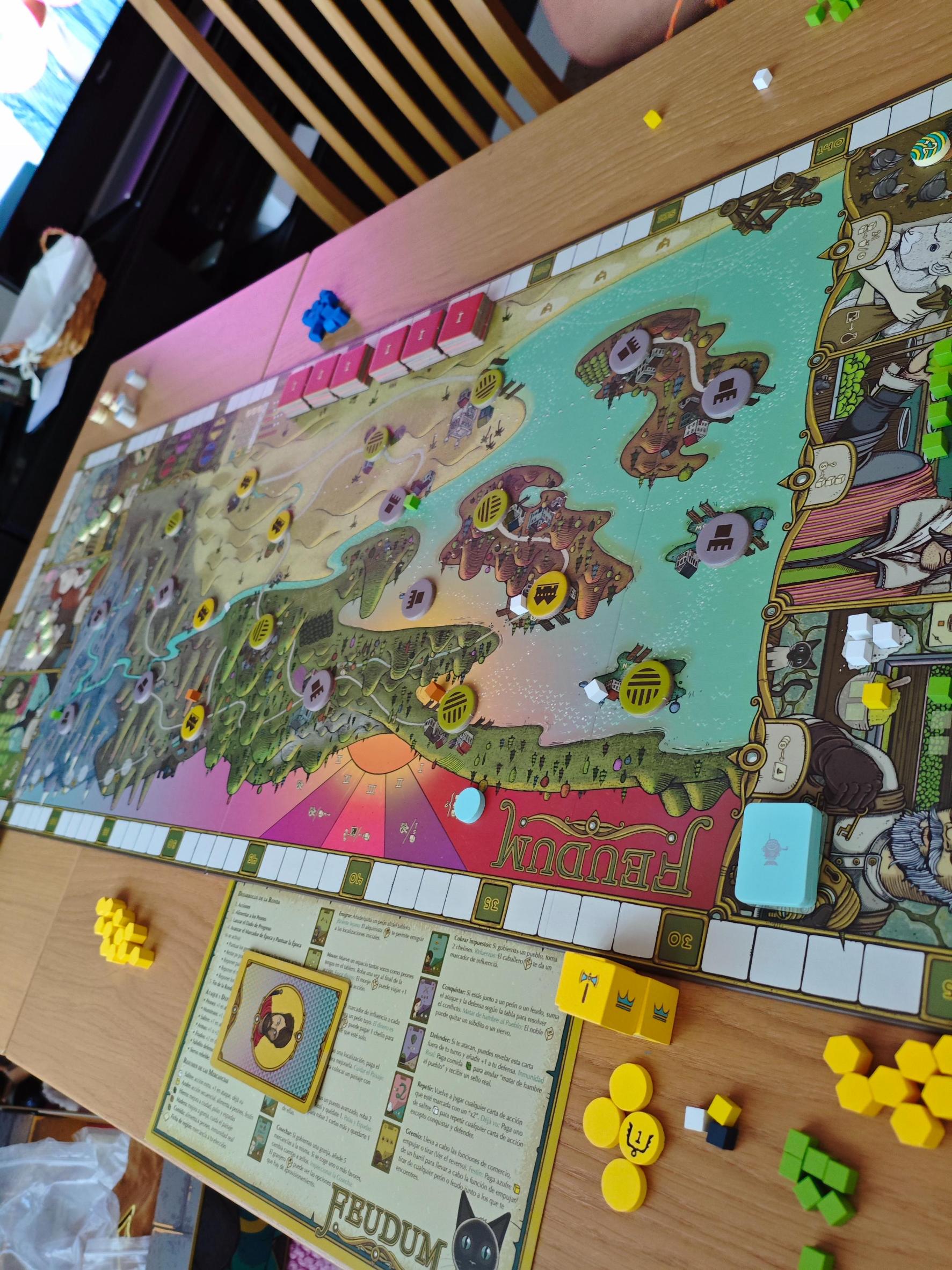
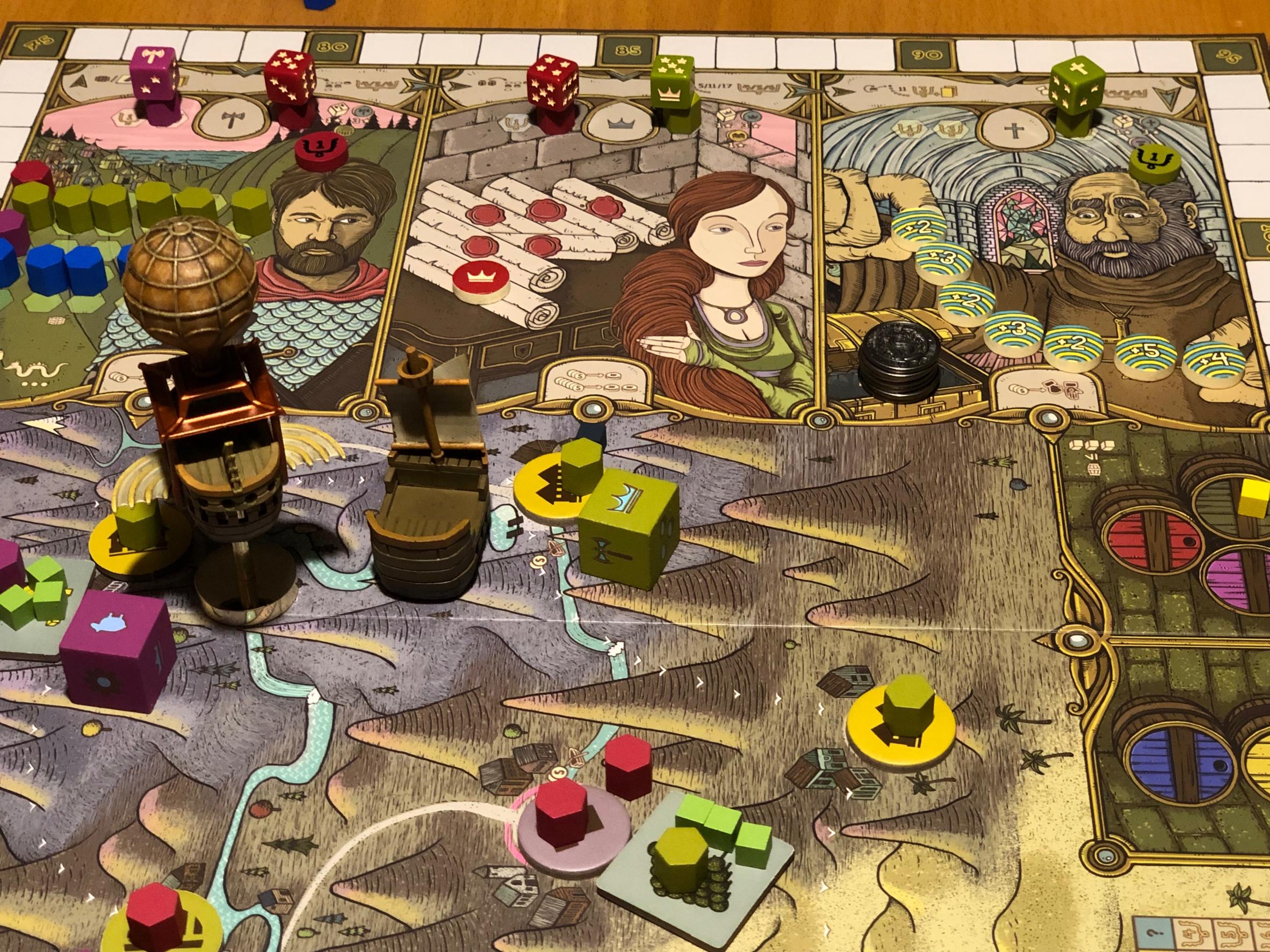
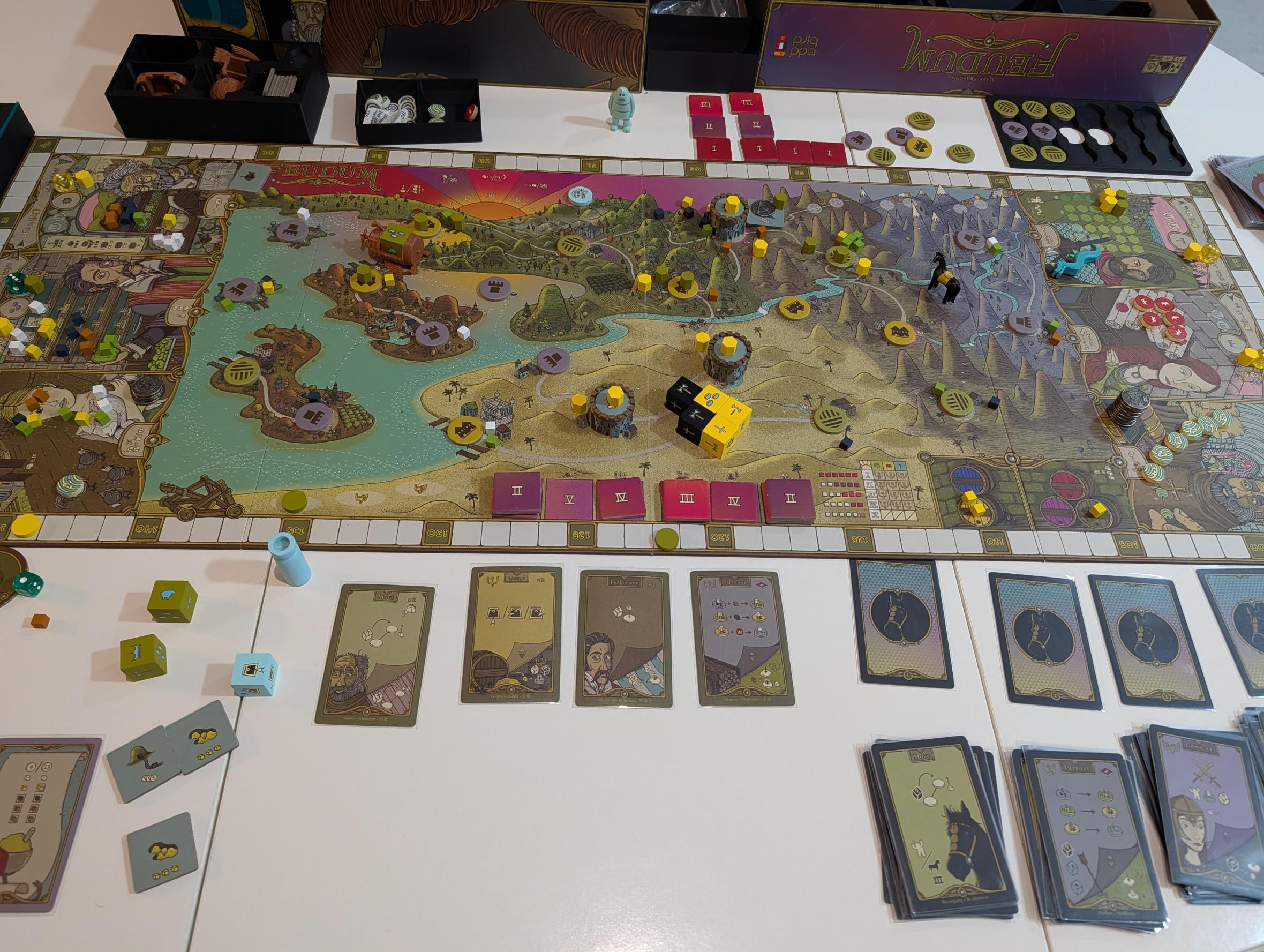
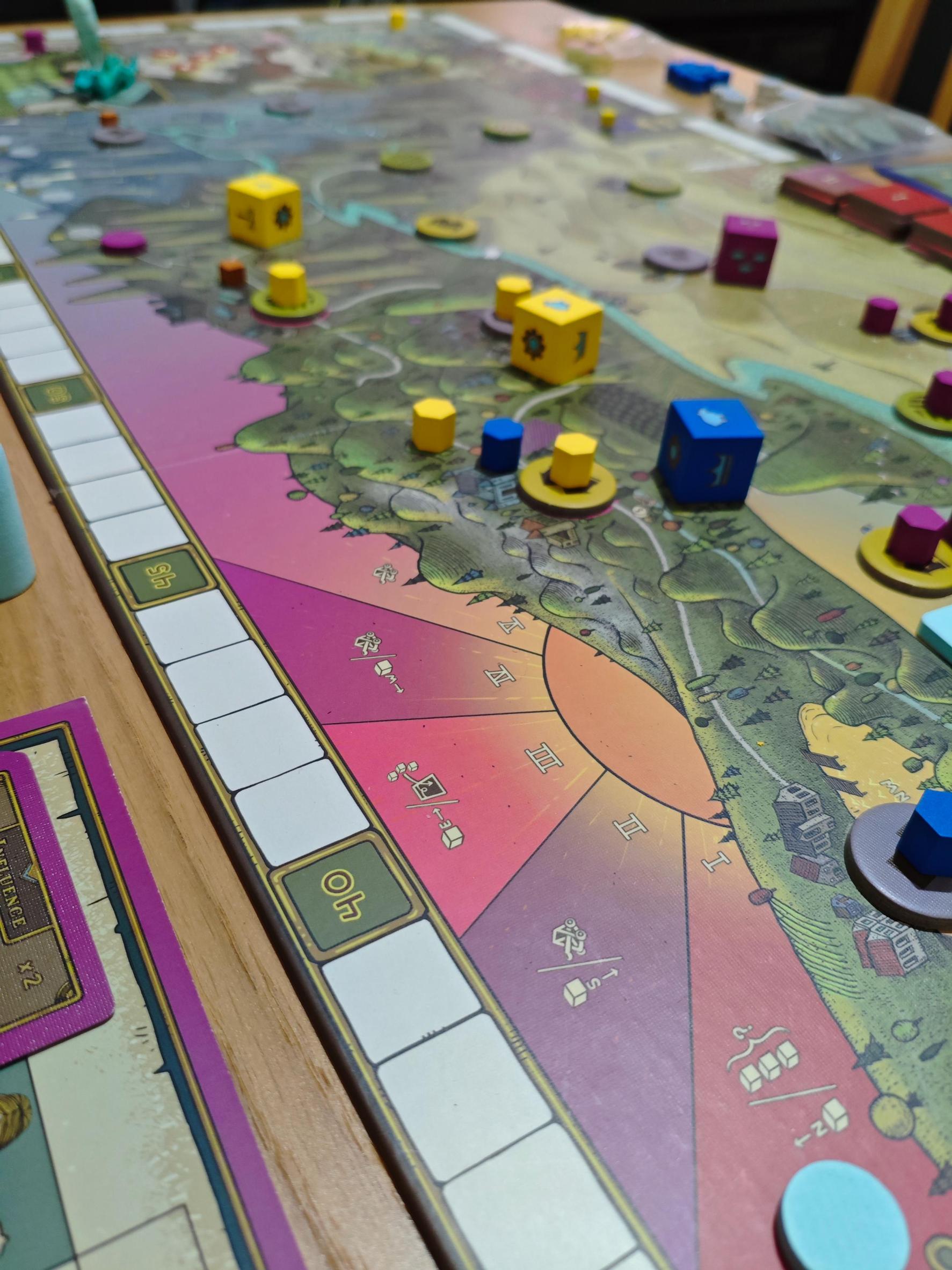
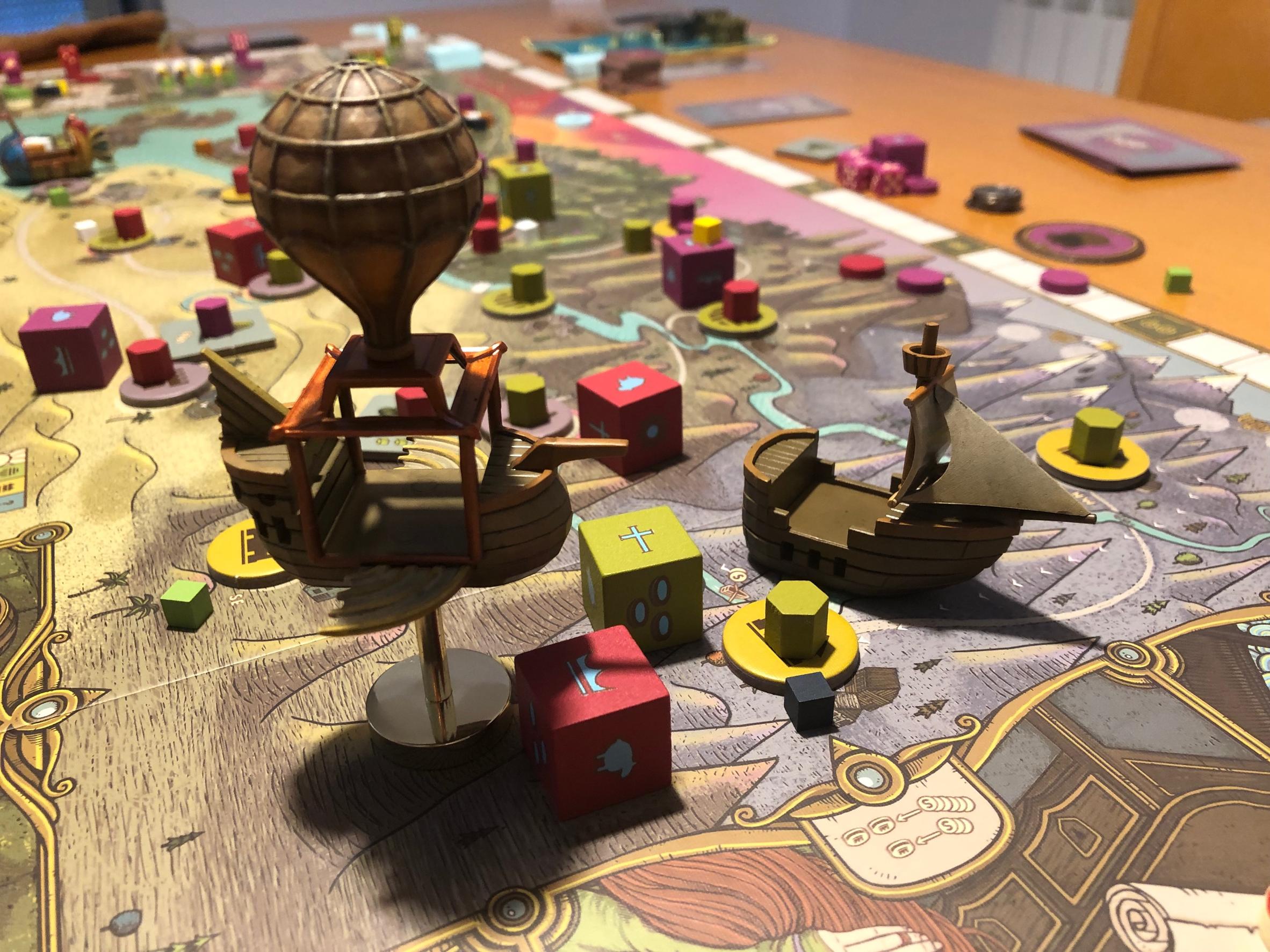
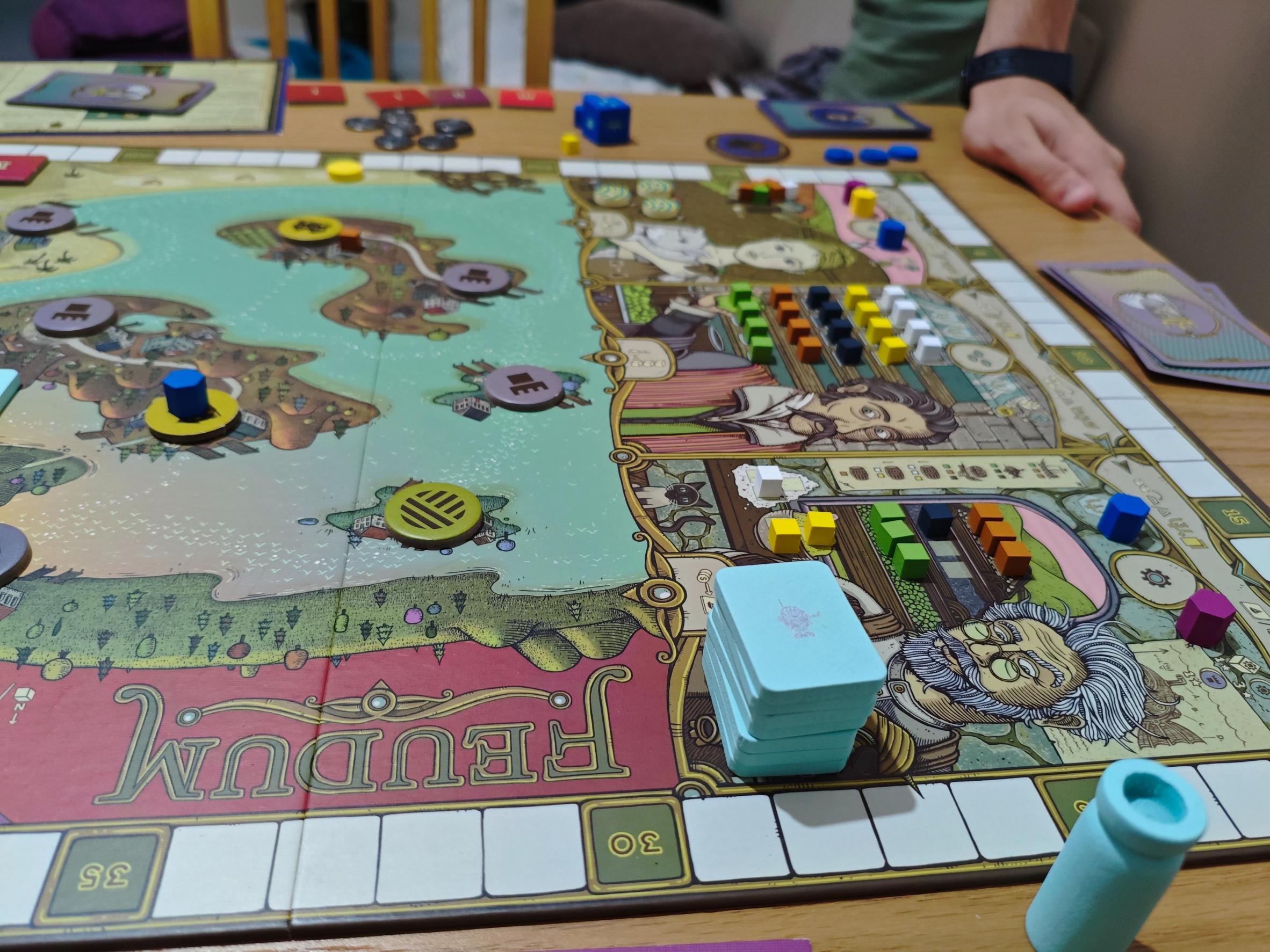
Ludoyaのテーブルでは
Ludoyaで詳しい統計を見る- 112
- 記録されたプレイ
- 198
- プレイヤー
- 3h 30m
- 平均プレイ時間
- 60
- コレクション登録
- 16
- ウィッシュリスト登録
5.8/10
Ludoyaのレビュー35件より
Poteet8.8 Is it messy? Yes. Does it require multiple plays for the rule set to stick? Yes. Is it memorable, mechanically interesting, and unique? Yes.
Evan3.5 In this game players compete for controlling locations on a central map for the purpose of gathering workers and cities that generate reputation with the six different guilds printed along two edges of the board. This is done though each player taking their set of symmetrical action cards, then simultaneously choosing four that will be your actions for that round. Then one at a time, players play and resolve a single action. The guilds work really interestingly. Each has a main ability that anyone can use if they choose to when they play the guild card, but if you have the first or second most reputation with that guild, you can instead choose to make use of a special ability that shifts components from guild to guild in a clockwise fashion, and then scores you points and or special action cards. The artwork in the game is really beautiful in my opinion. Very stylized and consistent. The miniatures are pretty high quality in terms of their look and painting. Unfortunately, now I have to talk about some of the things that are keeping me back from loving this game. Let's start with the artwork. Beautiful yes, but not remotely functional. The iconography is tiny and unclear. The player aids don't contain all the steps you go through when you resolve the corresponding action. The rulebook is full of 'theme-over-clarity' and not well organized for referencing when you realize that the player aid is a problem. The guilds have lots of room for the art, but make the effects of the guild teeny tiny. There are tiles that show a color of cube that's meant to be green, but they are printed with a sort of old-timey-instagram-filter yellowishness so that the green cube looks yellow, and this game has both green and yellow cubes. The worst offender is the special deck of cards where it's hopeless to discern what they do without looking each one up. My playgroup laughingly pointed out to me that when one of these cards asks you to spend two cubes, they draw a picture of all the cubes in the game, and then circle the two the card cares about. It's as if the graphic designer has never seen another board game before. So fine, that's forgivable if the core gameplay is amazing. Is it though? Everyone agrees the guild system is really interesting, and with more refinement, this could have been a really fantastic game. Unfortunately, there's over-complication at every turn. Nearly every action in the game has IF THEN OR statements to it. The process of understanding everything frustrated me to the point that I wrote out my own verbose player aid and then my players complained that the game had too much algebra. Another issue is that set of four cards you select each round. Using the guild card has a base of 6 possible functions plus extra options if any of the guilds like you. Not only that, but this card is the primary way of scoring points in the game. This means it's automatically in your hand every round. Then there's a card that lets you repeat another card. That gets played on the guild action in most cases. This means that you are really only choosing two cards each round, and many of the cards don't need to be cards. For example, there's a card that you play, and then if later in the round someone attacks you, you get a small bonus to your defense. In a game like this, where actions are precious, why would a card like this exist? There's also a card that puts a new Pawn on the board. Why wouldn't this function be bundled into the movement action? Then there's the attack card. I've found the central map to be fairly interesting without attacking. I like how players put down influence markers, and then those markers are limited and removable under certain circumstances. What I'm not happy with is the entire combat system of this game. Opponent's pawns, monsters and cities can be attacked, and the game actually requires you to do it, by punishing your points quite severely if you own a city, and haven't punched another player. Combat is fully non-random which I guess is better than doing it randomly, but there's not much a defending player can do, and it doesn't feel great to have the city you worked to build demolished or your pawn kicked off the board, potentially setting you back a full round due to lost action opportunities for cards you selected in hand that required a pawn be in a particular place. I suppose a removal mechanism might be justified in the case of needing to hurt the leader, but the fact that game is universally punishing to anyone who doesn't win fights makes it more that you will target whomever is easily vulnerable regardless of how they are doing in the game. All this being said, I still like the essence of the game despite myself. I just don't think I can keep teaching it to new people and keep having people's eyes cross before we even get to turn 1. The length of the game s a challenge to get it to the table to begin with, and honestly, even the cool mechanism of moving bits clockwise through the guilds gets a little tiresome around the 3/4 point of the game. I am worried that if I drop this game I'll regret it in the future, and look back thinking I didn't give it a fair chance, but at the same time I need to value my precious game time, and each time I set aside the time to tackle this monster, it's another night I'm not playing a Splotter game, which would absolutely give me a deeper experience in the same time without the same degree of rules overhead and iconography headache. :nostar: Art, Iconography and components functional :star: Clever or interesting mechanisms :star: Reasonably low downtime between turns with mildly AP players :star: Multiple plays stay interesting :star: Low or mitigatable luck elements :star::nostar::nostar::nostar::nostar: Raw enjoyment
BWizard8.4 [c] (15x) GAMING EXPERIENCE: :star::star::star::star::star::star::star::nostar::nostar::nostar: (5x) DEPTH / WEIGHT: :star::star::star::star::star::star::star::star::star::star: (5x) LUCK: :star::star::star::star::star::star::star::star::star::nostar: (10x) REPLAYABILITY: :star::star::star::star::star::star::star::star::star::nostar: (6x) MECHANICS: :star::star::star::star::star::star::star::star::star::star: (6x) PLAYER INTERACTION: :star::star::star::star::star::star::star::star::nostar::nostar: (3x) SCALABILITY (PLAYER COUNT): :star::star::star::star::star::star::star::star::nostar::nostar: (2x) LENGTH: :star::star::star::star::star::star::star::star::nostar::nostar: (2x) CLARITY OF RULES: :star::star::star::star::nostar::nostar::nostar::nostar::nostar::nostar: (6x) COMPONENT QUALITY: :star::star::star::star::star::star::star::star::star::star: [/c] I bought a 'just opened' Big Box version. :thumbsup: This was hard to understand, and I don't think I know all the rules properly. Need to play a lot more, and I want to play with it more! Much more! :) :thumbsup: With translated, edited, printed rulebooks. :thumbsup: Language independent. :thumbsdown: Terribly complex.


ゲーム情報(人数、プレイ時間、対象年齢、クレジット)の出典:BoardGameGeek。