
2012 · 中世
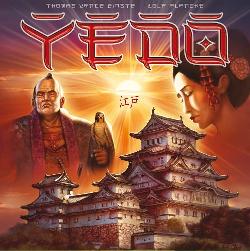
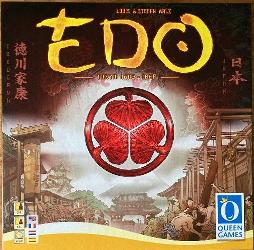
Yedo
Set in early-17th-century Edo, players lead rival clans seeking prestige under the new Shogun. Gameplay focuses on completing missions, gathering resources, and manipulating influence to gain Prestige Points. Players deploy agents to acquire information, kidnap or assassinate opponents, trade with European merchants, and use audiences with the Shogun to advance their standing. Actions require managing assets and outmaneuvering rivals while balancing public favor against covert operations. Multiple paths to victory exist, including mission completion, court influence, and wealth from trade, with player interaction centered on sabotage and tactical denial.
- プレイ人数
- 2–5 ベスト4人
- プレイ時間
- 120–180分
- 対象年齢
- 14+
- 複雑さ
- 3.3 / 5



購入先
ショップ価格と中古品を毎日チェックしています。
Ludoyaのテーブルでは
Ludoyaで詳しい統計を見る- 43
- 記録されたプレイ
- 39
- プレイヤー
- 2h 38m
- 平均プレイ時間
- 8
- コレクション登録
- 5
- ウィッシュリスト登録
4.8/10
Ludoyaのレビュー7件より
Evan5.9 The game round starts with an auction and then moves into a worker placement phase focused on recipe collection. The main source of money and victory points in the game comes from completing these recipe cards, and they come in four varieties of difficulty, with the easier cards focused a little more on money generation, and the harder ones focused a little more on getting victory points. One of the really interesting elements of the game is that most of the components you need for your recipes don't actually get spent with completion. Certain areas of the board allow players to make deals and trade with each other, adding even more player interaction to this already very interactive game. The recipes also require you to have your meeples in specific spots on the board, so competition of spaces is tight and timing is everything. Particularly because there is a patrolman who circles the regions booting out players he ends his movement on. Another really nice element of the game is that many of the things that can be won in the start of the round auction are available from the action spaces as well, but at a much higher money cost. This helps orient people to how valuable each category of actionable item is. There are certain areas of the game where I feel like the game shows it's age. Eleven rounds feels a little long for a game that's otherwise the weight of a solid 90 min euro game. Clearly the rounds are needed as many of the super-hard recipe cards can't be completed in less time, but I've heard players complain about the length anyway. The game also has a set of take-that cards that are labeled with the word "samurai" in the corner. The rulebook allows you to pull these cards, but then there are still a handful of take-that cards that remain. These cards can easily act as a fun-tax on anyone new to the game, as they are for the most part unique in their respective decks, so come as an unpleasant surprise. The game also has action cards who's sole purpose is to cancel someone else's action cards. I'm personally averse to counterspells as a mechanism. Normally I'm not for house-ruling a game. If I encounter a new game with these kinds of problems, there's a good chance I'll discount the whole game design in the face of them rather than try to impose what I'm looking for in a game over designer intent. However, there's a lot about this game that I've never seen anywhere else. I've been playing for a long time, and I can't imagine giving this up. To that end, I'm thinking about removing the following cards from the mix in order to get rid of a lot more of the take-that that isn't easily removed with the "samurai" cards: 1 quest "Defend the Eastern Provinces" which is the single quest that kills an opponent's worker. Then from the action card deck, the three "Walls have ears" counter spell cards, then the following five single cards "Traitor" which forces an opponent to give you one of their action cards, "Infiltrator" which forces a single opponent to waste his workers placed on his player board action spots, "Reshuffle" which forces an opponent to swap uncompleted recipe cards with you, "Backstab" which is the only action card that kills an opponent's worker, and finally "Trickery" which forces an opponent to discard an action card at random. Many of these I've never seen even hit the table, because they rest in a large deck of otherwise interesting and useful cards. There's still going to be some degree of take-that, in that many cards effect the movement of the guard pawn who kicks workers out of regions and lose the worker if they have more than 2, but there are enough ways to mitigate that, so it doesn't feel as bad as these cards, where there's no way to plan against them. :star: Art, Iconography and components functional :star: Clever or interesting mechanisms :star: Reasonably low downtime between turns with mildly AP players :star: Multiple plays stay interesting :nostar: Low or mitigatable luck elements :star::star::star::nostar::nostar: Raw enjoyment
Garfield2.0 If you don't get some of the own buildings in the first rounds you will have no chance. Because you need them for fulfilling missions. Too much random drawing involved. If you are lucky you draw a mission that you can fulfill immediately. Same with bonus cards. And if the guardians are blocking a spot that you need to fulfill a mission, you lose complete rounds. It happened to me that I lost 2 rounds because of this. And because I couldn't fulfill the missions I was lacking of money a lot. It also takes way too long to finish this game, 2,5hrs for a 4 player game. And the last 5-6 rounds are just rinse and repeat -> getting mission cards and fulfill them... [c] Theme: :star::nostar::nostar::nostar::nostar: <!-- size 7]Where is it? --> Gameplay: :star::star::star::nostar::nostar: <!-- size 7]Rinse and repeat from the middle of the game --> Interaction: :star::star::nostar::nostar::nostar: <!-- size 7]Very little --> Artwork: :star::star::star::nostar::nostar: <!-- size 7]Good --> Luck: :star::star::star::nostar::nostar: <!-- size 7]Mission drawing, where the guardian moves, bonus cards --> Strategy: :star::star::nostar::nostar::nostar: <!-- size 7]Just collect mission cards --> Components: :star::star::star::nostar::nostar: <!-- size 7]Ok, nothing special --> Play duration: :star::nostar::nostar::nostar::nostar: <!-- size 7]Too long --> Easy to teach: :star::star::nostar::nostar::nostar: <!-- size 7]A lot to teach --> Rules quality: <!-- size 7]not read --> Setup time: :star::star::star::nostar::nostar: <!-- size 7]Ok --> No downtime: :star::star::nostar::nostar::nostar: <!-- size 7]Too much downtime --> Replay value: :star::nostar::nostar::nostar::nostar: <!-- size 7]No replay value at all --> [/c]

ゲーム情報(人数、プレイ時間、対象年齢、クレジット)の出典:BoardGameGeek。