
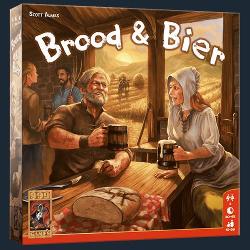
2022 · Kaartspel
Brood & Bier
Two villages continue a centuries-old rivalry built on brewing beer and baking bread. Players each manage a village over six alternating “years,” harvesting and storing shared-field resources, producing beer and bread, selling goods for coins and upgrading buildings. Play uses a multi-use card system with alternating rounds that drive drafting, resource management, and interaction as players allocate actions and develop production chains. Final scoring uses only the coins from the good type (beer or bread) for which a player earned less, so players must balance output and sales rather than maximize a single product.
- Spelers
- 2
- Speeltijd
- 30–45 min
- Leeftijd
- 10+
- Complexiteit
- 2,4 / 5
Over het spel
- Ontwerp
- Illustraties
- Publisher


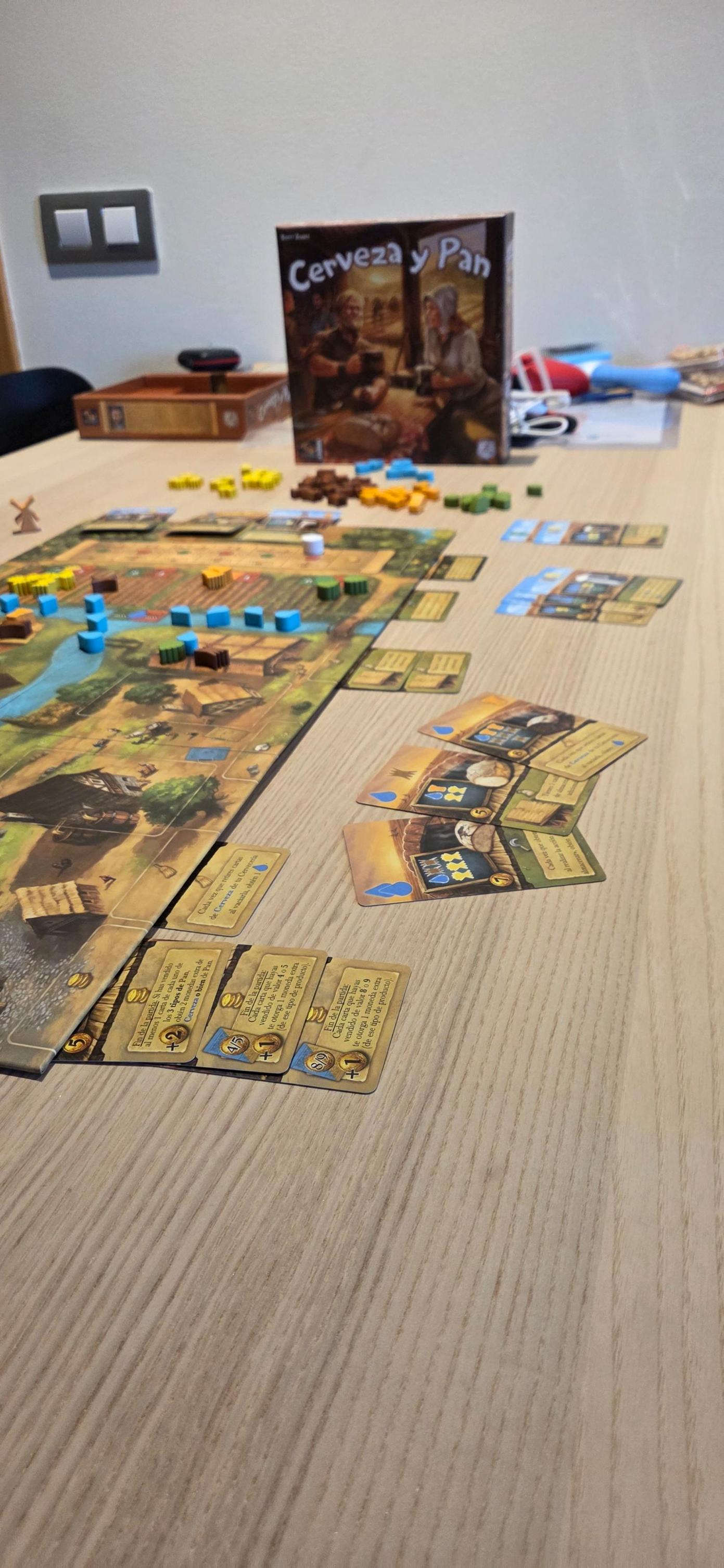
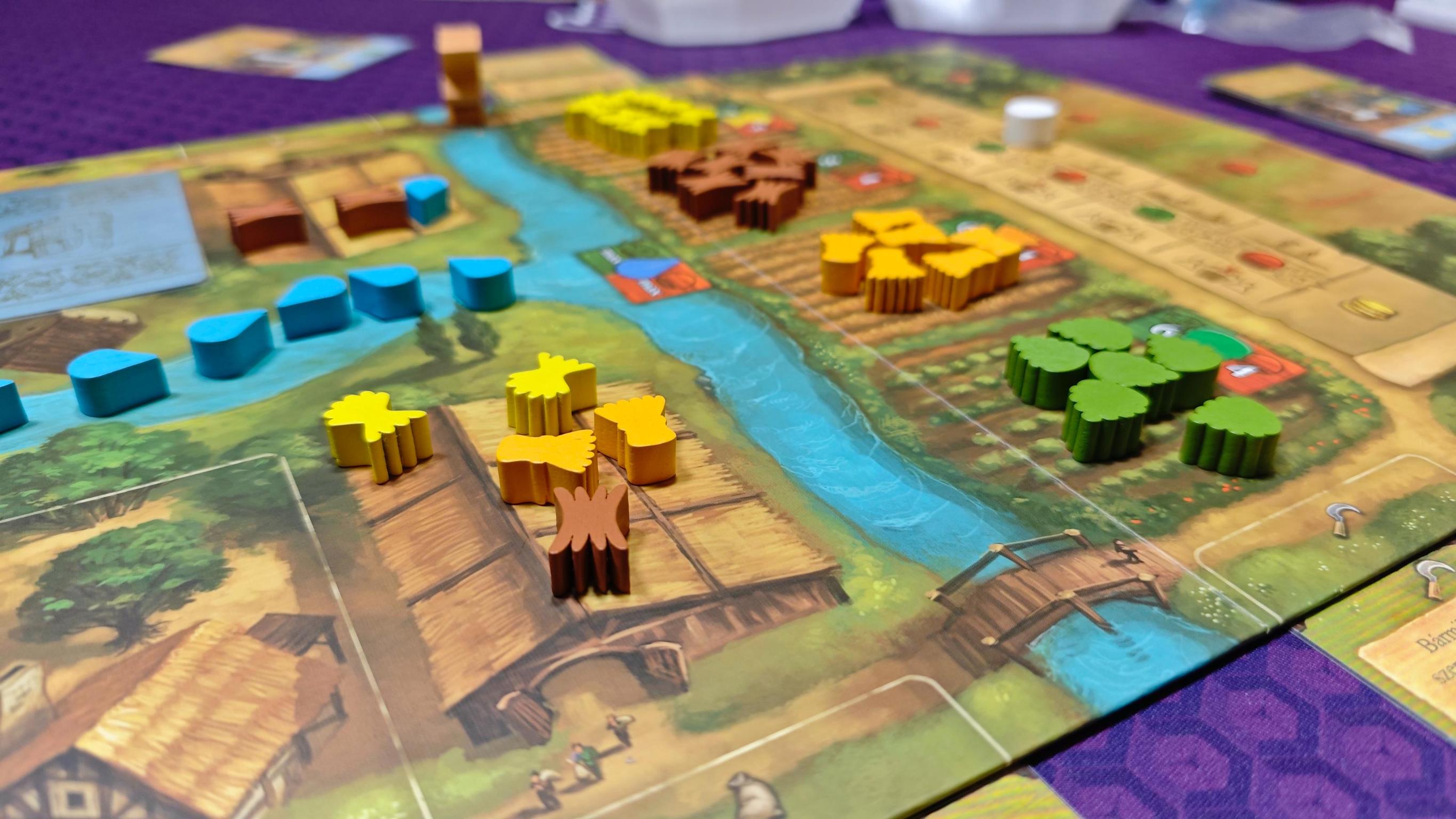
Foto's van Ludoya-tafels
Alle foto's in Ludoya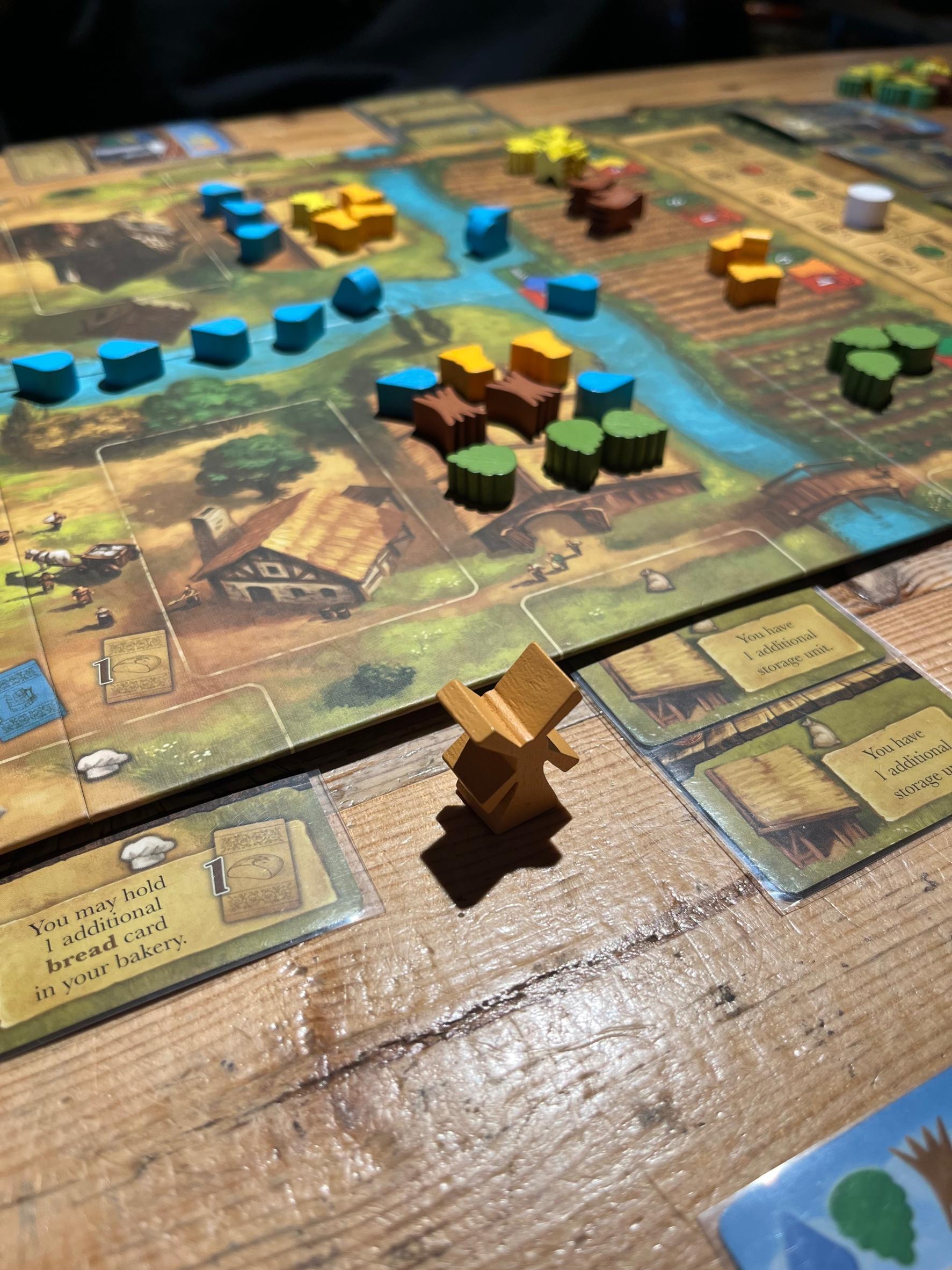
Waar te koop
Winkelprijzen en tweedehands exemplaren, elke dag gecontroleerd.
Aan de tafels van Ludoya
Alle statistieken in Ludoya- 413
- Vastgelegde speelsessies
- 319
- Spelers
- 46m 46s
- Gemiddeld potje
- 157
- In collecties
- 19
- Op verlanglijsten
7,6/10
uit 58 Ludoya-recensies
Hobbang10,0 It is such a comprehensive game. It's like a mini mash up of Rosenberg games but straightforward enough to introduce resource management to board gamers.
Elfrikijugon8,5 Edición en castellano de Maldito Game

Regelvragen
Beantwoord vanuit het spelregelboek door de regelassistent van Ludoya.
What happens if I harvest more resources than I have storage for?
Choose which tokens to keep from among all your tokens (stored ones and the newly collected); offer the rest to the other player, who may take any they have free storage for, and return any leftovers to the common supply (page 6).
When do we swap hands — do we swap every round?
In fruitful years you swap hands after each pair of turns (after both players take a turn), repeating until hands are empty; in dry years you do not swap hands during the Action phase (pages 5 and 8).
How do the exchange cards work — when can I take one and what happens to my card?
In the Card phase of dry years three exchange cards are placed face up; on your turn you may place any hand card face up onto an exchange space (making it the new exchange card) and immediately take and play the exchange card you removed (you may not add it to your hand) (page 8).
What's the difference in seeding between fruitful and dry years?
Fruitful years seed fields to higher targets (wheat 7, barley 8, rye 6, hops 6) and add all water to the river, while dry years seed to lower targets (wheat 5, barley 4, rye 4, hops 4) and also add all water; if the supply lacks tokens, add as many as available (pages 4 and 7).
Who gets the windmill and what if we tie?
Give the windmill to the player with fewer resource tokens in their storage units; in case of a tie, the windmill goes to the player who did not have it that round (page 7).
How do we score at the end — do we add beer and bread together?
Count sold beer and bread separately (including any upgrade bonuses), then your final score is the lower of the two totals; the higher final score wins, with ties broken by the higher other total and then by the player who does not have the windmill (page 9).

Gratis, op het web, Android en iOS
Speel Brood & Bier met Ludoya
- Houd het bij in je collectieHoud je exemplaar en de uitbreidingen bij, leen het uit aan vrienden of zet het op je verlanglijst en krijg bericht als de prijs daalt.Voeg het toe aan je collectie
- Leg elke speelsessie vastScores, winnaars, timers en foto's, en dan je statistieken: winpercentage, favoriete spelersaantal, beste score.Speelsessie vastleggen
- Regelvragen beslechtenVraag alles over de regels en krijg een antwoord uit het spelregelboek, met de pagina om het na te lezen.Vraag de regelassistent
- Vind mensen om het mee te spelenClubs, spelavonden en evenementen bij jou in de buurt waar dit spel op tafel komt.Bekijk evenementen
Speldata (spelers, speeltijd, leeftijd, makers) van BoardGameGeek.