
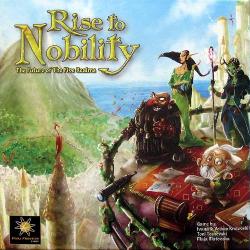
2018 · Construção de cidades
Rise to Nobility
Os jogadores desenvolvem um terreno em uma capital recém-fundada, melhorando edifícios, recrutando colonos e fazendo os cidadãos avançarem em suas profissões. O jogo usa a alocação de trabalhadores (dados) para atribuir ações, atender às exigências do conselho, alojar e empregar colonos e aumentar o valor da terra. A vitória vem de conquistar status na cidade ao acumular influência, melhorar edifícios e promover colonos de aprendizes a mestres de guilda para garantir posições por toda a cidade.
- Jogadores
- 1–6 melhor com 4
- Tempo de jogo
- 25–150 min
- Idade
- 14+
- Complexidade
- 3,3 / 5
Sobre o jogo



Expansões
Ver na Ludoya
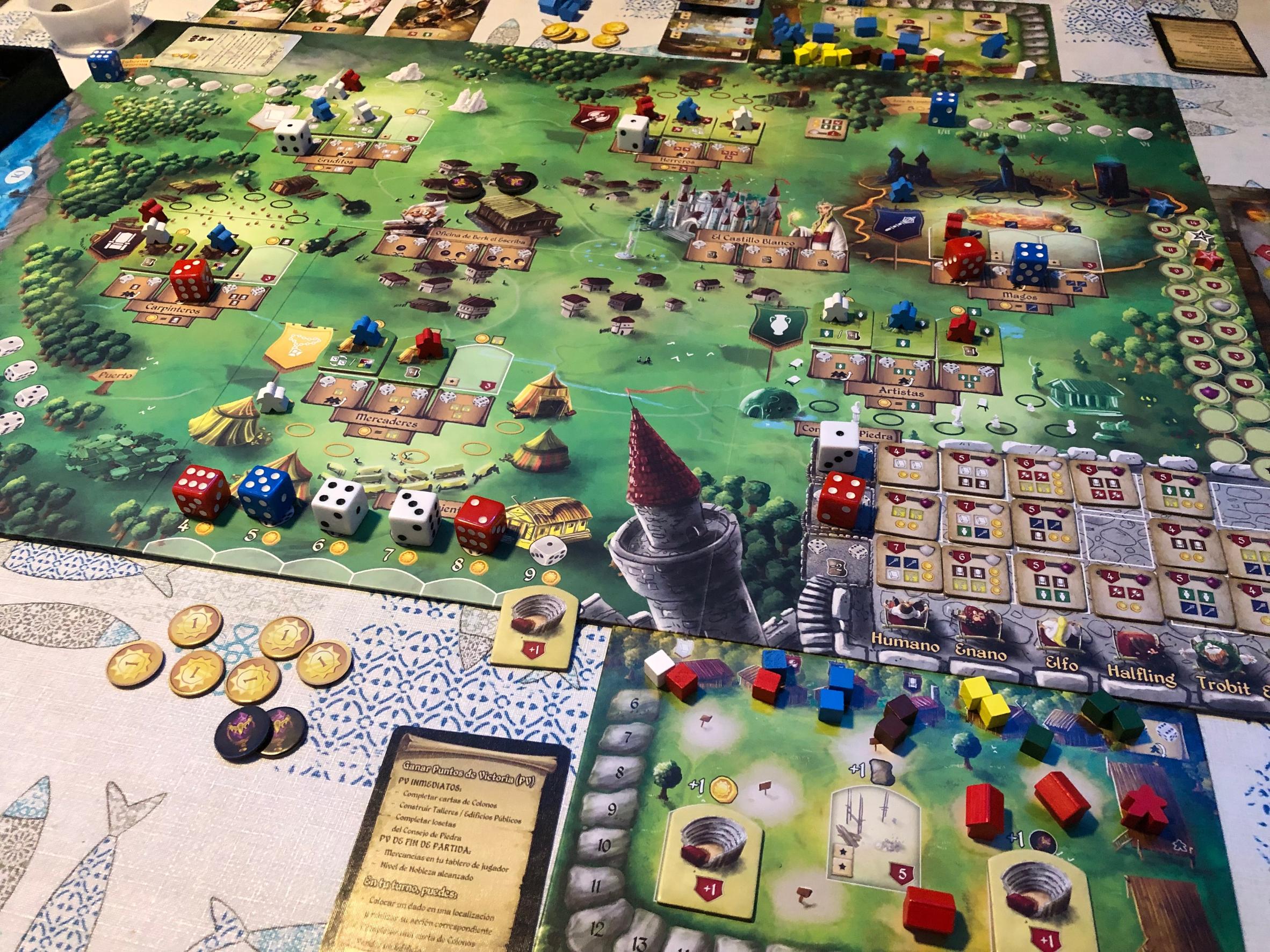
Fotos das mesas da Ludoya
Todas as fotos na Ludoya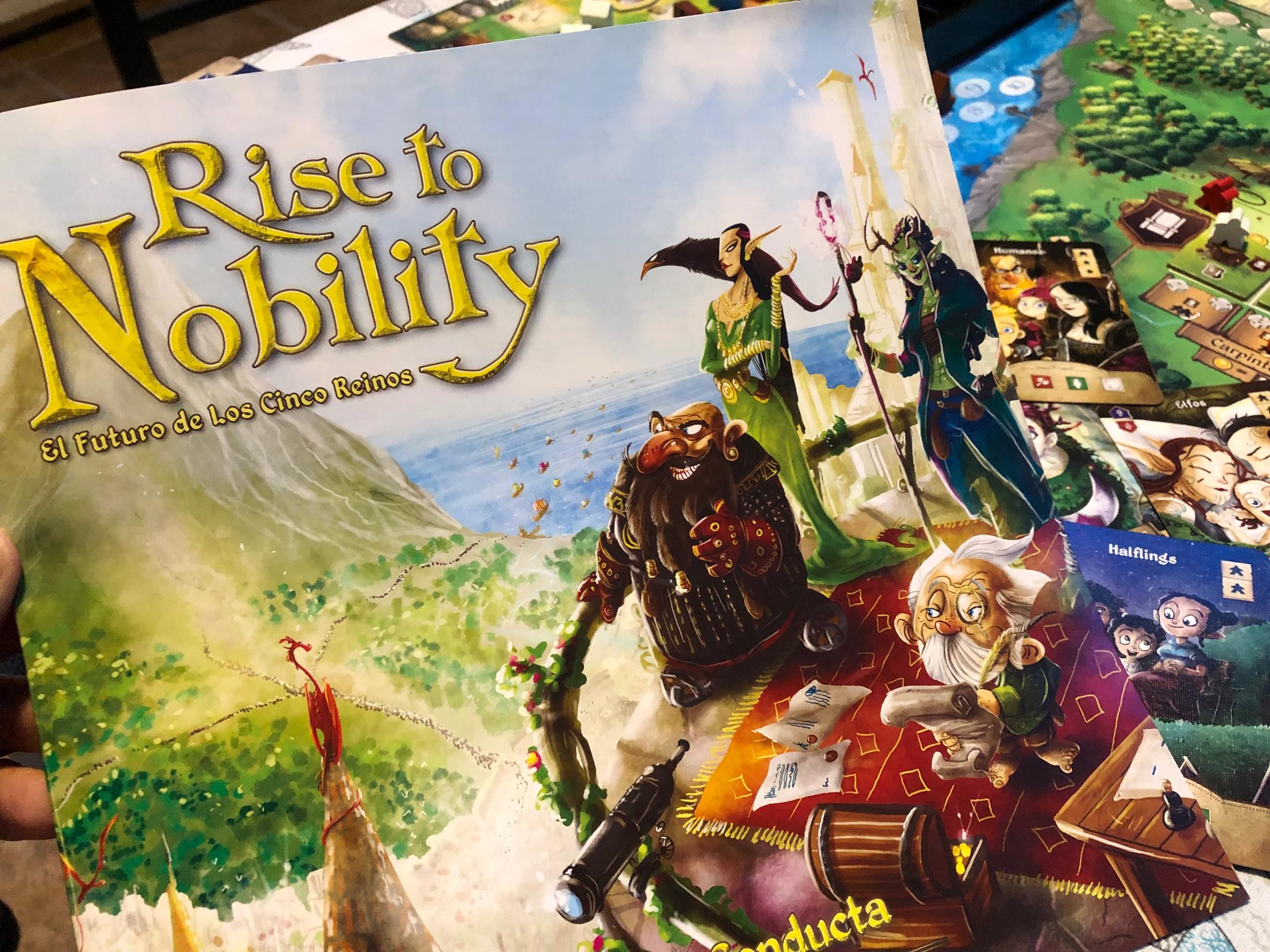
Onde comprar
Preços das lojas e cópias usadas, verificados todos os dias.
Nas mesas da Ludoya
Todas as estatísticas na Ludoya- 67
- Partidas registradas
- 91
- Jogadores
- 2h 1m
- Partida média
- 48
- Em ludotecas
- 3
- Em listas de desejos
- 1
- Comprado na pré-venda
6,2/10
de 15 avaliações na Ludoya
Evan4,0 This is a recipe game that uses dice as workers. Each round players roll their dice and then take turns placing them one by one in turn order. You have a track on your board that determines what the total sum of numbers on your dice you are allowed to use across your actions in the round. This track can be increased, and there are some additional +1/-1 tokens you can acquire, but it happens that in some rounds you won't be able to place all your dice. The game seems to position itself in a way that they intend this to be an important mechanism. There are low value VP tiles you can buy with recipes in addition to the normal recipe cards, and taking one of those tiles reduces your dice threshold by 2. The trouble is that dice are dice, and since this is worker placement with recipes. The luck of how many turns each player gets roughly evens out across the game's ten rounds, but some turns you need all your workers, and others it's less important. If you wind up rolling poorly at an important moment, that can be the game. The arc of the game makes sense. Over ten rounds you do complete the tasks the game sets out for your satisfactorily, however what you are doing feels a little basic for the length. Gather goods, build a house, take a card, complete the card, repeat. There are some nice engine building aspects where you can place meeples unlocked from your cards next to the gather spaces to increase your further gathers and gain you money. Then additionally, there are tiles you can purchase that add additional effects to a collection space, which you claim, and gain a small benefit from when another player uses the space. This is a mechanism I generally love, but the implementation here felt a little messy. Tiles in the gather spaces require a meeple standing in the gather space already, which then changes the things that meeple produces for you during income. Tiles that go on your board require a meeple standing in your supply. Additionally, the recipe cards you complete to get the meeples are a little messy. They have an icon that depicts both the minimum and maximum number of goods you can spend to complete the card, scoring 1vp per good spent. They have two additional constraints not depicted on the card, which is no fewer than 1 of each good type requested, and no more than 3 of each good type requested. Then this is altered by your starting personality card which lets you spend 1 more of 1 type of good, but doesn't increase the maximum overall. A little extra iconography work and a little simplifying would have gone a long way here. Stepping back to those VP tiles you have to sacrifice dice steps to take, they have multiple fiddily constraints to take. First, you have to use a die of a specific value to take a tile from a row, but then additionally, you have to have completed a recipe card to be allowed to take a tile from the matching column. This board section baffles me. Why is it a good or interesting move to use the correct die, complete the correct type of recipe card to then spend 4 goods, and 2 steps on your dice track to get 5vp, when the recipe cards themselves generate 1 point per good, plus steps on the star track, where each step is 1vp after a certain point? I must be missing something. ★ Art, Iconography and components functional ☆ Clever or interesting mechanisms ★ Reasonably low downtime between turns with mildly AP players ★ Multiple plays stay interesting ☆ Low or mitigatable luck elements ★☆☆☆☆ Raw enjoyment
Primeiras impressões · 1 partida
Jogos semelhantes











Grátis, na web, Android e iOS
Jogue Rise to Nobility com a Ludoya
- Tenha na sua ludotecaAcompanhe sua cópia e suas expansões, empreste para os amigos ou coloque na lista de desejos e seja avisado quando o preço cair.Adicionar à sua ludoteca
- Registre cada partidaPontuações, vencedores, cronômetros e fotos, e depois suas estatísticas: taxa de vitórias, número de jogadores favorito, melhor pontuação.Registrar uma partida
- Marque os pontos sem papelUse as folhas de pontuação e os ajudantes de jogo da comunidade e deixe a Ludoya somar os pontos.Encontrar folhas de pontuação
- Encontre gente para jogarClubes, noites de jogos e eventos perto de você que levam este jogo para a mesa.Ver eventos
Dados do jogo (jogadores, tempo de jogo, idade, créditos) do BoardGameGeek.