
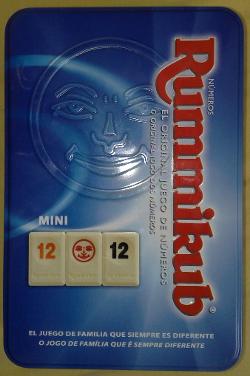
1950 · Jogo de cartas
Rummikub MINI
Os jogadores correm para jogar todas as suas peças numeradas, formando sequências (três ou mais números consecutivos da mesma cor) ou grupos (três ou quatro peças do mesmo número em cores diferentes). As peças podem ser reorganizadas na mesa para estender ou dividir combinações já existentes, permitindo que os jogadores reutilizem peças que já estão em jogo. Em cada turno, um jogador compra uma peça se não conseguir jogar e depois tenta manipular a mesa para baixar peças da sua estante. O jogo termina quando um jogador esvazia sua estante; a pontuação compara as peças restantes nas estantes dos outros jogadores.
- Jogadores
- 2–4 melhor com 4
- Tempo de jogo
- 60 min
- Idade
- 8+
- Complexidade
- 1,7 / 5
Sobre o jogo
- Design




Expansões
Ver na Ludoya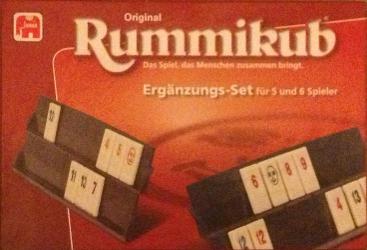
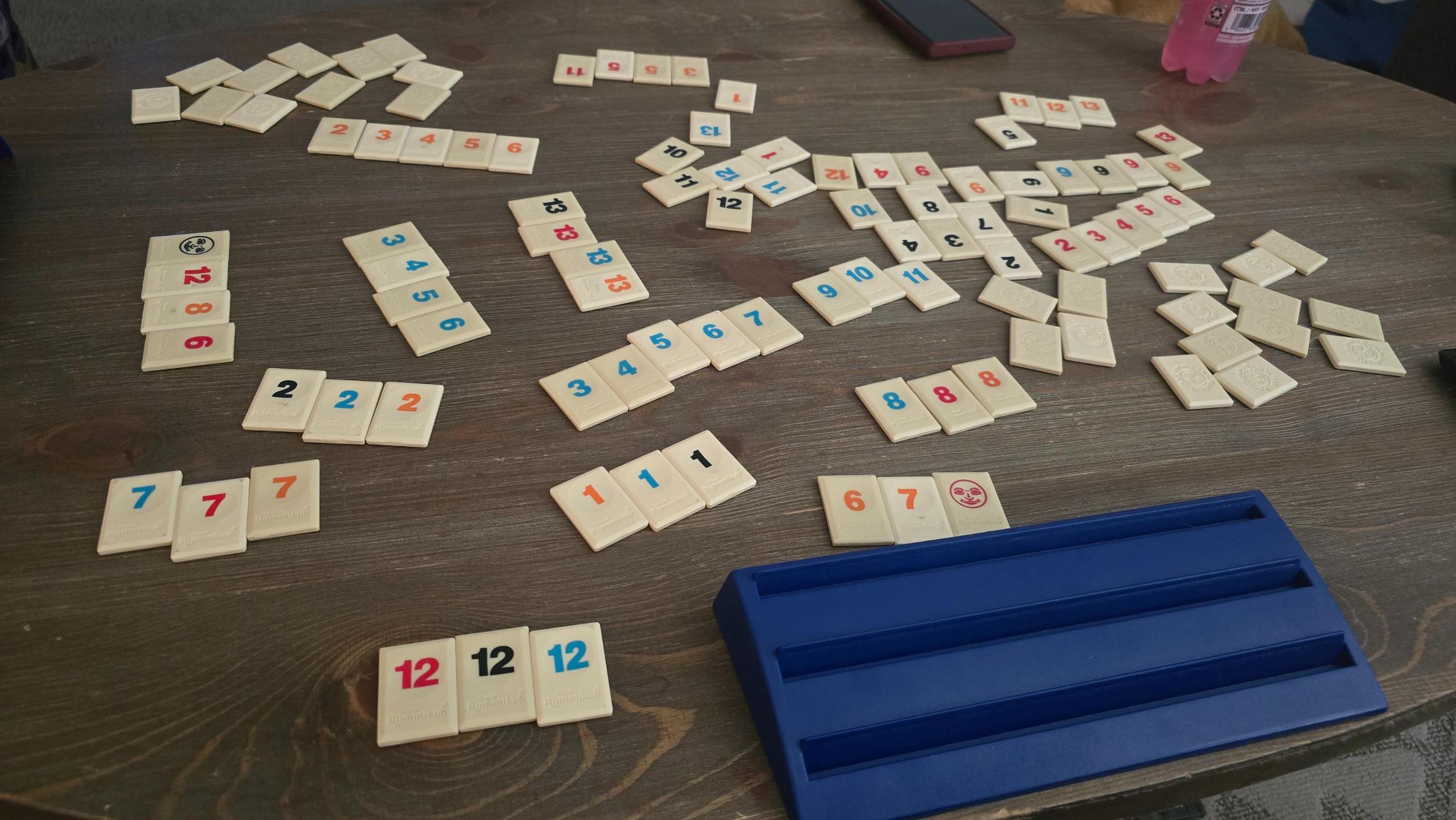
Fotos das mesas da Ludoya
Todas as fotos na Ludoya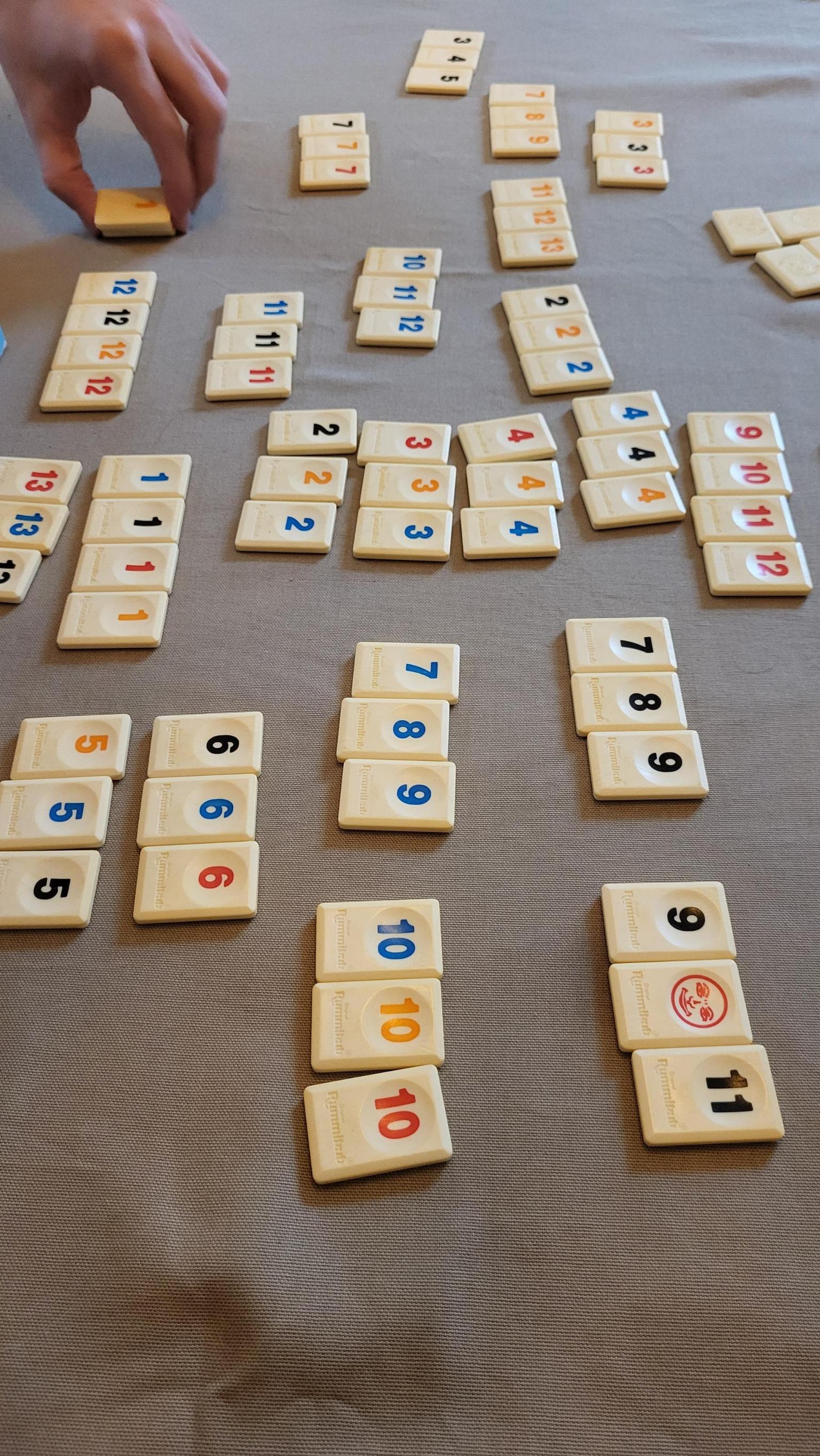
Onde comprar
Preços das lojas e cópias usadas, verificados todos os dias.
Nas mesas da Ludoya
Todas as estatísticas na Ludoya- 2.595
- Partidas registradas
- 667
- Jogadores
- 24m 18s
- Partida média
- 320
- Em ludotecas
- 3
- Em listas de desejos
- 1
- Comprado na pré-venda
6,5/10
de 104 avaliações na Ludoya
Vic Granell6,0 Learnt it from my grandma as a kid, grew up playing it a lot. It has a bit more strategy than other classic games that I used to play and were just moving tokens along with dice throws (like Parchís - Pachisi/Ludo), but not much. It allows for some thought at least!
[Gracze] 2-4 (najlepiej 4) [Czas] 60m [Wiek] 8+ S: - I: N/N
Mestremuten4,0 Rating: 2/5 Production value: 1/4 Is the game in my collection/Love to have?: 1/1

Dúvidas de regras
Respondidas a partir do manual pelo assistente de regras da Ludoya.
Can I use tiles already on the table to make my initial 30-point meld?
No — the tiles used for your initial meld must come from your rack; you may not use tiles already played on the table to reach the required 30 points (page 1).
How many points do I need for the initial meld and how is a joker counted?
You must place sets totaling at least 30 points for your initial meld, and a joker used in the initial meld scores the value of the tile it represents (page 1).
Am I allowed to rearrange or take tiles from sets already on the table to make new sets?
Yes — you may manipulate, split and recombine sets on the table (including removing tiles from groups/runs) as long as at the end of your turn only legitimate sets remain and no loose tiles are left (page 2).
When can I take a joker from the table, and what must I do after I take it?
A joker may be retrieved if you can replace it during your turn with tiles that keep the set legitimate, but when you retrieve it you must immediately play the joker to make a new set and use at least one tile from your rack that turn; you may not retrieve a joker before you have made your initial meld (page 3).
If I draw a tile from the pool, can I play that tile in the same turn?
No — when a player draws a tile from the pool their turn ends, and players cannot lay down a tile they have just drawn until a subsequent turn (page 1).



Grátis, na web, Android e iOS
Jogue Rummikub MINI com a Ludoya
- Tenha na sua ludotecaAcompanhe sua cópia e suas expansões, empreste para os amigos ou coloque na lista de desejos e seja avisado quando o preço cair.Adicionar à sua ludoteca
- Registre cada partidaPontuações, vencedores, cronômetros e fotos, e depois suas estatísticas: taxa de vitórias, número de jogadores favorito, melhor pontuação.Registrar uma partida
- Tire dúvidas de regrasPergunte qualquer coisa sobre as regras e receba uma resposta do manual, com a página para conferir.Perguntar ao assistente de regras
- Encontre gente para jogarClubes, noites de jogos e eventos perto de você que levam este jogo para a mesa.Ver eventos
Dados do jogo (jogadores, tempo de jogo, idade, créditos) do BoardGameGeek.