
2014 · 经济
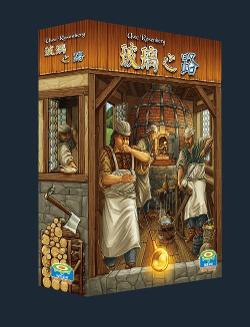
Murano
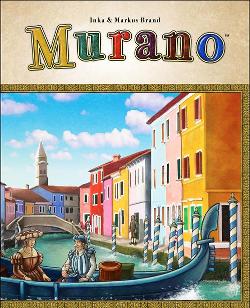
玩家将在由运河连接的一组岛屿上发展玻璃制造业,并使用贡多拉四处移动、执行行动。 在一个回合中,玩家沿着外围行动轨道移动一艘贡多拉,将其停在一个空位上并执行对应行动;除非支付费用移动挡路的其他贡多拉,否则移动会被它们阻挡。行动包括在岛屿建筑地块上放置不同类型的商店、将自己的贡多拉驶上岛屿、建造玻璃工坊,以及出售玻璃赚取金钱。 商店会根据距离和所提供的商品吸引游客到访;玩家则通过获取并完成胜利点数卡来得分,这些卡牌会与已建造的建筑、游客消费以及市场产生互动。
- 人数
- 2–4 最佳 4 人
- 游戏时长
- 60–75 分钟
- 年龄
- 10+
- 复杂性
- 2.7 / 5



在哪里买
商店价格和二手货源,每天检查。
在 Ludoya 的牌桌上
在 Ludoya 中查看完整统计- 40
- 已记录对局
- 55
- 玩家
- 1h 37m
- 平均时长
- 10
- 收藏数
- 3
- 愿望清单数
6.1/10
基于 8 条 Ludoya 评测
Garfield2.0 At the end it's just about getting target cards and hope that the condition is already fulfilled. Way too much luck involved.
无记录对局
Evan6.0 This game is one of those giant roundel games around the outside of the board. On a player's turn they advance a boat to a spot and resolve an action there. The trick is, you can't move a boat past another boat, although you can pay your precious money to move other boats out of the way. Because this is expensive, you do often wind up with traffic jams that could force you to resolve a less than ideal action. What I find compelling about this game is the tension created from trying to get the actions you want, keeping afloat in money, and knowing when to stop getting new objective cards and focus on completing those objectives. One problem I have with the game is that there are essentially two ways to produce money in the game, which again, you really need not only to mitigate the traffic jams but also to take nearly every action in the game. One way is through tile draws with both the buy a shop action, which gets you a random colored shop, and then the build action with which you can draw two random road tiles and hope the people on those roads match up with your shop. Then later, you can use the single action space where you choose an island to have one of each color of your shops produce a dollar per matching person on the roads. This action always gets clogged up. The other way is through buying and building glass producing buildings. When you take the action in the one spot that produces glass, you loose 2 vp per glass you produce, and you get that many random pulls from a bag and hope the gems you drew are either all the same, in which case they can be sold for lots of money, or that they match up endgame scoring cards you took. Either way, you need to involve yourself in some randomness, and with the glass way, your potential is higher, but knowing when to stop taking those big VP hits is tough. The second issue I have with the game is that many of the endgame victory point cards require islands to be setup in a particular way that relies on your opponents. For example, in one game I had a card that needed an island to have equal red buildings to black customers. I set that up, then paid to get my scoring pawn attached to that island, and from that point on I was at the mercy of other players choosing not to mess that ratio up, without them having any idea they were doing so. This sort of blind blocking troubles me. When someone messes up my plans, I like the to know they are doing it. I like it to be part of their strategy, or a choice they are making. I feel cheated when they proclaim, 'Oh I had no idea I was messing up your secret card, I just chose that spot randomly.' Aside from those problems, I do like the flow of the game, I like the look of the game, and there is a lot of enjoyable tension. I think if either the money engine was a little more enjoyable or reliable, or if the endgame victory cards were generally more self determinable, this would be a keeper for me. ★ Art, Iconography and components functional ★ Clever or interesting mechanisms ★ Reasonably low downtime between turns with mildly AP players ★ Multiple plays stay interesting ☆ Low or mitigatable luck elements ★★☆☆☆ Raw enjoyment
玩过 4 次
Mitchell C7.0 This game plays very smoothly and quickly. Feels like a classic eurogame. The shared rondel mechanic is very interesting and offers just enough interaction.
玩过 3 次

游戏信息(人数、游戏时长、年龄、制作人员)来自 BoardGameGeek。