
2018 · 文艺复兴
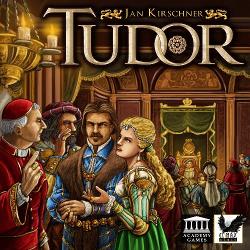
Tudor
玩家扮演贵族家族,在都铎王朝宫廷中争夺影响力。每回合,玩家将廷臣放入三个觐见室,然后放置一名领主;只有包含至少一名领主的觐见室中的廷臣,才能使用该觐见室的行动。有限的座位和对手的放置可能会挤走廷臣,并改变行动的可用性。 处于激活觐见室中的廷臣各执行两个可用行动之一(占据该室的领主可以两者都执行)。行动会提供宫廷卡,并允许玩家移动王座厅中的廷臣,以获取宫廷标记并在宫廷职位上晋升。到达某个职位的顶端即可获得一枚戒指,玩家将其展示在自己的个人屏风上;戒指的放置会改变未来行动的效果。职位可能被对手争夺并夺走,从而改变声望。 每局游戏会使用一张情景卡和两张计分卡来改变规则与计分方式,带来多变的策略体验。游戏结束时,拥有最多声望的玩家获胜。
- 人数
- 2–4 最佳 4 人
- 游戏时长
- 90–120 分钟
- 年龄
- 12+
- 复杂性
- 2.9 / 5

在 Ludoya 的牌桌上
在 Ludoya 中查看完整统计- 27
- 已记录对局
- 45
- 玩家
- 1h 38m
- 平均时长
- 26
- 收藏数
- 2
- 愿望清单数
6.1/10
基于 10 条 Ludoya 评测
Garfield4.0 Themeless tile collecting game. [c] Theme: ★☆☆☆☆ <!-- size 7]Too abstract --> Gameplay: ★★☆☆☆ <!-- size 7]Rinse and repeat. --> Interaction: ★★☆☆☆ <!-- size 7]Almost none --> Artwork: ★★☆☆☆ <!-- size 7]Nothing special --> Luck: ★★☆☆☆ <!-- size 7]Not much --> Strategy: ★★★☆☆ <!-- size 7]AP danger --> Components: ★★★☆☆ <!-- size 7]Nothing special --> Play duration: ★★☆☆☆ <!-- size 7]Too long --> Easy to teach: ★★★☆☆ <!-- size 7]Ok --> Rules quality: <!-- size 7]not read --> Setup time: ★★★☆☆ <!-- size 7]Ok --> No downtime: ★★☆☆☆ <!-- size 7]AP danger --> Replay value: ★★☆☆☆ <!-- size 7]Not much I can think of --> [/c]
无记录对局
Cool, original and demanding Eurogame!
无记录对局
Evan6.0 Each round players put one or two workers into one of three lines for action spaces. Once everyone is done placing their workers, the workers push into the spaces displacing workers from previous rounds if the room overfills. Then players place their double action pawn into one of the three action boxes. Each action box has two possible actions, with basic workers getting to do either of the two, and your double pawn getting to do both of the two, with the trick of things being that if no player places their double pawn into a box, no regular workers get to act. The game has a variable number of rounds, a variable number of actions each round and variable scoring conditions, so it's a bit hard to talk about what your goals are since they'll be different each game, but generally the core of the game comes from moving your pawns around a central grid. When you move into or through a space, you have to spend cards that color match the tokens that get randomly seeded into the spaces. Then you collect the faction tokens of those spaces, and new ones get drawn from a bag and placed into those spaces. If you land on a circle token, you also claim it for an extra bonus effect, which also varies game to game. If you hit the back row, your meeple locks in, and you get to select a ring from the display. The rings are how you do any engine building in the game. Each player has a very silly player screen with big fingers sticking out the top. You start the game with two rings, which you place on the fingers of your screen. Having rings of specific sets of fingers unlocks better versions of the actions your workers get to take. Getting more rings opens up your ability to use the actions more effectively as some rely on having specifically colored rings, but it also gives you access to more of the improved versions of the actions. I really enjoy the action selection and resolution process, although there are a few points of frustration for me. The first is when you make it to the back of a column and get a new ring, your meeple remains there until someone else comes along and knocks you out. When they do so, they get to take one of your rings. This might turn off the special version of the action you were just about to resolve. This might also change your color mix so you could be unable to resolve your actions usefully. Since the action that moves your meeple can move you up to 7 spaces in a single move, it can be very hard to predict or plan for when someone is going to take your ring. Having then taken your ring, there's very little you can do in terms of a response, other than eventually work around to amassing enough cards in the right combinations to do the same. You do get to re-arrange the locations of your rings when you get knocked out, so you might be able to salvage something out of the situation, but generally I like it better in euro games when there's some amount of back and forth to effects like this. It can also feel rough when you've lined up enough cards for a good run down the chart, and someone beats you to it, picking up all the tokens and replacing them with new ones that don't match your hand at all. This at least isn't as bad since you still do have those cards in supply and they'll come in handy eventually. My last big criticism is that when players get uneven numbers of worker activation opportunities, those players get weak pass actions. They consist of either take a card matching the color of a ring you have, or move 1 space. Since when you get knocked out of a space, you opponent gets to take a ring of their choice from you, there are rough situations where they might take a ring from you and create a situation where in your pass action you are unable to draw the color of a card that would let you walk a space. In theory taking the time to draw more cards than you need for your moves would mitigate this, but as it is in euros, actions are tight. So, in conclusion, this game has silly components, a compelling system for actions, but feels only slightly too punchy for my taste. This could change once I see some more of the variable game setup cards. ★ Art, Iconography and components functional ★ Clever or interesting mechanisms ★ Reasonably low downtime between turns with mildly AP players ★ Multiple plays stay interesting ★ Low or mitigatable luck elements ★☆☆☆☆ Raw enjoyment
初印象 · 1 局







游戏信息(人数、游戏时长、年龄、制作人员)来自 BoardGameGeek。