

2023 · Gebietsaufbau
Amritsar: Der Goldene Tempel
Die Spieler schlüpfen in die Rolle von Beratern und Förderern, die dem Maharaja dabei helfen, einen heiligen Tempel im historischen Amritsar wiederaufzubauen. Das Spiel dreht sich um eine Mancala-ähnliche Sämmechanik: Bewege Arbeiter und einen Elefanten, um pro Zug 1–3 Aktionen auszuführen, z. B. Stein und Marktressourcen zu sammeln, auf Wissensleisten voranzuschreiten, das eigene Spielertableau aufzuwerten und den Mahut für besondere Hilfe heranzurufen. Spenden für den Tempel wandeln Ressourcen in Prestige um, das am Spielende den Gewinner bestimmt. Strategische Koordination der Arbeiter und das richtige Timing der Aktionen sorgen für Effizienz und Punkteerträge.
- Spieler
- 1–4 am besten mit 3
- Spielzeit
- 60–120 Min.
- Alter
- 14+
- Komplexität
- 3,3 / 5
Über das Spiel
- Autoren
- Illustration
- Verlag


Fotos von Ludoya-Tischen
Alle Fotos in Ludoya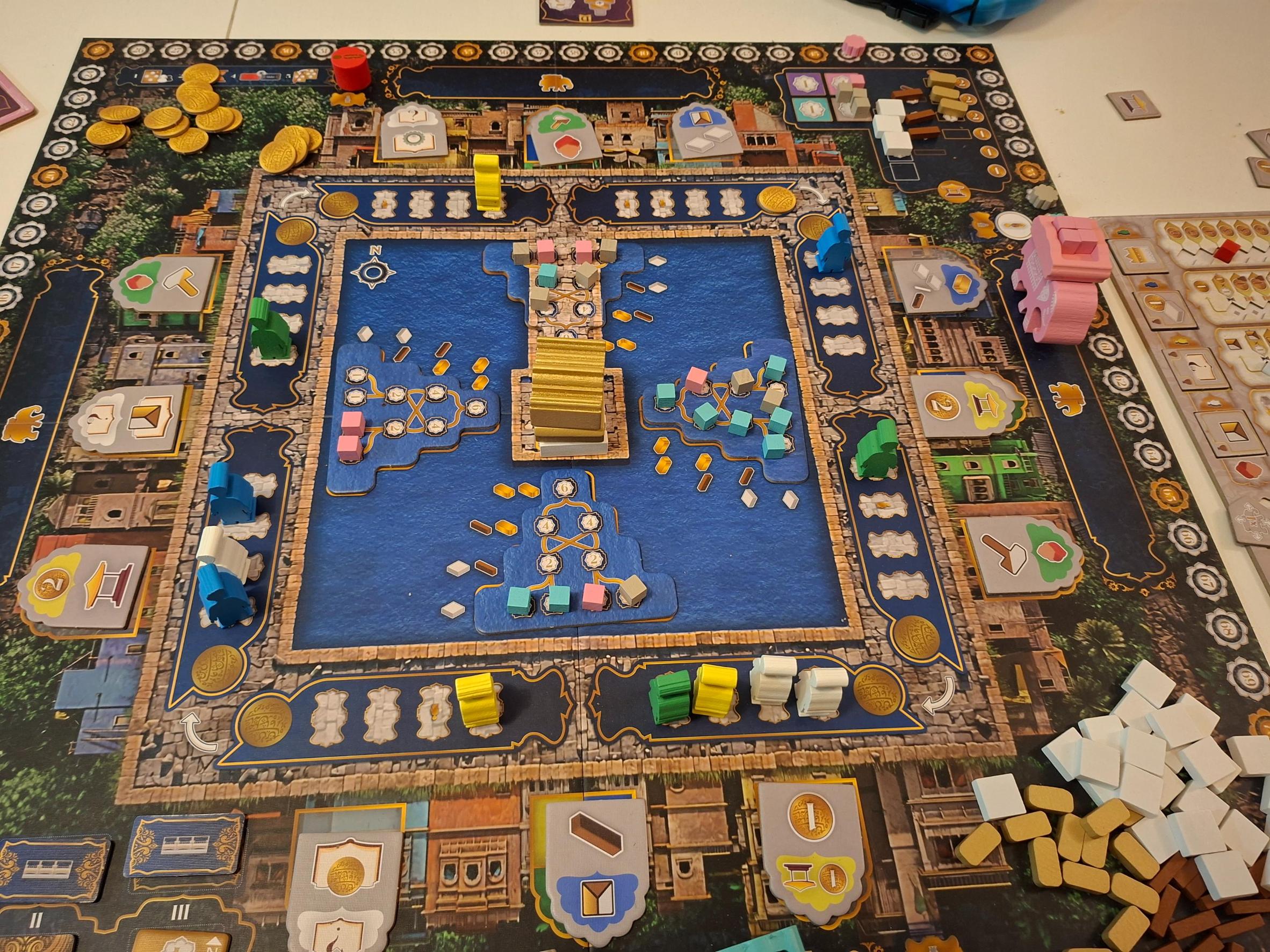
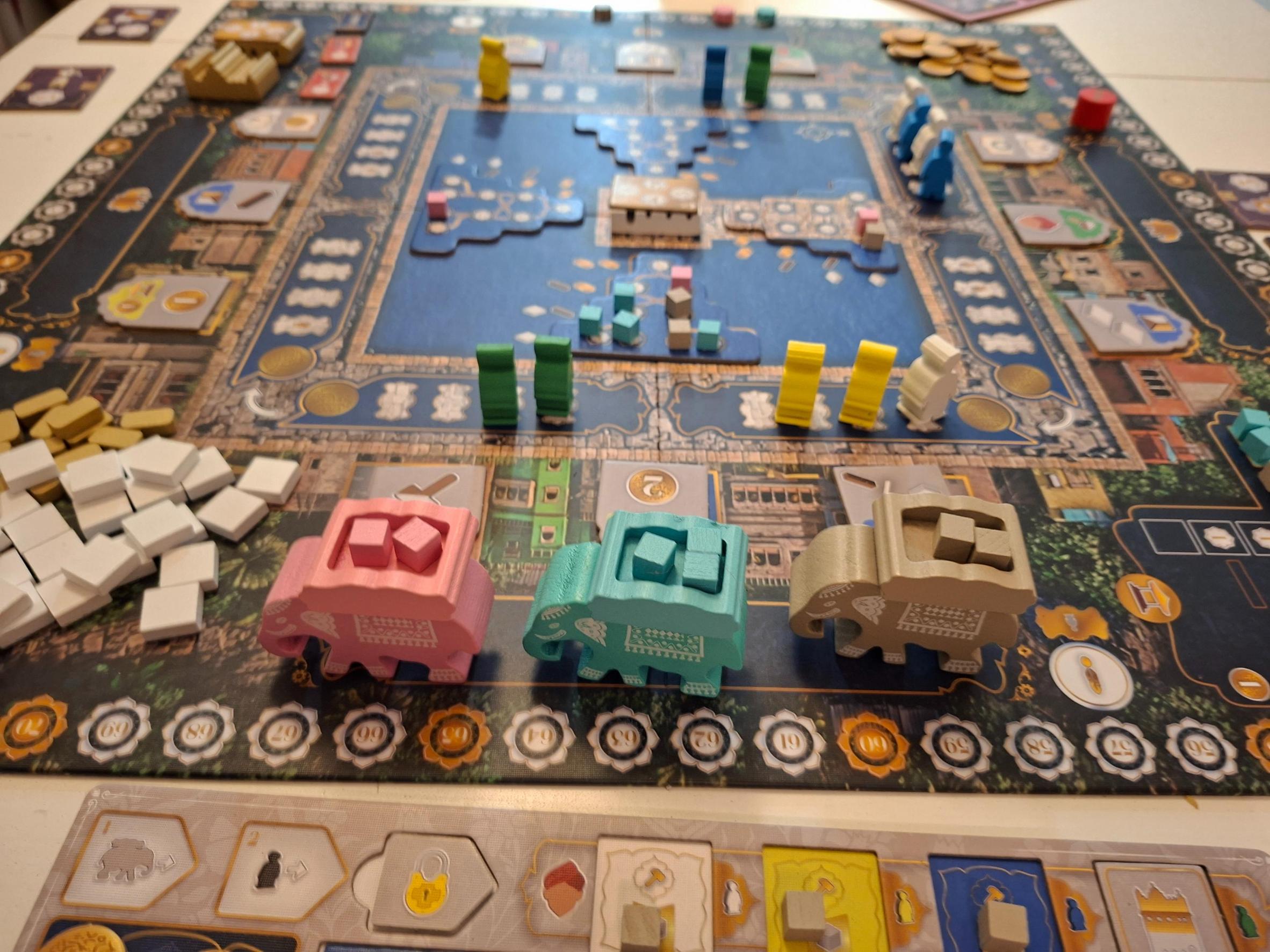
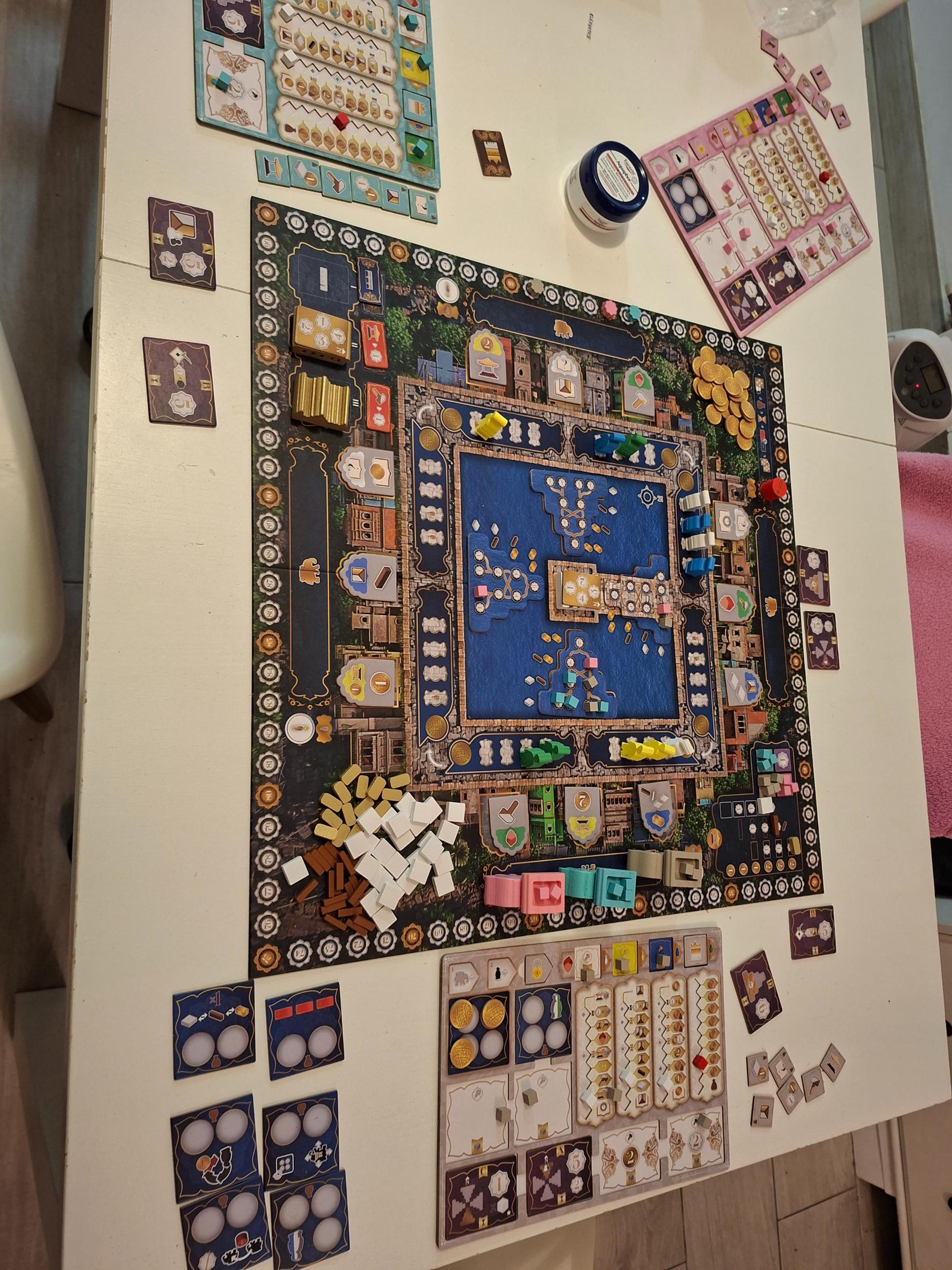
Wo kaufen
Shop-Preise und gebrauchte Exemplare, täglich geprüft.
An Ludoyas Tischen
Alle Statistiken in Ludoya- 143
- Erfasste Partien
- 193
- Spieler
- 1h 50m
- Durchschnittliche Partie
- 67
- In Sammlungen
- 12
- Auf Wunschlisten
6,6/10
aus 29 Ludoya-Rezensionen
Euro de mayorías con mecánica mancala y subetracks muy molón.
Garfield2,0 Mechanisms works, but this has a heavy AP warning on it! You can't plan ahead because the turn before yours can change much. Avoid playing it at 4 at all costs. Waiting time can be 10min between turns. Just mechnisms salad but it's not that fun.
Ddavebowman6,0 eladva


Regelfragen
Aus der Spielanleitung beantwortet von Ludoyas Regelassistenten.
Do elephants and workers move on the same part of my turn, or are they separate?
They are separate: your turn has Phase 1 (optional) to move your Elephant, Phase 2 (obligatory) to move Workers, and a possible Phase 3 Elephant move only if you unlocked the Movement Token on your board (see p.5–6).
If the active player uses a Worker colour I also have a Mahout for, can I copy their action?
Yes — immediately after the active player finishes, other players clockwise may ‘follow’ and perform the Mahout action matching that Worker colour if they have it on their board; the active player scores 1 PP per follower (p.7).
Where and how can I make donations to the Temple?
You can only make donations using a Mahout Tile and only in the District where your Elephant is located; Donation Tiles have 4 Levels with specific resource costs and higher-Level spaces require the two spaces below to be occupied, and you gain PP as described when placing a Counter (p.5).
Can I buy and sell the same Resource type during the same turn or market action?
No — on the same turn you cannot buy and sell the same type of Resource, even if you perform multiple Market actions; also any Market action where you buy or sell grants a Donation Counter from your Market space to your Elephant (p.9).
Are Storehouse benefits one-time or permanent?
Acquired Storehouses can grant an immediate benefit (taken when you add that Storehouse) and/or a permanent benefit that applies for the rest of the game; your Starting Storehouse has no benefit (p.12).
When I move up a Knowledge track do I get its benefit right away or later?
You get the Benefit shown for the step immediately when you move up a Knowledge track; additionally the rules list special End-of-Decade and End-of-Game Knowledge effects that apply at those times (p.11).
Ähnliche Spiele
 Terrakotta-Armee2022
 Der Weg zu Satori2026
 Pilgrim2022
 Teotihuacan: Die Stadt der Götter – Luxus Edition2025
 Baghdad: The City of Peace2025
 Small City: Deluxe Edition2023
 Portus2024
 Tawantinsuyu: Das Inkareich2020
 Paladine des Westfrankenreichs2019
 Horologium: Die Orloj von Prag2026
 Papyria2025
 Great Western Trail: Argentinien2022









Kostenlos, im Web, für Android und iOS
Spiel Amritsar: Der Goldene Tempel mit Ludoya
- Hab es in deiner SammlungVerwalte dein Exemplar und seine Erweiterungen, leih es Freunden oder setz es auf deine Wunschliste und erfahre, wenn der Preis fällt.Zur Sammlung hinzufügen
- Erfasse jede PartiePunkte, Sieger, Timer und Fotos, dann deine Statistiken: Siegquote, liebste Spielerzahl, beste Punktzahl.Partie erfassen
- Regelfragen klärenFrag alles zu den Regeln und erhalte eine Antwort aus der Spielanleitung, mit der Seite zum Nachprüfen.Den Regelassistenten fragen
- Finde Leute, mit denen du es spielstClubs, Spieleabende und Veranstaltungen in deiner Nähe, bei denen dieses Spiel auf den Tisch kommt.Veranstaltungen ansehen
Spieldaten (Spieler, Spielzeit, Alter, Mitwirkende) von BoardGameGeek.