

2009 · Städtebau
Carson City
Die Spieler wählen in jeder Runde eine von sieben Rollen und setzen Cowboys auf Aktionsfelder ein, um Gebäude zu errichten, Grundstücke zu besiedeln oder Straßen zu verbessern. Zu den Aktionen gehören das Beanspruchen von Gelände, das Bauen von Gebäuden und Häusern, das Anheuern von Pistolen (angestellte Hilfe), das Einsammeln von Geld und das Auslösen von Duellen, wenn mehrere Cowboys am selben Ort stehen. Die Konfliktlösung erfolgt per Würfelwurf, um die Ergebnisse zu bestimmen, und die Spieler erhalten Punkte für kontrollierte Grundstücke, Gebäude, Berge, angestellte Hilfe und angesammeltes Geld. Das Spiel läuft über vier Runden und kombiniert Worker Placement, Area Control und taktische Kämpfe, um den Spieler mit der höchsten Punktzahl zu ermitteln.
- Spieler
- 2–5 am besten mit 4
- Spielzeit
- 90 Min.
- Alter
- 12+
- Komplexität
- 3,2 / 5
Über das Spiel
- Autoren
- Illustration
- Publisher



Erweiterungen
In Ludoya ansehen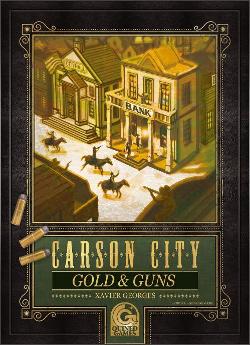 Carson City: Gold & Guns2012
 Carson City: A New Beginning2010
 Carson City: The Lawyer / Editor2015
 Carson City: The Indian2009
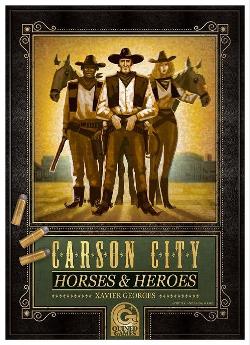 Carson City: Horses & Heroes2015
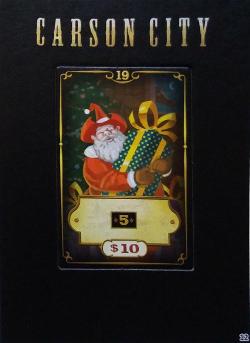 Carson City: Father Christmas Promo Card2018
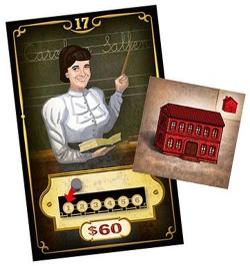 Carson City: The Teacher & Town Hall2015
 Brettspiel Adventskalender 20182018
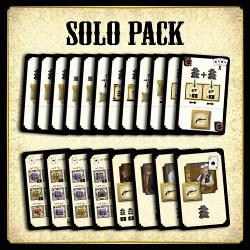 Carson City: Solo Pack2024
Fotos von Ludoya-Tischen
Alle Fotos in Ludoya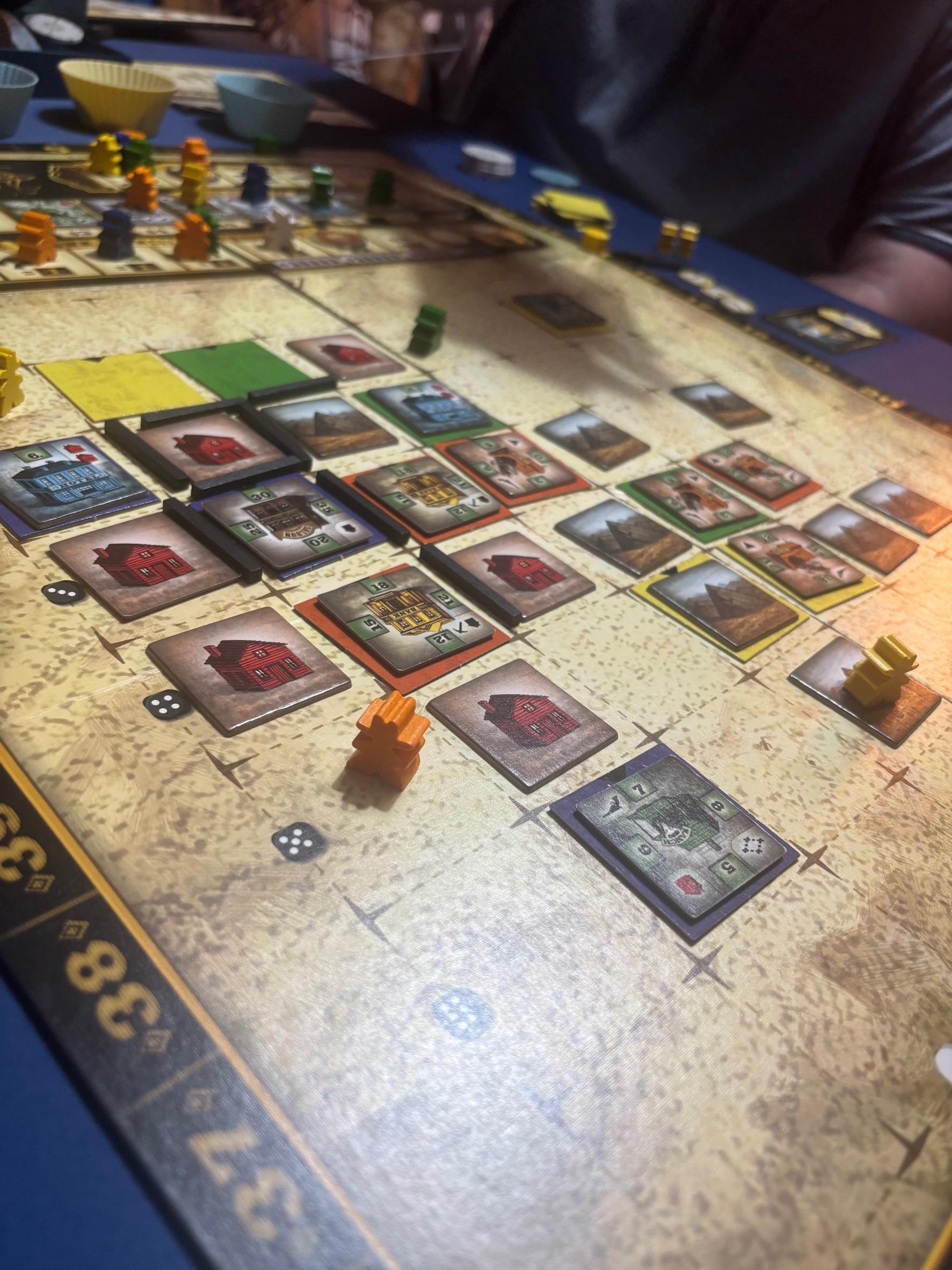
Wo kaufen
Shop-Preise und gebrauchte Exemplare, täglich geprüft.
An Ludoyas Tischen
Alle Statistiken in Ludoya- 202
- Erfasste Partien
- 254
- Spieler
- 1h 55m
- Durchschnittliche Partie
- 26
- In Sammlungen
- 18
- Auf Wunschlisten
6,4/10
aus 43 Ludoya-Rezensionen
Evan4,6 This is a curious western themed worker placement game. The game features a method of action blocking where you can place your meeple in a spot someone else has claimed to have a duel with them right before resolution for the right to execute that spot. You can also place your meeples on other player's buildings to take half of that buildings production until they duel you off. The duel consists of adding up unspent guys plus gun tokens and then rolling a D6. This can feel a little random at times, but it's mitigatable randomness by focusing on getting more gun tokens. The loser of a duel gets the worker back to place again in the next round, whereas normally spent workers are lost. The worker being returned to the player, also means they get 1 extra firepower if they have another duel that round. I like a lot about this game. I love how the city expands. I like that when you build most buildings you need to place a red house token somewhere legal for it to be, which both serves to fill up the map awkwardly, but also gives players big scoring opportunities when they place buildings that want to be adjacent to houses. I like the mitigatable action blocking, although the D6 thing is a little troublesome. I also like how players can sort of hinder the leader by blocking their scoring action or by taking some of their money for themselves. Here are my problems with the game... With 3 players the game is too loose. The board grows too slowly and the action spaces feel empty. With 6 players the game is far far too tight, with few to no actions you can take other than start a duel if you aren't going very early in turn order. The Train station building from the expansion seems to be worth way too many points. I'm not sure why the job that gives you the unduelable worker goes first (or second if playing with the 0 guy) in turn order. This seems like a doubly strong ability, as you can't place the unduelable worker in a space to start a duel. The iconography on the building tiles is pretty poor. The buildings require you to read a passage in the rulebook every time a new type of one flips, and they can be hard to remember in the face of remembering all the other rules. In the second expansion they use one of the same icons from the base game to have a different meaning, which is really troublesome. The biggest problem with the game is the endgame scoring. Throughout the game there are action spots available that let you covert dollars into points at different ratios. In each of the 4 rounds, the next best conversion spot disappears. Based on the character ability tile you select, you have a different ability to hold money between rounds. Any money you can't hold and didn't spend gets turned into points at a 10:1 rate, as opposed to 2/3/4/5:1 rate. All of these conversion spots are duel-able, which means taking the spot doesn't mean that you'll necessarily get to resolve it. The only sure way to convert dollars to points is at the end of the game, you discard down to your dollars held limit at that 10:1 rate, and then you can convert the remaining money at 6:1, which isn't bad, but it is bad when you look at how different the money held skills are. Several guys in the base setup only can hold $20, whereas one can hold over $100. For me, this makes scoring a frustrating experience. :nostar: Art and components :star: Innovative mechanics :star: Handles 5 or more players :nostar: Good with different player counts :star: Low time between turns :star: Comfortable complexity :star: Re-playability :star::nostar::nostar: Enjoyment
Mestremuten7,0 Rating: 3/5 Production value: 4/4 Is the game in my collection/Love to have?: 0/1
Carlos8,0 Mucha interacción y tiempo de duración bien acotado.

Regelfragen
Aus der Spielanleitung beantwortet von Ludoyas Regelassistenten.
Kann ich einen Cowboy auf einer bereits besetzten Aktion oder Parzelle platzieren? Was passiert dann?
Ja – du darfst einen Cowboy auf einem bereits besetzten Feld oder Grundstück platzieren; dadurch kommt es zu einem Duell, bei dem jeder beteiligte Spieler einen Würfel wirft und seine Feuerkraft (Cowboys + Revolver im Vorrat) addiert. Die höchste Summe gewinnt das Recht, die Aktion auszuführen, und die Verlierer nehmen ihren Cowboy in ihren persönlichen Vorrat zurück (bei Gleichstand entscheidet die niedrigere Zugreihenfolgenummer). (S. 3)
Gibt es Aktionsfelder, auf denen mehrere Cowboys platziert werden können, ohne dass es zu einem Duell kommt?
Ja – einige Felder erlauben ausdrücklich mehrere Cowboys ohne Duell: Beim Lohn gibt es $4 pro Cowboy auf dem Feld, und ein Straßenfeld gibt pro darauf befindlichem Cowboy eine Straße; bei den anderen Aktionsfeldern gelten die Reihenfolge und Duellregeln des Spielplans. (S. 3–4)
Brauche ich eine Straße, um auf einer Parzelle zu bauen? Gibt es Ausnahmen oder zusätzliche Voraussetzungen?
Im Allgemeinen muss ein Grundstück über eine Straße erreichbar sein (mindestens eine Straße muss eine Ecke berühren), um darauf zu bauen. Bei vielen Gebäuden musst du außerdem ein Haus auf einem freien, über eine Straße erreichbaren Grundstück platzieren. Ausnahmen: Ranches und Minen benötigen keine Straße. Du kannst ein Gebäude auch kaufen und vor dir behalten, um es später zu platzieren (siehe Timing-Regeln). (S. 4, 6)
Was passiert, wenn ich den Zug mit mehr Bargeld beende, als das Bargeldlimit meines Charakters erlaubt?
Jegliches Geld über dem Bargeldlimit deiner Persönlichkeit muss ausgegeben werden; für jeweils 10 $, die du ausgeben musst, erhältst du 1 Siegpunkt (du darfst freiwillig mehr Geld ausgeben und erhältst trotzdem 1 Siegpunkt pro 10 $). Auf jeder Persönlichkeitskarte ist ihr Bargeldlimit angegeben. (S. 3, 7)
Zählen Häuser, die anderen Spielern gehören (oder herrenlose Häuser), zu meinen Gebäudeeinnahmen?
Ein herrenloses Haus erhöht für alle den Wert benachbarter Gebäude, aber ein Haus auf einem einem Spieler gehörenden Grundstück kommt nur den Gebäuden dieses Spielers zugute (dieselbe Unterscheidung gilt für Berge/Minen). (S. 5)
Kann ich eine Kirche oder ein Gefängnis angreifen oder Gebäude neben der Kirche eines anderen Spielers angreifen?
Nein – du darfst keine Kirche und kein Gefängnis angreifen. Außerdem verhindert eine Kirche Angriffe auf alle direkt angrenzenden Gebäude ihres Besitzers, und der Bau einer Kirche neben einem angegriffenen Gebäude hebt diesen Angriff auf. (S. 6)








Kostenlos, im Web, für Android und iOS
Spiel Carson City mit Ludoya
- Hab es in deiner SammlungVerwalte dein Exemplar und seine Erweiterungen, leih es Freunden oder setz es auf deine Wunschliste und erfahre, wenn der Preis fällt.Zur Sammlung hinzufügen
- Erfasse jede PartiePunkte, Sieger, Timer und Fotos, dann deine Statistiken: Siegquote, liebste Spielerzahl, beste Punktzahl.Partie erfassen
- Regelfragen klärenFrag alles zu den Regeln und erhalte eine Antwort aus der Spielanleitung, mit der Seite zum Nachprüfen.Den Regelassistenten fragen
- Finde Leute, mit denen du es spielstClubs, Spieleabende und Veranstaltungen in deiner Nähe, bei denen dieses Spiel auf den Tisch kommt.Veranstaltungen ansehen
Spieldaten (Spieler, Spielzeit, Alter, Mitwirkende) von BoardGameGeek.