
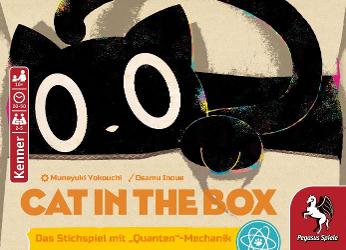
2022 · Kartenspiel
Cat in the Box
Spieler bieten, wie viele Stiche sie voraussichtlich gewinnen werden, und spielen dann Karten, deren Farben erst beim Ausspielen enthüllt werden. Der aktive Spieler eröffnet einen Stich, die Gegner folgen, und die höchste Karte der festgelegten Farbe gewinnt den Stich. Ein gemeinsames Forschungsboard sammelt Spielertoken, die während der Runde ausgelegt werden; verbundene Token-Gruppen bringen zusätzliche Punkte. Die Regeln verbieten, eine Farbe für eine Kartenwert bereits zu deklarieren, daher müssen die Spieler ihre Gebote und Züge so planen, dass sie keine Paradoxien erzeugen. Unterstützt 2–5 Spieler und enthält aufgewertete Komponenten wie Plastiktoken, vertiefte Spieler- und Zentralboards, einen Wertungsblock und ein passgenaues Inlay.
- Spieler
- 2–5 am besten mit 4
- Spielzeit
- 20–40 Min.
- Alter
- 13+
- Komplexität
- 2 / 5
Über das Spiel
- Autoren
- Illustration
- Verlag

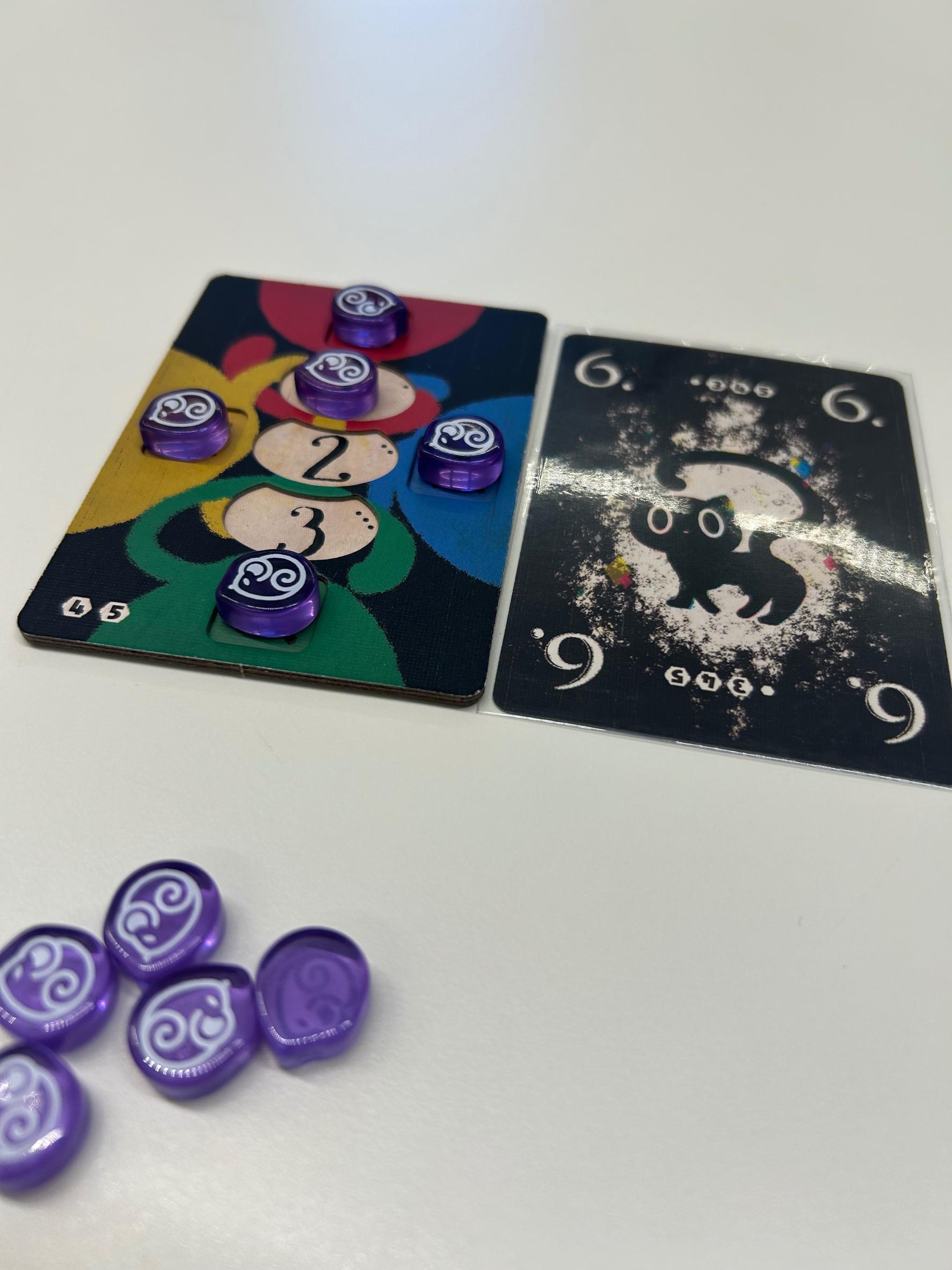
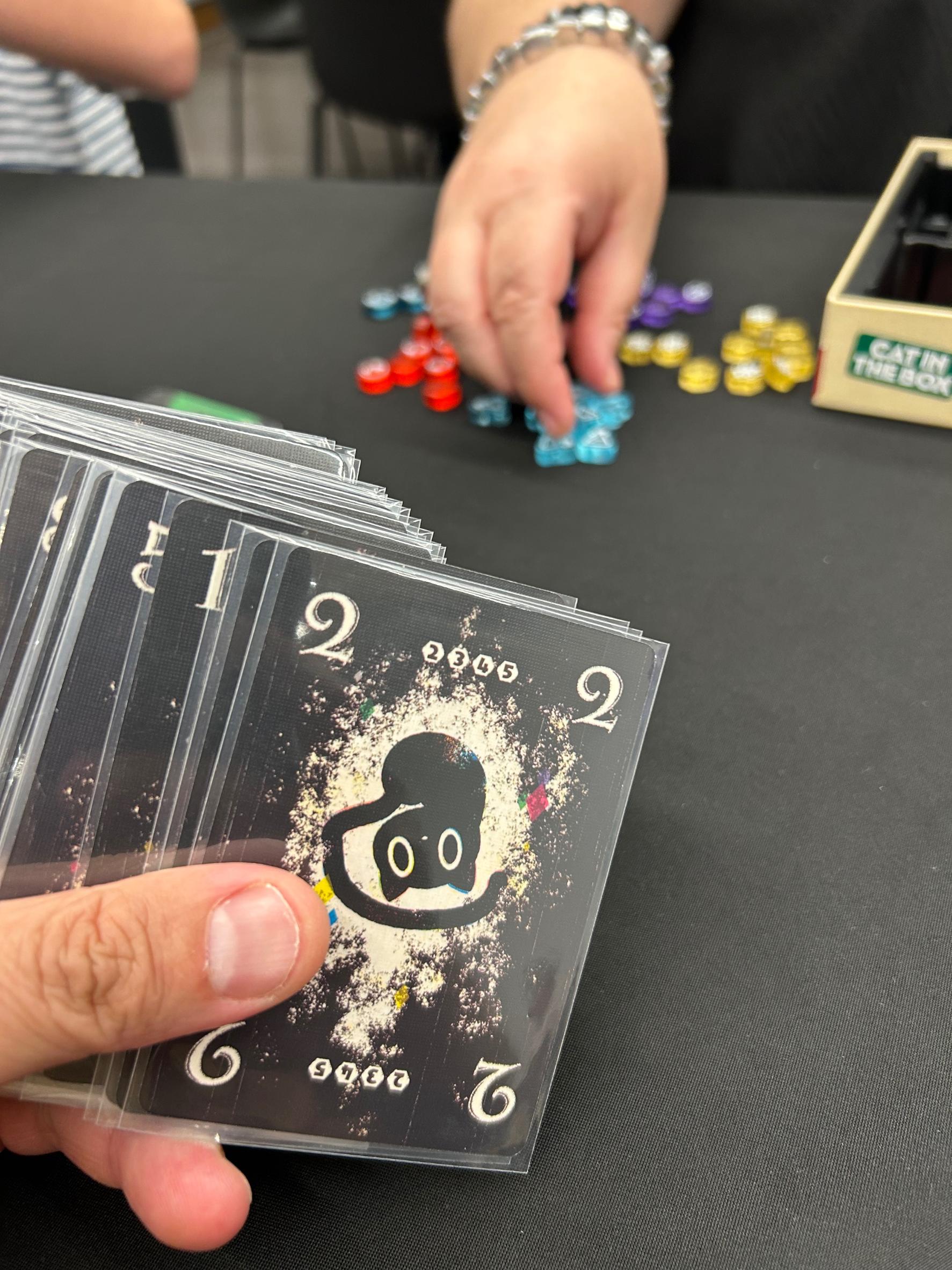
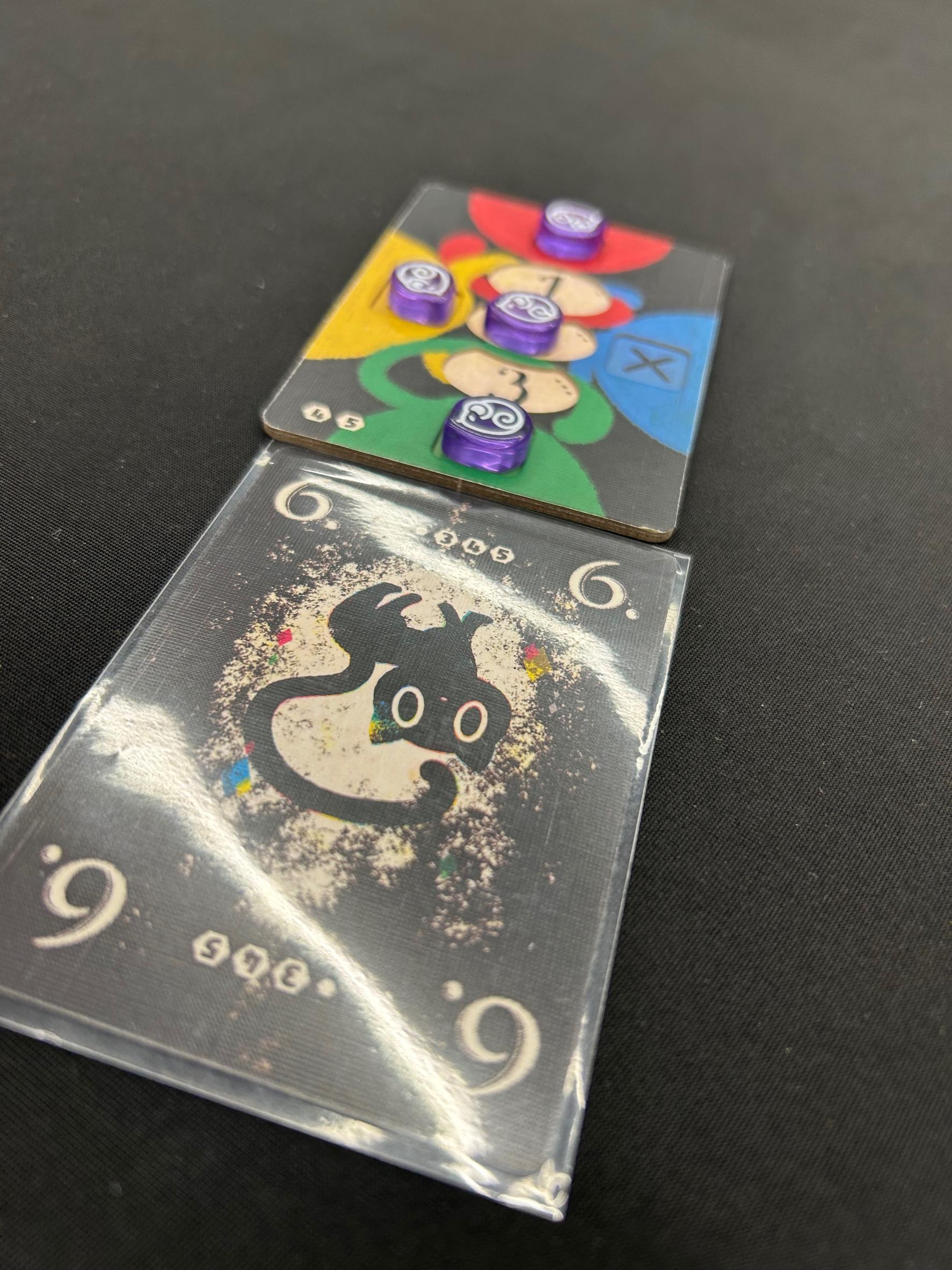
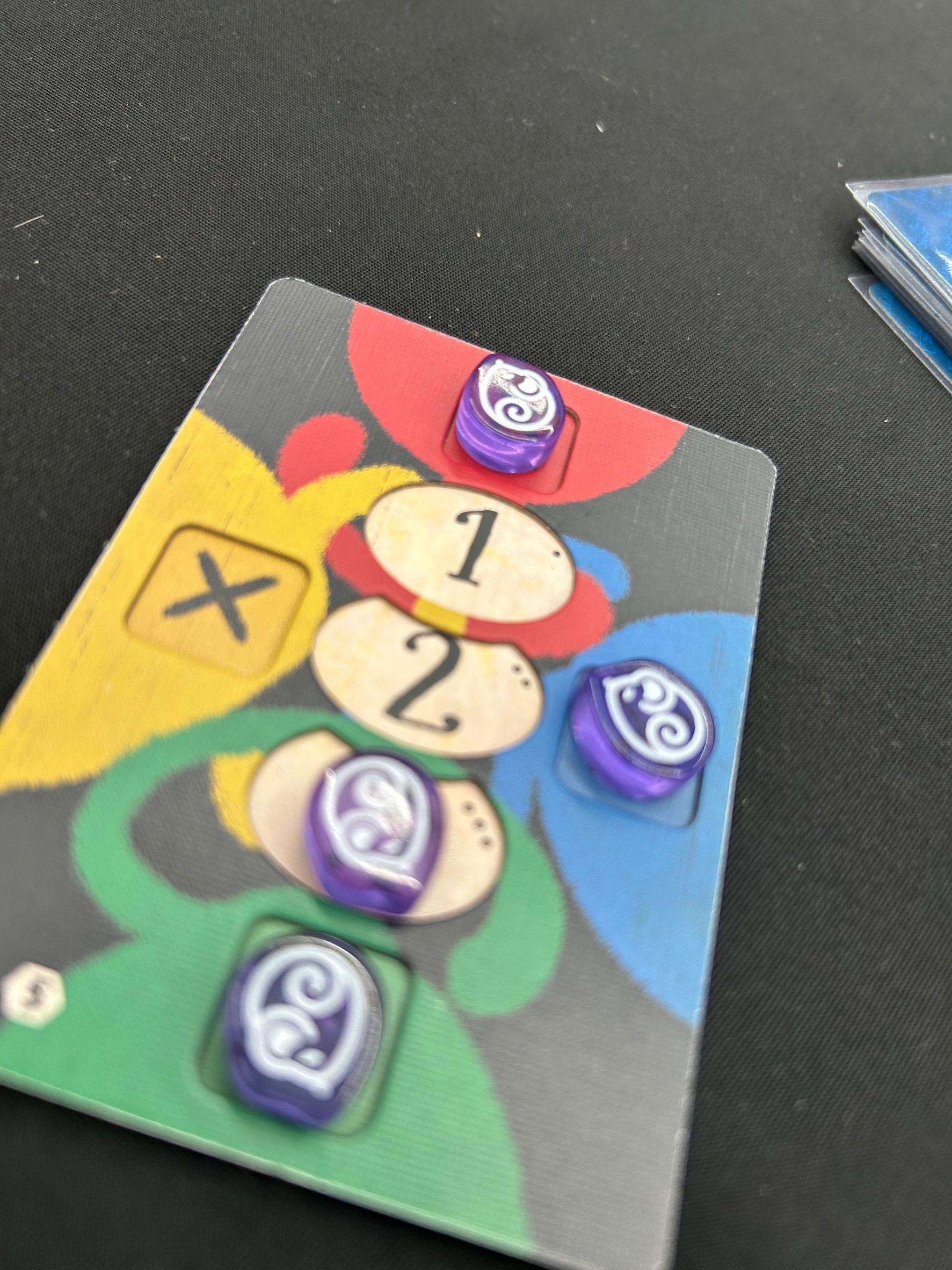
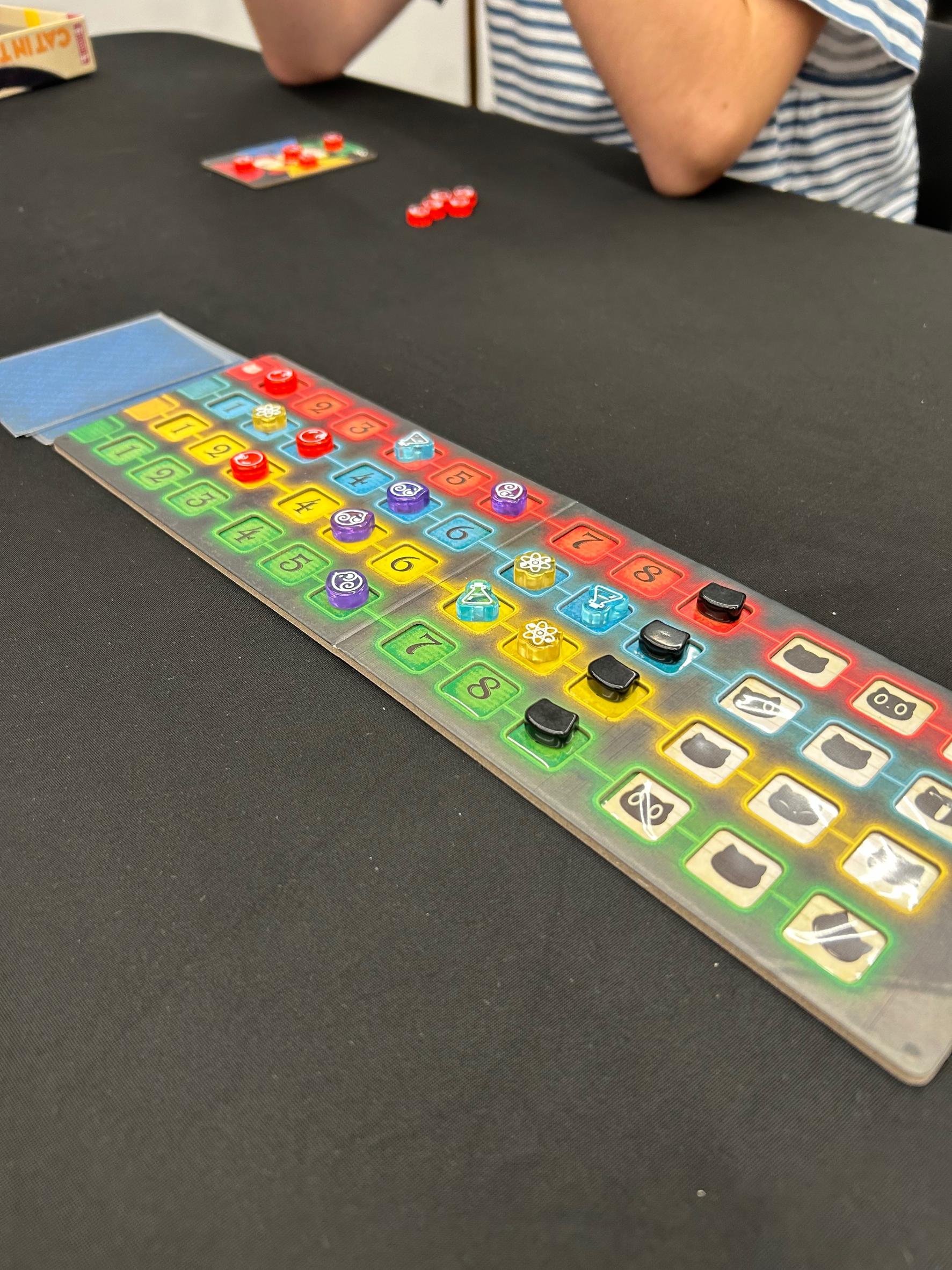
Fotos von Ludoya-Tischen
Alle Fotos in Ludoya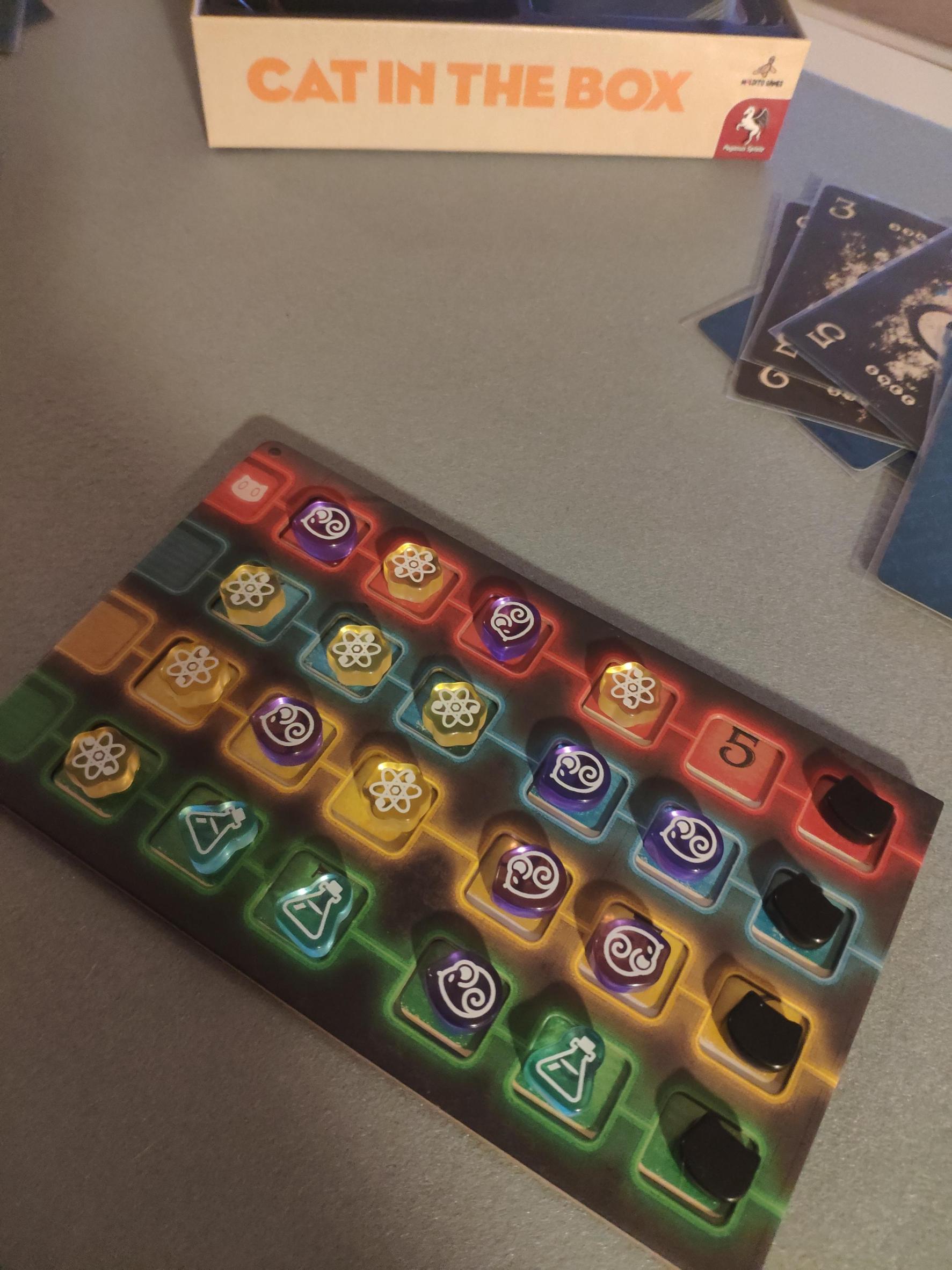
Wo kaufen
Shop-Preise und gebrauchte Exemplare, täglich geprüft.
An Ludoyas Tischen
Alle Statistiken in Ludoya- 872
- Erfasste Partien
- 1.144
- Spieler
- 37m 51s
- Durchschnittliche Partie
- 284
- In Sammlungen
- 31
- Auf Wunschlisten
- 3
- Vorbestellt
7,6/10
aus 107 Ludoya-Rezensionen
Vic Granell7,5 I'd play this over Skull King almost any day!
- Base -
Garfield9,0 8 Very funny Stich-Spiel! [c] Theme: ★☆☆☆☆ <!-- size 7]No --> Gameplay: ★★★☆☆ <!-- size 7]Interesting choices to make --> Interaction: ★★☆☆☆ <!-- size 7]Who blocks which spots --> Artwork: ★★★★☆ <!-- size 7]Very nice --> Luck: ★★★☆☆ <!-- size 7]Random cards and what others play --> Strategy: ★★☆☆☆ <!-- size 7]Very little --> Components: ★★★★☆ <!-- size 7]Very good --> Play duration: ★★☆☆☆ <!-- size 7]A little bit too long for what it is --> Easy to teach: ★★★★☆ <!-- size 7]Quite easy (10min) --> Rules quality: <!-- size 7]not read --> Setup time: ★★★★★ <!-- size 7]Very fast --> No downtime: ★★★★★ <!-- size 7]Almost no downtime --> Replay value: ★★☆☆☆ <!-- size 7]Only little variety --> [/c]


Regelfragen
Aus der Spielanleitung beantwortet von Ludoyas Regelassistenten.
Do the face-down cards get used in this round or are they removed?
Each player selects one card from their hand and places it face down; those face-down cards are not used in the current round (page 4).
When and how do we predict how many tricks we'll win?
After placing the face-down card, each player in clockwise order (starting with the start player) places a token on the number on their player board that represents how many tricks they predict they will win (page 4).
What exactly do I have to satisfy when declaring the observed color on a played cat card?
Two rules must be met: the research-board space for that color and card number must be empty, and you must still have your player token on the X of that color on your player board; additionally the start player may not declare red unless a token already exists on the red row or they cannot declare any other color (pp.5-6, 12).
If I declare a color different from the led color, does anything happen to my player board?
Yes — when you declare a color other than the led color, you remove the player token on your player board that was on the X of the led color (if it hasn't already been removed) and you can no longer declare that led color for the rest of the round (page 6).
How is the winner of a trick determined when players declare different colors?
If any player declared a color different from the led color, resolve color strength first: red (trump) beats all, otherwise only cards of the led color remain; then among the remaining cards the highest number wins the trick (page 7).
What is a paradox, and what happens if one occurs during the trick phase?
A paradox occurs when a player cannot legally declare any color for any card in their hand; when it happens you immediately stop the trick phase, the player reveals their hand, no one wins that trick, tokens placed during the interrupted trick remain, and the paradox-causing player scores −1 point per trick they won that round and forfeits any bonus (pp.8-9).
Wertungsbögen und Spielhelfer
- Hoja de Puntuación
- Cat in the Box Game Kit




















Kostenlos, im Web, für Android und iOS
Spiel Cat in the Box mit Ludoya
- Hab es in deiner SammlungVerwalte dein Exemplar und seine Erweiterungen, leih es Freunden oder setz es auf deine Wunschliste und erfahre, wenn der Preis fällt.Zur Sammlung hinzufügen
- Erfasse jede PartiePunkte, Sieger, Timer und Fotos, dann deine Statistiken: Siegquote, liebste Spielerzahl, beste Punktzahl.Partie erfassen
- Regelfragen klärenFrag alles zu den Regeln und erhalte eine Antwort aus der Spielanleitung, mit der Seite zum Nachprüfen.Den Regelassistenten fragen
- Finde Leute, mit denen du es spielstClubs, Spieleabende und Veranstaltungen in deiner Nähe, bei denen dieses Spiel auf den Tisch kommt.Veranstaltungen ansehen
Spieldaten (Spieler, Spielzeit, Alter, Mitwirkende) von BoardGameGeek.