
2018 · Nautisch
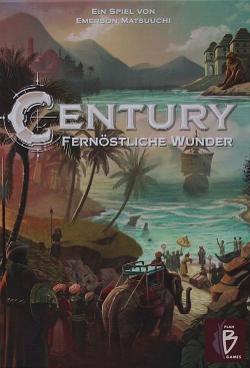
Century: Fernöstliche Wunder
Die Spieler segeln auf hoher See als Händler und Freibeuter, die daran arbeiten, Gewürzhandelsnetzwerke zwischen den indonesischen Inseln aufzubauen. Sie draften und spielen Karten, um Waren aufzuwerten und zu tauschen, steuern die Bewegung ihrer Schiffe auf einem modularen Spielplan und sichern sich Wertungsziele, indem sie bestimmte Gewürzkombinationen liefern. Das Gameplay dreht sich um effizienten Engine-Building- und Routenwahl-Flow: Gewürze umwandeln und kombinieren, Schiffe einsetzen, um Inseln zu kontrollieren, und um lukrative Verträge und Handelsposten konkurrieren. Variable Ziele und der modulare Aufbau sorgen für unterschiedliche strategische Wege und hohen Wiederspielwert.
- Spieler
- 2–4 am besten mit 4
- Spielzeit
- 30–45 Min.
- Alter
- 8+
- Komplexität
- 2,1 / 5
Über das Spiel
- Autoren
- Illustration
- Publisher



Spielbar mit
In Ludoya ansehenWo kaufen
Shop-Preise und gebrauchte Exemplare, täglich geprüft.
An Ludoyas Tischen
Alle Statistiken in Ludoya- 174
- Erfasste Partien
- 191
- Spieler
- 45m 43s
- Durchschnittliche Partie
- 86
- In Sammlungen
- 4
- Auf Wunschlisten
5,6/10
aus 37 Ludoya-Rezensionen
Evan2,5 In this game, players sail around the board turning cubes into other cubes, with the goal of trying to sail over to a contract spot and complete the contract before someone else gets it. When a contract is taken it's replaced with a new one, but you don't know what cubes it will need, and you have a limited cube storage capacity. One cute twist in the game is that if you want to move more than one space on your turn you have to leave behind one cube on the space you jump, which gets collected by the next person to end their movement there. Another interesting element is that in order to use an action space you have to drop a house, which costs cubes equal to the number of players who already have houses there. Then the icon on the tile determines which house you drop, and there are bonuses for unlocking all of a row or column. The game works. The design choices are all logical, but I found the game was lacking any real magic or excitement. The gameplay is quite repetitive as you wind up carving out a little cube conversion path, and then more or less stick to it until you buy a contract and then have to start the loop over again to aim for the next one. I'm not sure what else this game needs, as everything is pretty tight design wise, but it definitely feels like it's missing something. ★ Art, Iconography and components functional ☆ Clever or interesting mechanisms ★ Reasonably low downtime between turns with mildly AP players ☆ Multiple plays stay interesting ☆ Low or mitigatable luck elements ★★☆☆☆ Raw enjoyment
I prefere the first one, I'm not much into Pick And Deliver

Regelfragen
Aus der Spielanleitung beantwortet von Ludoyas Regelassistenten.
How do I acquire a Merchant card — what do I pay and does the leftmost card cost anything?
To acquire a Merchant card, place one cube from your cargo hold on each Merchant card to the left of the card you are taking, then take that Merchant card into your hand; taking the leftmost card requires placing no cubes (page 1).
When I play a Trade card or do a Market action, can I perform the same trade multiple times?
Yes — both Trade cards and Market actions allow you to perform the listed trade any number of times in a row as long as you have the required cubes available (page 2).
How many cards do I have to discard to move my boat, and where can those cards come from?
For a Move action you discard one or more cards (each discarded card equals one adjacent tile of movement) from your hand and/or your face-up cards to the right of your player board into your face-down discard pile; the first movement also requires a discarded card (page 2).
Can I end my movement on a market tile that already has other players' boats?
You may end on a market tile with other boats only if you can pay each owner 1 cube from your cargo when you land there; if you don’t have enough cubes to pay all concerned players you cannot end your movement on that tile (page 2).
What does it cost to build an outpost on a market tile?
You may build one outpost per market tile if you don’t already have one there; the cost is 1 cube for each outpost currently on that market tile (in a 2-player game this counts as 2 cubes per outpost), so placing the first outpost on a tile costs no cubes (page 2).
How do Port VP tiles and the Closed Port tile work when I claim a VP tile?
To claim a port’s VP tile return the cubes shown on that VP tile to the supply and take the tile face down, then draw and reveal the next VP tile for that port; if the revealed tile is the Closed Port tile the port is closed (no VP tiles are placed while it is present), and whenever a VP tile is later claimed at another port you move the Closed Port tile to that port and then place a VP tile on the port that previously held the Closed Port (page 2).
Ähnliche Spiele
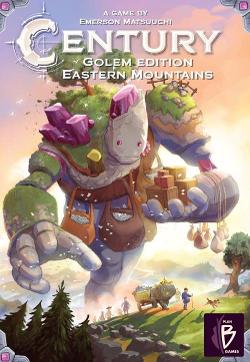 Century: Golem Edition – Eastern Mountains2019
 Century: Eine neue Welt2019
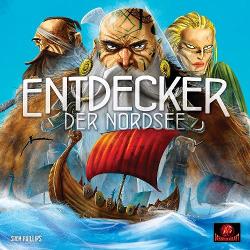 Entdecker der Nordsee2018
 Istanbul: Big Box2018
 Port Royal: Big Box2022
 Century: Golem Edition – An Endless World2020
 Century: Big Box2023
 Photo Tour: North America2025
 Seedrachen2024
 The Quest for El Dorado: The Golden Temples2019
 Century: Die Gewürzstraße2017
 Pilgrims: Seltsame Abenteuer2026






Kostenlos, im Web, für Android und iOS
Spiel Century: Fernöstliche Wunder mit Ludoya
- Hab es in deiner SammlungVerwalte dein Exemplar und seine Erweiterungen, leih es Freunden oder setz es auf deine Wunschliste und erfahre, wenn der Preis fällt.Zur Sammlung hinzufügen
- Erfasse jede PartiePunkte, Sieger, Timer und Fotos, dann deine Statistiken: Siegquote, liebste Spielerzahl, beste Punktzahl.Partie erfassen
- Regelfragen klärenFrag alles zu den Regeln und erhalte eine Antwort aus der Spielanleitung, mit der Seite zum Nachprüfen.Den Regelassistenten fragen
- Finde Leute, mit denen du es spielstClubs, Spieleabende und Veranstaltungen in deiner Nähe, bei denen dieses Spiel auf den Tisch kommt.Veranstaltungen ansehen
Spieldaten (Spieler, Spielzeit, Alter, Mitwirkende) von BoardGameGeek.