
2016 · Deduktion
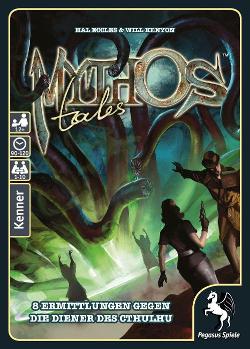
Mythos Tales
Die Spieler schlüpfen in die Rolle von Ermittlern im Arkham der 1920er Jahre und setzen Lovecraft’sche Mysterien mithilfe von erzählerischen Hinweisen und Dokumenten Stück für Stück zusammen. Das Spiel bietet eine Zeitung, ein Verzeichnis von Verbündeten, ein Einwohnerverzeichnis und eine Karte, um Hinweisen von Orten zu Verdächtigen zu folgen und Beweise zu sammeln. Im Mittelpunkt des Spiels stehen kooperatives Schlussfolgern und Informationsmanagement: Orte besuchen, Quellen konsultieren und entscheiden, wie viele Hinweispunkte man einsetzt, während man das Risiko für den Verstand im Auge behält. Jede Szene endet mit einer Reihe von Fragen; die Endwertung berücksichtigt verwendete Hinweise, verlorenen Verstand und die Genauigkeit der Antworten im Vergleich zu einem Vergleichsermittler.
- Spieler
- 1–10 am besten mit 3
- Spielzeit
- 60–120 Min.
- Alter
- 13+
- Komplexität
- 2,1 / 5
Über das Spiel
- Illustration





Erweiterungen
In Ludoya ansehen
Wo kaufen
Shop-Preise und gebrauchte Exemplare, täglich geprüft.
An Ludoyas Tischen
Alle Statistiken in Ludoya- 71
- Erfasste Partien
- 30
- Spieler
- 1h 42m
- Durchschnittliche Partie
- 19
- In Sammlungen
- 4
- Auf Wunschlisten
4,1/10
aus 9 Ludoya-Rezensionen
Evan2,5 This is a mystery solving game in the same style as Sherlock Holmes Consulting Detective. The general idea is there's a choose your own adventure book, and players take turns deciding who to talk to and where to go. When you think you've solved the mystery, the book asks you questions about the case, and you score based on how well you can answer the questions minus points for wrong turns you made. The game was fun, and introduced some nice mechanisms beyond that you find in Sherlock, for example, this game might give you a different encounter text based on if you have an item or not, or even what time of day it is. On the other hand, the text passages aren't quite as well written in Sherlock. In Sherlock, the person you meet will give you some piece of information, and then you need to figure out what to do with it, without much guidance. In Mythos, so far anyway, guy A tells you to go see guy B, who tells you that you really should talk to guy C. Another difference is that Sherlock lets you walk around talking to people, accumulating negative points as you go, as long as you want to. Mythos has a fixed timer. This is an interesting element, but it does make me feel like I'm missing out on plot, and it sort of seems like a crutch to compensate for the different investigation paths being too straightforward. I'm tempted to say, we should just ignore the timer in future plays and just take negative points beyond a certain point? ★ Art, Iconography and components functional ☆ Clever or interesting mechanisms ★ Reasonably low downtime between turns with mildly AP players ★ Multiple plays stay interesting ★ Low or mitigatable luck elements ☆☆☆☆☆ Raw enjoyment
Taha Afyouni5,9 The Sherlock Holmes Consulting Detective games are my favorite board games, so I was really interested in this even though I'm not generally a Cthulhu fan. My group had fun with this one. While there was quite a bit of errata, we still enjoyed our time with it.
Ähnliche Spiele
 Sherlock Holmes Beratender Detektiv: Die Baker-Street-Spezialeinheit2023
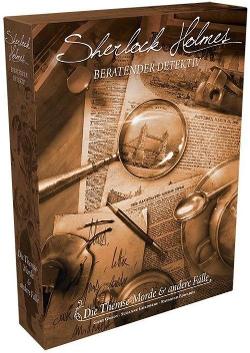 Sherlock Holmes Beratender Detektiv: Die Themse-Morde & andere Fälle2020
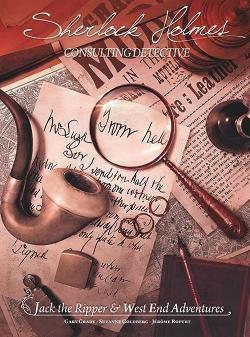 Sherlock Holmes Consulting Detective: Jack the Ripper & West End Adventures2016
 Chronicles of Crime2018
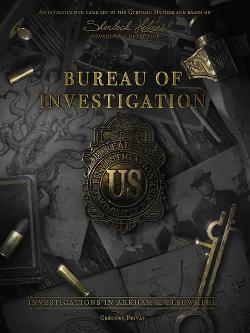 Bureau of Investigation: Investigations in Arkham & Elsewhere2022
 Suspects: Claire Harper, Eternal Investigator2022
 Suspects: Claire Harper Takes the Stage2021
 Nightmare Das Thriller Spiel2020
 A Touch of Evil: 10 Year Anniversary Edition2020
 Cthulhu: Death May Die – Furcht vor dem Unbekannten2024
 Sherlock Holmes Consulting Detective: Carlton House & Queen's Park2017
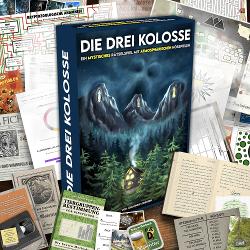 Die Drei Kolosse2023
Wer es hat, hat auch





Kostenlos, im Web, für Android und iOS
Spiel Mythos Tales mit Ludoya
- Hab es in deiner SammlungVerwalte dein Exemplar und seine Erweiterungen, leih es Freunden oder setz es auf deine Wunschliste und erfahre, wenn der Preis fällt.Zur Sammlung hinzufügen
- Erfasse jede PartiePunkte, Sieger, Timer und Fotos, dann deine Statistiken: Siegquote, liebste Spielerzahl, beste Punktzahl.Partie erfassen
- Werte ohne PapierNutze die Wertungsbögen und Spielhelfer der Community und lass Ludoya die Punkte zusammenzählen.Wertungsbögen finden
- Finde Leute, mit denen du es spielstClubs, Spieleabende und Veranstaltungen in deiner Nähe, bei denen dieses Spiel auf den Tisch kommt.Veranstaltungen ansehen
Spieldaten (Spieler, Spielzeit, Alter, Mitwirkende) von BoardGameGeek.