
2019 · Rätsel
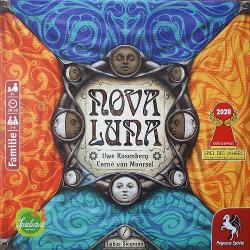
Nova Luna
Spieler draften Plättchen von einem gemeinsamen Rad und legen sie in ihr persönliches Tableau, um Aufgaben und farbige Nachbarschaftsmuster zu erstellen, die bestimmte Anforderungen erfüllen. Jedes Plättchen bringt eine oder mehrere Aufgaben mit sich; um eine Aufgabe zu erfüllen, muss sie von Plättchen bestimmter Farben umgeben sein, und der Spieler darf dann einen Marker auf diese Aufgabe legen. Spieler müssen vorausplanen, denn jedes gelegte Plättchen erzeugt neue Aufgaben und Möglichkeiten. In den Zügen geht es darum, ein Plättchen vom Rad auszuwählen, es zu platzieren und alle erfüllten Aufgaben abzuwickeln. Das Spiel endet, wenn ein Spieler alle seine Marker platziert hat.
- Spieler
- 1–4 am besten mit 2
- Spielzeit
- 30–60 Min.
- Alter
- 8+
- Komplexität
- 1,9 / 5
Über das Spiel
- Illustration
- Publisher



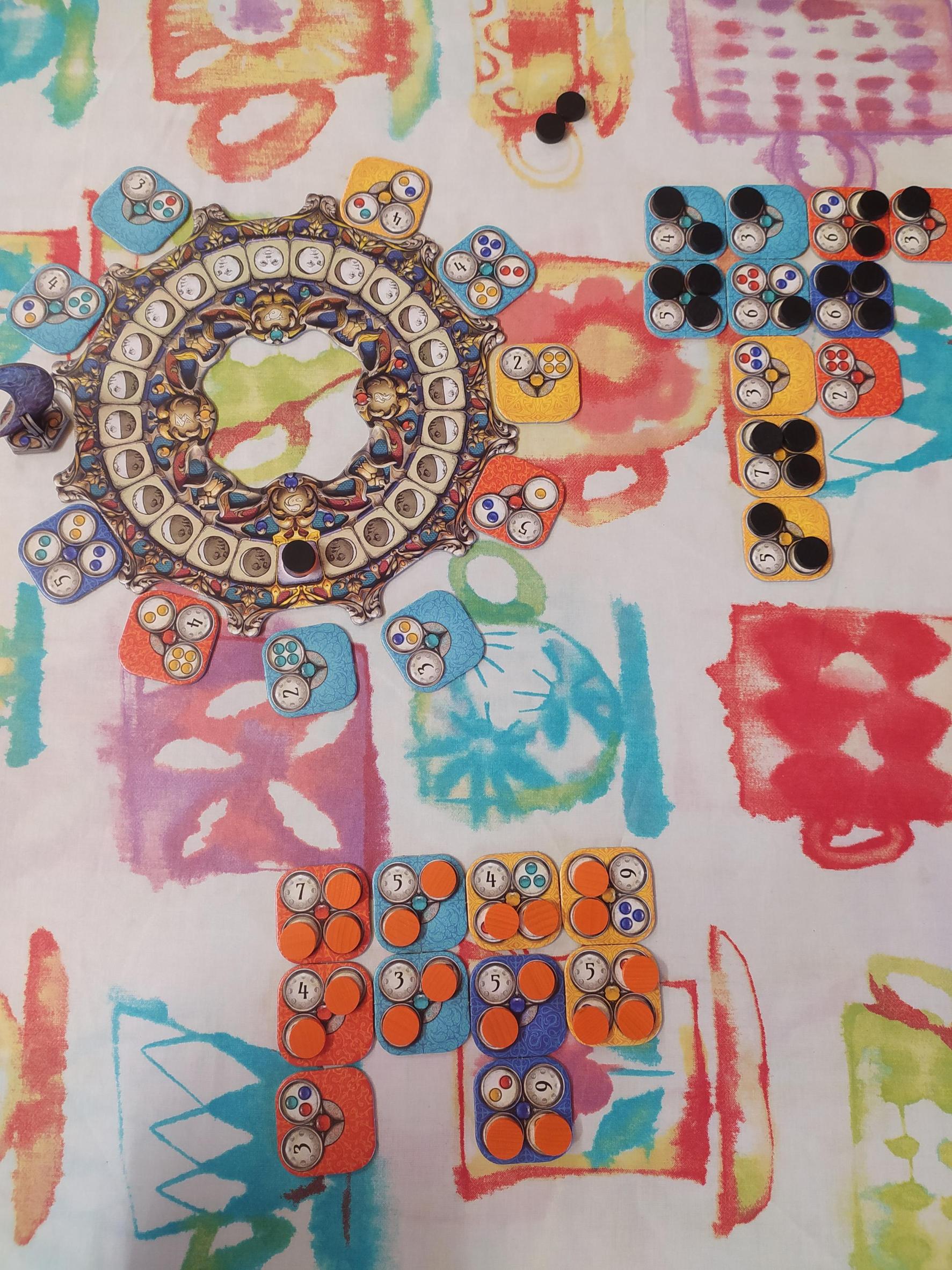
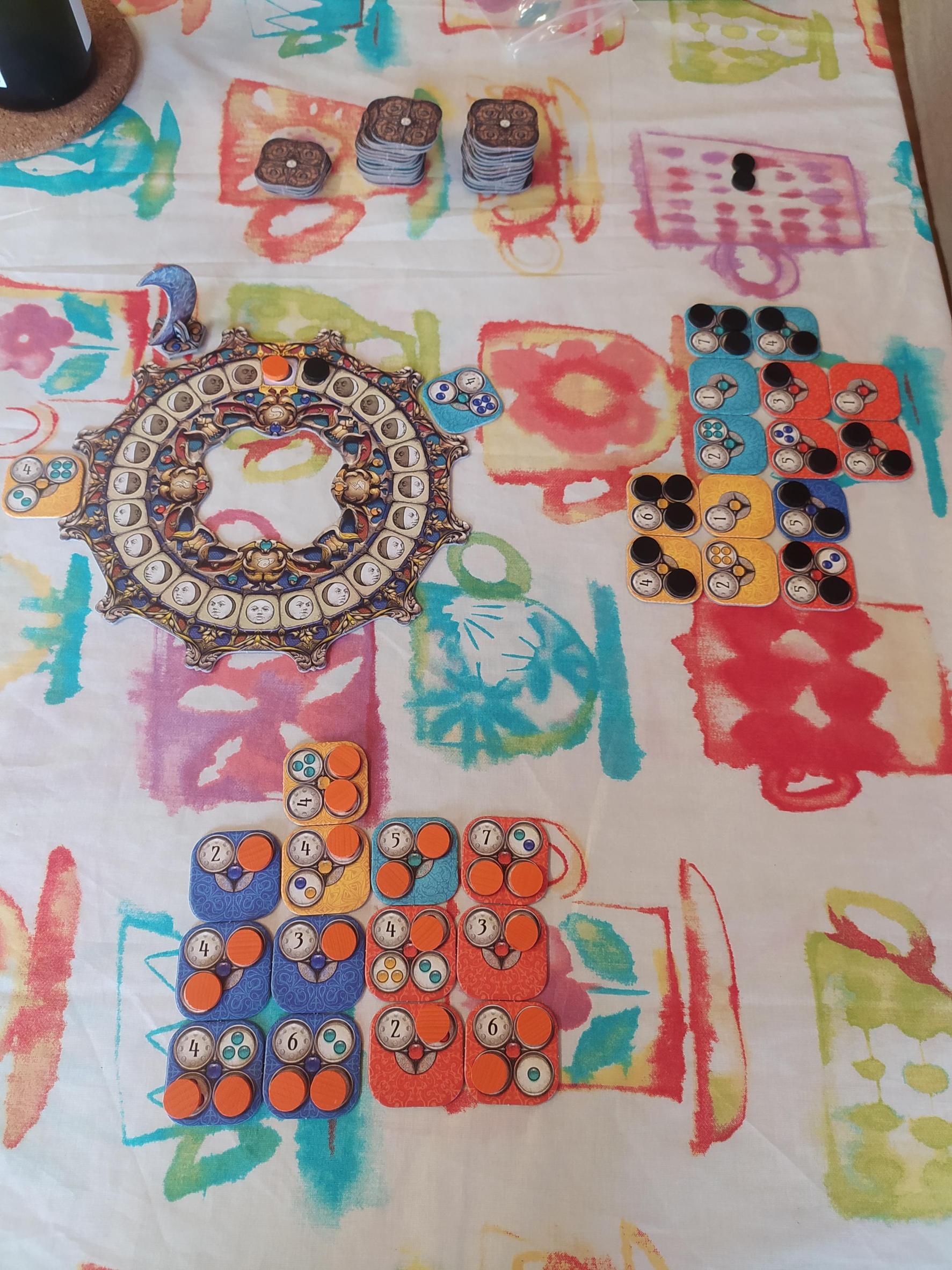
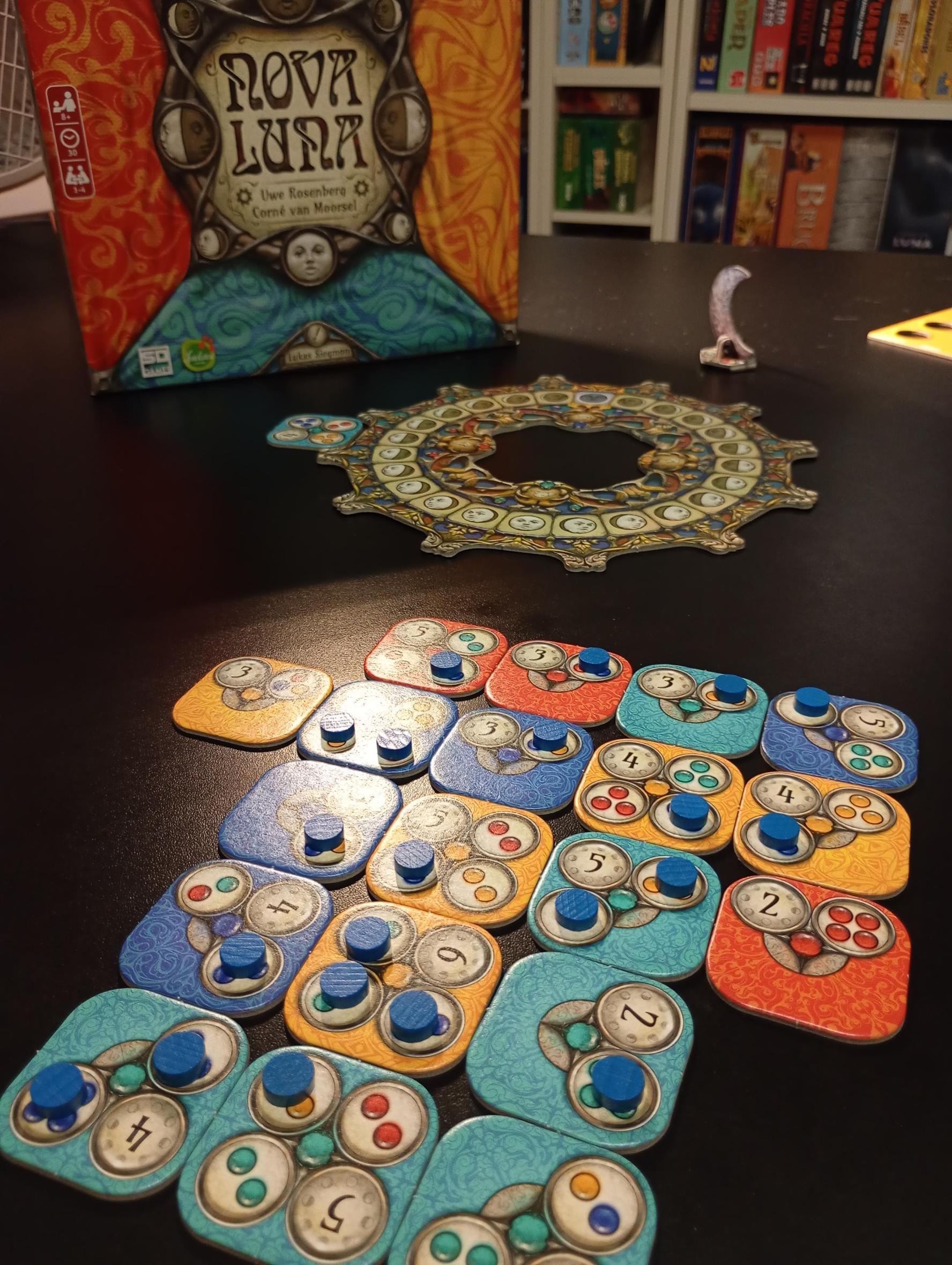
Fotos von Ludoya-Tischen
Alle Fotos in Ludoya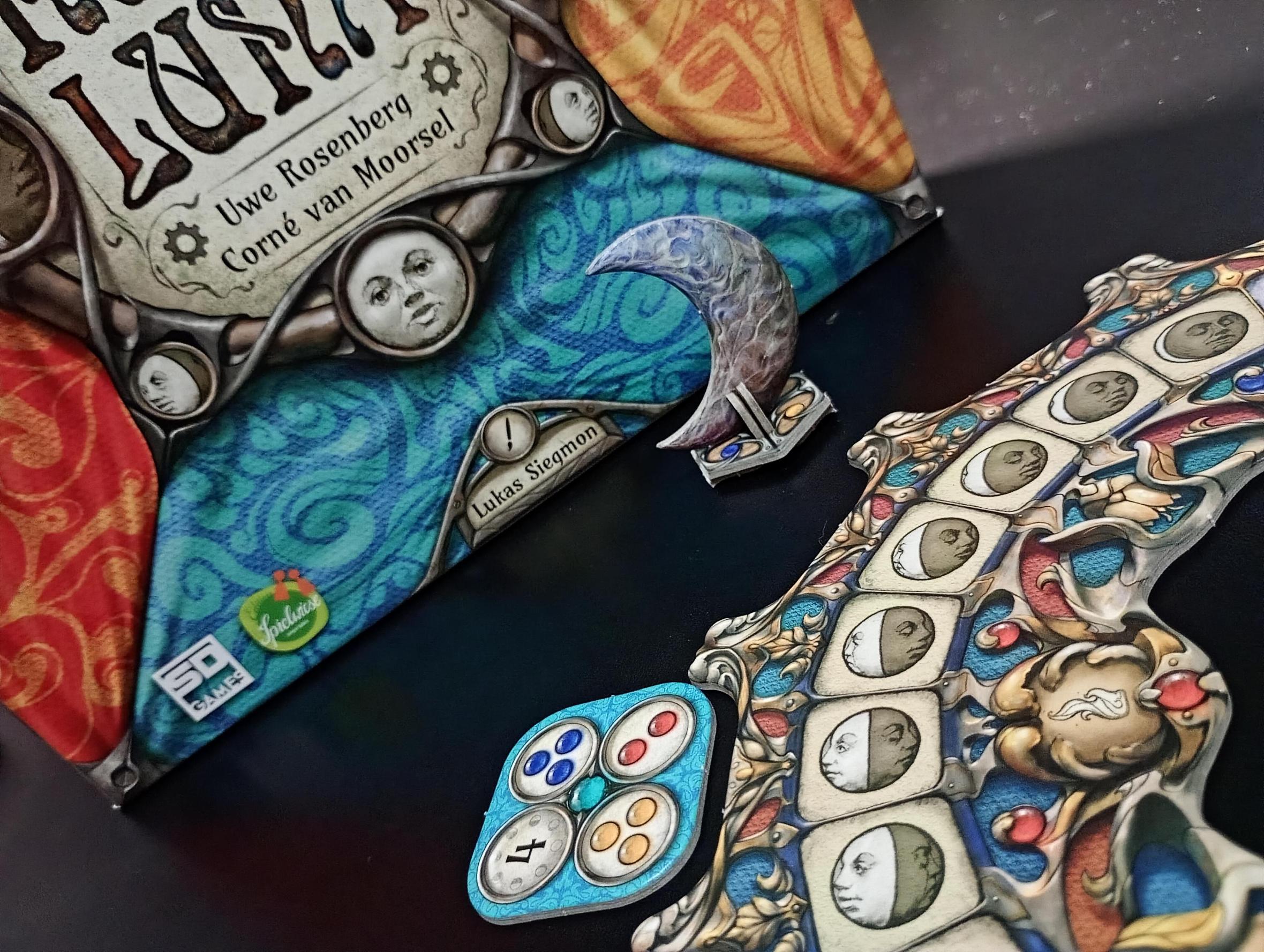
Wo kaufen
Shop-Preise und gebrauchte Exemplare, täglich geprüft.
An Ludoyas Tischen
Alle Statistiken in Ludoya- 1.417
- Erfasste Partien
- 743
- Spieler
- 26m 40s
- Durchschnittliche Partie
- 185
- In Sammlungen
- 25
- Auf Wunschlisten
- 2
- Vorbestellt
6,9/10
aus 80 Ludoya-Rezensionen
Juego del cansino Uwe con aires de Patchwork donde deberemos colocar fichitas según vayamos cumpliendo objetivos de losetas.
Daniel6,5 Ludoteca Mama
Evan5,9 Players move their pawns around the time wheel a number of steps equal to the number on the tile they take from the three tiles in front of the moving tile selection marker, then they add the tile to their play area, just like in the game patchwork. Each tile has a color, and a number of circles on it, each with some number of smaller colored orbs. When a tile in your area is surrounded by tiles of the colors printed in the orbs of one of your circles, you cover it with a disc. The goal of the game is to be the first player to run out of discs. The puzzle element gets interesting as tiles of the same color can chain by 1 space, so if I have a tile that needs three blues next to it, I can put blue1 adjacent to it, then blue 2 above blue1, and blue 3 below blue1 and then I've met the goal on the tile. Since every tile has it's own requirements, your goal is to orchestrate things where you can complete multiple circles with the fewest moves. The game works better the fewer players you have, as the more planning you can do. The puzzle is thinky and satisfying, but I do have some concerns as to the game's staying power. I also wish the game came with some neutral circle markers you could use to cover circles that you are no longer able to complete, just to reduce the visual load. Of course this would be easy to find custom bits for. :star: Art, Iconography and components functional :star: Clever or interesting mechanisms :nostar: Reasonably low downtime between turns with mildly AP players :nostar: Multiple plays stay interesting :star: Low or mitigatable luck elements :star::star::star::star::nostar: Raw enjoyment


Regelfragen
Aus der Spielanleitung beantwortet von Ludoyas Regelassistenten.
Can I take any tile from the Moon Wheel or only those on the selection track?
You take tiles from the selection track; after you take a tile you refill the selection track from the Moon Wheel and then resolve the rest of your action (including advancing the moon marker). (p3)
When I take a tile, how far do I move my moon marker?
After taking a tile you advance the moon track by the tile’s printed time cost (the number shown on the tile). (p2, p3)
Do corner tasks count tiles diagonally or only orthogonally?
Corner tasks count only orthogonally adjacent tiles; groups of the same color that are orthogonally connected are counted as groups for task fulfillment. (p4)
Does the tile I just placed count toward fulfilling its own corner tasks?
No — the tile you place does not count as part of the surrounding color groups for its own corner tasks (see the examples illustrating origin-color exclusion). (p4, p5)
How is the solo game different — what changes should I watch out for?
Solo play uses a two‑phase sequence with token stacks, special selection‑track rules, and adjusted scoring/penalties specific to solo mode; follow the solo setup and procedures listed for single‑player games. (p6)





Kostenlos, im Web, für Android und iOS
Spiel Nova Luna mit Ludoya
- Hab es in deiner SammlungVerwalte dein Exemplar und seine Erweiterungen, leih es Freunden oder setz es auf deine Wunschliste und erfahre, wenn der Preis fällt.Zur Sammlung hinzufügen
- Erfasse jede PartiePunkte, Sieger, Timer und Fotos, dann deine Statistiken: Siegquote, liebste Spielerzahl, beste Punktzahl.Partie erfassen
- Regelfragen klärenFrag alles zu den Regeln und erhalte eine Antwort aus der Spielanleitung, mit der Seite zum Nachprüfen.Den Regelassistenten fragen
- Finde Leute, mit denen du es spielstClubs, Spieleabende und Veranstaltungen in deiner Nähe, bei denen dieses Spiel auf den Tisch kommt.Veranstaltungen ansehen
Spieldaten (Spieler, Spielzeit, Alter, Mitwirkende) von BoardGameGeek.