
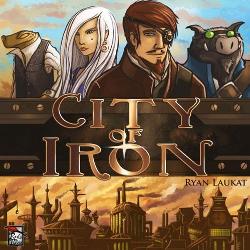
2013 · Fantasy
City of Iron
Les joueurs dirigent l’une des quatre nations rivales dans un monde steampunk peuplé de machines, de magie et de commerce, en développant des villes, des flottes et des technologies sur un continent partagé et des îles volantes. Le jeu mêle construction de moteur basée sur les cartes et contrôle de territoires : les joueurs personnalisent deux decks, produisent et vendent des marchandises comme des pièces mécaniques ou des démons en bouteille, recherchent des technologies de l’ère de la vapeur, recrutent des mercenaires et construisent ou démolissent des bâtiments urbains pour gérer une capacité limitée. Les navires et les dirigeables permettent de s’étendre vers des terres et des îles lointaines, tandis que les voies économiques et militaires offrent toutes deux des chemins vers la domination nationale.
- Joueurs
- 2–4 idéal à 4
- Temps de jeu
- 120 min
- Âge
- 13+
- Complexité
- 3,2 / 5
À propos du jeu
- Auteurs
- Illustration
- Éditeur


Extensions
Les voir dans Ludoya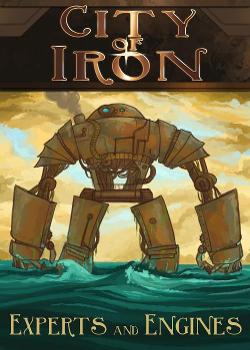
Où l'acheter
Prix des boutiques et exemplaires d'occasion, vérifiés chaque jour.
- Cardhaus GamesEn stock59.99 $
- AlphaspelEn stock649 kr
- Gamers Guild AZEn stock49.94 $
- SpelexpertenEn stock649 kr
Sur les tables de Ludoya
Toutes les statistiques dans Ludoya- 4
- Parties enregistrées
- 3
- Joueurs
- 1
- Dans des collections
- 1
- Dans des listes de souhaits
4,7/10
sur 2 avis Ludoya
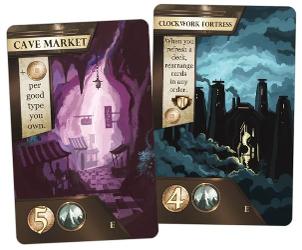
Evan4,6 In this game, players build two different decks of cards simultaneously with the purpose of collecting money to spend on building cards, and attacking neutral town cards, which is all in service of collecting resource symbols which bump your cube on the matching track in the central board. The player with the highest position in each resource will be granted extra money as well as victor points at the end of each of the three scoring rounds. The abstracted map-less area majority game here used to really excite me. The innovation of having these floating provinces distilled down to only needing a single cube to represent your presence there, fueled by card pulls. I also used to be very excited by the two deck element, where one deck is focused more on buildings and the other more on attacking neutral cards, with the neural cards being slightly stronger than the buildings, but the downside is that other players can then attack the cards you defeated to steal them from you, so there's a risk reward thing going on. All that being said, I'm much less into deckbuilders these days than I was when I first was enamored of it. In particular, the way you buy new cards is you can spend whatever money you have left at the end of the round on any card from a fairly large personal supply of cards. Looking through and reading everything at the end of round one is a lot of information to frontload onto players. Then having to manage two draw piles, and make sure you unlock ways to automatically draw from both decks just feels like a pain now where once It was an exciting new challenge. Additionally, the way that military players need to self balance each other is also troublesome. If you wind up with one player going heavy military, and everyone else either doesn't push into military or they do so ineffectively you'll have a run away player and nobody who has even built into the option to slow them down. I still think this is a good game for an ameritrash / euro hybrid enthusiast, but I think it's just not for me anymore. ★ Art, Iconography and components functional ★ Clever or interesting mechanisms ☆ Reasonably low downtime between turns with mildly AP players ★ Multiple plays stay interesting ★ Low or mitigatable luck elements ★★☆☆☆ Raw enjoyment
Jeux similaires
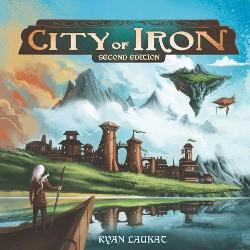 City of Iron: Second Edition2016
 Uprising: Curse of the Last Emperor2021
 London2010
 Epochs: Course of Cultures2025
 Path of Light and Shadow2017
 Pillars of Heracles2025
 Imperium: Horizons2024
 Cerebria: The Inside World – Origin Box2018
 Feudalia2011
 Skytear2020
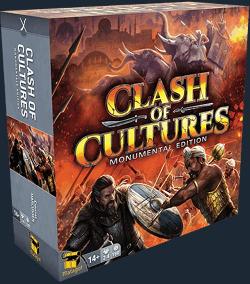 Clash of Cultures: Monumental Edition2021
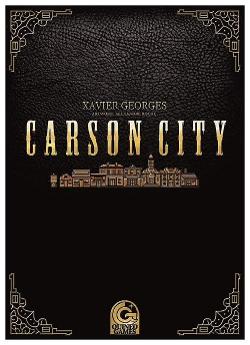 Carson City: Big Box2015
Gratuit, sur le web, Android et iOS
Jouez à City of Iron avec Ludoya
- Gardez-le dans votre collectionSuivez votre exemplaire et ses extensions, prêtez-le à vos amis ou ajoutez-le à votre liste de souhaits et soyez prévenu quand le prix baisse.Ajouter à votre collection
- Enregistrez chaque partieScores, gagnants, minuteurs et photos, puis vos statistiques : taux de victoire, nombre de joueurs préféré, meilleur score.Enregistrer une partie
- Comptez les points sans papierUtilisez les feuilles de score et les aides de jeu de la communauté, et laissez Ludoya additionner les points.Trouver des feuilles de score
- Trouvez des gens avec qui y jouerClubs, soirées jeux et événements près de chez vous qui mettent ce jeu sur la table.Voir les événements
Données du jeu (joueurs, durée, âge, crédits) issues de BoardGameGeek.