
2019 · Casse-tête
Miyabi
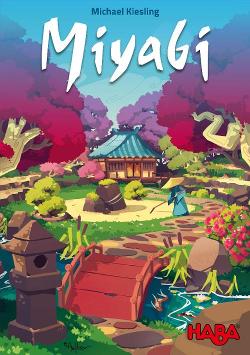
Les joueurs conçoivent un jardin japonais raffiné en plaçant des tuiles sur un plateau partagé à plusieurs niveaux afin d’y disposer des pierres, des buissons, des arbres, des étangs et des pagodes. À chaque tour, les joueurs choisissent et placent des éléments de jardin pour respecter les règles de placement et marquer des points en collectant le plus grand nombre de chaque type d’aménagement à travers les différents niveaux. Le placement stratégique des tuiles, la planification des tours à venir et l’adaptation aux actions des adversaires déterminent le score. Le jeu de base comprend plusieurs scénarios et cinq extensions optionnelles qui apportent davantage de variété et de nouveaux défis.
- Joueurs
- 2–4 idéal à 2
- Temps de jeu
- 45 min
- Âge
- 8+
- Complexité
- 2 / 5
À propos du jeu
- Auteurs
- Illustration
- Publisher



Photos des tables de Ludoya
Toutes les photos dans Ludoya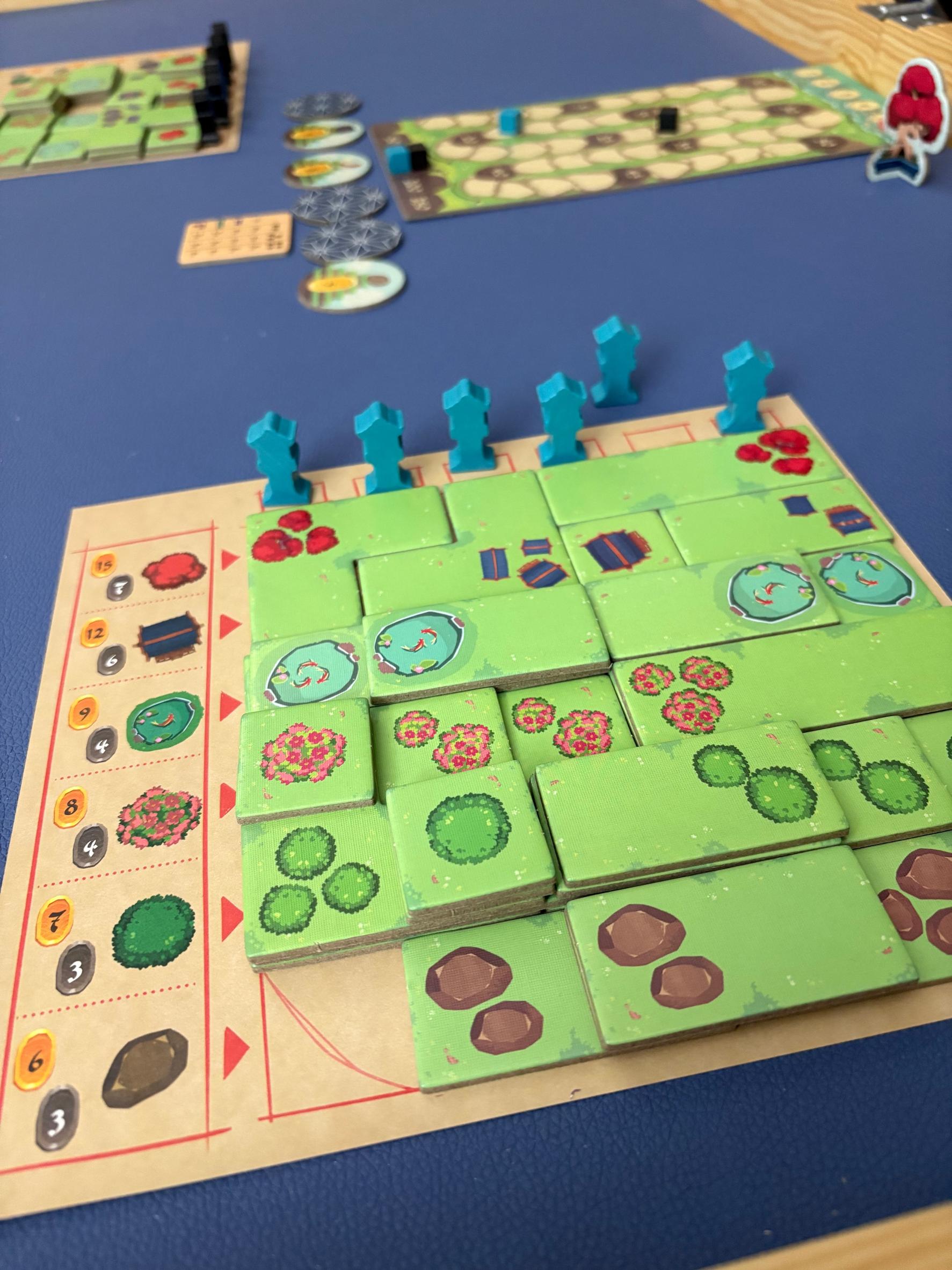
Où l'acheter
Prix des boutiques et exemplaires d'occasion, vérifiés chaque jour.
Sur les tables de Ludoya
Toutes les statistiques dans Ludoya- 320
- Parties enregistrées
- 261
- Joueurs
- 37m 26s
- Partie moyenne
- 83
- Dans des collections
- 12
- Dans des listes de souhaits
- 1
- Précommandé
7,1/10
sur 40 avis Ludoya
Evan5,9 At the start of each round you lay out a fixed number of tiles of each size, then players take turns taking a tile and placing it on their mat. Each tile has a square containing a scoring feature and once the tile is placed, you put a market at the top of the column the scoring feature was laid into, preventing you from adding another scoring feature to the same column in the same round. Tiles can be laid on top of each other so long as it rests flatly. You then score points according to the size of the tile times the height of the tile. Things get tense as you build up your board and slowly become damned by your own choices. Then there are bonus points for the first player to get each of the features to five height, and additional points for whichever player has the most features across each of the different rows. Then game then adds additional optional mechanisms that provide even more scoring opportunities and features, which elevate decisions in the game even more. This is a very satisfying abstract tile laying game. It starts off slow, then ramps up quickly. I only wish there were an easier way of tracking who had how many features in each row for majorities purposes. Perhaps adding some dice to track it would help, although this too would be a little fiddily since you often cover features with your tile placements. It would also be better if the game had a little more flexibility. Getting things 5 high seems like more of a momentous achievement of focus rather than an exciting race to the top. :star: Art, Iconography and components functional :star: Clever or interesting mechanisms :star: Reasonably low downtime between turns with mildly AP players :nostar: Multiple plays stay interesting :star: Low or mitigatable luck elements :star::star::star::nostar::nostar: Raw enjoyment
- Base -















Gratuit, sur le web, Android et iOS
Jouez à Miyabi avec Ludoya
- Gardez-le dans votre collectionSuivez votre exemplaire et ses extensions, prêtez-le à vos amis ou ajoutez-le à votre liste de souhaits et soyez prévenu quand le prix baisse.Ajouter à votre collection
- Enregistrez chaque partieScores, gagnants, minuteurs et photos, puis vos statistiques : taux de victoire, nombre de joueurs préféré, meilleur score.Enregistrer une partie
- Comptez les points sans papierUtilisez les feuilles de score et les aides de jeu de la communauté, et laissez Ludoya additionner les points.Trouver des feuilles de score
- Trouvez des gens avec qui y jouerClubs, soirées jeux et événements près de chez vous qui mettent ce jeu sur la table.Voir les événements
Données du jeu (joueurs, durée, âge, crédits) issues de BoardGameGeek.