
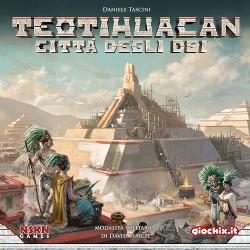
2018 · Costruzione di città
Teotihuacan: Città degli Dei
I giocatori controllano dadi-lavoratore che aumentano di forza man mano che agiscono, spostando un singolo dado su una plancia cittadina modulare e svolgendo l’azione di uno dei due spazi presenti su ogni tessera. Durante il proprio turno, i giocatori scelgono se compiere un’azione e potenziare quel lavoratore, oppure ottenere un bonus immediato senza potenziarlo, gestendo al contempo le risorse e la necessità di nutrire la propria forza lavoro. Le azioni permettono di sviluppare tecnologie, costruire abitazioni, avanzare su tre templi principali e contribuire alla piramide centrale a gradoni nel corso di tre ere successive. La vittoria viene determinata dalla fama accumulata dopo i conteggi periodici.
- Giocatori
- 1–4 ideale in 4
- Tempo di gioco
- 90–120 min
- Età
- 14+
- Complessità
- 3,8 / 5
Il gioco
- Autori
- Illustrazioni
- Editore



Espansioni
Vedile in Ludoya Teotihuacan: Tardo Periodo Preclassico2019
 Teotihuacan: Shadow of Xitle2020
 Teotihuacan: Expansion Period2021
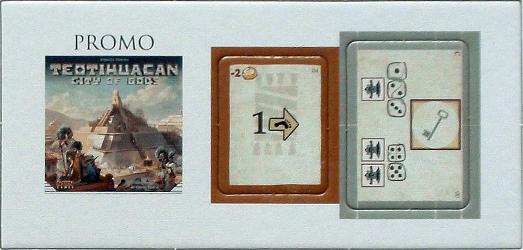 Teotihuacan: Dice Settlers Promo2018
 Teotihuacan: City of Gods – Pyramid Tile Promo, Red Temple2019
 Teotihuacan: City of Gods – Promo Bundle2020
 Teotihuacan: City of Gods – 5th Player Expansion2020
 Teotihuacan: City of Gods – Decoration Tiles2019
 Teotihuacan: Brettspiel Adventskalender 2018 Promo2018
 Loot Box #12022
 Teotihuacan: City of Gods – Man vs Meeple Promo2019
 Brettspiel Adventskalender 20182018
 Teotihuacan: Expert Challenges – Book 12021
 Teotihuacan: Expert Challenges – Book 22021
 Teotihuacan: Expert Challenges – Book 32022
 Teotihuacan: New Priests2024
 Teotihuacan: City of Gods – 5th Player Expansion2024
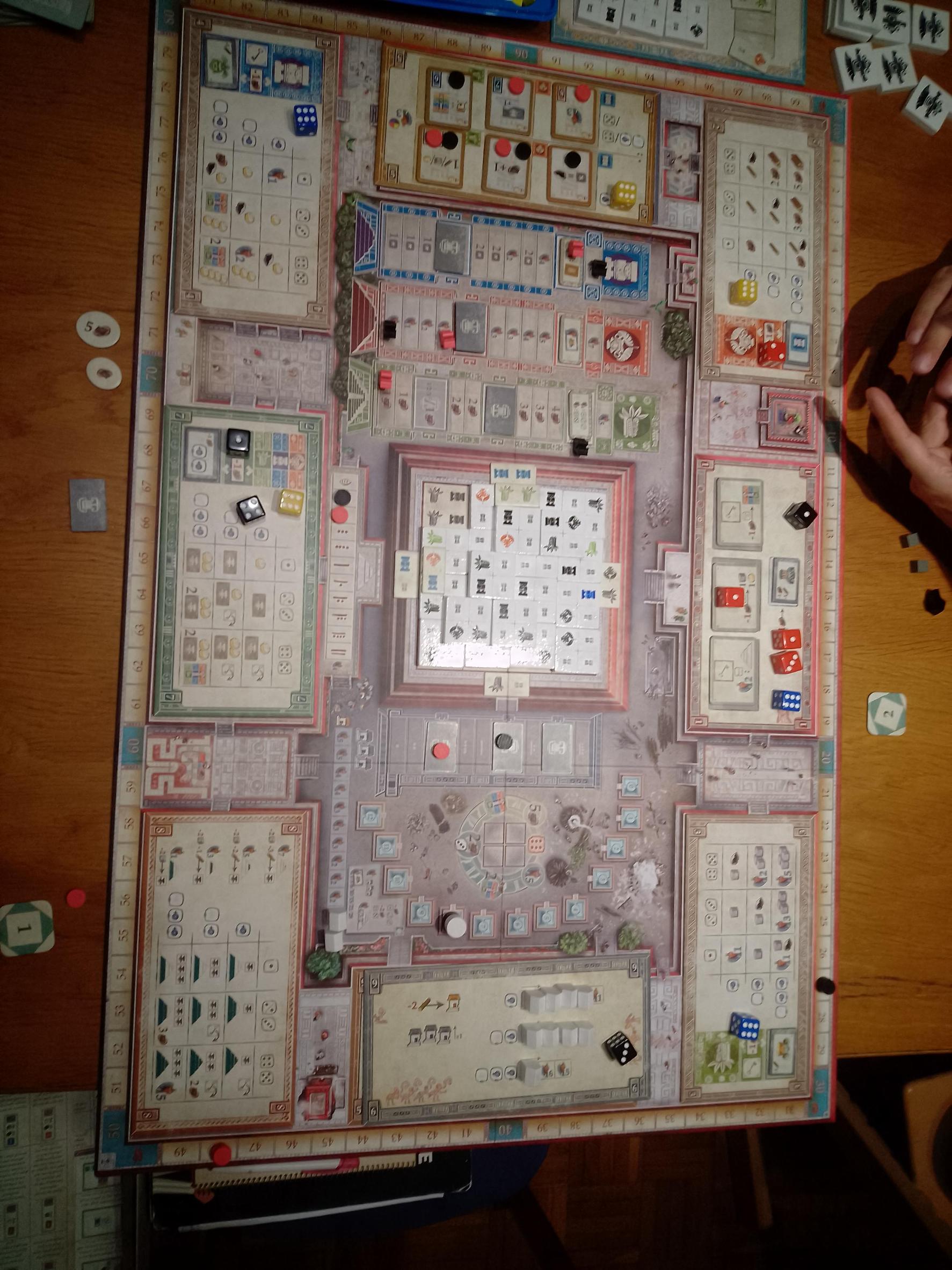
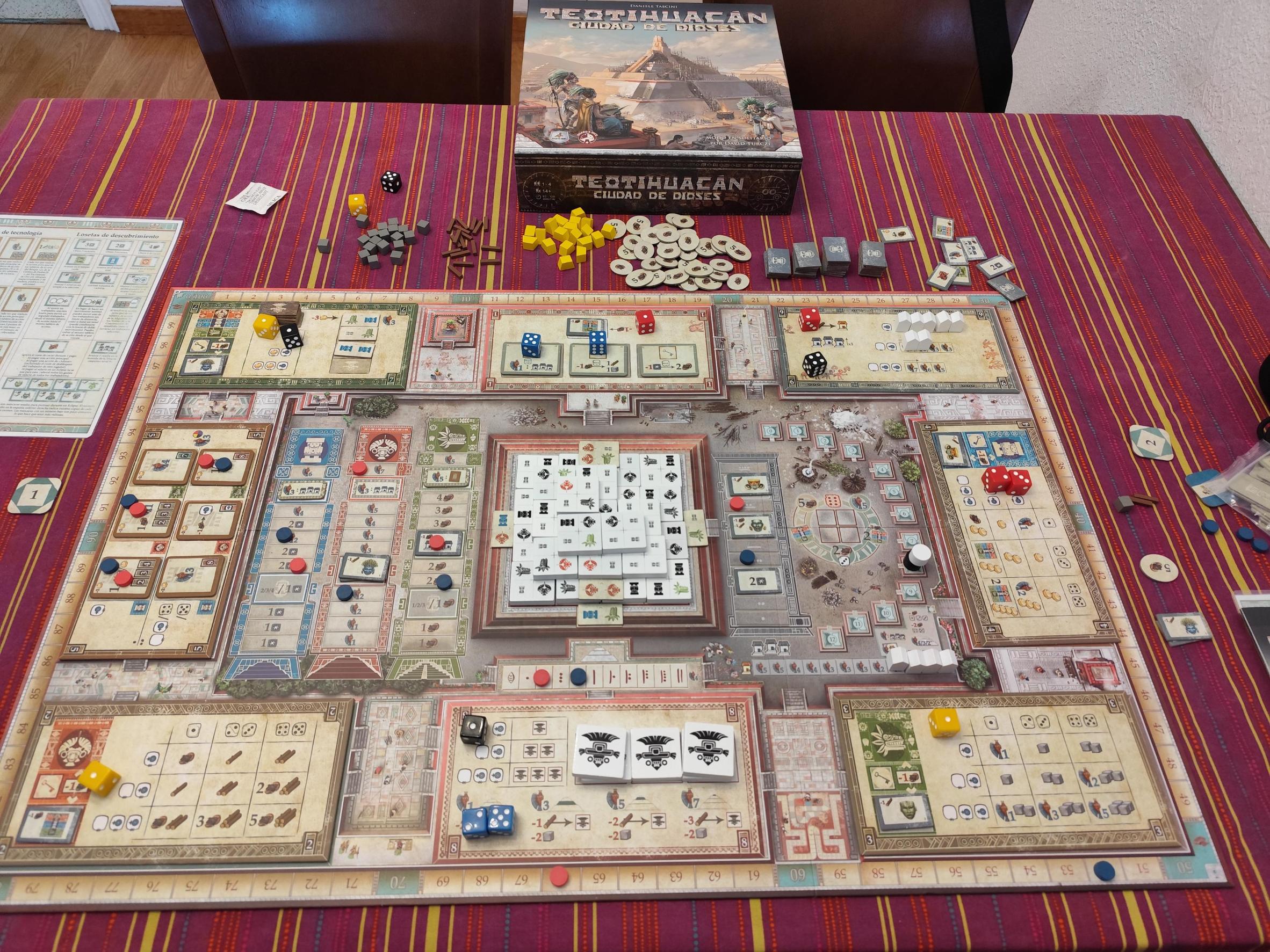
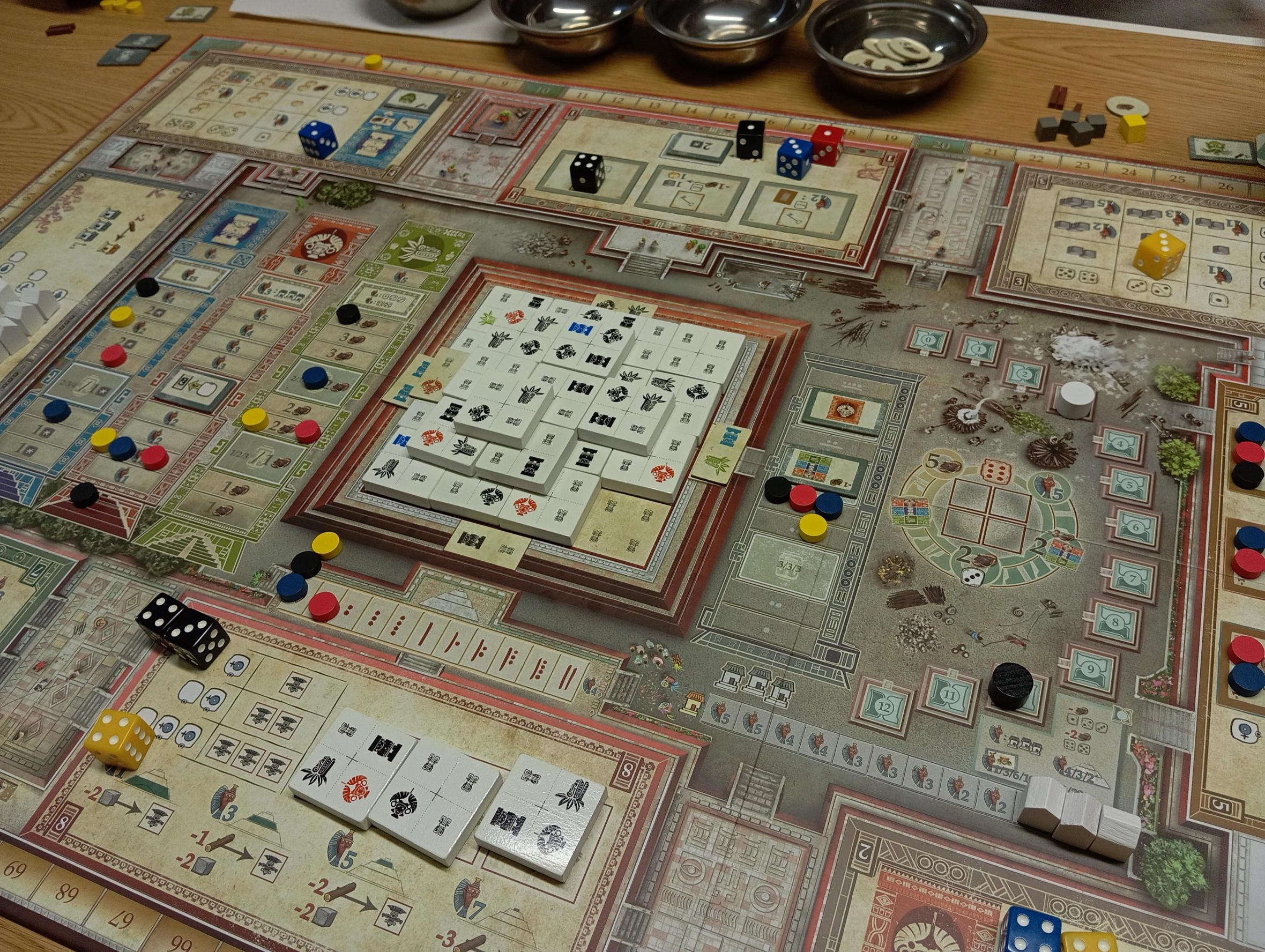
Foto dai tavoli di Ludoya
Tutte le foto in Ludoya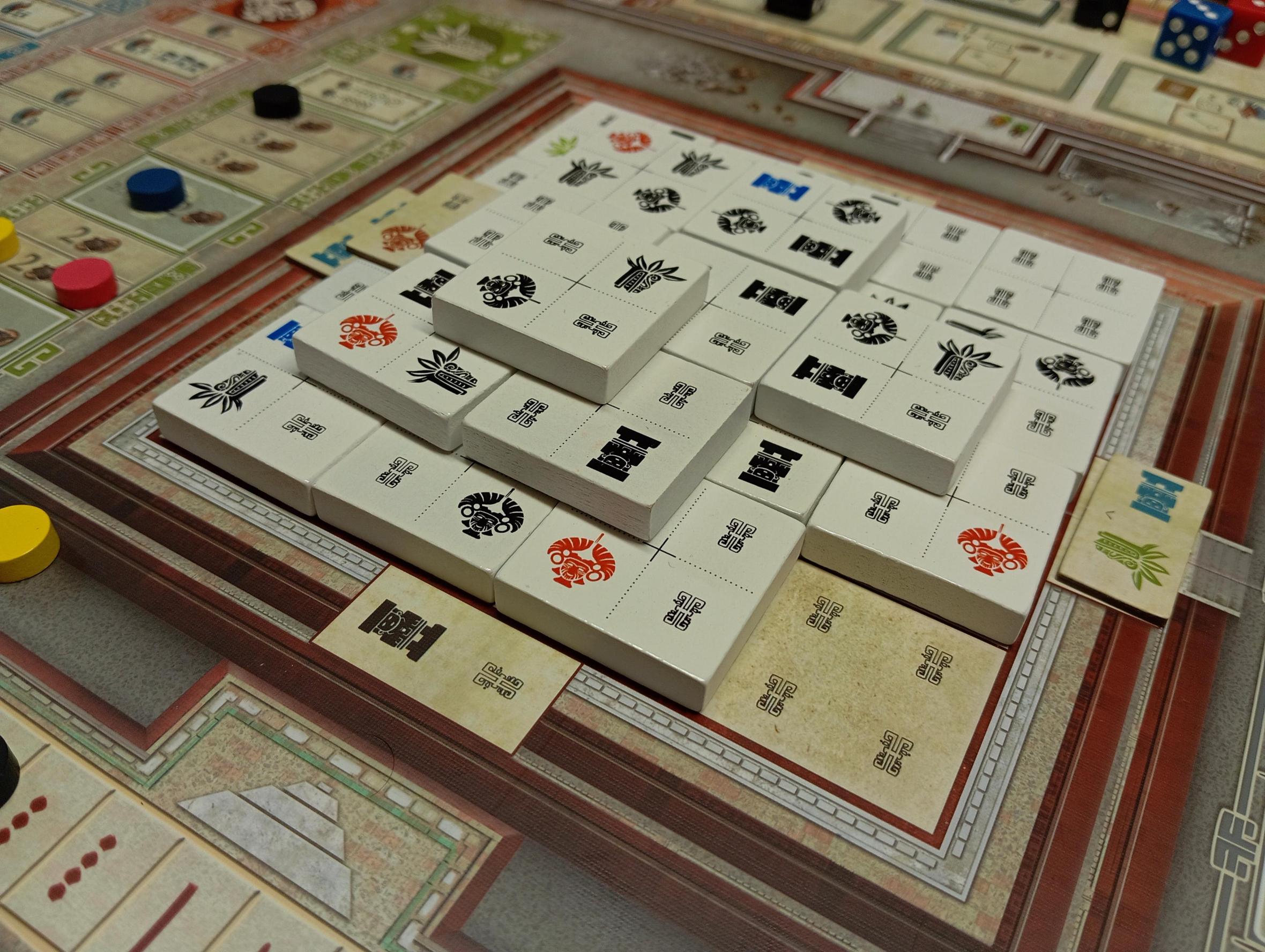
Dove comprarlo
Prezzi dei negozi e copie usate, controllati ogni giorno.
Sui tavoli di Ludoya
Tutte le statistiche in Ludoya- 823
- Partite registrate
- 634
- Giocatori
- 1h 53m
- Partita media
- 183
- Nelle ludoteche
- 33
- Nelle liste dei desideri
- 1
- Preordinato
6,3/10
da 117 recensioni Ludoya
Jan Solo8,0 Gran juego de gestión de recursos y construcción de la pirámide. Modo solitario interesante, pero a mi gusto excesivamente farragoso y lento.
Evan2,5 In this game you move one of your player markers around a roundel 1-3 spaces then resolve the action in the space you end at. Your makers are dice, and the effect of the action spaces is based on a table that looks for how many of your dice are in the space, then also what the pip value of your lowest die is. Often the effect of the space will then add pips to one or two of your dice. When a die hits 6, it resets to 1, and you gain a step on a track that produces points at the end of the round per step you have. Then you also gain a reward from a small wheel of options next to that track. Mostly what you are doing is collecting bricks and wood, then spending the bricks and wood to build the structure at the center of the board. There are extremely important technology tiles you can invest in to make your actions better. Another key thing to manage is the need to spend cacao tokens equal to the number of players in an action space to resolve the action. If you can't pay it, then you wind up skipping your action and instead getting the cacao tokens plus 1 instead. You can avoid this by taking gather actions more often, but since there's very little if any engine building in the game, it does feel like a large portion of your actions in the game work out to similar feeling gather then spend cycles. When you take the action to build the central structure, some but not all of the tiles have colored icons that give you a free step on the matching temple track in addition to the large number of points produced by the action normally. Ability to build is dependent on a substantial number of turns setup, getting the resouces and lining your dice up. Temple track steps are somewhat hard to come by and each step produces points, resources or cacao in addition to having high value endgame scoring criteria at the top, so when you are ready to build and all the pieces are totally colorless, and then you flip up colored pieces for the next person so they can spend exactly what you did only they get a substantial additional return doesn't feel great. Temple builds additionally come with steps on a track that gives bonus 4 points each round to the player who built the most. The track rests right next to the building space and is clearly tied to it. The problem here is that there is a second space that adds stair tokens to the temple, with a different cost, and a different place on the roundel, which makes it needlessly hard to see who has the potential to gain a step and when. Additionally, the stair tokens have a pointlessly specific orientation they need to be placed at because there is a tiny hard to see arrow on the tile that has to point inward. This is there to make matching the icons when you place the stair token more luck driven for no reason I can understand. Additionally these tiles can have either one or two bonus colored icon payouts that again, depend on luck of what's available, again rewarding players for lucking into situations they had no control over establishing. There's also a confusing action space that we rarely saw used. It awards some points, gives you a step on the death track, and then reduces the value of being on that track for everyone. Why have a space that invests in a track, and then simultaneously reduces the value of that same track? When a player's marker goes from 1 to 6, you also click ahead the round timer, which additionally moves after each player has had an action. The game has two modes, one where the round ends the moment the marker hits the end of the track producing uneven turns, or when it hits the end of the track each player gets one more turn. Neither of these is great, because if you age out one of your markers in the final round it effectively doesn't change the pace of the game. Why not just have even turns without playing a whole additional round? I suppose it's due to the fact that when a player is about to age out a die is very unpredictable, since when you resolve a space with two age icons, you can age the same die twice, rather than having to spread it across two dice. What this means is that it's vastly more influential to the flow of the game to age out early in the round than later in the round. More unevenness to the feel and flow of the game. I additionally was confused by one special reward tile that you can spend to ignore paying a food cost, even the totality of food required at the end of the round to feed your people. So, spend it now to avoid paying 3 or 4 food for a crowded action space, or spend it at the end of the round to avoid paying up to 8. There's a massive point hit for not feeding your people, it seems like a pretty core 'watch yourself' mechanism, that you can just ignore for a round by virtue of taking this tile. Very odd. I don't know, this is an ok game were everything feels just a little off. A few minor changes and I think this could have been great, it just doesn't feel very interesting or cohesive. Any of the little things I'm complaining about could probably be forgiven if the core mechanism was more interesting. ★ Art, Iconography and components functional ☆ Clever or interesting mechanisms ★ Reasonably low downtime between turns with mildly AP players ★ Multiple plays stay interesting ☆ Low or mitigatable luck elements ★☆☆☆☆ Raw enjoyment
Garfield8,0 #50 [c] Theme: ★★★★☆ <!-- size 7]The pyramide is great --> Gameplay: ★★★★★ <!-- size 7]Lots of meaningful decisions --> Interaction: ★★★☆☆ <!-- size 7]Where are the other dice placed --> Artwork: ★★★☆☆ <!-- size 7]Ok --> Luck: ★★☆☆☆ <!-- size 7]Pyramid tiles available at your turn --> Strategy: ★★★★☆ <!-- size 7]Different strategies possible --> Components: ★★★★☆ <!-- size 7]Pyramide tiles are great --> Play duration: ★★★☆☆ <!-- size 7]Ok --> Easy to teach: ★★★☆☆ <!-- size 7]Ok --> Rules quality: <!-- size 7]not read --> Setup time: ★★☆☆☆ <!-- size 7]A lot to setup --> No downtime: ★★★☆☆ <!-- size 7]Ok --> Replay value: ★★★★★ <!-- size 7]Modular board, different strategies --> [/c]

Domande sulle regole
Risposte tratte dal regolamento dall'assistente per le regole di Ludoya.
Quando eseguo un’azione principale, come conto i lavoratori e quanto cacao devo pagare? I lavoratori bloccati o quello che ho appena mosso contano?
Per determinare il costo in cacao, conta innanzitutto il numero di lavoratori sbloccati di colori diversi già presenti sul tabellone (ignora il lavoratore in arrivo e i lavoratori negli spazi di culto bloccati) e paga quella quantità di cacao (p. 7). Per risolvere gli effetti dell’azione principale, conta poi i tuoi lavoratori sbloccati su quel tabellone, incluso quello appena posizionato, ma mai più di 3 ai fini degli effetti (p. 7).
Quando eseguo Raccogli Cacao, quali lavoratori vengono conteggiati? Viene conteggiato il lavoratore che arriva o quelli bloccati?
Per Raccogliere Cacao, conta il numero di lavoratori sbloccati di colori diversi già presenti sul Tabellone delle Azioni (non contare il lavoratore in arrivo né i lavoratori bloccati negli spazi di adorazione) e guadagni quella quantità più 1 cacao; poi colloca il lavoratore spostato nell’area generale (p. 6).
Cosa succede esattamente quando un lavoratore raggiunge il livello di potere 6 (Ascensione)? Attivo immediatamente un’Eclissi?
L'ascensione si attiva immediatamente quando un lavoratore viene potenziato a 6: avanza sul Viale dei Morti, sposta quel dado nell'area generale del Palazzo e reimpostalo a potenza 1, scegli una ricompensa dell'Ascensione, quindi fai avanzare il disco luminoso sul tracciato del Calendario (il che può attivare un'Eclissi) — risolvi completamente ogni ascensione e attiva l'Eclissi solo dopo il turno, se applicabile (p. 9).
Come funzionano le restrizioni per il posizionamento della Piramide e delle Decorazioni, e quando il completamento della Piramide pone fine alla partita?
Le tessere Decorazione devono essere piazzate solo sugli spazi consentiti quando sono presenti i livelli della piramide sottostanti richiesti e le Decorazioni prerequisito; ottieni punti per le icone corrispondenti quando copri le tessere (p. 8). Piazzare la tessera della cima della Piramide (quarto livello) richiede che sotto di essa sia presente l’intero terzo livello, fa ottenere i VP indicati e sposta immediatamente il disco bianco del Calendario sulla posizione del disco nero, innescando l’Eclissi finale e ponendo fine alla partita (p. 8).
Quando eseguo un'azione Adorazione, posso sbloccare il lavoratore di un altro giocatore ed effettuare sia l'abilità di adorazione sia reclamare la tessera Scoperta? Devo pagare qualcosa?
Se lo spazio Adorazione è occupato dal lavoratore di un altro giocatore, paghi 1 cacao per sbloccare quel lavoratore (spostandolo nell’area generale) prima di piazzare il tuo; non puoi sbloccare in questo modo i tuoi lavoratori (pag. 6). Poi scegli se attivare l’abilità Adorazione oppure reclamare la tessera Scoperta, o paghi 1 cacao aggiuntivo per fare entrambe le cose (tutti i costi in cacao devono essere pagati prima di risolvere qualsiasi beneficio); se reclami una tessera, ne paghi il costo indicato (pag. 6).
Giochi simili










Gratis, sul web, Android e iOS
Gioca a Teotihuacan: Città degli Dei con Ludoya
- Tienilo nella tua ludotecaTieni traccia della tua copia e delle sue espansioni, prestala agli amici o mettila nella lista dei desideri e ricevi un avviso quando il prezzo scende.Aggiungilo alla tua ludoteca
- Registra ogni partitaPunteggi, vincitori, timer e foto, poi le tue statistiche: percentuale di vittorie, numero di giocatori preferito, miglior punteggio.Registra una partita
- Risolvi i dubbi sulle regoleChiedi qualsiasi cosa sulle regole e ottieni una risposta dal regolamento, con la pagina per verificarla.Chiedi all'assistente per le regole
- Trova persone con cui giocarloClub, serate di gioco ed eventi vicino a te che portano questo gioco in tavola.Vedi gli eventi
Dati del gioco (giocatori, durata, età, crediti) da BoardGameGeek.