
2014 · Medievale
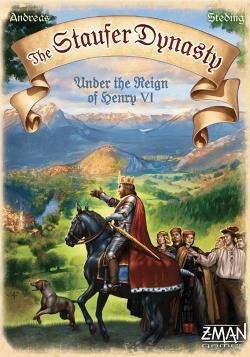
The Staufer Dynasty
I giocatori vestono i panni di nobili del XII secolo che viaggiano con l’imperatore attraverso sei regioni del suo regno, collocando emissari e nobili per ottenere incarichi e influenza. La partita dura cinque round; in ogni round, ogni giocatore compie tre azioni nell’ordine determinato dal posizionamento dei membri della famiglia. Con un’azione di rifornimento, un giocatore prende figure da una traccia delle scorte e le porta nella propria corte, reclamando anche uno scrigno del tesoro da quello spazio; gli scrigni sono di vari colori e forniscono punti a fine partita, punti o figure immediati, bonus utilizzabili una sola volta oppure carte privilegio che modificano le azioni. Con un’azione di movimento/schieramento, un giocatore paga emissari per viaggiare lontano dal re, occupa un seggio di un incarico pagandone il costo e collocando figure in senso orario tra le regioni, quindi reclama lo scrigno sotto quel seggio. Dopo ogni round, una o due regioni ottengono punti in base alla tessera del round; i giocatori ricevono punti per le maggioranze negli incarichi e per i bonus regionali, gli occupanti della regione che ha ottenuto punti vengono rimossi, gli scrigni vengono riforniti e il re avanza in senso orario, ripristinando gli emissari che oltrepassa. Dopo cinque round, i giocatori conteggiano gli scrigni del tesoro e gli incarichi segreti per determinare il vincitore.
- Giocatori
- 2–5 ideale in 4
- Tempo di gioco
- 90 min
- Età
- 13+
- Complessità
- 3 / 5
Il gioco
- Autori
- Illustrazioni

Dove comprarlo
Prezzi dei negozi e copie usate, controllati ogni giorno.
Sui tavoli di Ludoya
Tutte le statistiche in Ludoya- 40
- Partite registrate
- 55
- Giocatori
- 1h 33m
- Partita media
- 15
- Nelle ludoteche
- 2
- Nelle liste dei desideri
5,6/10
da 11 recensioni Ludoya
Praxy8,0 This another great, lean and focus game from Andreas Steding. Only one resource and 2 possible actions, but such a depth behind where one can really try to plan ahead. Some of the gameplay remind me of Hansa Teutonica, I can't explain why but maybe I like it a bit less than Hansa Teutonica's master piece, but overall a great game.
Prime impressioni · 1 partita
Evan4,0 In this game, you have 15 turns to get the most points possible by predicting which regions will score, when they will score, and how best to position yourself for bonus points from the three secret endgame cards in your hand. To do this, you have to take actions that grant you chests with useful powers, and then know when best to use the chests. On your turn, you make one simple choice. Get more guys, or place guys you have. This is not a game that gives you a turn to figure out things before stuff starts mattering; the clock is fierce. While the game has that puzzle like quality to it, the puzzle is not solvable, as you are competing with other players for chests, powers, and meeple spots. It's very easy to set up for something early and have it taken away from you through other player's moves, and since actions are so limited, you have little if any ability to make a counter move in response. Additionally, for the first four rounds of the game, when a region scores, every meeple in a scoring spot gets removed from the board, which means they are no longer lined up to help with your two endgame points. You only know half of the provinces that score each game for certain, the other half gets assigned if a certain criteria is met. This can get quite annoying if you are a person who likes having a plan and then following through with said plan. Of course in any area majority game, turn order can be very important. If you go first you might grab the exact spot with the exact chest you need. If you go last, you can be the determining factor which second region scores, or beat someone out for a majority. The problem here is that players who took 'get more meeple' actions in the previous round go earlier in the current one. Players who took actions on the board go later. This makes for a sort of boom/bust cycle where your turn order is more to do with when you have to take meeples, than it is about having a specific strategy. Since taking meeples is one of the few actions you get in a current round, it usually means it's best to just sort of pick a few rounds to sit out and just collect, and then a few rounds where you have all the guys and you do all the things. The ebb and flow of this is alright, and i'm sure I never manage it that well, but regardless it bothers me. ★ Art, Iconography and components functional ☆ Clever or interesting mechanisms ☆ Reasonably low downtime between turns with mildly AP players ★ Multiple plays stay interesting ☆ Low or mitigatable luck elements ★★☆☆☆ Raw enjoyment
L'ha giocato 3 volte
Juego de control de áreas con unas reglas reguleras, no quedan claros ciertos puntos. El juego es de control de áreas y es una gran ensalada de puntos que aparenta una gran complejidad cuando al final solo puedes hacer dos cosas durante tu turno, todo te da bonus y todo sirve para darte puntos, aparte cada turno se van puntuando dos regiones por mayorías. El juego está bien diseñado y desarrollado y una vez que lo conoces es fácil de explicar y jugar, pero estoy cansado de buscar los patrones de puntuación en las ensaladas de puntos.
Prime impressioni · 1 partita






Gratis, sul web, Android e iOS
Gioca a The Staufer Dynasty con Ludoya
- Tienilo nella tua ludotecaTieni traccia della tua copia e delle sue espansioni, prestala agli amici o mettila nella lista dei desideri e ricevi un avviso quando il prezzo scende.Aggiungilo alla tua ludoteca
- Registra ogni partitaPunteggi, vincitori, timer e foto, poi le tue statistiche: percentuale di vittorie, numero di giocatori preferito, miglior punteggio.Registra una partita
- Segna i punti senza cartaUsa i fogli punteggio e gli assistenti di gioco della community e lascia che Ludoya sommi i punti.Trova fogli punteggio
- Trova persone con cui giocarloClub, serate di gioco ed eventi vicino a te che portano questo gioco in tavola.Vedi gli eventi
Dati del gioco (giocatori, durata, età, crediti) da BoardGameGeek.