
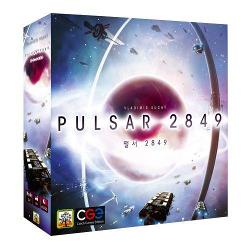
2017 · 우주 탐사
펄서 2849
Players take on the role of future energy entrepreneurs who explore space, claim pulsars, and build infrastructure to distribute pulsar power across the stars. Each of eight rounds begins with a communal dice roll and draft: players choose dice from a shared pool to pay for actions such as moving a survey ship, developing pulsars, building transmitter vectors, acquiring technologies, buying dice modifiers, or completing special projects at a headquarters. Scoring occurs each round based on exploration, developed pulsars, patents, and progress toward shared objectives, while multiple strategic paths and engine-building choices determine the endgame outcome.
- 인원
- 2–4 최적 4명
- 플레이 시간
- 60–90분
- 연령
- 14+
- 복잡성
- 3.3 / 5
게임 소개


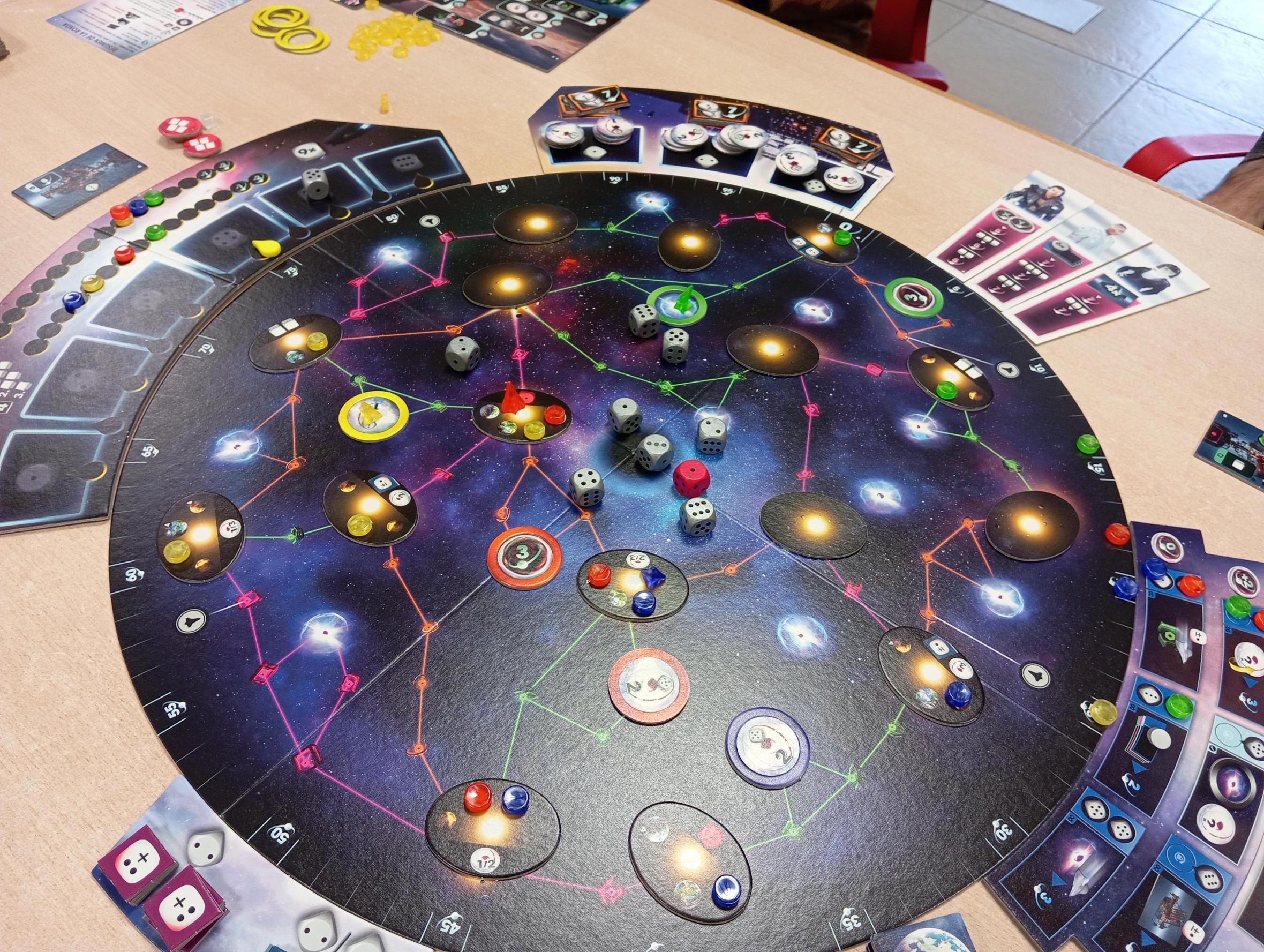
Ludoya 테이블의 사진
Ludoya에서 모든 사진 보기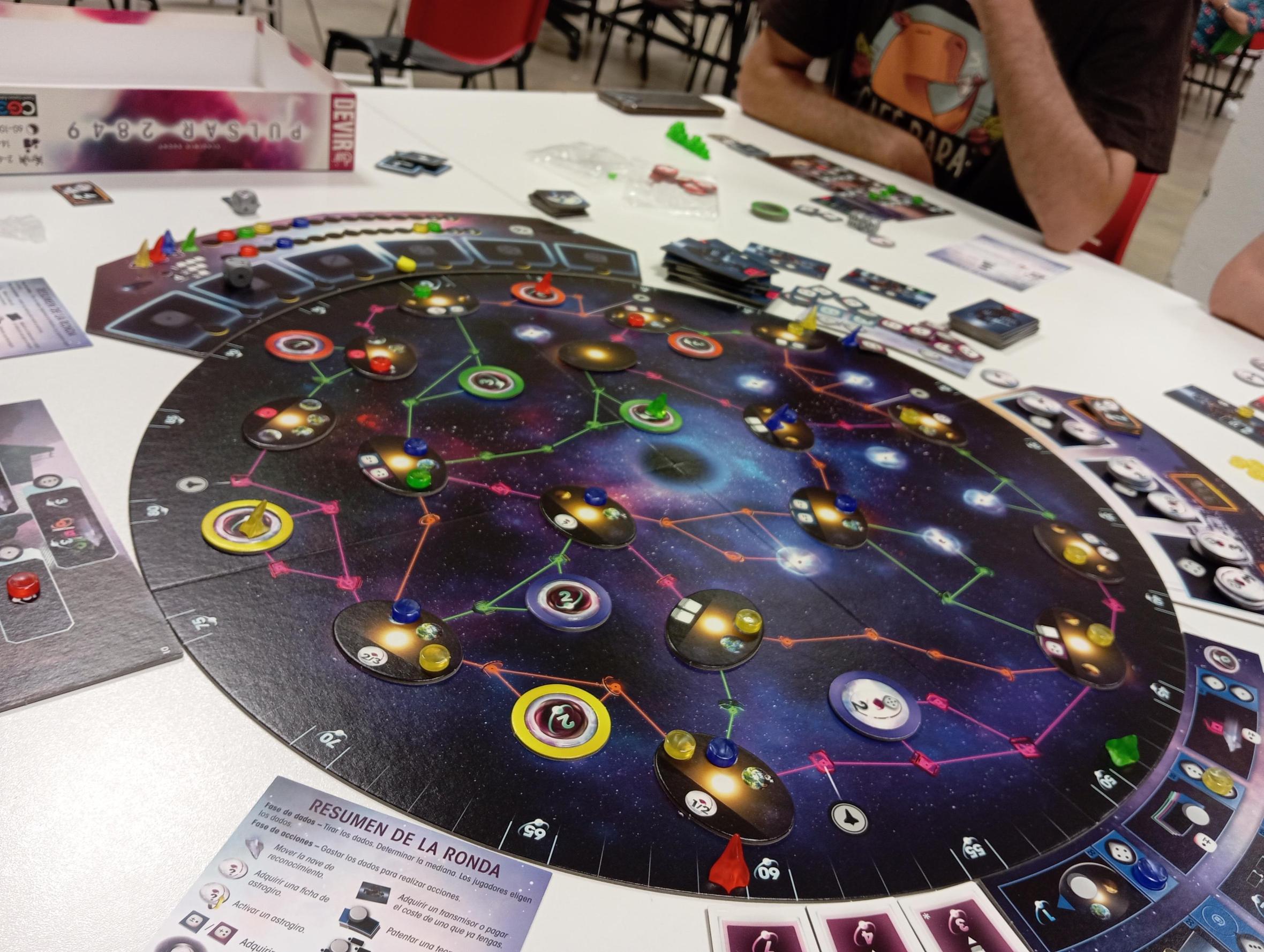
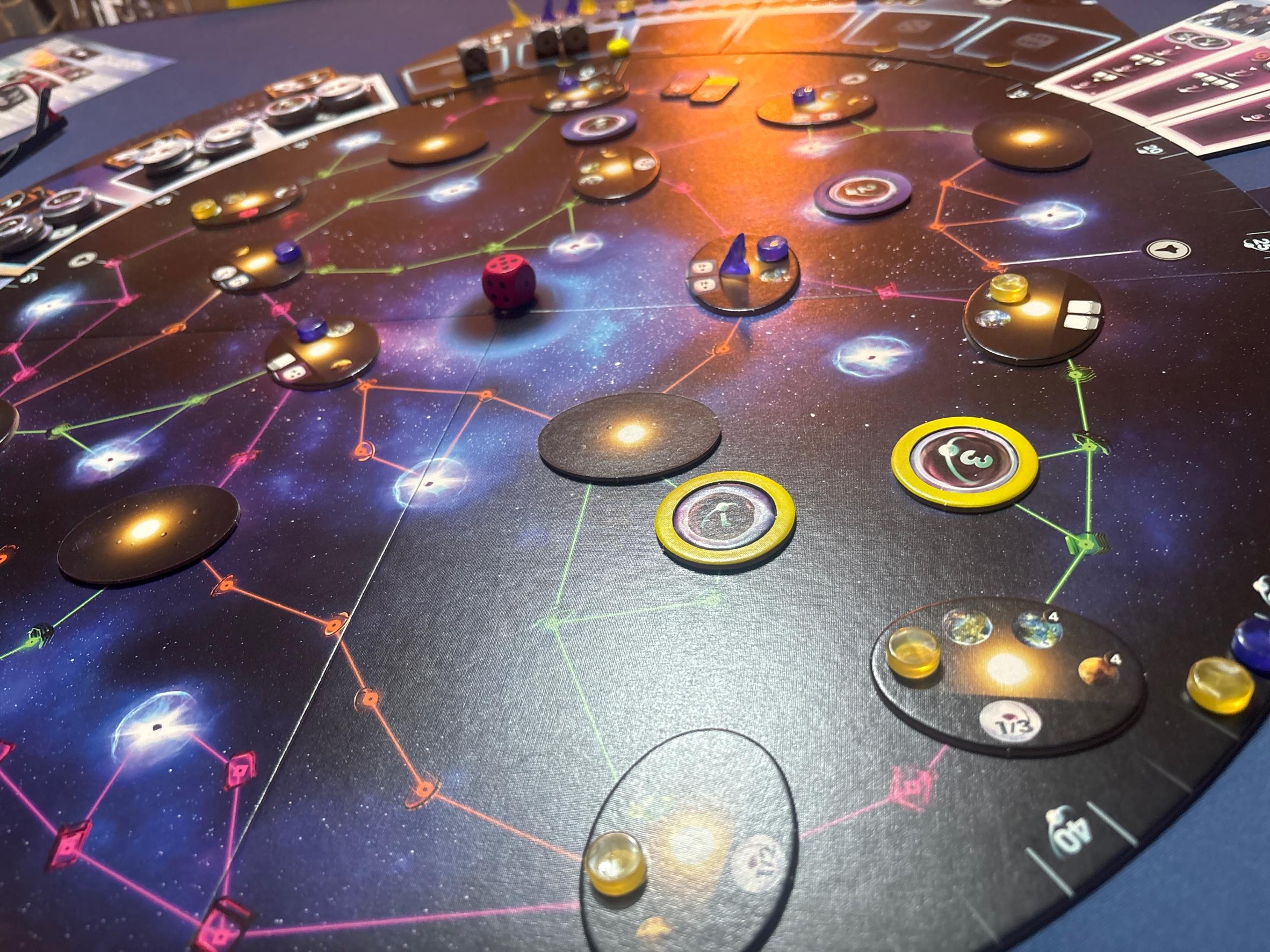
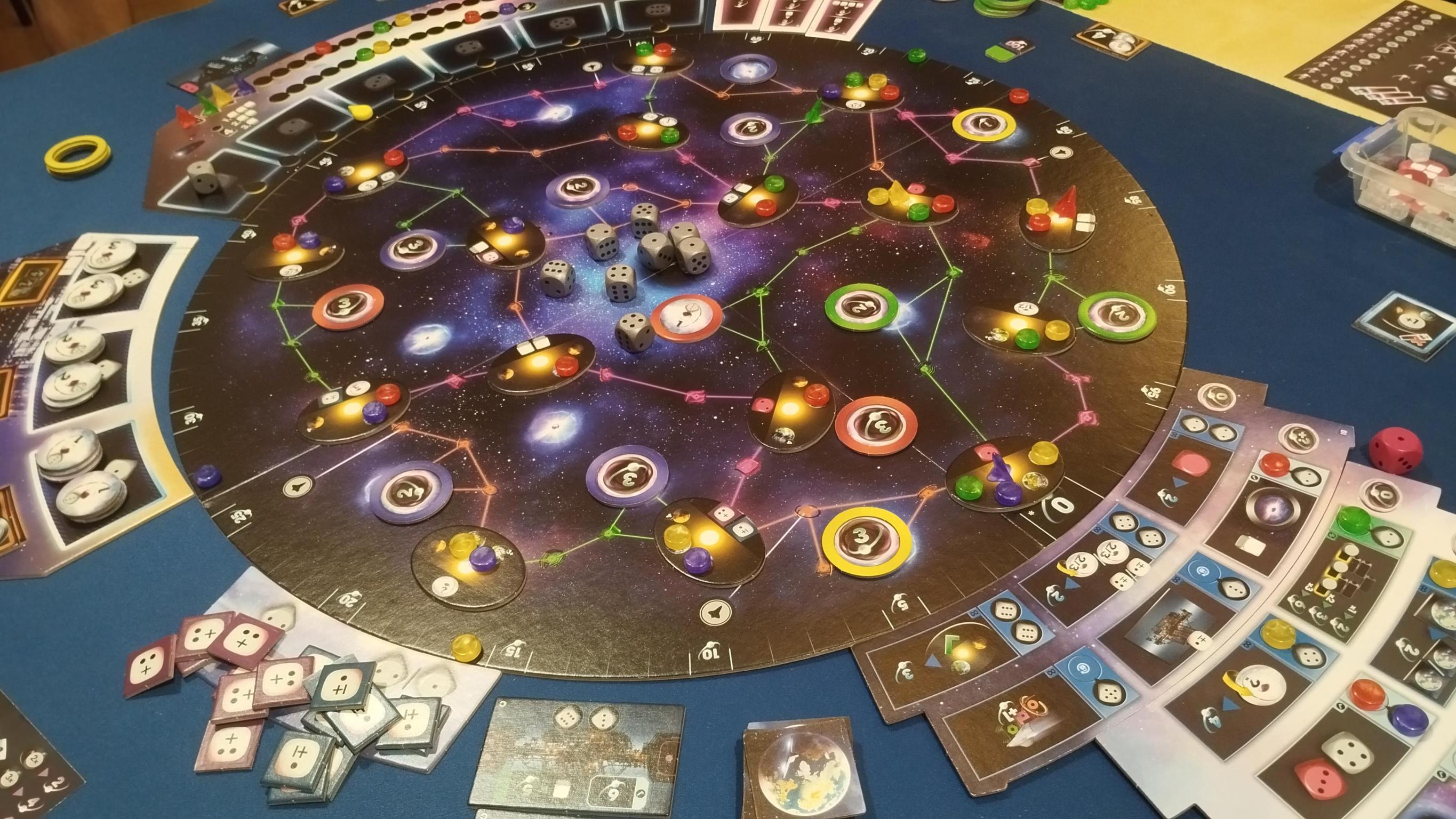
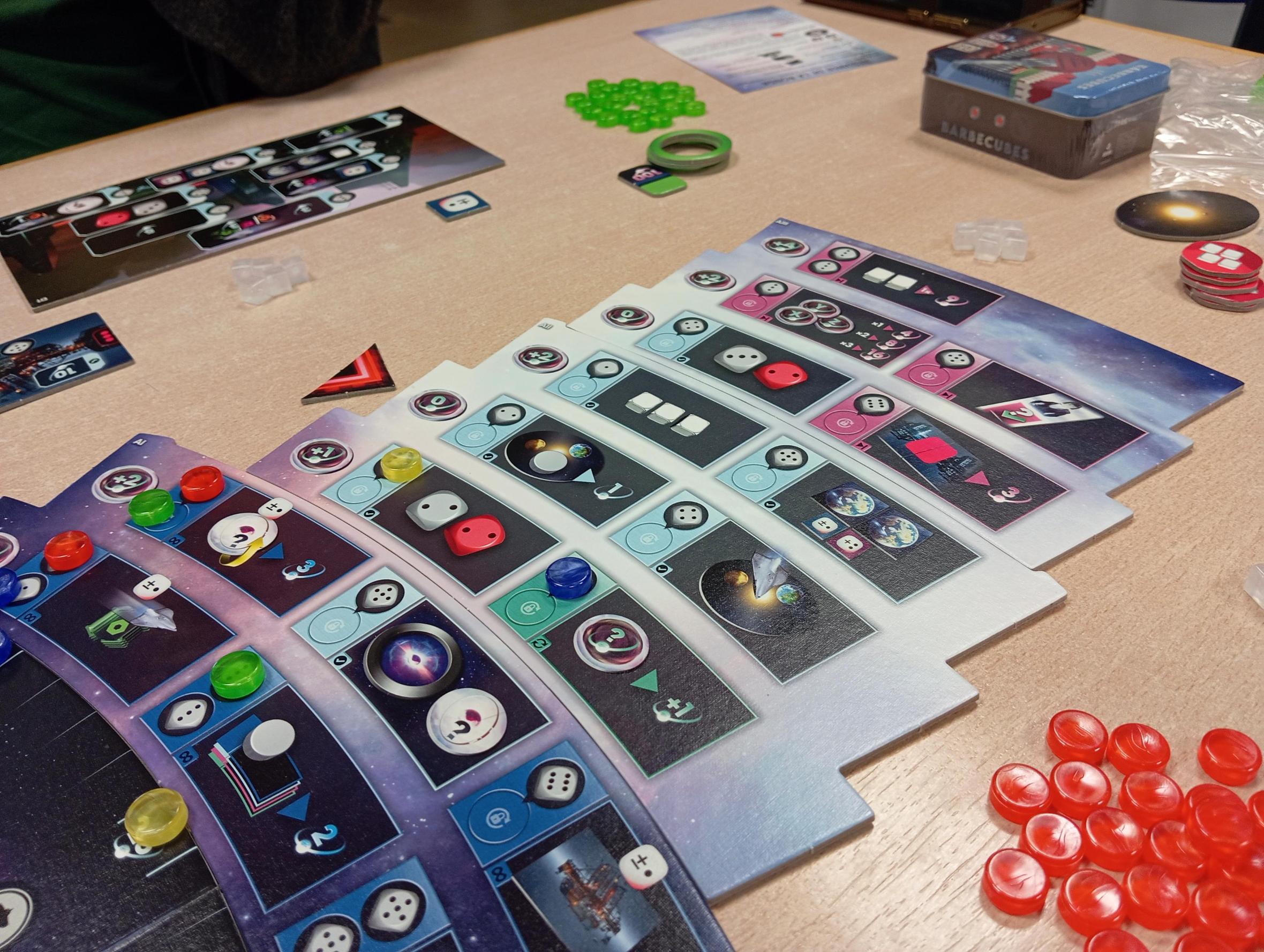
Ludoya 테이블에서는
Ludoya에서 전체 통계 보기- 221
- 기록된 플레이
- 328
- 플레이어
- 1h 54m
- 평균 플레이 시간
- 118
- 컬렉션 보유
- 30
- 위시리스트 등록
7.7/10
Ludoya 리뷰 56개 기준
- Base -
첫인상 · 2회 플레이
Eric9.1 Diversión 5/5 · Interacción 5/5 · Atractivo 3/5 · Originalidad 4/5 · Rejugabilidad 5/5 · Accesibilidad 3/5
첫인상 · 2회 플레이
Cool dice placement games with point salad system. Nice theme, cool mechanics and low interaction.
플레이 기록 없음



룰 질문
Ludoya 룰 도우미가 룰북을 바탕으로 답변했습니다.
How do I determine the median after rolling the dice, and what does it do when we take dice?
Line the rolled silver dice in order; the median is the middle die and you place the median marker on it (if more dice sit to one side, move the marker one space toward that side so it sits between spaces). When you take a die you move either your initiative or engineering counter left or right relative to the median marker by the number of die spaces between the marker and the die you took, which affects play order and cube income later (p.7-8).
When I fly my survey ship, do I have to move the exact number of segments and can I retrace segments?
A flight must use exactly the number of segments equal to the die you pay (possibly modified) and you may not use any flight segment more than once during that single flight; flights of distance zero are not allowed and isolated pulsars with no connecting segments cannot be flown to (p.10).
If I only pass through a planetary system, can I still take the blue-planet exploration bonus?
No — if you only pass through a system you must place your token on a lifeless planet if one is available and you get no exploration bonus; you receive an exploration bonus only when your flight ends at the system and you establish a station on a blue planet (p.11).
How do gyrodyne tiles get placed, completed, and when do they score points?
You must first claim a pulsar, then take a gyrodyne tile (taking costs: 1 for small, 2 for medium, 4 for large), place it on your claimed pulsar to start construction, and later spend the tile's completion die (3 for small, 5 for medium, 6 for large) to flip it so it is spinning; spinning gyrodynes produce points each Production Phase equal to the gyrodyne's face plus the value of the current technology row (p.12, p.16).
How do transmitter links work and when do I get the red bonus die from them?
When you take transmitter tiles you decide immediately whether to link them end-to-end into an array (links are permanent) and you must pay each printed die cost to flip a transmitter online (one cost is covered when you take it); if you have two linked transmitters that are flipped online you gain the red bonus die formed by their link, which you may use as your bonus die that turn (p.13, p.15).























게임 정보(인원, 플레이 시간, 연령, 제작진) 출처: BoardGameGeek.