
2019 · Animais
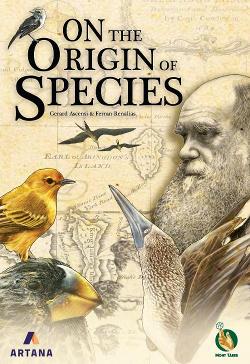
On the Origin of Species
Os jogadores acompanham Charles Darwin na viagem do Beagle pelas Galápagos, pesquisando habitats e catalogando espécies. A cada turno, um jogador escolhe entre Pesquisar — colocando fichas de pesquisa em diferentes peças de espécies para obter conhecimento sobre ar, terra ou água — ou Descobrir — usando conhecimento sobre habitats para colocar novas peças de espécies, marcar pontos e obter cartas de evolução, personagem e objeto, enquanto avança o Beagle. O jogo termina quando o Beagle conclui sua viagem; os jogadores adicionam aos pontos acumulados os pontos de evolução do final da partida, indicados por uma carta de objetivo final. Vence quem tiver a maior pontuação na trilha.
- Jogadores
- 2–4 melhor com 3
- Tempo de jogo
- 45–80 min
- Idade
- 9+
- Complexidade
- 2,3 / 5
Sobre o jogo
- Arte
- Editora



Onde comprar
Preços das lojas e cópias usadas, verificados todos os dias.
Nas mesas da Ludoya
Todas as estatísticas na Ludoya- 53
- Partidas registradas
- 61
- Jogadores
- 54m 16s
- Partida média
- 26
- Em ludotecas
- 4
- Em listas de desejos
3,6/10
de 14 avaliações na Ludoya
Garfield2,0 I didn't feel the theme. And I didn't like the mechanism placing cube for purchasing animal tiles. It happens a lot that others are purchasing the tile you wanted and then you have to rearrange your cubes. Too repetitive. [c] Theme: ★★☆☆☆ <!-- size 7]Very little --> Gameplay: ★★☆☆☆ <!-- size 7]Too repetitive --> Interaction: ★★★☆☆ <!-- size 7]Race for the animal tiles --> Artwork: ★★★★☆ <!-- size 7]Nice --> Luck: ★★★☆☆ <!-- size 7]Random cards --> Strategy: ★☆☆☆☆ <!-- size 7]Very little --> Components: ★★★☆☆ <!-- size 7]Ok, nothing special --> Play duration: ★★★★☆ <!-- size 7]Good --> Easy to teach: ★★★★☆ <!-- size 7]Quite easy (15min) --> Rules quality: <!-- size 7]not read --> Setup time: ★★★★☆ <!-- size 7]Fast --> No downtime: ★★★★☆ <!-- size 7]Almost no downtime --> Replay value: ★★☆☆☆ <!-- size 7]Random animal tiles --> [/c]
Evan2,5 In this game either you place a cube onto two tiles in the grid, or you pull cubes from tiles in the grid, treating those tiles as if they were the resources according to what is printed on the tile, to buy a new tile and add it to the grid. This act additionally scores you some points and draws you some special cards. Rather than simply adding a new tile, you can replace an existing one with the higher level, then claim the lower level one into your own personal score pile, where depending on the game mode you are playing, it can be work some significant points. The tricky part of the game, the part that's really interesting, is that for the most part, resource cubes used to pay for tiles, need to come from tiles on or around the space you are putting the new tile into. This puzzle of deciding what tile to buy and where to save your resources up makes for a game with some real potential. Unfortunately, the potential never comes to fruition. The game is full of powerful one time use cards that swing and warp the game state. The cards aren't evenly useful, some of the cards are drafted from a faceup display, but others are pulled from facedown piles. In a game that is asking you to plan ahead your turns by carefully watching where your opponent's resources are being placed, to the degree that is needed here, you don't want someone to swing in with secret resources from their hand that you couldn't plan or account for. With a little more work, this game could have been something special, so it's a pity that it wound up angling too far to the lighter end of things. ★ Art, Iconography and components functional ★ Clever or interesting mechanisms ★ Reasonably low downtime between turns with mildly AP players ☆ Multiple plays stay interesting ☆ Low or mitigatable luck elements ★☆☆☆☆ Raw enjoyment






Quem tem também tem







Grátis, na web, Android e iOS
Jogue On the Origin of Species com a Ludoya
- Tenha na sua ludotecaAcompanhe sua cópia e suas expansões, empreste para os amigos ou coloque na lista de desejos e seja avisado quando o preço cair.Adicionar à sua ludoteca
- Registre cada partidaPontuações, vencedores, cronômetros e fotos, e depois suas estatísticas: taxa de vitórias, número de jogadores favorito, melhor pontuação.Registrar uma partida
- Marque os pontos sem papelUse as folhas de pontuação e os ajudantes de jogo da comunidade e deixe a Ludoya somar os pontos.Encontrar folhas de pontuação
- Encontre gente para jogarClubes, noites de jogos e eventos perto de você que levam este jogo para a mesa.Ver eventos
Dados do jogo (jogadores, tempo de jogo, idade, créditos) do BoardGameGeek.