
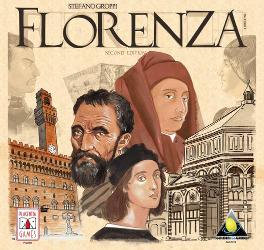
2010 · 文艺复兴
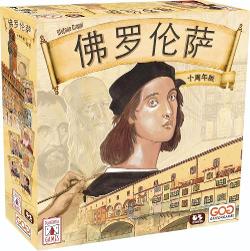
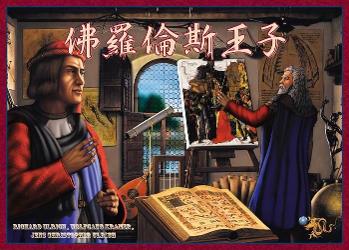
Florenza
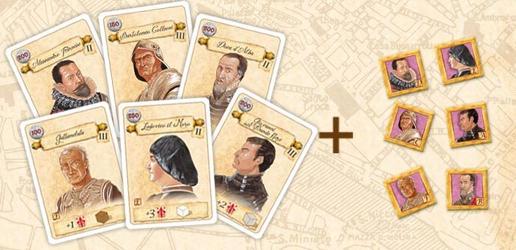
玩家扮演强大的文艺复兴家族领袖,通过聘请著名艺术家并资助他们的作品,争夺成为最杰出的艺术赞助者。 每回合,玩家会在自己的城区、大教堂或市政建筑中委托创作艺术品,然后派遣工人前往作坊——有时还要前往对手的城区——收集完成委托所需的金钱和资源。玩家还可以通过在教堂进行慈善活动来获得额外工人。完成艺术品并管理声望点是计分的关键;声望点可以在游戏过程中花费,但在游戏结束时会成为胜利点的主要来源。 所有角色和建筑都取材于意大利文艺复兴时期的历史资料。
- 人数
- 2–5 最佳 3 人
- 游戏时长
- 90–120 分钟
- 年龄
- 14+
- 复杂性
- 3.7 / 5


在哪里买
商店价格和二手货源,每天检查。
在 Ludoya 的牌桌上
在 Ludoya 中查看完整统计- 21
- 已记录对局
- 30
- 玩家
- 2h 56m
- 平均时长
- 6
- 收藏数
4.0/10
基于 4 条 Ludoya 评测
Floro7.0 Caylus evolucionado
初印象 · 1 局
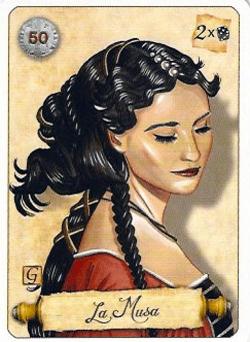
Evan3.0 In this game players are collecting sets of cubes to then spend on recipes. When you complete a recipe, you also have to chose an artist card that hasn't been taken yet, pay the cost, then roll a die and see how many bonus points you get in addition to the recipe's reward by looking at the chart at the base of the card. Each different card has it's own chart, so there is some push your luck in terms of how many actions you spend preparing before locking in the thing you want to try to build. This leads me to something about the game I found a bit odd. In this game you don't pay for actions when you place your worker. Rather, everyone places all their guys, then you resolve player boards, then you pay for your recipes. Since you are allowed to take actions on anyone's player board (not just your own) this means that bookkeeping is really difficult. The game seems to think this is an interesting mechanism as it has a whole punishment structure for a player who messed up and isn't able to resolve an action they logged in. I'm generally not thrilled with this sort of mechanism, but I tolerate it in something like Agricola where if you didn't invest in food properly you starve or in Martin Wallace games where you can slowly loan yourself to death as a result of bad planning, but in this game the challenge seems to not come from your own choices as much as it comes from the graphic design of the game being built in a way to make it easy to mess up. The die luck isn't great, but to a certain extent it comes out in the wash. The game also has a little bit of take-that in the form of the players in first and second place in turn order get to deny another player an action pawn for the round. This leads me to my second big issue with the game. Turn order is really difficult to control. The way it works is the player who is in the lead on the points track is starting player. They then reduce their marker to zero, and gain paper points equal to where they were on the track. Then the player who is highest on the faith track becomes second player. Then the remaining players remain in whatever order they were. In theory this means that each player gets an opportunity to be starting player, as players cash out and reset to zero, but in practice it's very easy to wind up not in first, as the recipes in the game can pay out quite a lot of points in one go, and wind up sitting in third or fourth place for multiple rounds. Turn order is very important, as anyone can use anyone else's buildings so often times if you go later in turn order, other players have used your best stuff before you get a chance to. Not to mention if the first and or the second player hits you for that worker, then you are really stuck. Not that the game is all bad. There are some interesting things happening. For example, the buildings you add to your board have all different abilities , but they have to be resolved in the order you built them. You also have open recipes on your player board that are pretty inexpensive but the more complicated recipes on the central board have better rewards and also give you some ongoing income. If you ignore the simple recipes on your player board you take an endgame point penalty, so that adds some nice tension. I like how different cards stay in the game for different lengths of time. I like how when you use an opponent's building you have to pay them a point (although 1vp hardly seems enough to make a full on buildings strategy seem worth it). I might be willing to play this game again someday, but I wouldn't make it a priority. Other games do this style of game better in terms of recipe fulfillment/engine building, and in addition to my other issues I'm slightly bothered by tiny icons where they didn't get even the cube colors right and the tiles that go along with the cards don't have the printed costs on them so you have to keep looking back to the side of the board to remind yourself, making bookkeeping even more awkward. ☆ Art, Iconography and components functional ☆ Clever or interesting mechanisms ☆ Reasonably low downtime between turns with mildly AP players ★ Multiple plays stay interesting ☆ Low or mitigatable luck elements ★★☆☆☆ Raw enjoyment
初印象 · 1 局





游戏信息(人数、游戏时长、年龄、制作人员)来自 BoardGameGeek。