
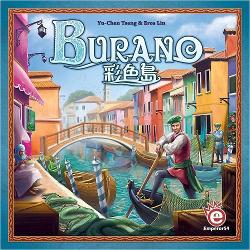
2015 · Städtebau
Burano
Die Spieler führen eine Familie auf einer kleinen venezianischen Insel durch vier Jahreszeiten und weisen ihre Mitglieder an, zu arbeiten, sich weiterzuentwickeln und Waren zu verkaufen. Zu den Aktionen gehören, Männer zum Fischen zu schicken, Frauen zur Herstellung von Spitze für den Export einzusetzen und Häuser entlang der Kanäle zu decken oder zu streichen. Das Gameplay nutzt eine Würfel-Pyramiden-Engine: Die Spieler zahlen Münzen, um eine farbcodierte Pyramide zu aktivieren, die jede Runde bestimmte Aktionen auslöst. Ressourcen und Aktionen bringen durch Produktion, Verkäufe und Bauverbesserungen im Verlauf von 14 Runden Siegpunkte ein. Der Fokus des Spiels liegt darauf, den Arbeitereinsatz zu optimieren, das Timing der Pyramiden-Aktionen gut zu wählen und Einkommen mit langfristigem Ansehen auszubalancieren.
- Spieler
- 2–4 am besten mit 3
- Spielzeit
- 90–120 Min.
- Alter
- 12+
- Komplexität
- 3,8 / 5
Über das Spiel
- Autoren
- Illustration
- Publisher


Wo kaufen
Shop-Preise und gebrauchte Exemplare, täglich geprüft.
An Ludoyas Tischen
Alle Statistiken in Ludoya- 9
- Erfasste Partien
- 14
- Spieler
- 1h 47m
- Durchschnittliche Partie
- 16
- In Sammlungen
4,2/10
aus 8 Ludoya-Rezensionen
Evan3,5 Placing delightful colored cubes next to each other or on top of each other as an action selection method is really delightful. It's an interesting and colorful puzzle I fully enjoy. I wish I could say the same about the rest of the game. From what I've read, the second edition of the game solves a lot of the problems I've read about in the first edition, but the game still has a few issues. There appears to be a strong first player advantage. It's not hard for the first player in turn order to grab up a few majorities and drop some big scoring roof tiles before anyone has a reasonable chance to contest them. There's no difference in starting positions for players later in turn order, and they don't have these same opportunities for scoring without battling anyone. The house cards that are earned for placing roof tiles are of wildly different levels of usefulness. For example, all the cards that give you points are points locked in for the rest of the game, except one type of card that gives you points for each person you have in a contestable area. This appears to be an unintentional weakening from a change from 1st to 2nd edition that was paid no attention. The game does have a lot of flip luck, in terms of what fish cards come up, which house cards are available at any given time, and what color roof tiles you randomly draw. The last thing is the actions that you take just aren't that compelling. On your turn you get 1-4 actions, and each action you take means you spend more money. A compelling idea, but when half your actions consist of moving a cube from your pyramid to your "ready area", the efficiency and opportunities for clever moves is overshadowed by a stale feeling. Overall, the game isn't bad for a tactical game, but it doesn't shine as a strategy game, which is a real pity as I love putting bricks on top of other bricks. :star: Art, Iconography and components functional :star: Clever or interesting mechanisms :nostar: Reasonably low downtime between turns with mildly AP players :star: Multiple plays stay interesting :star: Low or mitigatable luck elements :star::nostar::nostar::nostar::nostar: Raw enjoyment















Kostenlos, im Web, für Android und iOS
Spiel Burano mit Ludoya
- Hab es in deiner SammlungVerwalte dein Exemplar und seine Erweiterungen, leih es Freunden oder setz es auf deine Wunschliste und erfahre, wenn der Preis fällt.Zur Sammlung hinzufügen
- Erfasse jede PartiePunkte, Sieger, Timer und Fotos, dann deine Statistiken: Siegquote, liebste Spielerzahl, beste Punktzahl.Partie erfassen
- Werte ohne PapierNutze die Wertungsbögen und Spielhelfer der Community und lass Ludoya die Punkte zusammenzählen.Wertungsbögen finden
- Finde Leute, mit denen du es spielstClubs, Spieleabende und Veranstaltungen in deiner Nähe, bei denen dieses Spiel auf den Tisch kommt.Veranstaltungen ansehen
Spieldaten (Spieler, Spielzeit, Alter, Mitwirkende) von BoardGameGeek.