
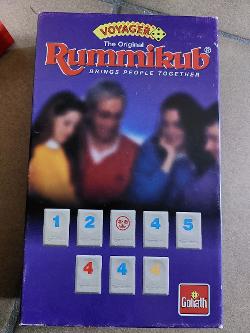
1950 · Kartenspiel
Rummikub
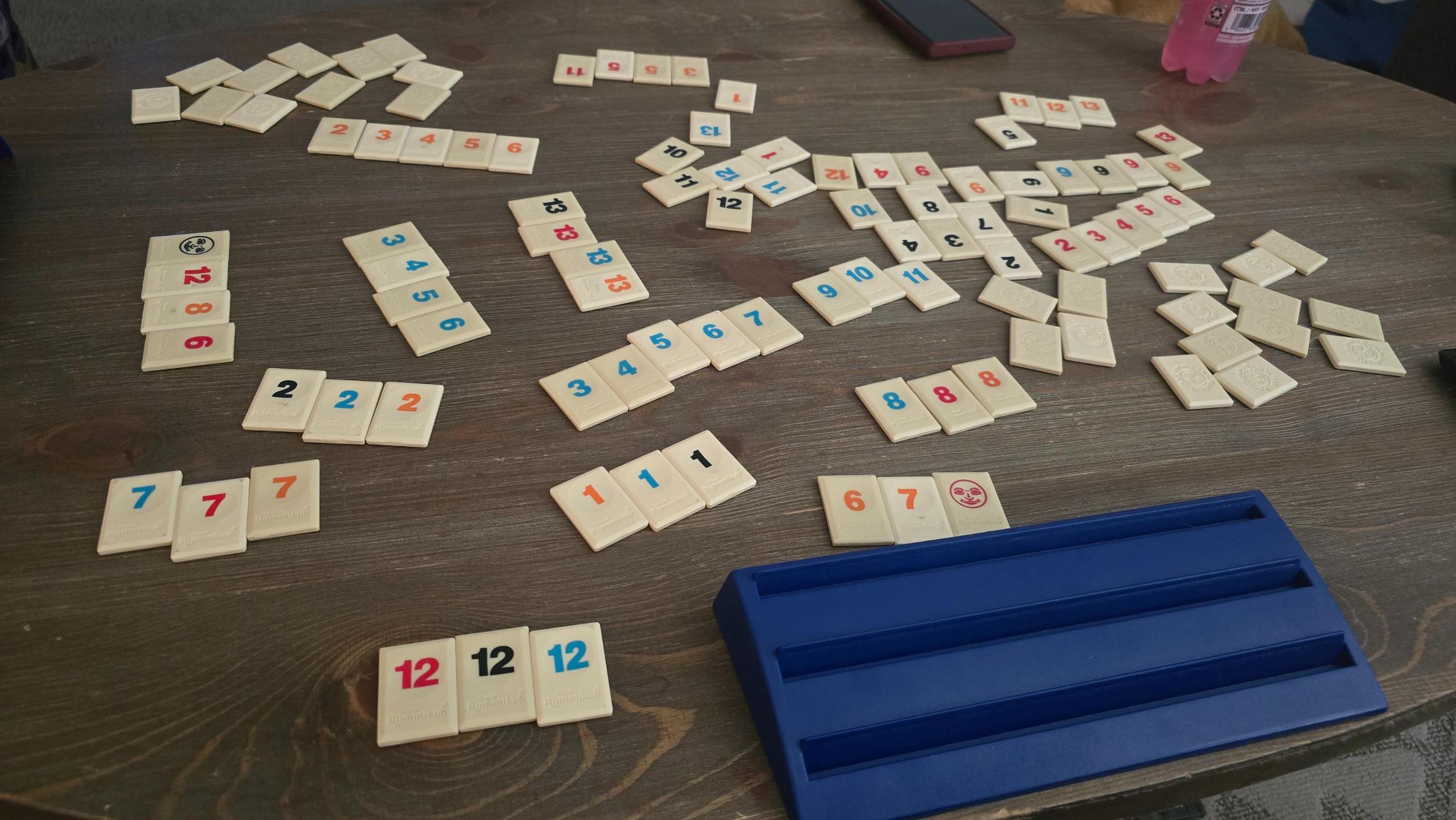
Die Spieler versuchen, alle ihre nummerierten Steine loszuwerden, indem sie Reihen bilden (drei oder mehr aufeinanderfolgende Zahlen in derselben Farbe) oder Gruppen (drei oder vier Mal dieselbe Zahl in verschiedenen Farben). Die Steine auf dem Tisch dürfen neu angeordnet werden, um bestehende Kombinationen zu verlängern oder aufzuteilen, sodass Spieler bereits gespielte Steine wiederverwenden können. In jedem Zug zieht ein Spieler, wenn er nicht spielen kann, und versucht dann, das Spielfeld zu manipulieren, um Steine aus seinem Vorrat abzulegen. Das Spiel endet, wenn ein Spieler seinen Vorrat leer hat; bei der Wertung werden die übrigen Steine auf den Vorräten der anderen Spieler verglichen.
- Spieler
- 2–4 am besten mit 4
- Spielzeit
- 60 Min.
- Alter
- 8+
- Komplexität
- 1,7 / 5
Über das Spiel
- Autoren




Erweiterungen
In Ludoya ansehen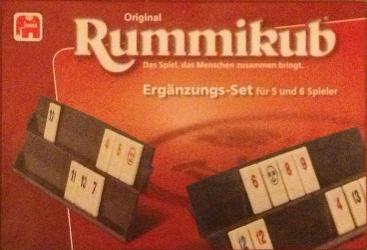
Fotos von Ludoya-Tischen
Alle Fotos in Ludoya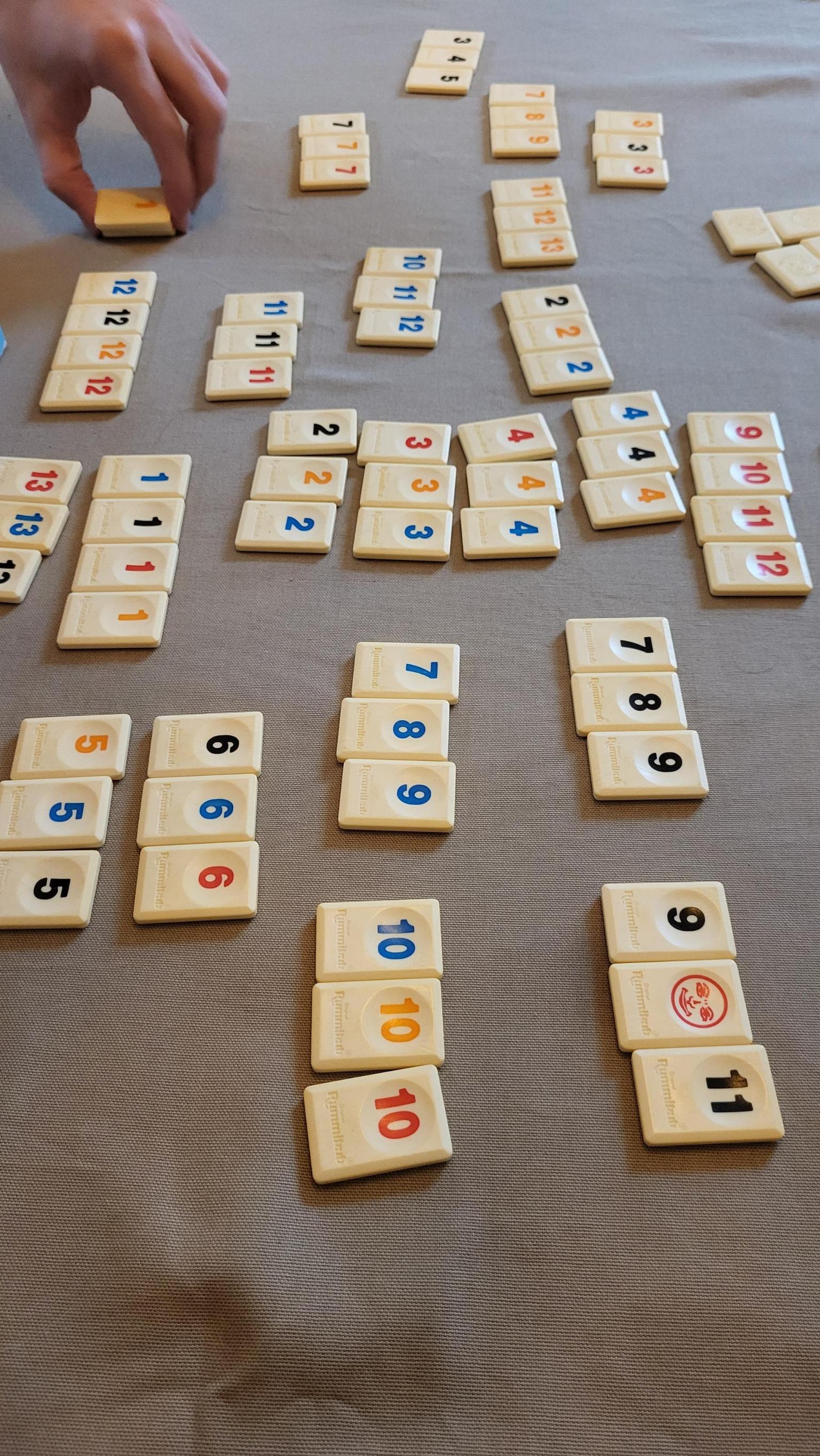
Wo kaufen
Shop-Preise und gebrauchte Exemplare, täglich geprüft.
An Ludoyas Tischen
Alle Statistiken in Ludoya- 2.595
- Erfasste Partien
- 667
- Spieler
- 24m 18s
- Durchschnittliche Partie
- 320
- In Sammlungen
- 3
- Auf Wunschlisten
- 1
- Vorbestellt
6,5/10
aus 104 Ludoya-Rezensionen
Vic Granell6,0 Learnt it from my grandma as a kid, grew up playing it a lot. It has a bit more strategy than other classic games that I used to play and were just moving tokens along with dice throws (like Parchís - Pachisi/Ludo), but not much. It allows for some thought at least!
[Gracze] 2-4 (najlepiej 4) [Czas] 60m [Wiek] 8+ S: - I: N/N
Mestremuten4,0 Rating: 2/5 Production value: 1/4 Is the game in my collection/Love to have?: 1/1

Regelfragen
Aus der Spielanleitung beantwortet von Ludoyas Regelassistenten.
Can I use tiles already on the table to make my initial 30-point meld?
No — the tiles used for your initial meld must come from your rack; you may not use tiles already played on the table to reach the required 30 points (page 1).
How many points do I need for the initial meld and how is a joker counted?
You must place sets totaling at least 30 points for your initial meld, and a joker used in the initial meld scores the value of the tile it represents (page 1).
Am I allowed to rearrange or take tiles from sets already on the table to make new sets?
Yes — you may manipulate, split and recombine sets on the table (including removing tiles from groups/runs) as long as at the end of your turn only legitimate sets remain and no loose tiles are left (page 2).
When can I take a joker from the table, and what must I do after I take it?
A joker may be retrieved if you can replace it during your turn with tiles that keep the set legitimate, but when you retrieve it you must immediately play the joker to make a new set and use at least one tile from your rack that turn; you may not retrieve a joker before you have made your initial meld (page 3).
If I draw a tile from the pool, can I play that tile in the same turn?
No — when a player draws a tile from the pool their turn ends, and players cannot lay down a tile they have just drawn until a subsequent turn (page 1).














Kostenlos, im Web, für Android und iOS
Spiel Rummikub mit Ludoya
- Hab es in deiner SammlungVerwalte dein Exemplar und seine Erweiterungen, leih es Freunden oder setz es auf deine Wunschliste und erfahre, wenn der Preis fällt.Zur Sammlung hinzufügen
- Erfasse jede PartiePunkte, Sieger, Timer und Fotos, dann deine Statistiken: Siegquote, liebste Spielerzahl, beste Punktzahl.Partie erfassen
- Regelfragen klärenFrag alles zu den Regeln und erhalte eine Antwort aus der Spielanleitung, mit der Seite zum Nachprüfen.Den Regelassistenten fragen
- Finde Leute, mit denen du es spielstClubs, Spieleabende und Veranstaltungen in deiner Nähe, bei denen dieses Spiel auf den Tisch kommt.Veranstaltungen ansehen
Spieldaten (Spieler, Spielzeit, Alter, Mitwirkende) von BoardGameGeek.