
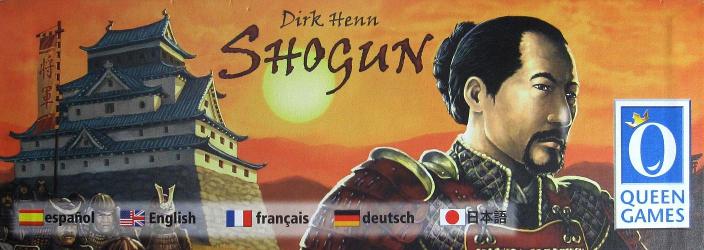
2006 · Wirtschaft
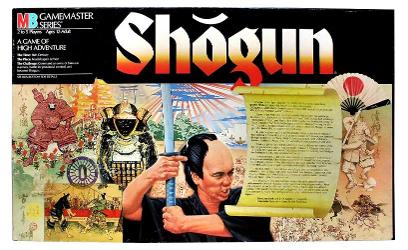
Shogun
Die Spieler übernehmen die Rollen von Feudalherren im Japan der Sengoku-Zeit und erweitern ihren Einfluss, indem sie Truppen bewegen und aufstellen, Gebäude errichten und um Provinzen kämpfen. In jeder Runde wählen die Spieler aus einer Auswahl von zehn Aktionen und ordnen sie ihren Provinzen zu, um die Wirtschaft auszubauen, Streitkräfte zu mobilisieren oder Belagerungen auszulösen. Wenn gegnerische Armeen aufeinandertreffen, entscheidet ein gemeinsamer Turm den Kampf: Würfel, die Truppen darstellen, werden hineingeworfen, und diejenigen, die wieder herausfallen, bestimmen den Ausgang der Schlacht. Provinzen, Tempel, Theater und Burgen bringen bei der Wertung Punkte, und wer am Spielende die meisten Punkte hat, gewinnt.
- Spieler
- 3–5 am besten mit 5
- Spielzeit
- 90–120 Min.
- Alter
- 12+
- Komplexität
- 3,4 / 5
Über das Spiel
- Autoren
- Illustration
- Publisher


Erweiterungen
In Ludoya ansehen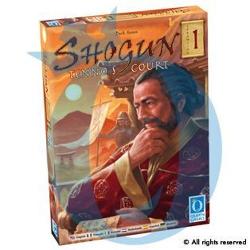
Wo kaufen
Shop-Preise und gebrauchte Exemplare, täglich geprüft.
An Ludoyas Tischen
Alle Statistiken in Ludoya- 113
- Erfasste Partien
- 181
- Spieler
- 3h 4m
- Durchschnittliche Partie
- 46
- In Sammlungen
- 6
- Auf Wunschlisten
7,8/10
aus 35 Ludoya-Rezensionen
Garfield8,0 #AreaControl Interesting area control game. [c] Theme: :star::star::star::nostar::nostar: <!-- size 7]Ok --> Gameplay: :star::star::star::star::nostar: <!-- size 7]Good amount of choices to make --> Interaction: :star::star::star::nostar::nostar: <!-- size 7]Battles for areas --> Artwork: :star::star::star::nostar::nostar: <!-- size 7]Simple artwork --> Luck: :star::nostar::nostar::nostar::nostar: <!-- size 7]Little to none --> Strategy: :star::star::star::star::nostar: <!-- size 7]Yes --> Components: :star::star::star::star::nostar: <!-- size 7]Good wooden components, but too small board --> Play duration: :star::star::star::nostar::nostar: <!-- size 7]Ok --> Easy to teach: :star::star::nostar::nostar::nostar: <!-- size 7]A lot to teach --> Rules quality: not yet read Setup time: :star::nostar::nostar::nostar::nostar: <!-- size 7]Preparing the area cards is a nightmare --> No downtime: :star::star::star::star::nostar: <!-- size 7]Plays quite fast --> Replay value: :star::star::nostar::nostar::nostar: <!-- size 7]Not that much I can think of --> [/c]
Mestremuten8,0 Rating: 4/5 Production value: 3/4 Is the game in my collection/Love to have?: 1/1
Regelfragen
Aus der Spielanleitung beantwortet von Ludoyas Regelassistenten.
How do the 10 action cards work — what do up/down cards mean and in what order do actions resolve?
Each round the 10 action cards are arranged beneath fields 1–10 with the top 5 revealed (face up) and the bottom 5 face down; actions are executed in numeric order (1 then 2 ... then 10), revealing face‑down cards as you go. (p.6, p.9)
How is turn order decided — how do the special‑card auction and bids work?
Players secretly bid with chest cards or province cards, reveal and pay their bids, then in bid order choose a special card and place their Daimyo in that special’s slot to set turn order; province bids pay nothing but consume that province for the round. (p.6–9)
What do ‘Deploy 5 / Deploy 3 / Deploy 1’ cost and can I move armies when deploying?
Deploy 5 costs 3 chests and places 5 armies; Deploy 3 costs 2 chests and places 3; Deploy/Move 1 costs 1 chest and places 1 army and additionally allows moving armies from that province into one adjacent own province (no battling). Any number of armies may move to an adjacent province provided at least one army remains behind, and sea routes count as adjacency. (p.8)
How does the battle tower determine the winner and what happens to armies after a battle?
All participating armies plus any cubes in the tower tray are tossed into the tower; the armies that fall out into the tray are counted and the side with more cubes in the tray wins. The defeated side’s fighting armies are removed to supply, the victor also loses as many armies as the defeated side, and remaining victorious armies occupy the province (ties/undecided have special consequences described in the rules). (p.11–12)
What happens in winter if I don’t have enough rice — how are revolts chosen and resolved?
In winter each player must have one rice per province; unsupplied provinces determine how many revolts occur and how many additional farmer armies join (per the provisions table), then the besieged player’s left neighbor draws province cards to pick which provinces revolt — revolts are then resolved as battles with the extra farmers. (p.10–12)
If an event and a special card both modify an action, which one applies first?
Apply the event first and then apply the special card’s effect. (p.7)





Kostenlos, im Web, für Android und iOS
Spiel Shogun mit Ludoya
- Hab es in deiner SammlungVerwalte dein Exemplar und seine Erweiterungen, leih es Freunden oder setz es auf deine Wunschliste und erfahre, wenn der Preis fällt.Zur Sammlung hinzufügen
- Erfasse jede PartiePunkte, Sieger, Timer und Fotos, dann deine Statistiken: Siegquote, liebste Spielerzahl, beste Punktzahl.Partie erfassen
- Regelfragen klärenFrag alles zu den Regeln und erhalte eine Antwort aus der Spielanleitung, mit der Seite zum Nachprüfen.Den Regelassistenten fragen
- Finde Leute, mit denen du es spielstClubs, Spieleabende und Veranstaltungen in deiner Nähe, bei denen dieses Spiel auf den Tisch kommt.Veranstaltungen ansehen
Spieldaten (Spieler, Spielzeit, Alter, Mitwirkende) von BoardGameGeek.