
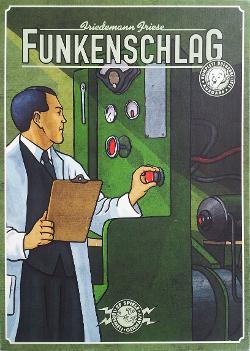
2004 · Industrie / Herstellung
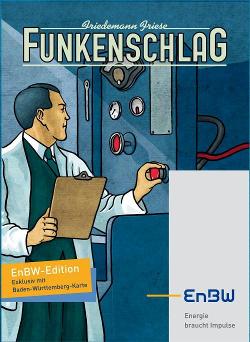
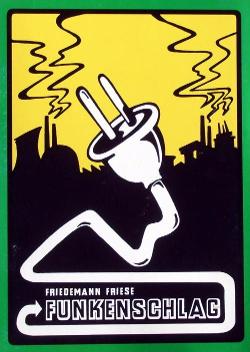
Funkenschlag
Spieler bauen und erweitern ein Stromnetz über eine Karte, indem sie Städte verbinden und Kraftwerke per Auktion kaufen. In jeder Runde bieten die Spieler auf Kraftwerke, kaufen dann Brennstoff aus einem sich verändernden Markt, um diese Kraftwerke zu betreiben und die verbundenen Städte mit Strom zu versorgen. Neuere Kraftwerke kommen auf den Markt, sobald ältere gekauft werden, und bieten effizientere Optionen, die das Bietverhalten und die langfristige Strategie beeinflussen. Die Spieler müssen Ausgaben für Kraftwerks-Upgrades, Brennstoffbeschaffung (Kohle, Öl, Müll, Uran) und den Ausbau des Netzes ausbalancieren, um die Anzahl der Städte zu erhöhen, die sie mit Strom versorgen können, bevor das Spielende ausgelöst wird.
- Spieler
- 2–6 am besten mit 4
- Spielzeit
- 120 Min.
- Alter
- 12+
- Komplexität
- 3,2 / 5
Über das Spiel
- Autoren






Erweiterungen
In Ludoya ansehen Funkenschlag: Die neuen Kraftwerke – Set 12021
 Funkenschlag: Erweiterung Benelux/Zentraleuropa2006
 Power Grid: France/Italy2026
 Funkenschlag: Erweiterung China/Korea2026
 Funkenschlag: Die Roboter2011
 Funkenschlag: Erweiterung Brasilien/Spanien & Portugal2009
 Funkenschlag: Erweiterung Russland/Japan2010
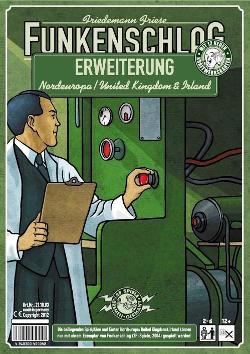 Funkenschlag: Nordeuropa/United Kingdom & Irland2012
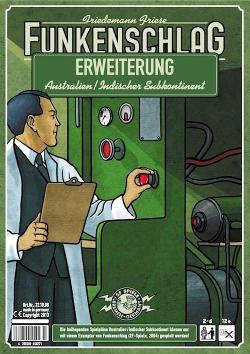 Funkenschlag: Australien & Indischer Subkontinent2013
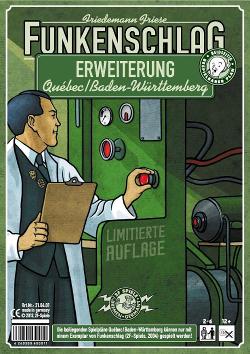 Funkenschlag: Québec/Baden-Württemberg2012
 Power Grid: BGG Promo Card Set2011
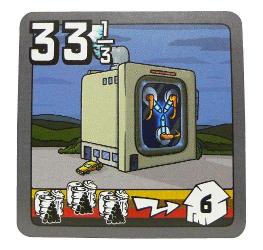 Funkenschlag: Flux-Generator2008
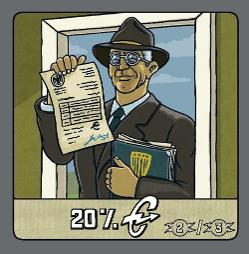 Funkenschlag: Steuern2014
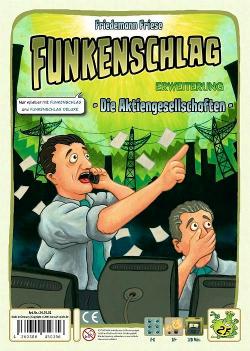 Funkenschlag: Die Aktiengesellschaften2015
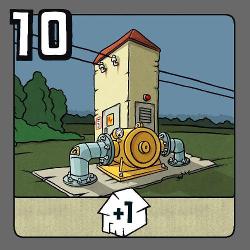 Power Grid: Transformer Station2009
 Power Grid: Supply Contract2011
 Funkenschlag: Fabel-Erweiterung2017
 Power Grid: Oracle & Industrial Espionage2012
 Power Grid: Warehouse2010
 Power Grid: Theme Park2011
 Funkenschlag: Mittlerer Osten/Südafrika2019
 Funkenschlag: Die neuen Kraftwerke – Set 22021
 Power Grid: High-Voltage DC Transmission Passage C2015
 Funkenschlag: Europa/Nordamerika2021
 Funkenschlag: Bremen/Manhattan2024
 Brettspiel Adventskalender 20152015
 Atolla Modulis (fan expansion for Funkenschlag)2006
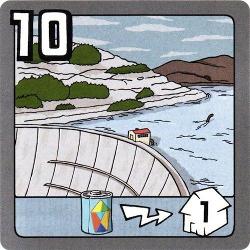 Funkenschlag: Speicherkraftwerk2011
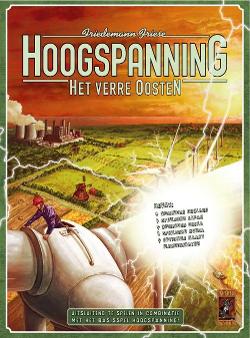 Hoogspanning: Het Verre Oosten2011
 New Plants (fan expansion for Power Grid)2008
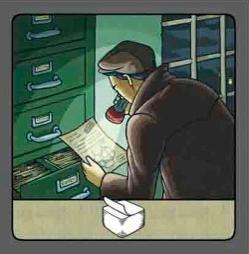 Power Grid: Industrial Espionage2012
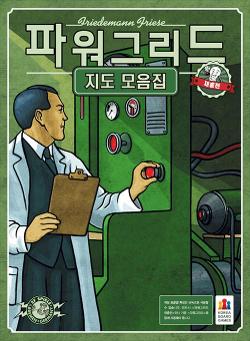 파워그리드 재충전 확장: 지도 모음집 (Power Grid Recharged – Map Collection)2022
 Funkenschlag: Die Ersten Funken – Orakel2013
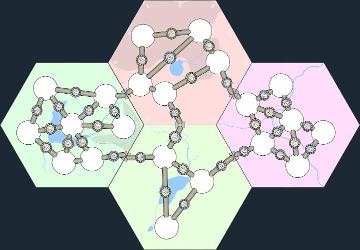 Morphogea: A Modular Hex Map (fan expansion for Power Grid)2006
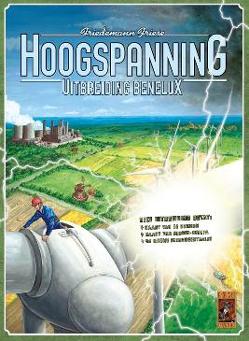 Hoogspanning: Uitbreiding Benelux2010
Spielbar mit
In Ludoya ansehen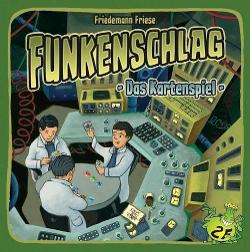
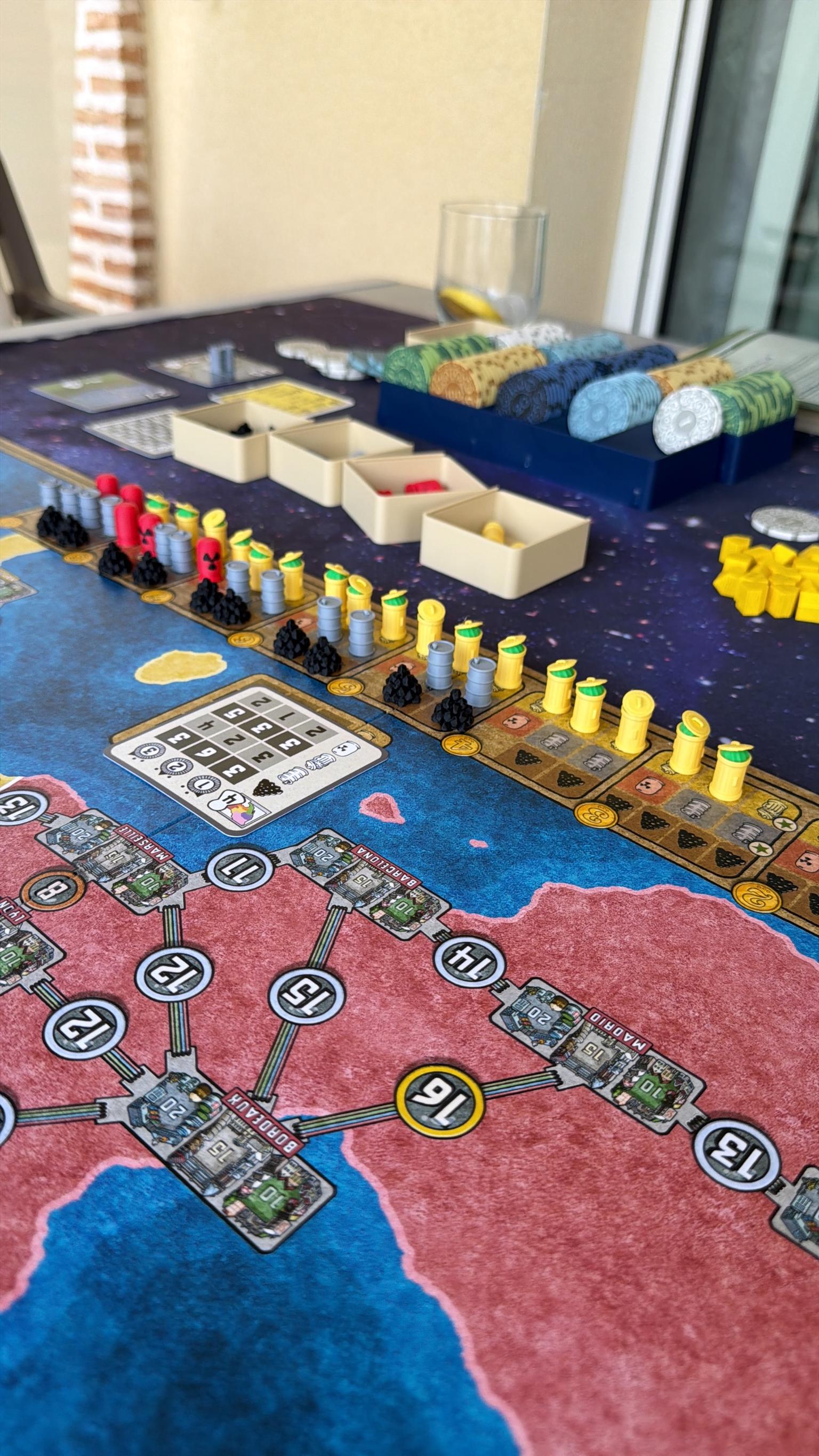
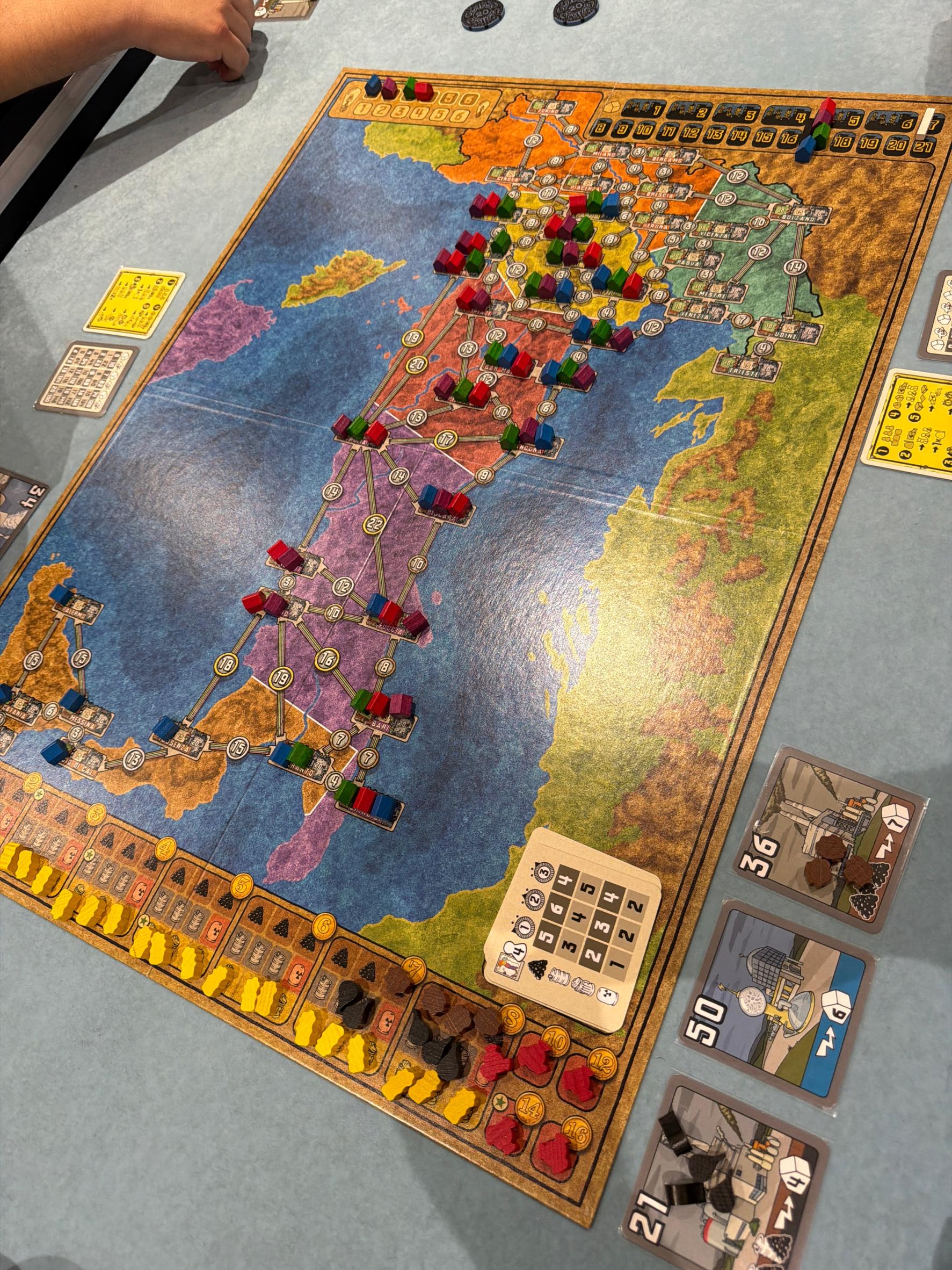
Fotos von Ludoya-Tischen
Alle Fotos in Ludoya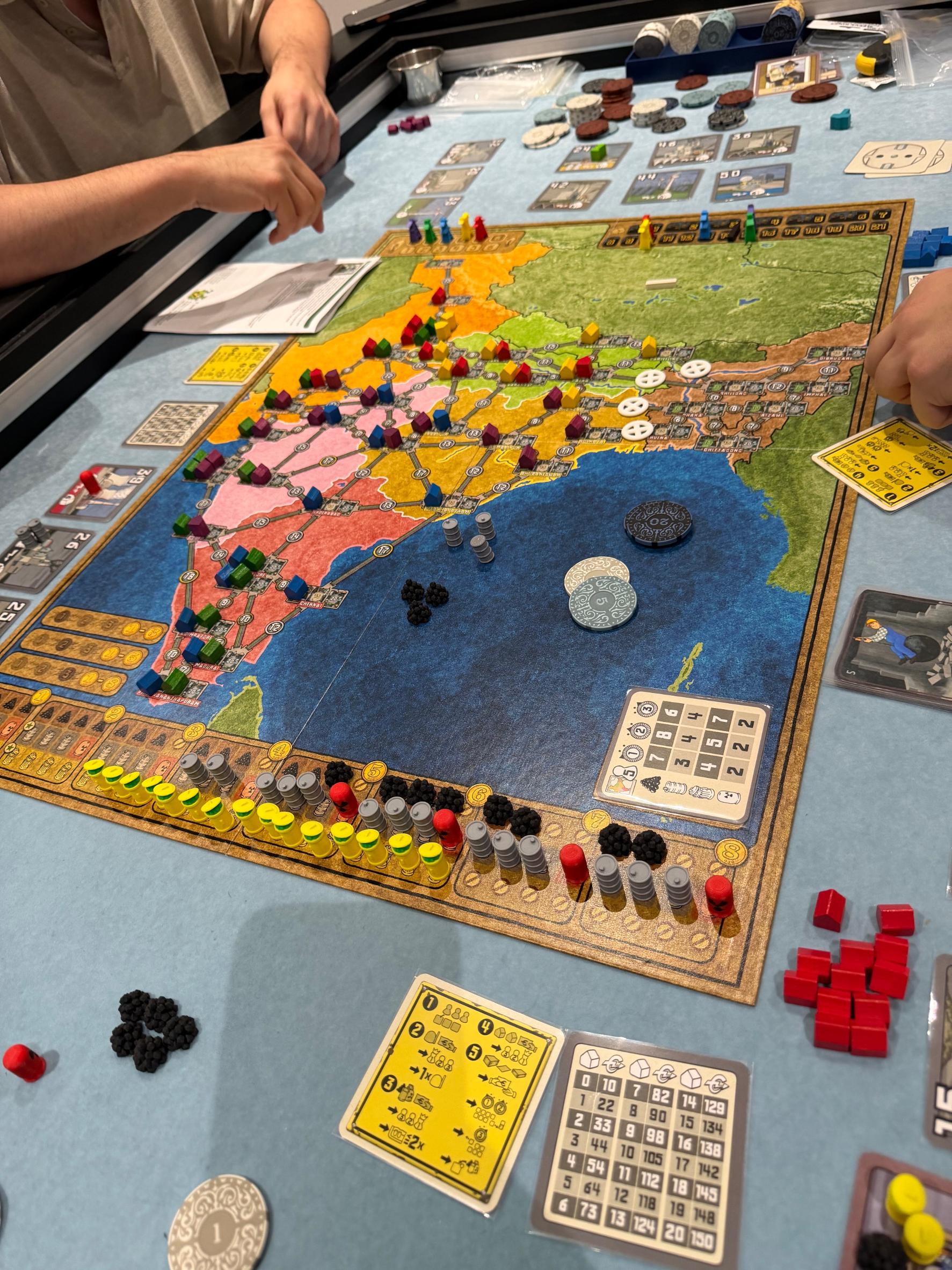
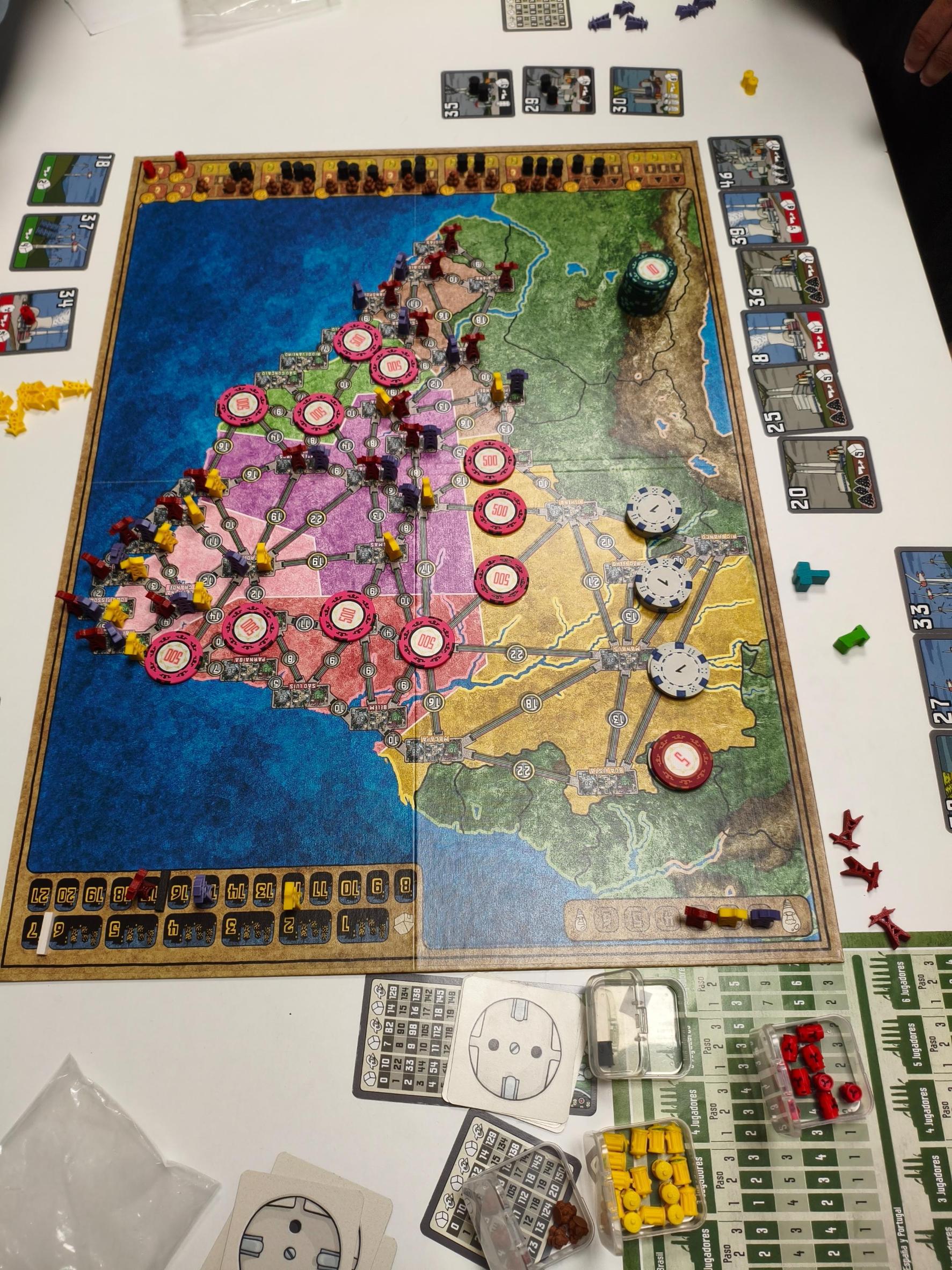
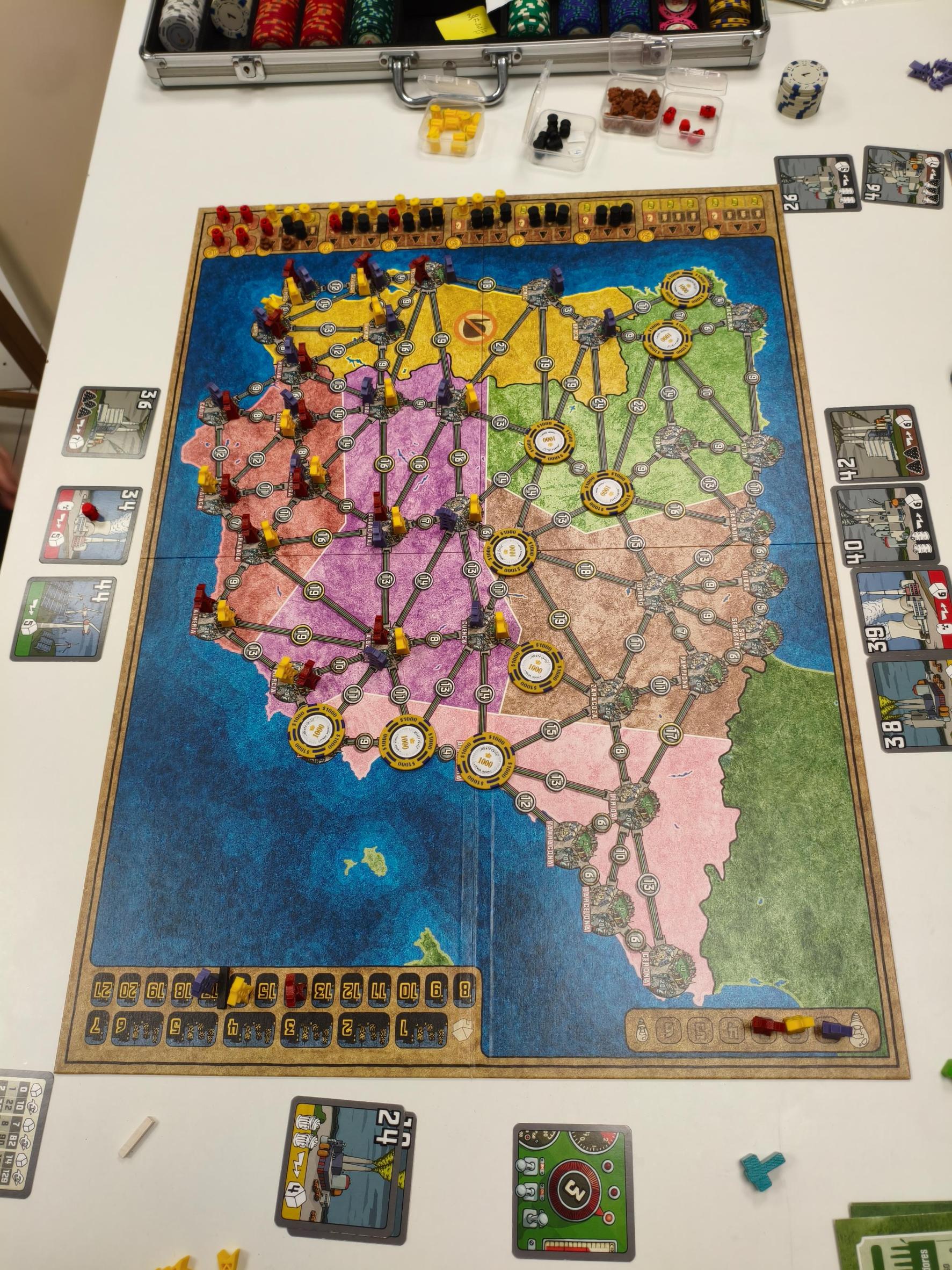
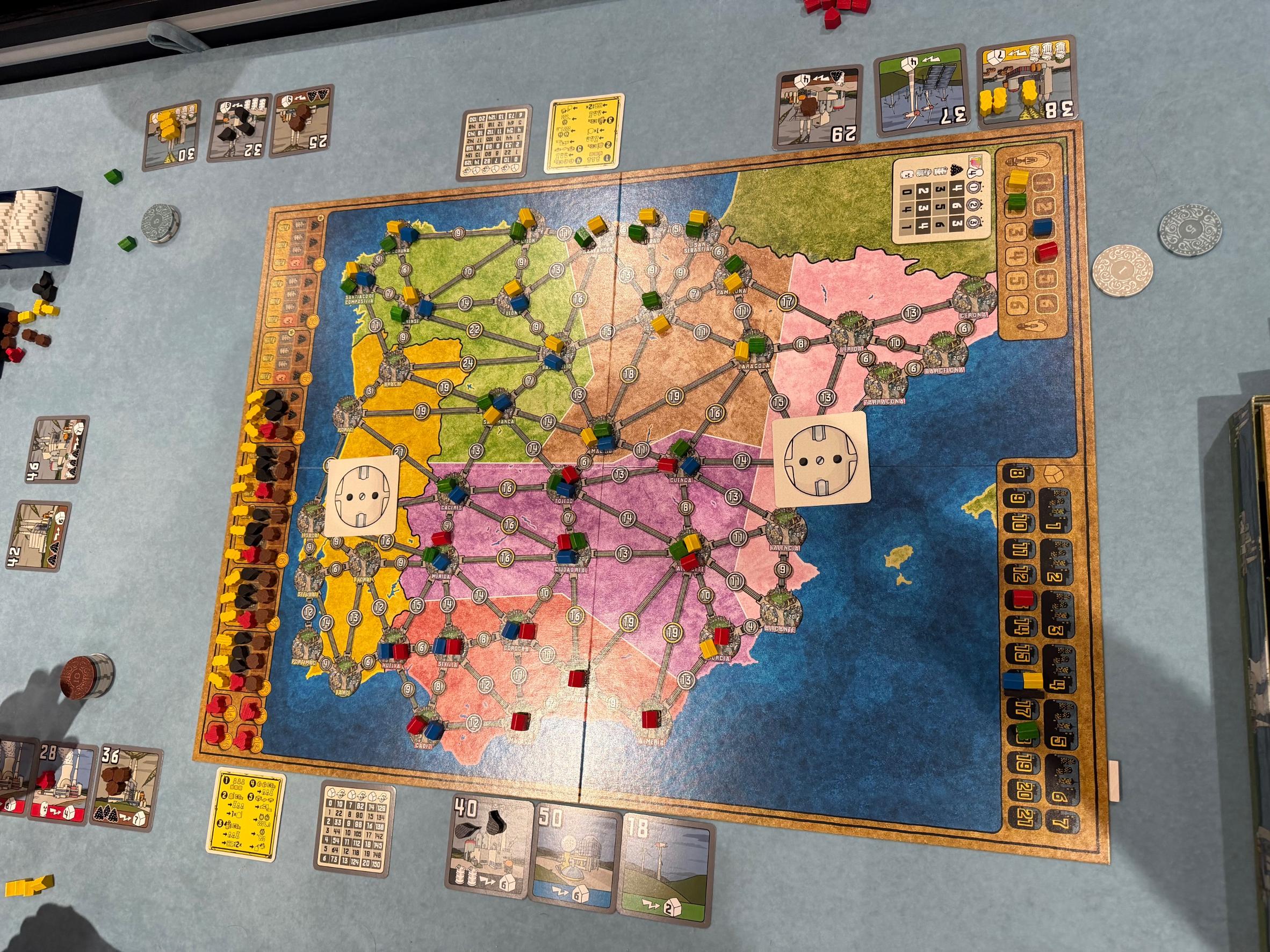
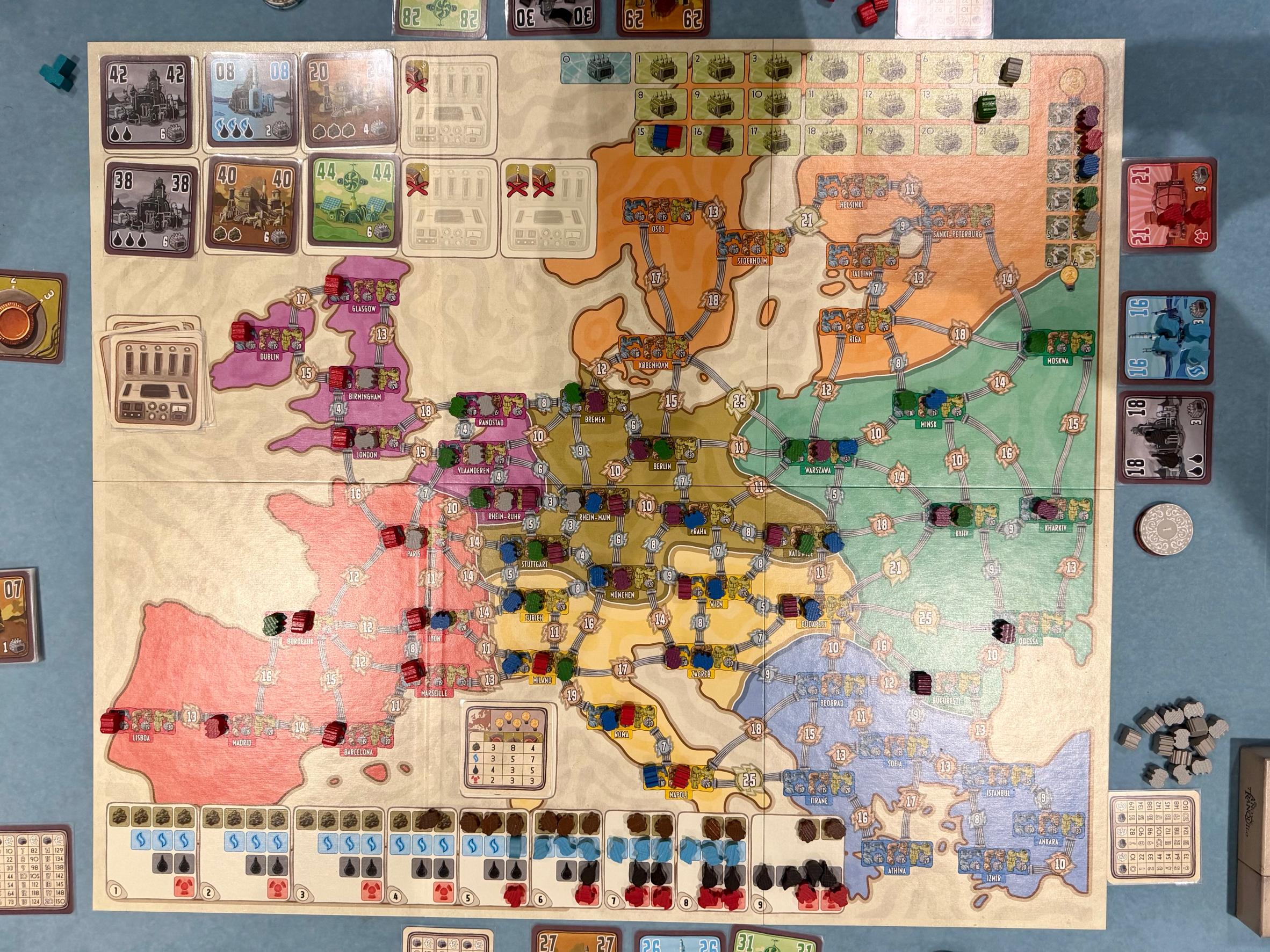
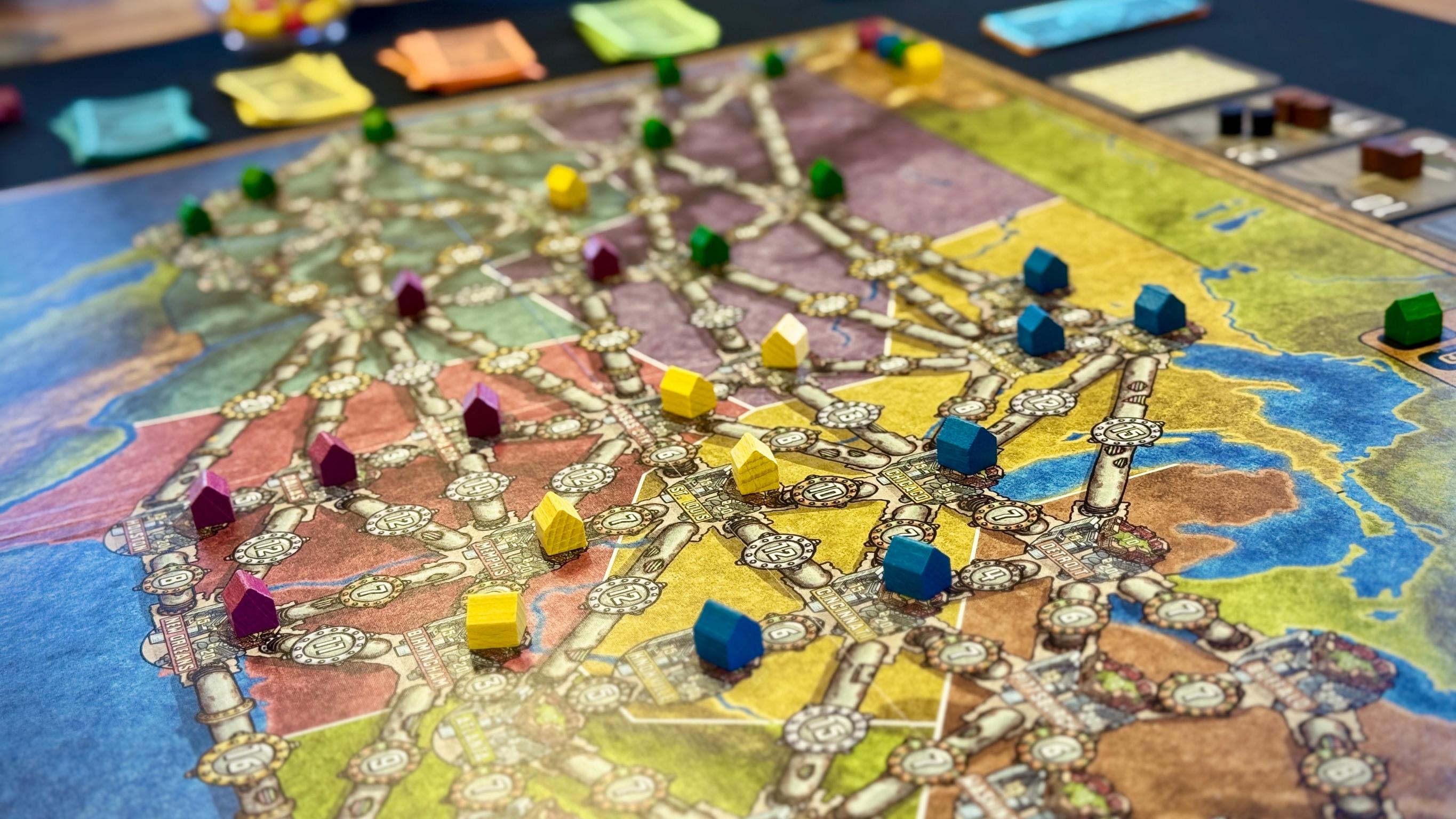
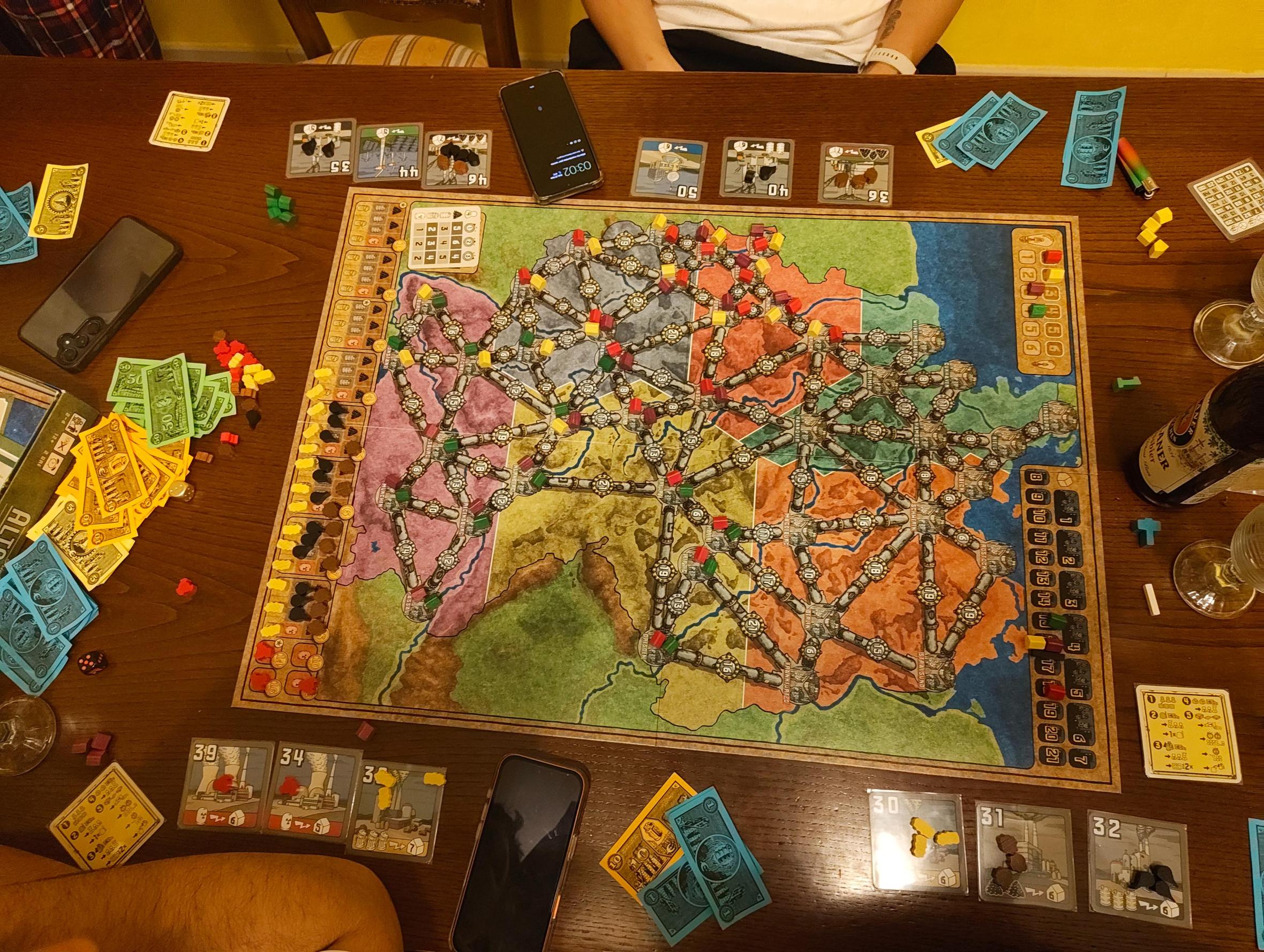
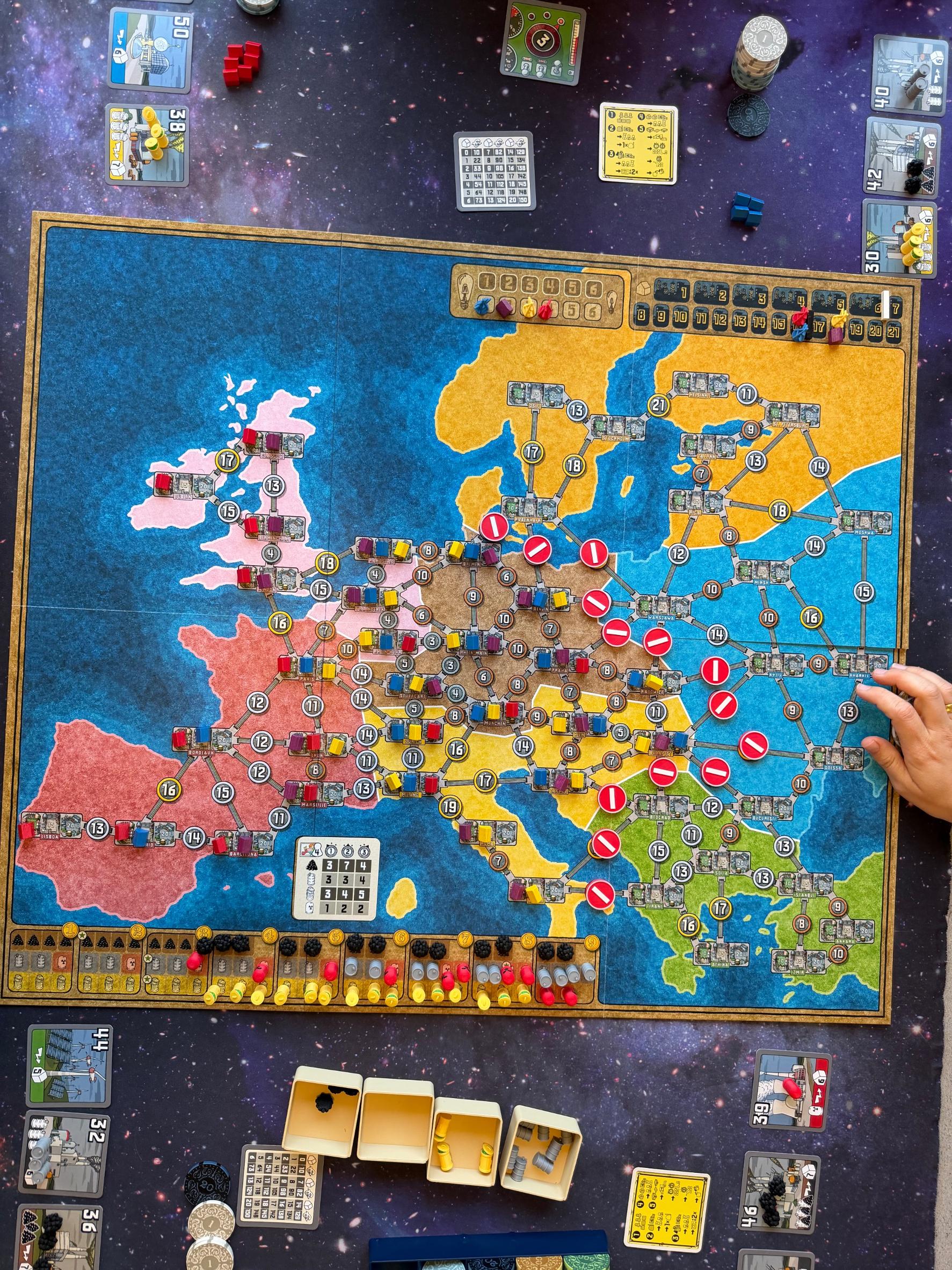
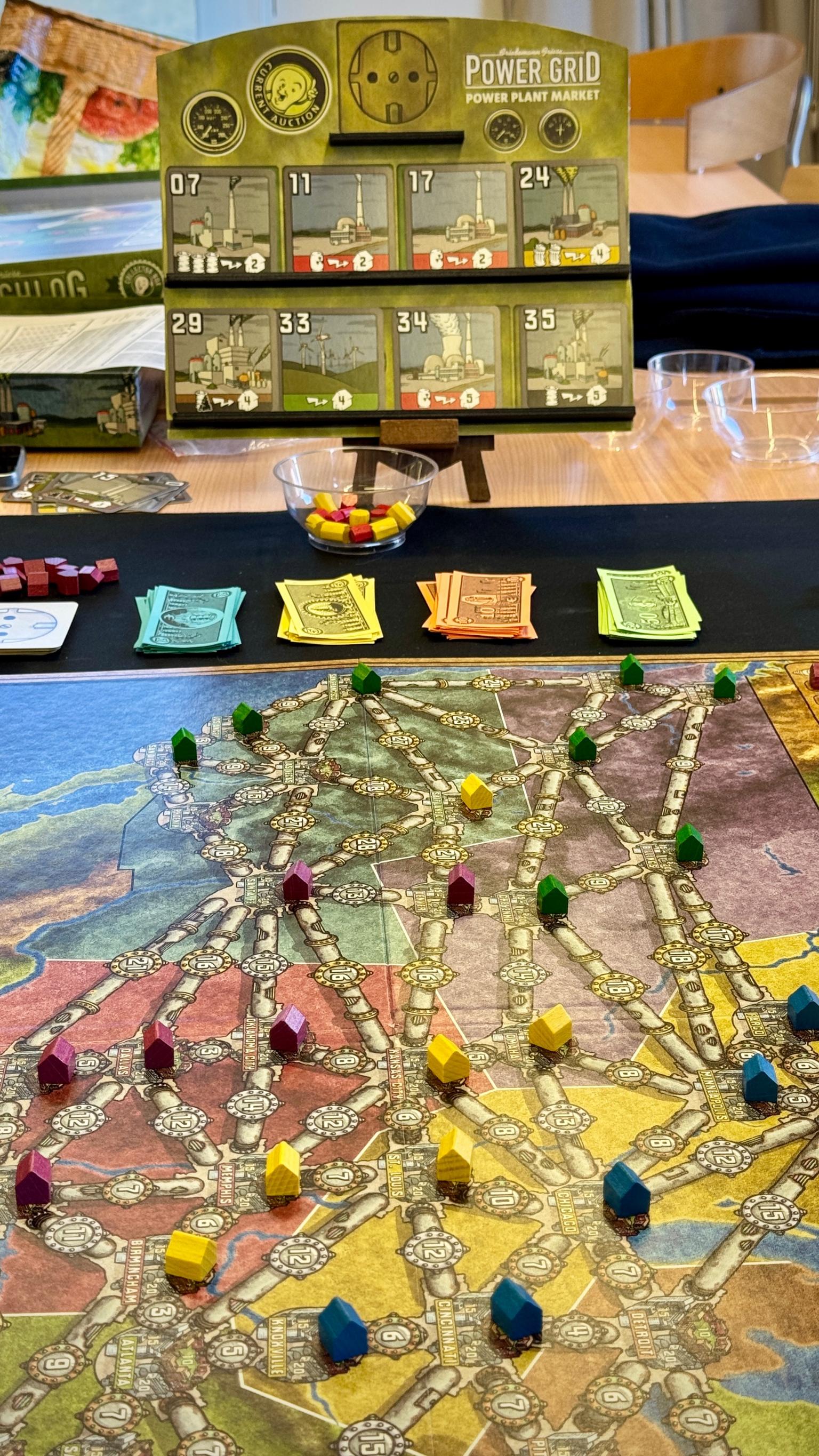
Wo kaufen
Shop-Preise und gebrauchte Exemplare, täglich geprüft.
An Ludoyas Tischen
Alle Statistiken in Ludoya- 878
- Erfasste Partien
- 1.228
- Spieler
- 2h 6m
- Durchschnittliche Partie
- 345
- In Sammlungen
- 32
- Auf Wunschlisten
7,5/10
aus 190 Ludoya-Rezensionen
Vic Granell8,0 Just played once on the German map. Really liked the tension of the cities filling up! Can't wait to play again
Iván Sanin7,5 Euro clásico. Muy distraído y fácil de explicar, aunque no lo parezca a primera vista de manual. Mejor consultar un gameplay en Youtube, porque de verdad que el juego es mucho más sencillo de lo que parece. Perfecto para jugadores que quieran subir un poco el nivel de juegos de introducción, con el plus de ser un juego a 6 que no se hace muy pesado ni en las mecánicas ni en el entreturno.
Mestremuten9,0 Rating: 4/5 Production value: 4/4 Is the game in my collection/Love to have?: 1/1

Kommende Veranstaltungen mit diesem Spiel
Alle VeranstaltungenRegelfragen
Aus der Spielanleitung beantwortet von Ludoyas Regelassistenten.
How is player order determined each round?
The player with the most cities is first; ties are broken by who owns the largest‑numbered power plant — place that player in first and continue likewise (Phase 1). (See page 3.)
How many power plants can I own — what if I buy a fourth?
Normally a player may own only 3 power plants; if you buy a fourth you must immediately discard one of your other plants and may move matching resources to your remaining plants, otherwise returned to the resource supply (not the market). (See page 3; 2‑player exception listed on page 7.)
How much resource can each power plant store — can I stockpile?
Each power plant can store up to twice the number of resources it consumes when producing (but it still only produces the stated number of cities); hybrids may store either resource they use, ecological plants store none. (See page 4.)
When do we buy resources and who buys first?
Resource buying is Phase 3 and is done in reverse player order (the last player in turn order buys first); you may only buy resources for plants you own and only up to each plant’s storage limit. (See page 4.)
How many cities can I build in one turn and do they have to connect?
You may add any number of cities in a round as long as you can pay the connection and building costs, but every new city must connect to your existing network (you cannot start a second network); place your house on the lowest available price slot in the city. (See pages 4–5.)
What if there aren’t enough resource tokens to re‑supply the market?
If the supply lacks enough tokens you only place what remains (resources in the game are limited); uranium is refilled one token per specified high spaces and is never placed more than once per space. (See page 6.)
Kostenlos, im Web, für Android und iOS
Spiel Funkenschlag mit Ludoya
- Hab es in deiner SammlungVerwalte dein Exemplar und seine Erweiterungen, leih es Freunden oder setz es auf deine Wunschliste und erfahre, wenn der Preis fällt.Zur Sammlung hinzufügen
- Erfasse jede PartiePunkte, Sieger, Timer und Fotos, dann deine Statistiken: Siegquote, liebste Spielerzahl, beste Punktzahl.Partie erfassen
- Regelfragen klärenFrag alles zu den Regeln und erhalte eine Antwort aus der Spielanleitung, mit der Seite zum Nachprüfen.Den Regelassistenten fragen
- Finde Leute, mit denen du es spielstClubs, Spieleabende und Veranstaltungen in deiner Nähe, bei denen dieses Spiel auf den Tisch kommt.Veranstaltungen ansehen
Spieldaten (Spieler, Spielzeit, Alter, Mitwirkende) von BoardGameGeek.