
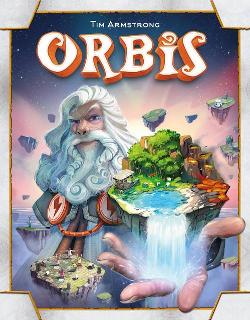
2018 · Civilización
Orbis
Los jugadores actúan como deidades, eligiendo losetas de regiones y dioses para formar un mundo personal y acumular puntos de creación. En cada turno, un jugador toma una de las nueve losetas de región compartidas o una loseta de Dios disponible (cada jugador puede reclamar como máximo una loseta de Dios), y luego coloca las losetas de región en su tablero personal siguiendo restricciones de colocación. Tomar una loseta de región coloca adoradores de ese color en las losetas adyacentes, lo que cambia el valor futuro de las losetas e influye en las decisiones de los rivales. Algunas tierras otorgan bonificaciones especiales o puntuación al final de la partida, y los jugadores gastan adoradores para conseguir regiones más poderosas. Después de un número fijo de rondas, los jugadores suman puntos de creación, se reparten bonificaciones y comparan sus totales para determinar al ganador.
- Jugadores
- 2–4 mejor con 3
- Duración
- 45 min
- Edad
- 10+
- Complejidad
- 2 / 5
Sobre el juego
- Diseño
- Arte
- Publisher


Dónde comprarlo
Precios de tiendas y copias de segunda mano, revisados cada día.
En las mesas de Ludoya
Todas las estadísticas en Ludoya- 46
- Partidas registradas
- 80
- Jugadores
- 30m 49s
- Partida media
- 38
- En colecciones
- 5
- En listas de deseos
4,6/10
de 15 reseñas en Ludoya
Garfield3,0 It's way too difficult to match some tiles to score points. So the easiest way to get points are red and yellow tiles I think. [c] Theme: :star::nostar::nostar::nostar::nostar: <!-- size 7]Nope --> Gameplay: :star::star::nostar::nostar::nostar: <!-- size 7]Quite boring --> Interaction: :star::nostar::nostar::nostar::nostar: <!-- size 7]Nope --> Artwork: :star::star::nostar::nostar::nostar: <!-- size 7]Nothing special --> Luck: :star::star::star::nostar::nostar: <!-- size 7]Random tile drawing --> Strategy: :star::star::star::nostar::nostar: <!-- size 7]Obvious ones --> Components: :star::star::star::nostar::nostar: <!-- size 7]Nothing special --> Play duration: :star::star::star::nostar::nostar: <!-- size 7]Good --> Easy to teach: :star::star::star::nostar::nostar: <!-- size 7]Ok --> Rules quality: <!-- size 7]not read --> Setup time: :star::star::star::nostar::nostar: <!-- size 7]Not much to set up --> No downtime: :star::star::star::nostar::nostar: <!-- size 7]Ok --> Replay value: :star::star::nostar::nostar::nostar: <!-- size 7]Not really --> [/c]
Evan4,6 In this game you are building a pyramid of tiles, where tiles on upper levels have to color match one of the two tiles below it. Each color has a certain effect genre, so as you choose colors you are also picking your path to scoring. Tiles are selected from a 3x3 grid, and often cost recipes of colored cubes to take. When a tile gets taken, it drops colored cubes matching the color of the tile on each orthogonality adjacent tile in the selection grid, thereby making them more appealing for other players to take. Managing your cubes is crucial as if you can't pay for or place a tile on your turn, you take one anyway, and flip it over to it's -1 vp side where it becomes a rainbow color for placement rules. Once per game instead of taking a tile, players can take a god tile which is what will sit at the top of the pyramid and give you extra points if you met it's requirements. The game plays quickly, and has that good feeling of tough decisions. You have to watch what your opponents are going for, what they are likely to take, and where they are likely to drop what color of cubes on their turns to optimize your moves. Every choice feels both good, and totally wrong as you wall yourself in. The game does cap out after a few plays. Once you've followed each color path through the game once, there's not a ton left to see. That being said, the core game play is still quite enjoyable. :star: Art, Iconography and components functional :star: Clever or interesting mechanisms :star: Reasonably low downtime between turns with mildly AP players :nostar: Multiple plays stay interesting :star: Low or mitigatable luck elements :star::star::star::nostar::nostar: Raw enjoyment
An abstract puzzly game with nice aesthetics. PROS - The base idea is easy to grasp and works well within its abstract frame. - Iconography, graphic design and art are all quite good. The game is pretty easy to understand for its icons and it has a nice table presence. CONS - The game naturally constrains you, which is not bad in itself but leads to less and less possibilities and therefore decisions towards its end. - The design space seems to be underexplored, leading to some turns with little or not very meaningful decisions to make as many tiles offer kind of the same thing. - It just feels like there is nothing new here, the design doesn't feel innovative nor very exciting.



Gratis, en web, Android e iOS
Juega a Orbis con Ludoya
- Tenlo en tu colecciónControla tu copia y sus expansiones, préstala a tus amigos o ponla en tu lista de deseos y te avisamos cuando baje de precio.Añadirlo a tu colección
- Registra cada partidaPuntuaciones, ganadores, temporizadores y fotos, y luego tus estadísticas: porcentaje de victorias, número de jugadores favorito, mejor puntuación.Registrar una partida
- Puntúa sin papelUsa las hojas de puntuación y ayudas de juego de la comunidad, y deja que Ludoya sume los puntos.Buscar hojas de puntuación
- Encuentra gente con quien jugarloClubes, noches de juegos y eventos cerca de ti que sacan este juego a la mesa.Ver eventos
Datos del juego (jugadores, duración, edad, créditos) de BoardGameGeek.