
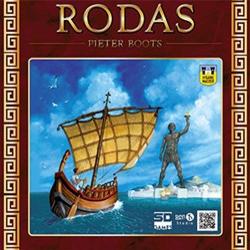
2016 · Construcción de ciudades
Rodas
Los jugadores asumen el papel de mercaderes y campesinos isleños en la antigua Rodas, produciendo aceitunas, uvas, grano y leche de cabra, y enviando mercancías a los barcos del puerto para venderlas. Un mercado compartido y dinámico ajusta los precios cuando llegan los barcos; los jugadores eligen si vender ahora o guardar mercancías para más tarde, influyendo tanto en el valor del mercado como en los ingresos de los demás jugadores. La partida pone el foco en decisiones tácticas y estratégicas a través de la producción, la interacción con el mercado y el orden de turno, con opciones para ampliar tierras, desarrollar habilidades que se saltan los mercados o manipular la oferta para crear escasez. La alta interacción entre jugadores y las condiciones cambiantes del mercado generan dilemas recurrentes; por lo general, los enfoques equilibrados rinden mejor que las estrategias de una sola vía.
- Jugadores
- 2–5 mejor con 3
- Duración
- 60–90 min
- Edad
- 10+
- Complejidad
- 2,7 / 5
Sobre el juego
- Diseño
- Publisher


Expansiones
Verlas en Ludoya
Fotos de mesas de Ludoya
Todas las fotos en LudoyaDónde comprarlo
Precios de tiendas y copias de segunda mano, revisados cada día.
- MathomEn stock12 €
- Magia de TintaEn stock31.95 €
- ZacatrusSin stock35.95 €
- Dungeon MarvelsSin stock35.96 €
- Juegos de la Mesa RedondaSin stock39.95 €
- El NucliEn stock39.95 €
- LudifolieEn stock19.9 €
En las mesas de Ludoya
Todas las estadísticas en Ludoya- 17
- Partidas registradas
- 37
- Jugadores
- 1h 48m
- Partida media
- 11
- En colecciones
5,0/10
de 6 reseñas en Ludoya
Evan4,6 This is a nice, lighter euro where players are trying to fulfill recipe cards. The way this happens is pretty interesting. There's a communal "grow" action where a player takes the action spot and then chooses two types of fields that will generate new goods, along with assigning a quantity tile to each of those types. Then the number of goods produced gets distributed evenly among all players who can grow that type of good, starting with the person who took the action. Then, with another action, players put their goods on boats in the center of the board. When someone wants to complete a recipe, they can buy goods from any of the boats they want, paying the people they took the goods from. The recipe tiles have some nice points on them, and they also act as the endgame timer, but points can also come from bonus buildings, or by just spending money on the relevant action spot. There's some really nice tension about wondering if players will buy your goods, or if they'll sit on the line of boats, slowly getting pushed ahead in line, becoming cheaper and cheaper. If they happen to reach the end of the line, you get to keep them for free, which is really cool. Timing the push of the boats is a lot of fun. All that being said, I felt like the game didn't have enough complication or excitement for me. Even though I was amped enough for this game that I ordered a copy from europe, I decided to sell it, as I have other games that play in about this time that I liked better. I think one of the things that made me shy away in the end was that many of the buildings you can construct didn't seem very interesting. I could see how they would be helpful to you, but the bonuses seemed small and somewhat mundane. If those had been a little wilder, I think this would have been a hit. :star: Art, Iconography and components functional :star: Clever or interesting mechanisms :star: Reasonably low downtime between turns with mildly AP players :nostar: Multiple plays stay interesting :star: Low or mitigatable luck elements :star::star::nostar::nostar::nostar: Raw enjoyment



Gratis, en web, Android e iOS
Juega a Rodas con Ludoya
- Tenlo en tu colecciónControla tu copia y sus expansiones, préstala a tus amigos o ponla en tu lista de deseos y te avisamos cuando baje de precio.Añadirlo a tu colección
- Registra cada partidaPuntuaciones, ganadores, temporizadores y fotos, y luego tus estadísticas: porcentaje de victorias, número de jugadores favorito, mejor puntuación.Registrar una partida
- Puntúa sin papelUsa las hojas de puntuación y ayudas de juego de la comunidad, y deja que Ludoya sume los puntos.Buscar hojas de puntuación
- Encuentra gente con quien jugarloClubes, noches de juegos y eventos cerca de ti que sacan este juego a la mesa.Ver eventos
Datos del juego (jugadores, duración, edad, créditos) de BoardGameGeek.